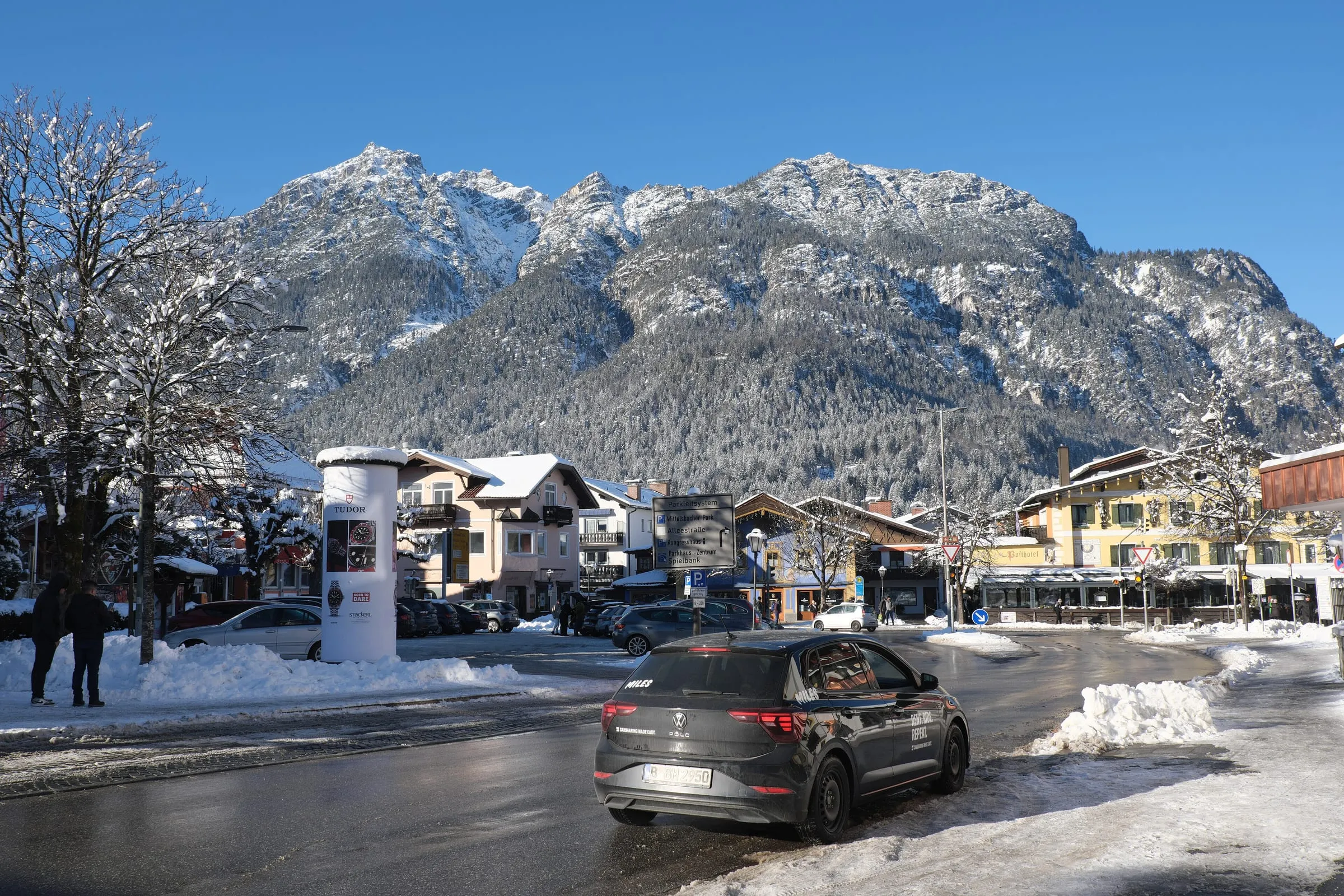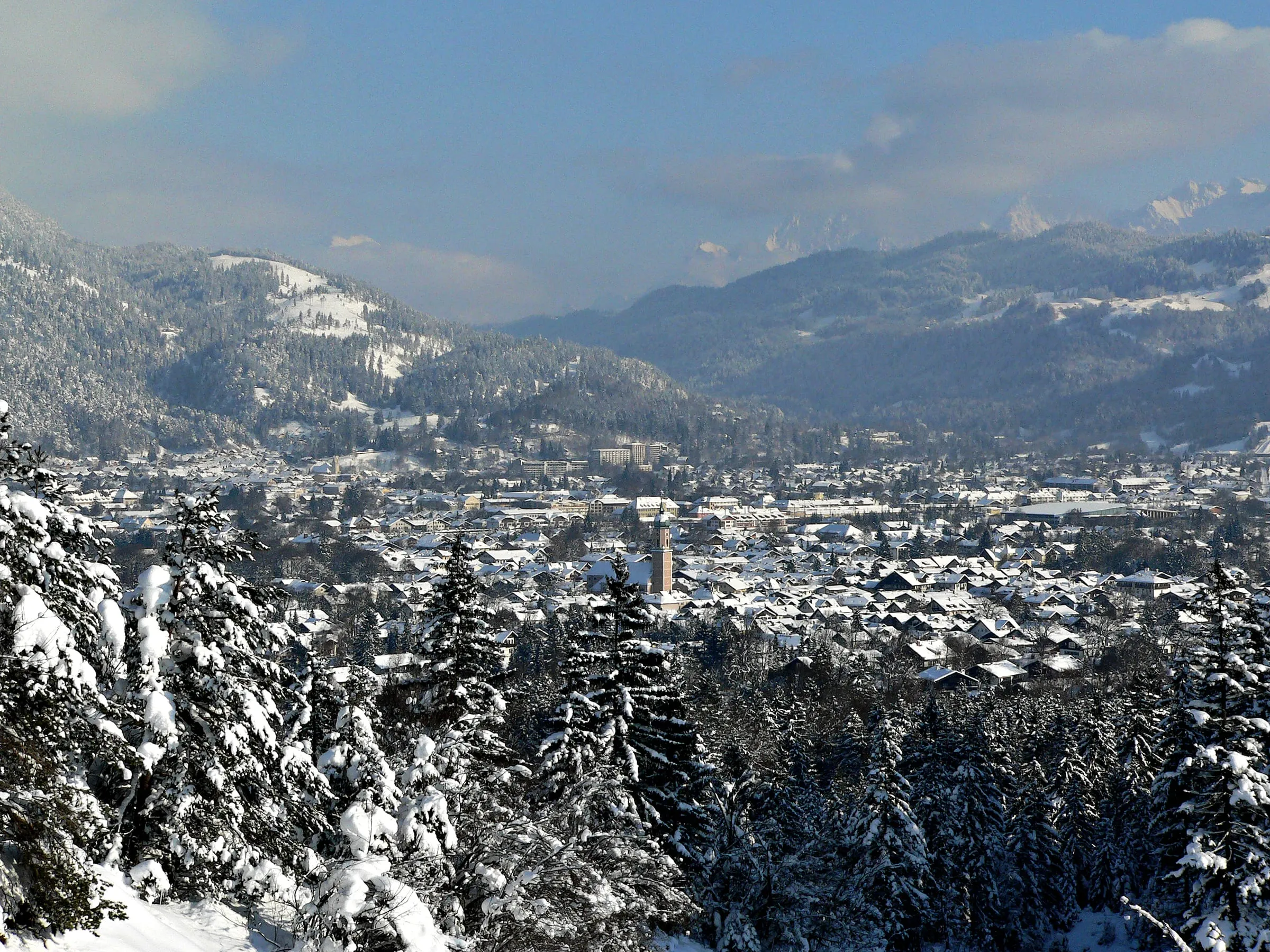
Garmisch-Partenkirchen is a Bavarian market town at about 708 m, south of Munich, with two ski areas run by the Bayerische Zugspitzbahn. Garmisch-Classic is the town’s own mountain, with 40 km of pistes on the Hausberg, Kreuzeck and Alpspitze. The Zugspitze, Germany’s highest mountain, has another 20 km on a high glacier plateau between roughly 2,000 and 2,720 m.
The key thing to understand before you book: the two areas aren’t linked. There’s no lift or piste between them, and each has its own day pass. With a railway station in town, it’s also one of the easiest Alpine ski trips to do without a car.
Garmisch-Partenkirchen ski area: two mountains, one town
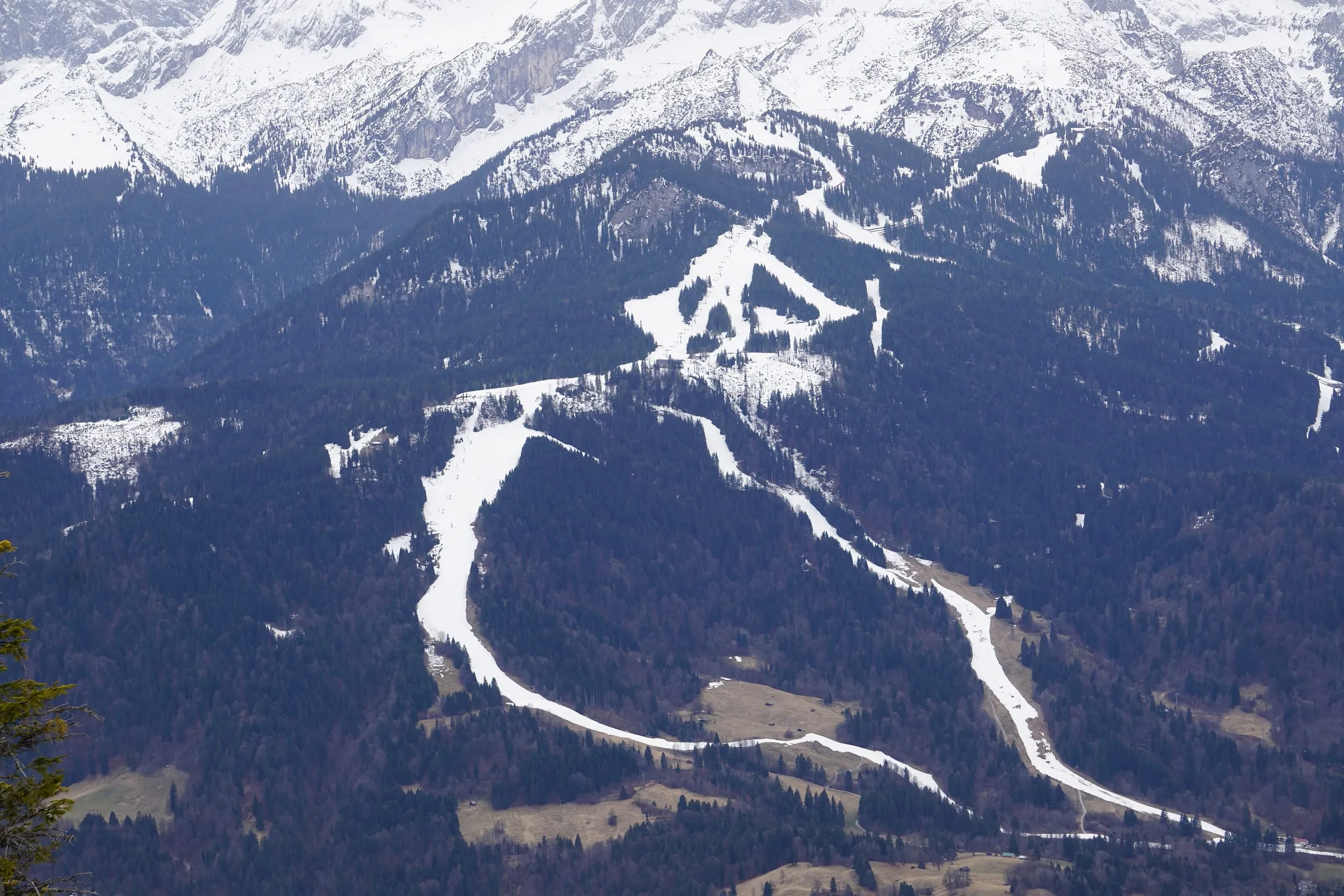
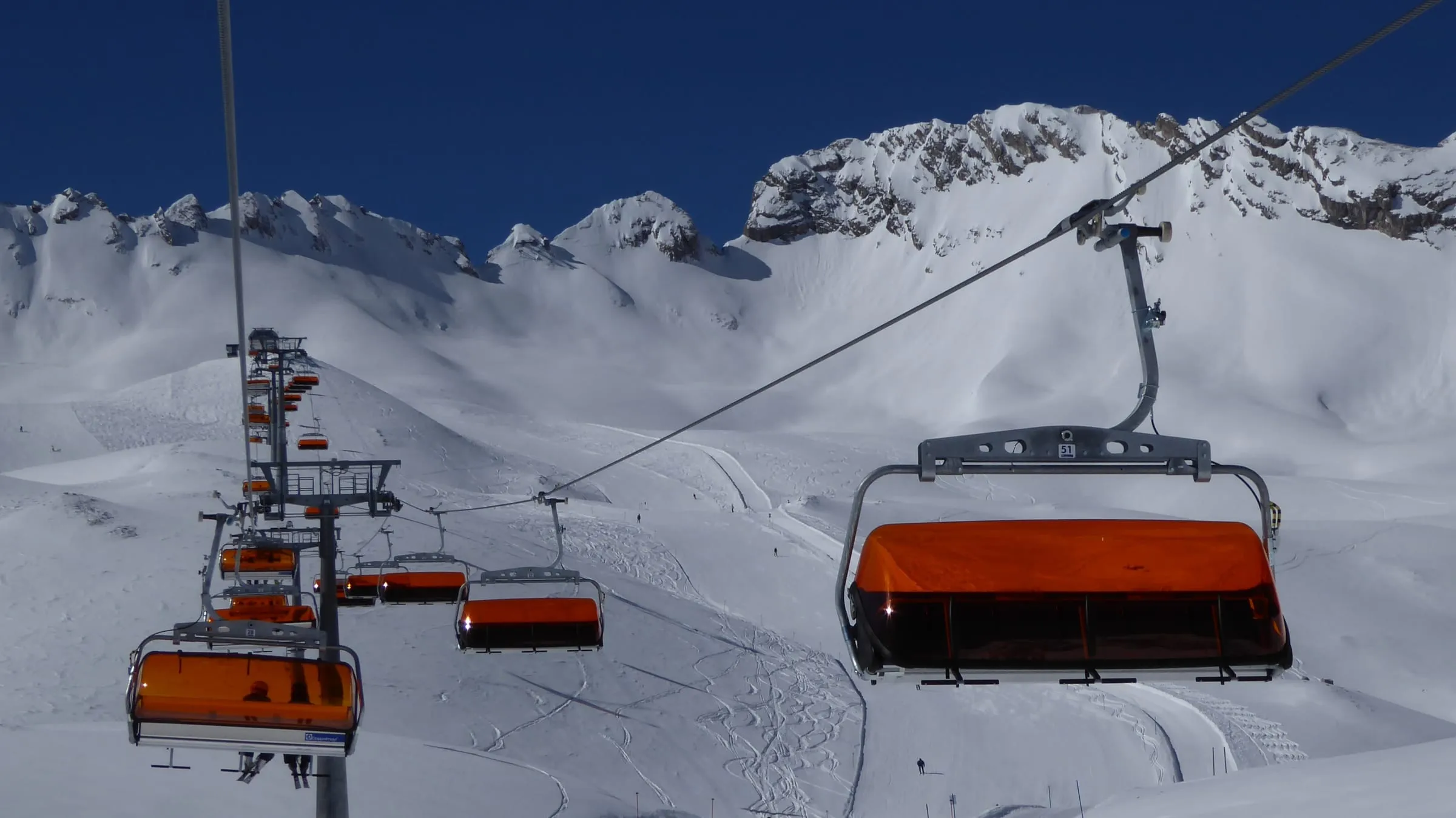
Garmisch-Classic spreads across three mountains: the Hausberg (1,310 m), the Kreuzeck (1,651 m) and the Alpspitze (2,628 m). The lifts top out at about 2,050 m at the Osterfelderkopf, below the Alpspitze summit, and there are four valley runs back down towards town. It has 12 km of blue, 18 km of red and 10 km of black, served by 4 gondolas and cable cars, 4 chairlifts and 10 T-bars.
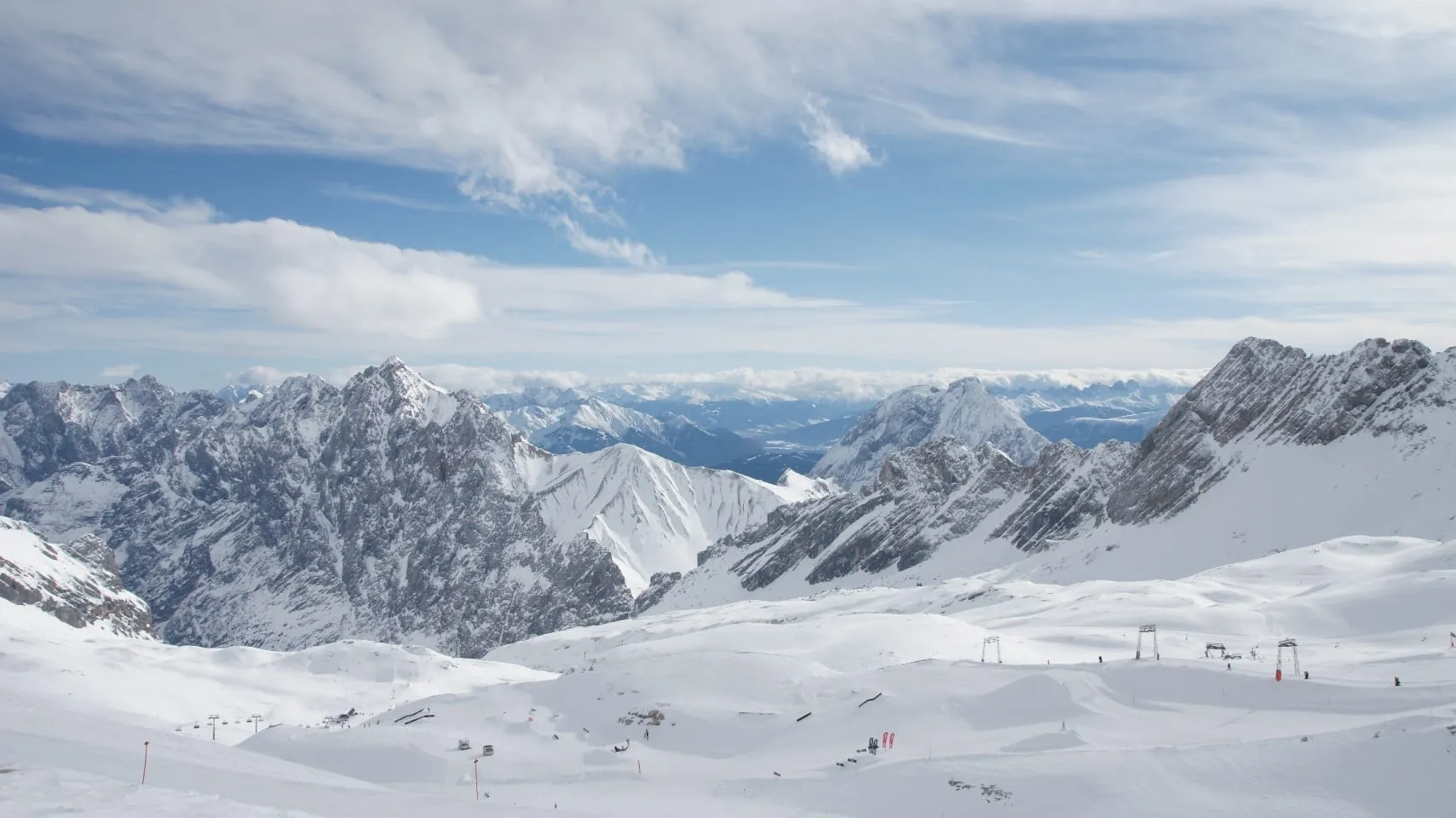
The Zugspitze ski area sits on the Zugspitzplatt, below the Schneefernerkopf, Wetterwandeck and Zugspitze summits. It has 20 km of runs (7 km blue, 13 km red, no blacks), served by 2 cable cars, 2 chairlifts and 4 T-bars, plus the cogwheel railway that brings you up. The operator describes it as glacier skiing on natural snow.
Getting between them takes time. From Garmisch, the cogwheel train takes about 75 minutes to the Zugspitzplatt, stopping at the Hausberg and Kreuzeck lifts on the way. Alternatively, the Seilbahn Zugspitze cable car leaves from the Eibsee, takes 10 minutes to the summit, and the Gletscherbahn drops you onto the plateau in 4 more. Plan a Zugspitze day as a separate day out.
Skiing in Garmisch-Partenkirchen for beginners
Start in the Ixis children’s area on the Hausberg, which has a magic carpet and three beginner lifts. Adults learning from scratch use the same gentle terrain. The Kinderland ticket covers the Hausbergbahn up and down plus the practice lifts, so you don’t need a full pass on day one. Once you can turn, the Zugspitze’s blue runs are wide, high and a good next step.
Skiing in Garmisch-Partenkirchen for intermediates
Garmisch-Classic has the better mix, with 18 km of red. The runs from the Kreuzeck and Osterfelderkopf are long and varied, and the valley runs add real vertical when the snow is good. The Zugspitze is mostly red and blue, and higher, so it’s often the better choice when the snow lower down is poor. Be realistic, though: 60 km over two unlinked areas is plenty for a long weekend or short break, but keen intermediates may run out of new terrain in a full week.
Skiing in Garmisch-Partenkirchen for experts
Strong skiers come for the Kandahar (below), the 10 km of black in Garmisch-Classic and the terrain under the Alpspitze. The Alpspitzbahn also runs a ski touring ticket, with one ride each on the Alpspitzbahn and the Bernadein lift, for tours up to the Stuibenhütte. Off-piste and touring terrain here is serious alpine ground, so go with a qualified guide.
The Kandahar: Garmisch-Partenkirchen’s World Cup downhill
The Kandahar is Garmisch-Classic’s famous FIS race course, used for World Cup races. Its steepest pitch has a maximum gradient of 92 per cent. It’s strictly for experienced, confident skiers. After skiing it, the Kandahar 2 ski bar at the Kreuzeckbahn valley station is the obvious place to stop.
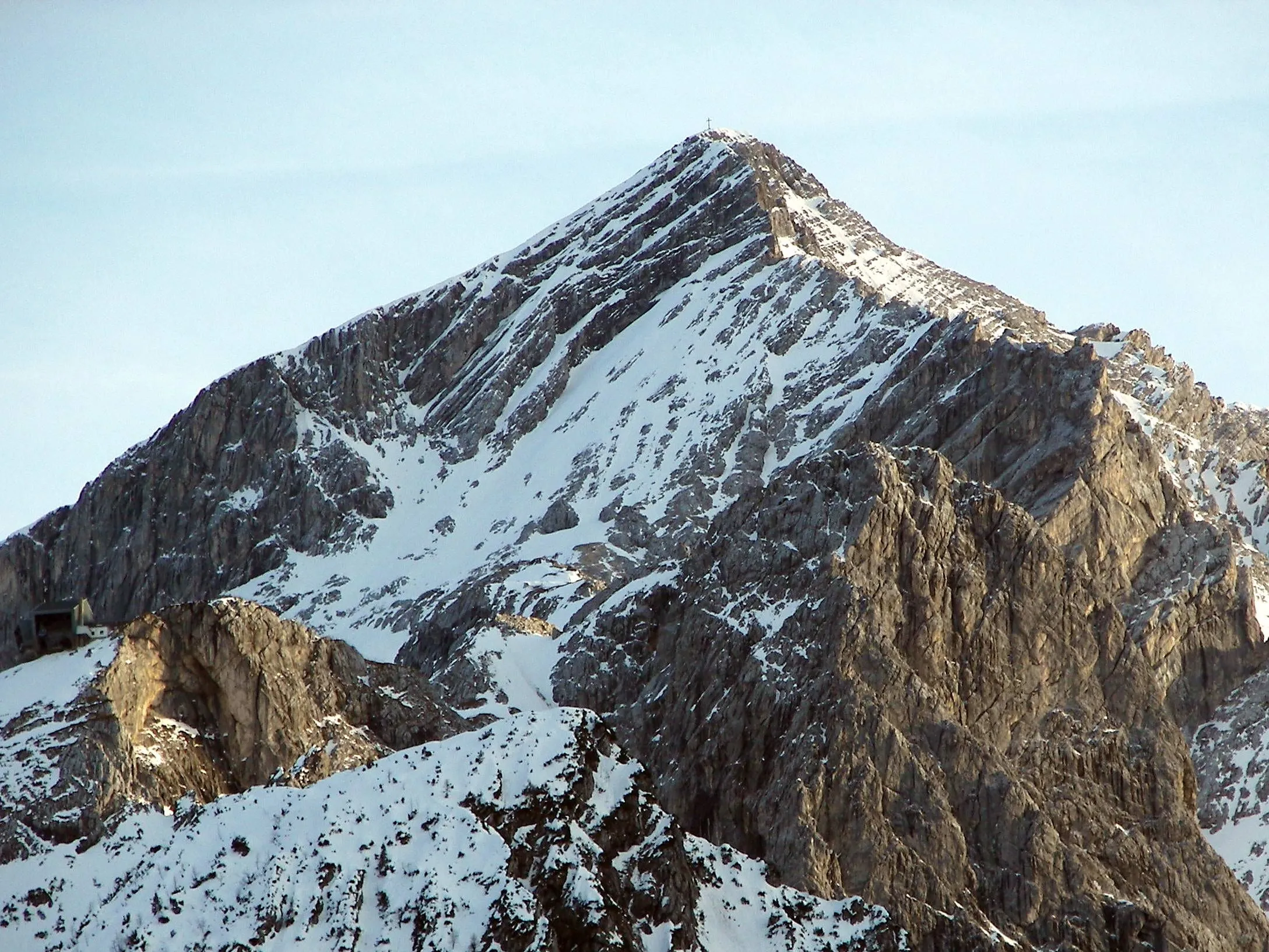
The Alpspitzbahn also takes non-skiers up to the AlpspiX viewing platform, with two x-shaped glass walkways over the drop, which is open in winter.
Snow in Garmisch-Partenkirchen and the 2026/27 season
For 2026/27, the Zugspitze is expected to open on 27 November 2026 and run until 2 May 2027. Garmisch-Classic is expected to open in mid-December and close on 29 March 2027. All dates depend on snow, and the Zugspitze is fully closed for maintenance on several days in November before the season starts.
The two areas behave very differently. Garmisch-Classic’s runs start not far above the town, at around 740 m, and most of the skiing sits below 2,000 m, so in a mild spell the valley runs and lower slopes suffer first, and early- and late-season trips are a gamble. The Zugspitze plateau sits between roughly 2,000 and 2,720 m and is much more reliable, which is why it opens weeks earlier and stays open five weeks longer. The trade-offs: it’s small, exposed in bad weather, and getting up takes time.
Is Garmisch-Partenkirchen good for a last-minute ski trip?
It’s a good pick in the right conditions, for three reasons:
- Easy to reach. Regional trains run hourly from Munich, about 80 minutes away, and Munich, Innsbruck and Memmingen airports are all within reach. You can watch the forecast and go at short notice.
- A snow-sure fallback. When Garmisch-Classic is thin, the Zugspitze glacier is usually still skiing, from late November to early May.
- A real town with plenty to do if the weather closes in.
But check the lift status page before you book. If only the Zugspitze is open, you have 20 km of skiing and a long trip up each day. And avoid weekends if you can: Garmisch is a favourite day trip from Munich, and the tourist office warns of jams and long delays in peak season. Then find a place to stay in Garmisch-Partenkirchen.
Garmisch-Partenkirchen lift passes
Lift passes are sold online and at the valley station ticket offices. Online prices apply until 11.59 pm the day before you ski.
- Garmisch-Classic day pass, plus a morning pass (until 1 pm) and an afternoon pass (from noon, on-site only). Morning passes aren’t sold from 24 December 2026 to 10 January 2027 or from 6 to 14 February 2027.
- Zugspitze ski pass, which includes the ski area, the Gletscherbahn and one trip up and down by the cable car or the cogwheel train.
- Twin-Ticket: a 2-day pass valid for two days in either area or one day in each. The second day can be any day that season. If you visit both areas on the same day, you lose the second day.
- Children under 6 ride free with a parent or legal guardian, but need a ticket in ski lessons. Child rates cover 6 to 15, youth 16 to 18, and the family rate covers children from 6 to 18 with at least one parent.
- A rail and ski combination ticket with DB Regio covers a train from Munich Hauptbahnhof plus a Zugspitze or Garmisch-Classic pass.
Because the areas aren’t linked, you effectively ski one per day, so pick your mountain each morning based on the snow.
Après-ski and things to do in Garmisch-Partenkirchen
This isn’t a party resort. Après is low-key, centred on the mountain restaurants and the town’s Bavarian inns rather than dance-on-the-tables bars. On the mountain, try Drehmöser 9 and the Garmischer Haus on the Hausberg, Osterfelder 2000 at the top of the Alpspitzbahn and the Kandahar 2 ski bar at the Kreuzeckbahn. On the Zugspitze, Sonnalpin, Gletscher 2600 and Panorama 2962 all have sun decks.
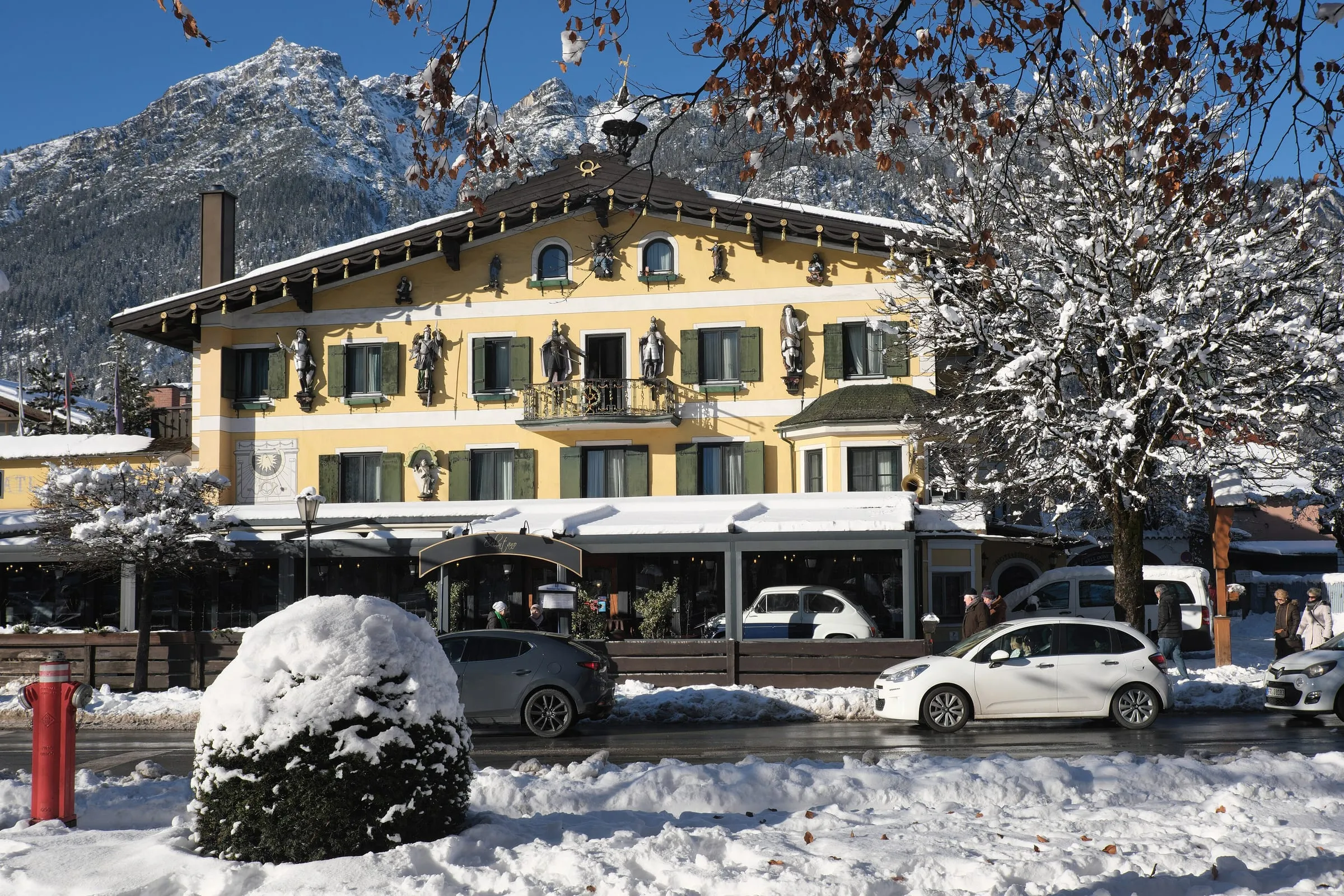
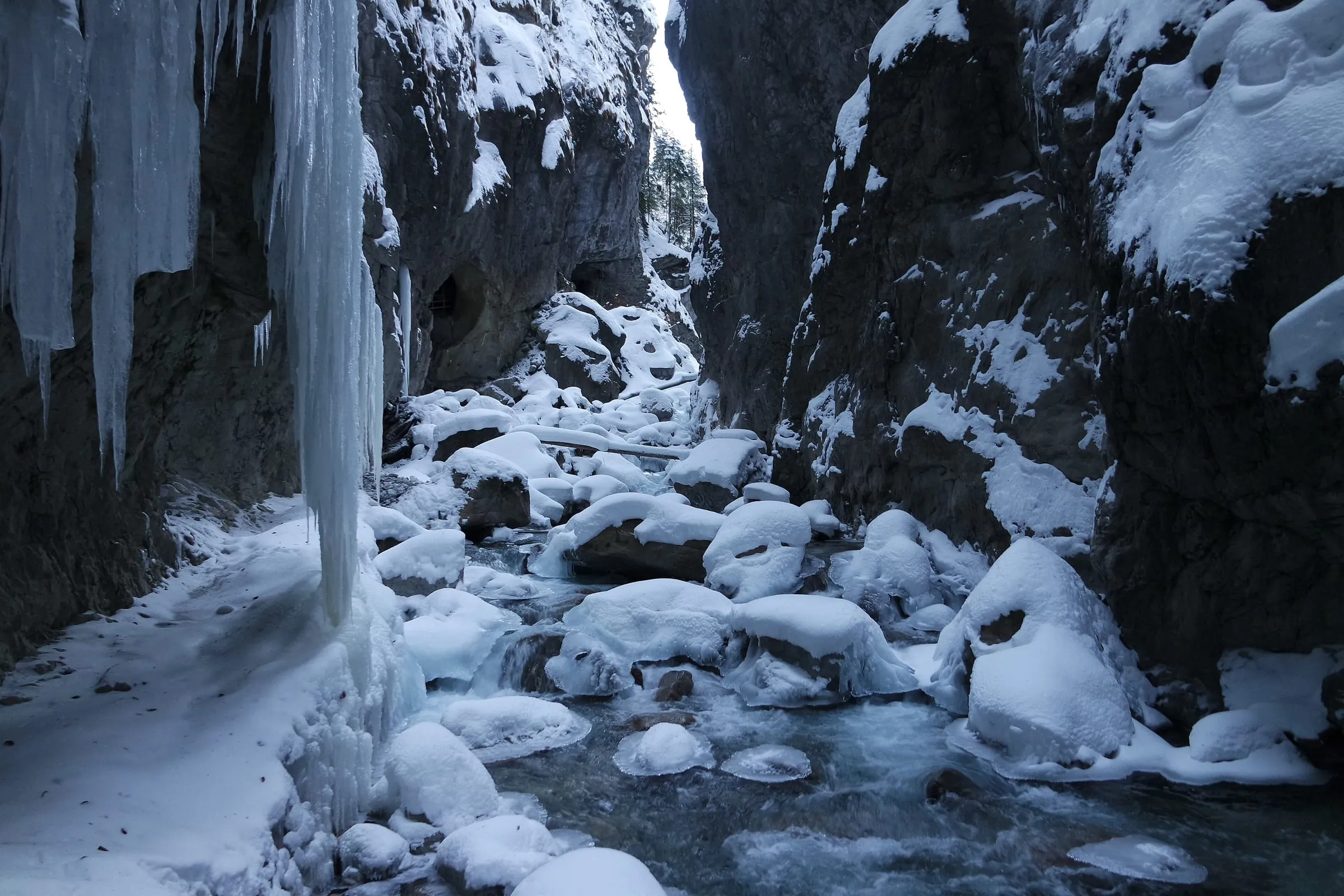
Off the slopes, the town lists torchlit walks through the Partnach gorge, snowshoeing, alpaca and llama hikes and sledging. On the Zugspitze, there’s a short family toboggan run and two glacier runs of about 500 m. The Garmisch side of town has the pedestrian zone and Marienplatz, and Partenkirchen has the historic Ludwigstraße.
Who Garmisch-Partenkirchen suits, and who it doesn’t
- Great for: short breaks and long weekends from Munich, skiers who want to go by train, families with beginners, strong skiers who want to tick off the Kandahar, and mixed groups where not everyone skis.
- Think twice if: you want a big linked area for a full week, ski-in/ski-out convenience, lively après, or reliable snow on the lower slopes early or late in the season.
Skiing with children? Read our guide to Garmisch-Partenkirchen with kids.
How to get to Garmisch-Partenkirchen
Driving to Garmisch-Partenkirchen
From Munich, take the A95 south to its end, then the B2 into town. From the west, the A7 and Fernpass route joins the B23, and from Innsbruck you come in on the B2 via Mittenwald and Klais. Germany doesn’t charge cars motorway tolls, but if you drive in through Austria you’ll need an Austrian vignette.
German winter tyre rules are situational: in snow, slush, ice or frost your car must have tyres marked with the Alpine symbol (mountain and snowflake). Tyres marked only M+S no longer count. For the Zugspitze cable car, note that the Eibsee has a single access road: the operator advises arriving before 10 am on sunny days, or taking the cogwheel train or the Eibsee bus instead. Overnight parking isn’t allowed at the Zugspitzbahnhof, Hausberg or Eibsee Hotel car parks.
By train and bus
Regional trains from Munich run hourly and take around 80 minutes, with direct ICE trains at weekends to Berlin, Hamburg, Cologne, Frankfurt and Nuremberg. The station is in the town centre. The Zugspitzbahnhof is about 200 m from the DB station’s west exit, and its cogwheel trains are timed to meet the regional trains. They stop at the Hausberg and Kreuzeck for Garmisch-Classic before climbing to the Zugspitze. FlixBus line 040 runs between Munich, Garmisch-Partenkirchen and Innsbruck.
Nearest airports
Innsbruck is the closest airport, about 62 km away. Munich is 123 km and Memmingen 134 km.