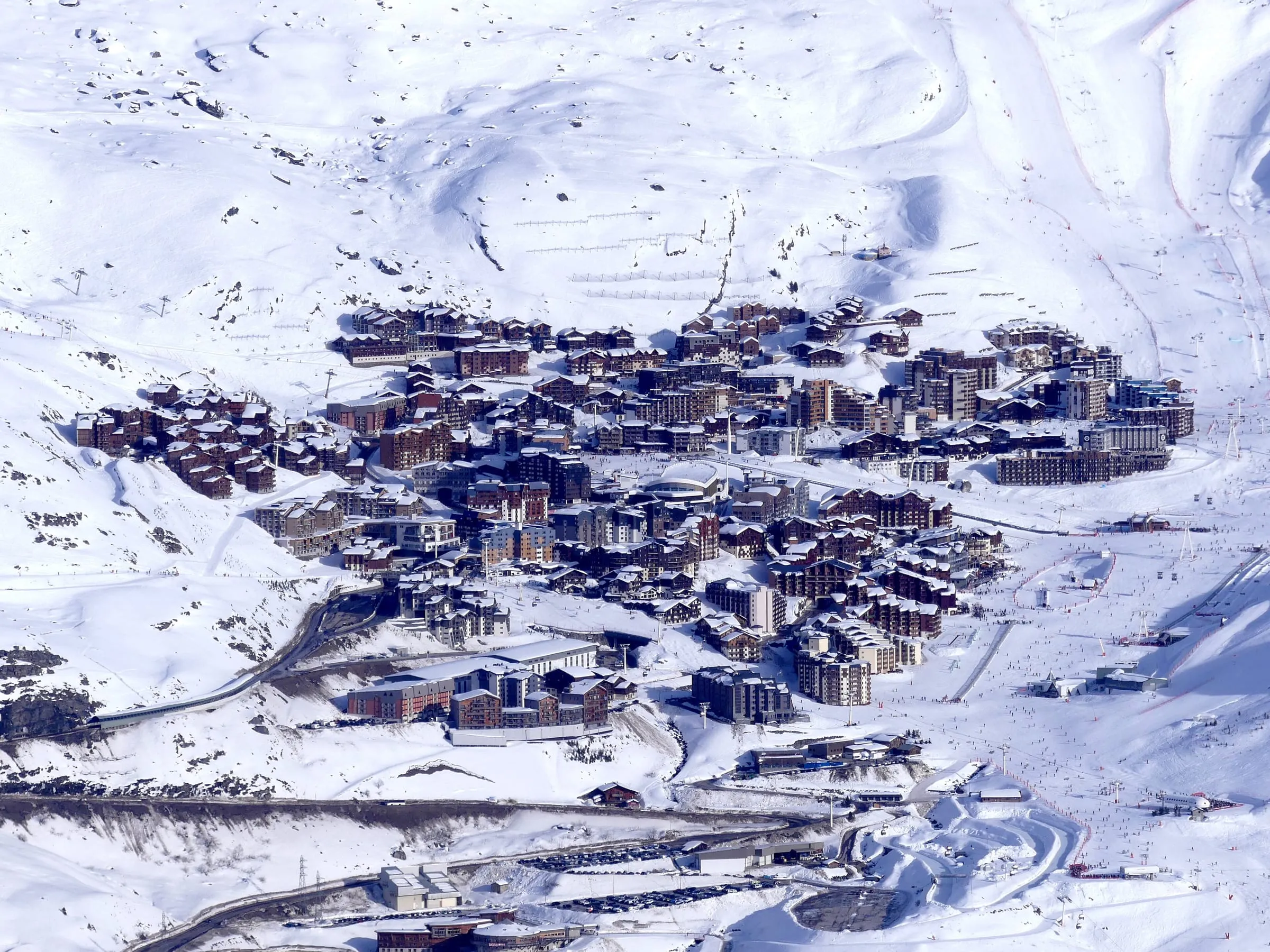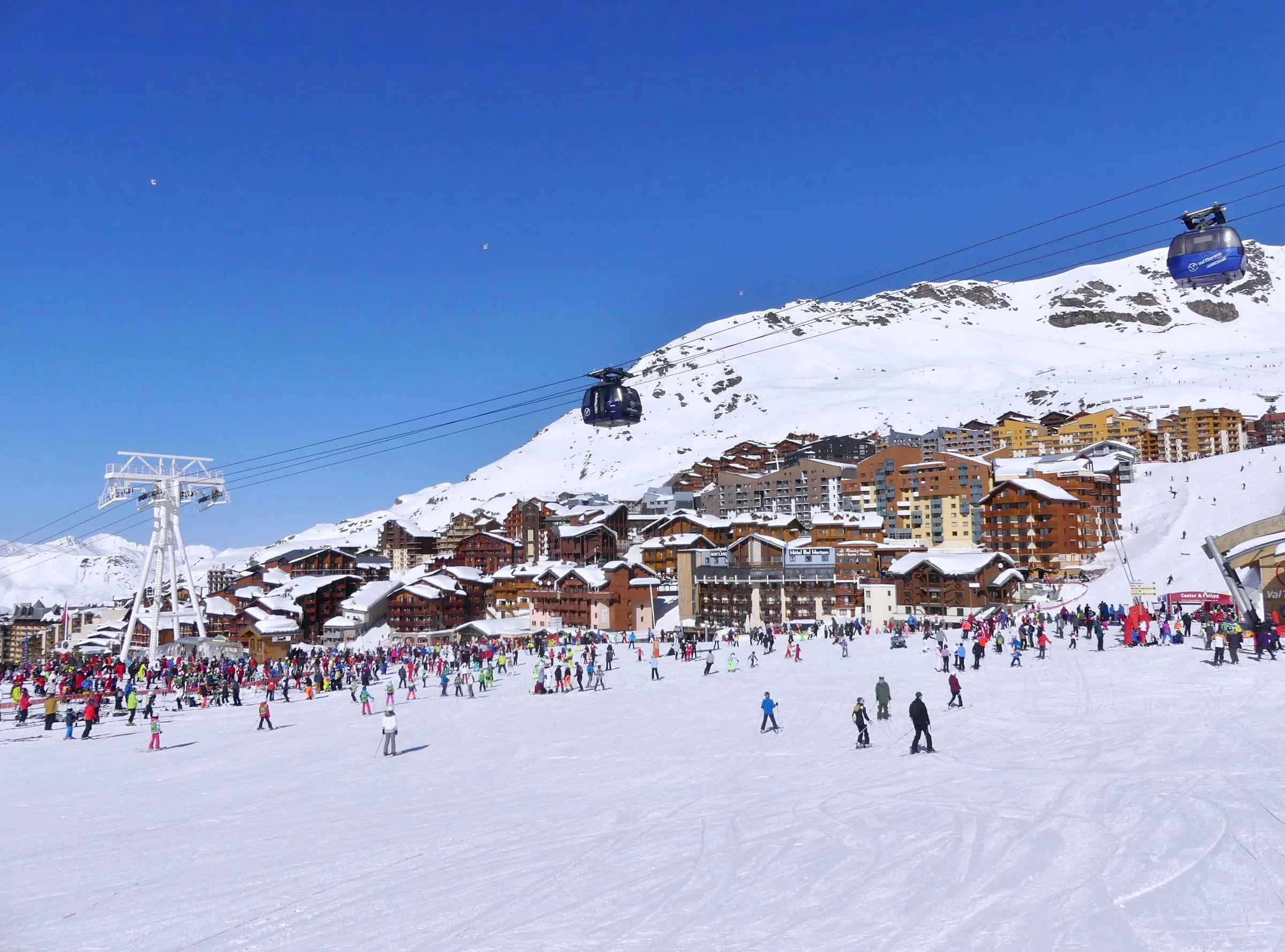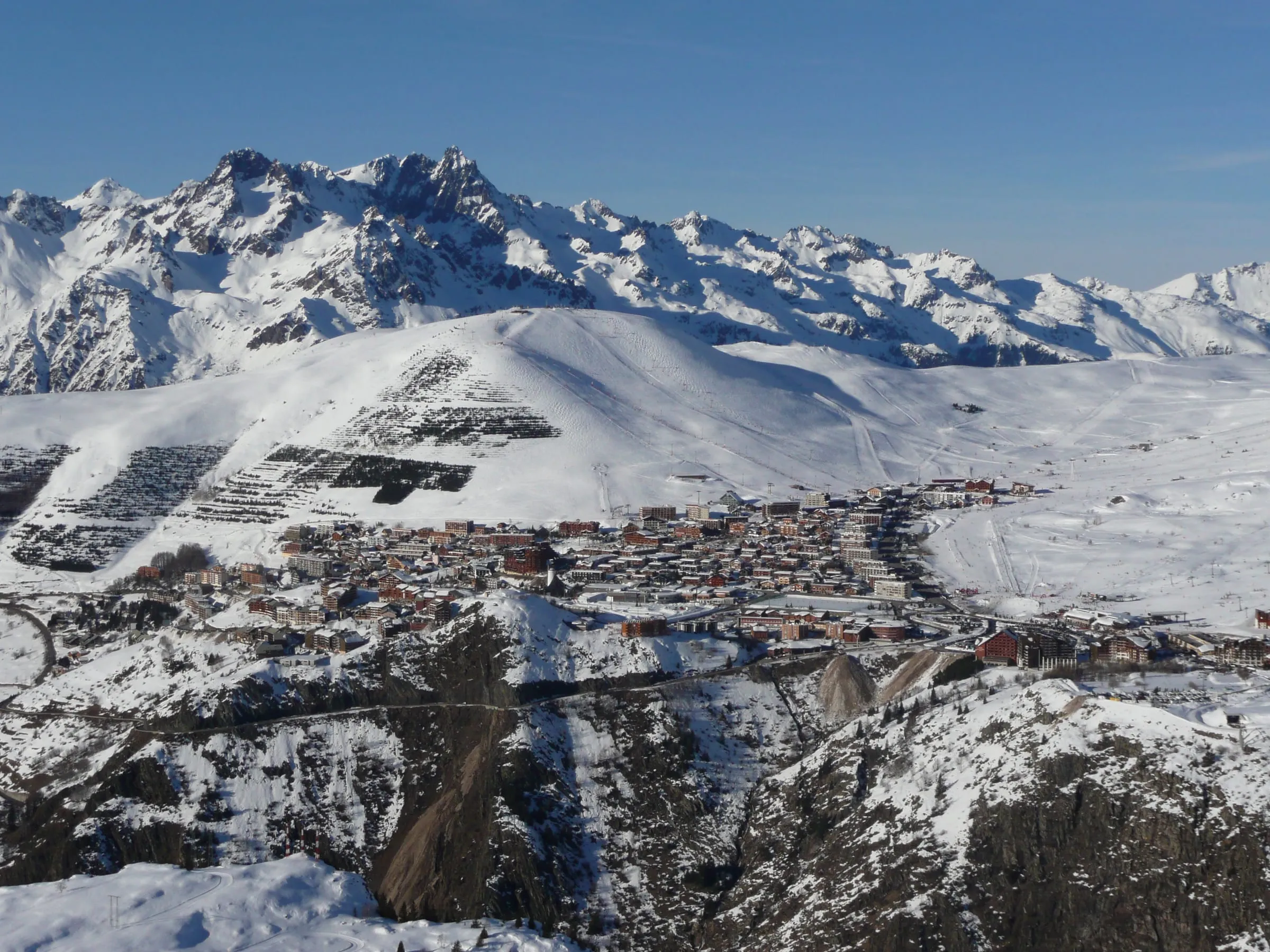
At about 2,300 m, Val Thorens is the highest ski resort in Europe. That one fact explains most of its appeal: when lower resorts are struggling for snow, Val Thorens usually isn’t. It sits at the head of the Belleville valley in Savoie, at the top end of Les 3 Vallées, the 600 km linked area it shares with Les Menuires, Méribel and Courchevel.
Its own ski area, together with neighbouring Orelle, has 150 km of pistes and about 30 lifts, and 99% of it is above 2,000 m. It’s usually the first resort in Les 3 Vallées to open, in November, and it stays open into May, which makes it one of the first places to look when you’re planning a trip at short notice.
Val Thorens ski area: 150 km above 2,000 m
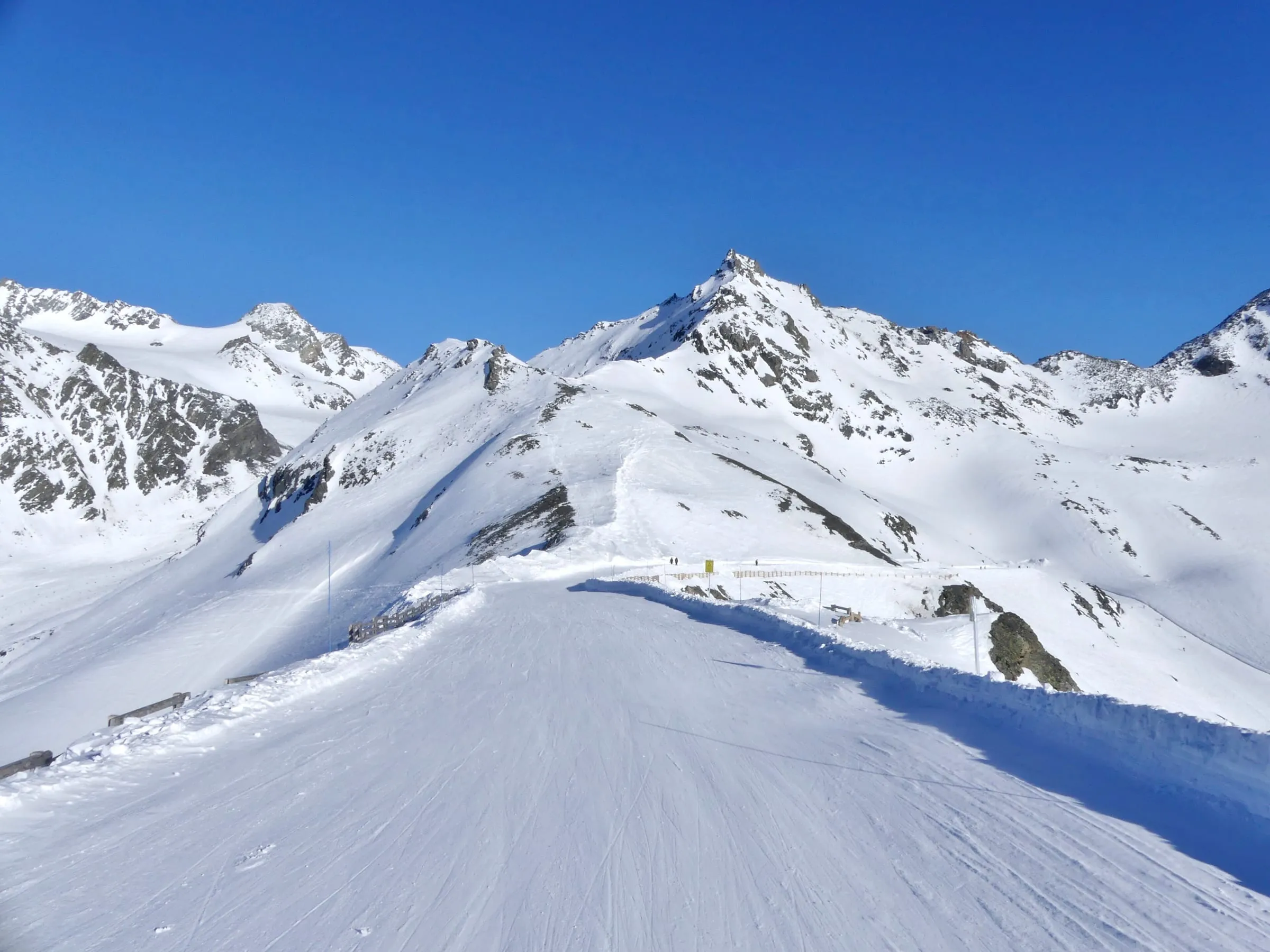
Val Thorens sits in a high, treeless bowl, ringed by peaks and glaciers. Lifts fan out in every direction from the village, so you can ski straight out of the door and back again in the afternoon. More than half of the runs are green or blue.
From the village, the lifts link to Les Menuires and the rest of the Belleville valley, to Méribel over the Col de la Chambre, and over the Col du Bouchet to Orelle, which you can also reach from the Maurienne valley on the other side. With a 3 Vallées pass, you can carry on to Courchevel.
Skiing in Val Thorens for beginners
First-timers are well looked after. Three carpet lifts by the village, Campagnols, Musaraigne and Castor & Pollux, are free, and the VT Fun slope is set aside for beginners. Once you’re ready to go higher, the Beginners Pass costs half the public rate and covers green and blue runs from five lifts, including the Caron gondola. Ask for the free beginners’ piste map at the ticket office.
Skiing in Val Thorens for intermediates
This is the resort’s sweet spot. Long, wide blues and reds come back to the village from every side, and the open terrain is easy to read on a clear day. The links to Les Menuires, Méribel and Orelle turn a day into a proper tour, and with a 3 Vallées pass you can reach Courchevel too.
Skiing in Val Thorens for experts
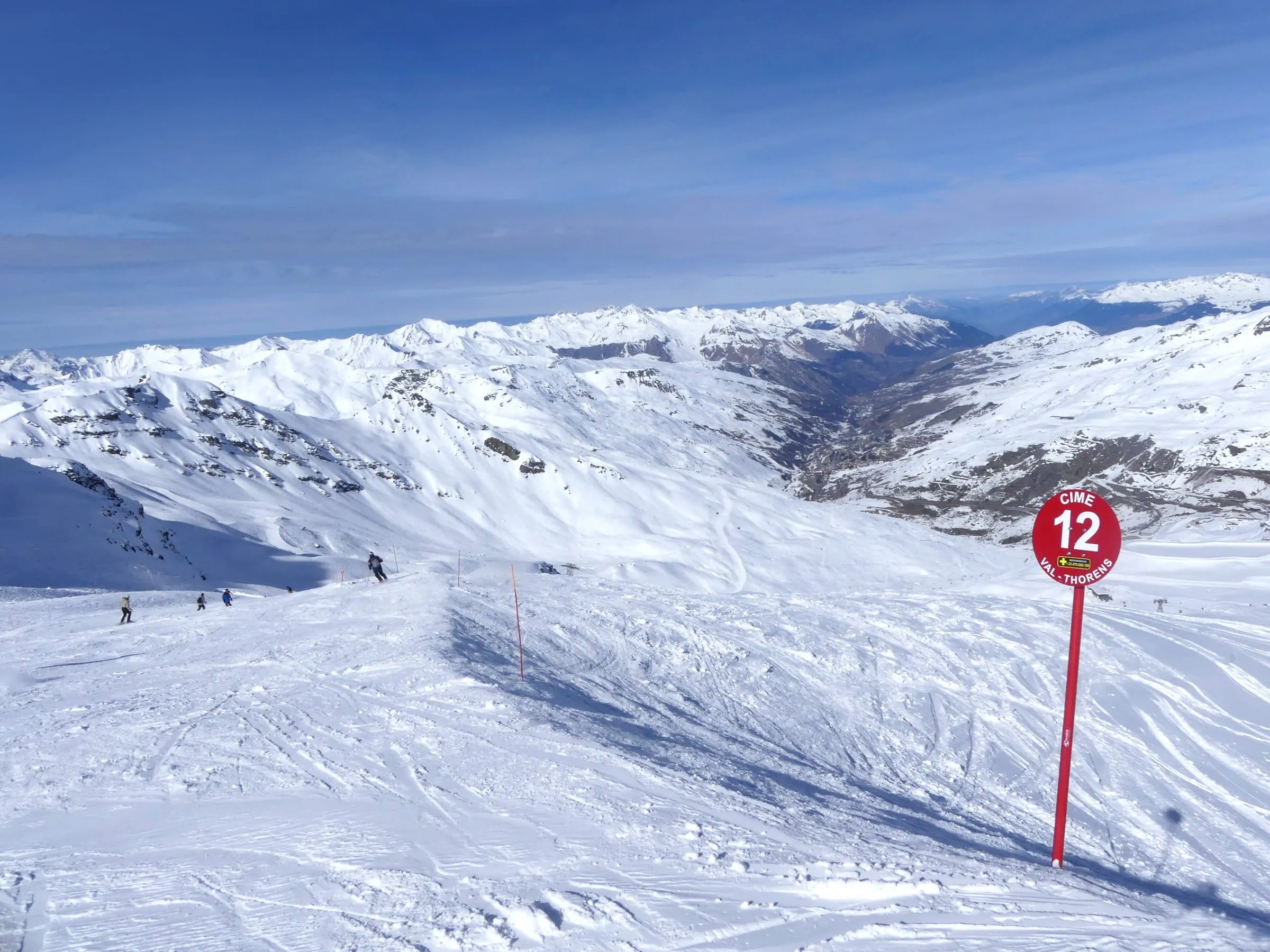
Strong skiers head for the Cime Caron and the steeper runs off the top, plus the high terrain towards Orelle and the glaciers. There’s a lot of off-piste when conditions allow, but it’s high, glaciated and exposed in places, so go with a guide. The resort also runs guided ski-touring outings and supervised off-piste sessions.
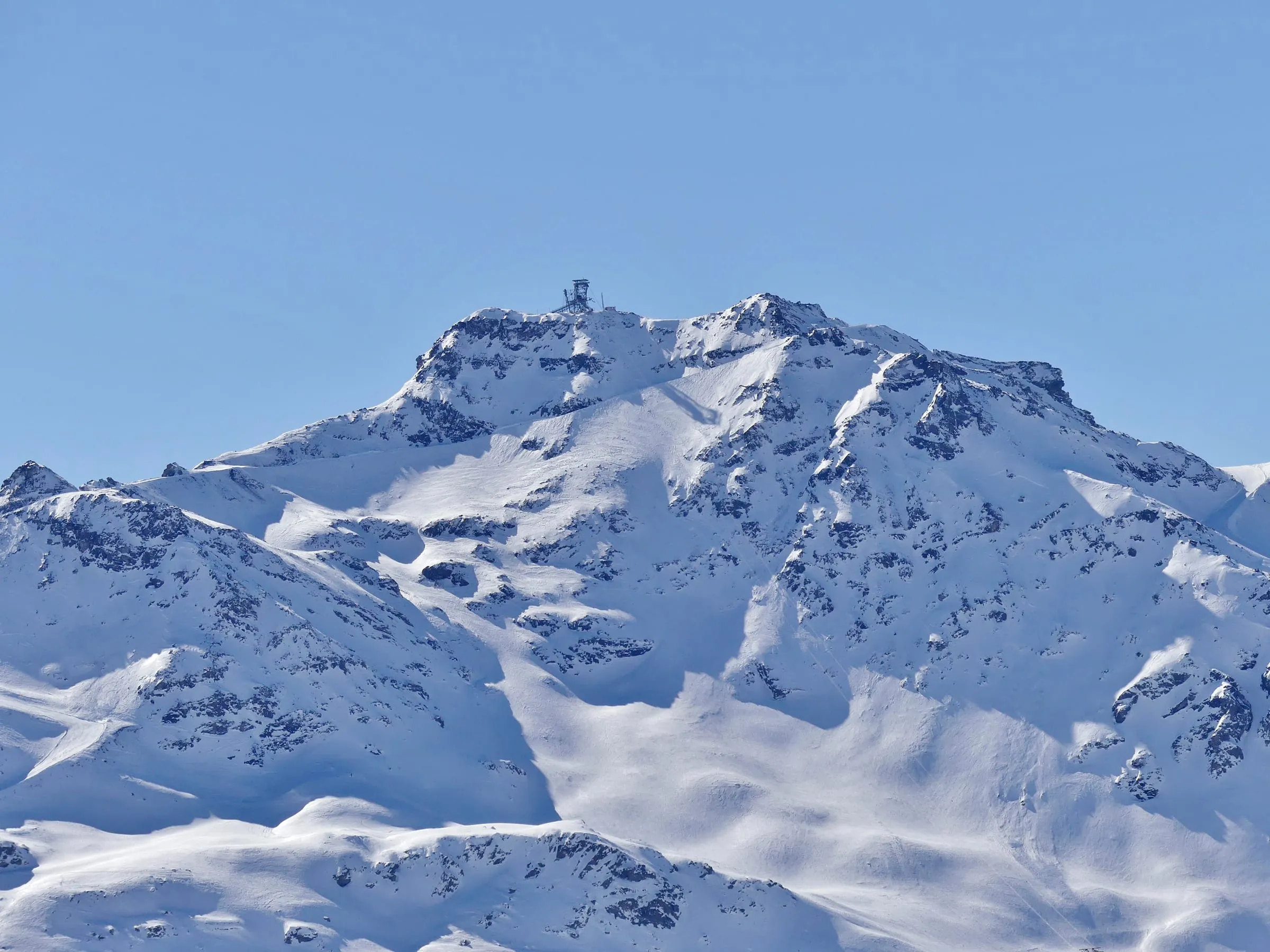
The Cime Caron and Orelle: Val Thorens’ high points
The Caron cable car climbs to about 3,200 m at the Cime Caron. Step out at the top and there’s a 360-degree viewpoint across French, Swiss and Italian peaks, Mont Blanc included on a clear day. The classic way down is the Combe de Caron, a 2 km black run. The red Cime run is the gentler option back towards the village.
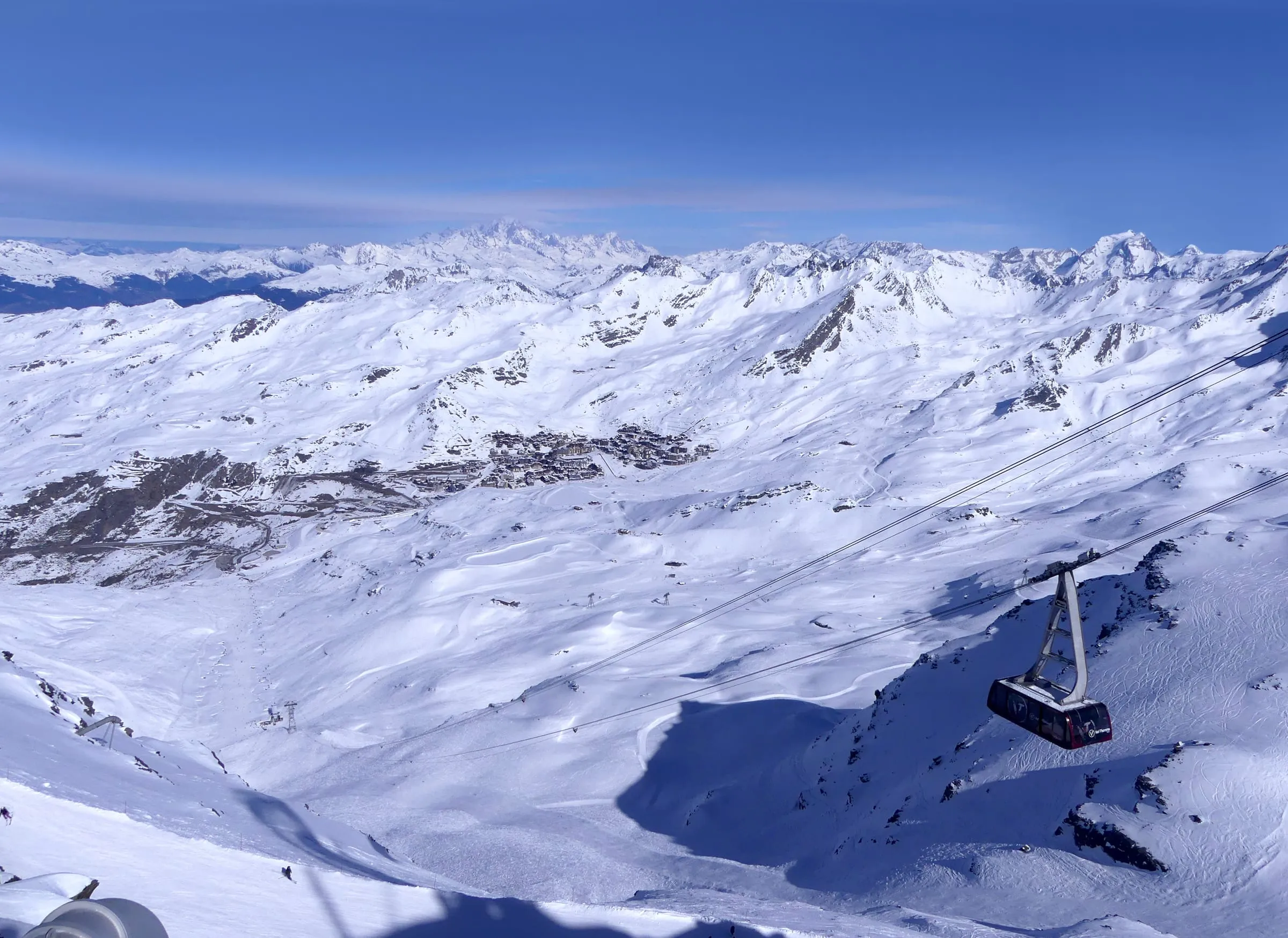
Over the Col du Bouchet, the Orelle sector reaches the highest skiable point in Les 3 Vallées, the Pointe du Bouchet at 3,230 m. It’s high, quiet and usually has good snow. The catch: the link to Orelle is exposed, and it’s sometimes suspended in bad weather, so don’t plan a whole day there when the wind is up.
Snow in Val Thorens and the 2026/27 season
For 2026/27, the Val Thorens-Orelle ski area is scheduled to open from 21 November 2026 to 2 May 2027, subject to snow. The season kicks off with La Grande Première on 21 and 22 November. The links to the rest of Les 3 Vallées run from 5 December 2026 to 18 April 2027, so at either end of the season you’ll mostly be skiing Val Thorens and Orelle.
The altitude is the whole point. The resort sells itself on snow from November to May, and in a warm or thin winter it’s often the best-covered resort in the area. The flip side: it can be very cold in December and January, and with no trees, a stormy day means flat light, wind and little shelter. On days like that, the lower, wooded slopes of Méribel or Courchevel are a better plan if you have a 3 Vallées pass.
Is Val Thorens good for a last-minute ski trip?
Yes, more than almost anywhere in the Alps. Three things make it a safe short-notice pick:
- Snow reliability. Nearly all of the ski area is above 2,000 m, so a late-season week or an early-December trip is far less of a gamble than in a lower resort.
- A long season, from late November to early May, starting before the rest of Les 3 Vallées.
- Easy to reach. Lyon, Geneva, Chambéry and Grenoble airports are all under 2.5 hours away, and Moûtiers station is about 45 minutes by road.
Before you book, check the weather forecast as well as the snow. In a week of storms, Val Thorens can feel bleak, and the lifts to Orelle and the high links may be closed. Then find a place to stay in Val Thorens.
Val Thorens lift passes
You can buy a Val Thorens pass, which covers the local area, or a 3 Vallées pass for all 600 km. Passes are sold online, with free delivery or collection, and at the ticket offices. A few things worth knowing:
- Children under 5 ski free. Bring a recent colour photo and proof of age, such as a passport, to collect their pass.
- An extra day free: buy a pass for 5 consecutive days or more and you get an extra day included.
- FamilyFlex is for groups of at least 3 people, with one or two adults and up to six children, on passes of 6 to 21 days. Everyone pays the child rate.
- Beginners can use three carpet lifts free, or buy the half-price Beginners Pass.
Après-ski and things to do in Val Thorens
Val Thorens has some of the busiest après-ski in the Alps. La Folie Douce Val Thorens, on the slopes, opens in November and is the best-known spot, with music and dancing from the afternoon. In the village there are party bars, pubs, wine bars and a nightclub scene that keeps going late, which is great if you want it and worth knowing about if you don’t.
Off the slopes, the resort lists:
- Cosmojet, a 6 km sledge run that the resort calls the longest in France, from age 5 with an adult.
- La Bee, a double zip line over the slopes.
- Moon Xperience snow tubing, Mountain Kart Xperience, snowmobiles, dog sledding and snowshoeing.
- Le Board, the sports centre, with an 18 m pool, a hydro-play pool and paddling pool, saunas, a hammam and jacuzzis.
- An ice rink on Place Péclet, a cinema and bowling.
Who Val Thorens suits, and who it doesn’t
- Great for: early- and late-season trips, intermediates who want mileage, groups who want lively après-ski, beginners (free carpet lifts and a cheap beginner pass), and anyone booking at short notice who needs snow.
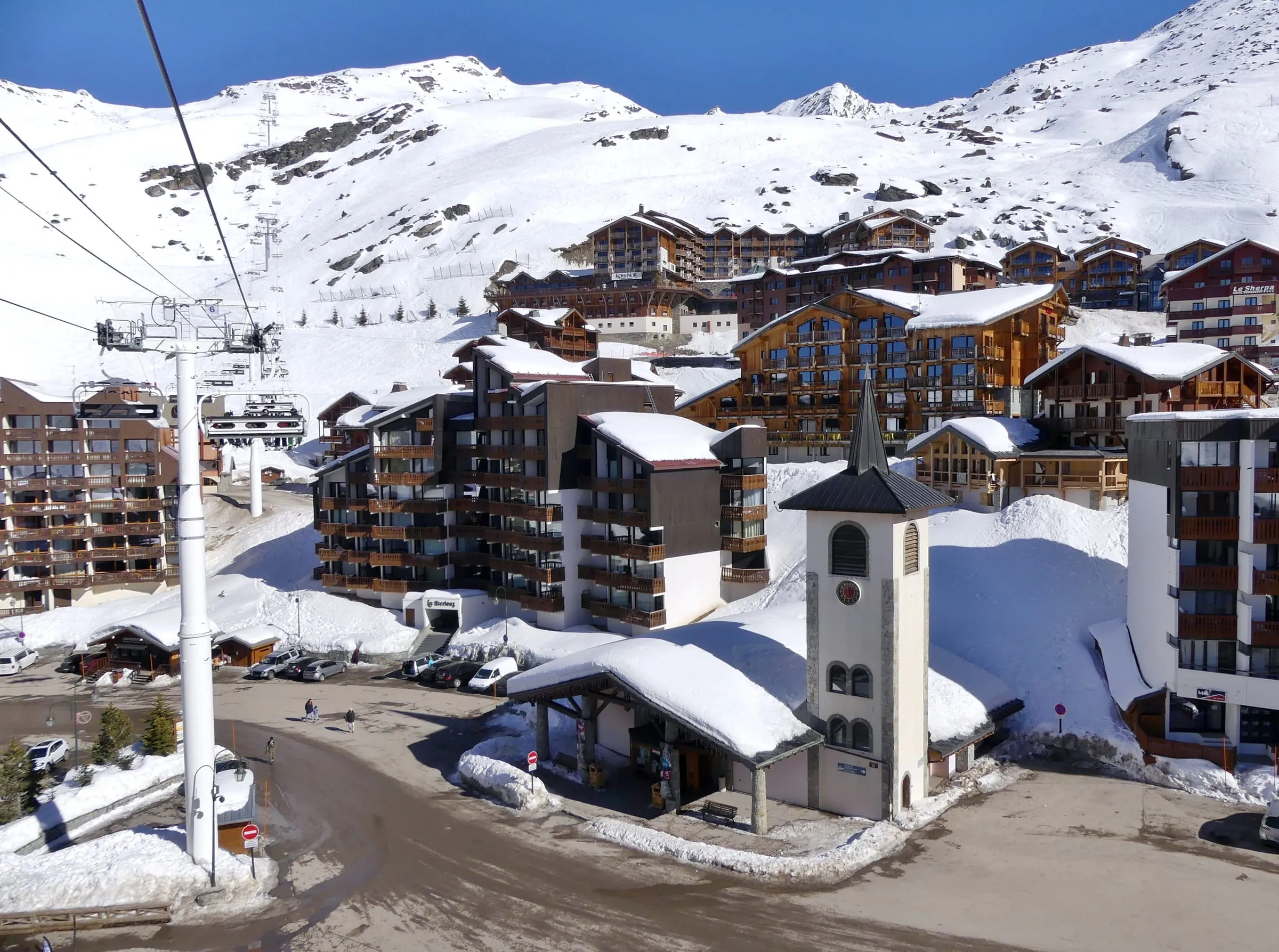
- Think twice if: you want tree-lined runs for bad-weather days, a traditional alpine village (Val Thorens is purpose-built), or a quiet evening scene in peak season. Families with very young children should weigh up the cold and the altitude.
Skiing with children? Read our guide to Val Thorens with kids.
How to get to Val Thorens
Driving to Val Thorens
From Chambéry, take the motorway towards Albertville, then the dual carriageway up the Tarentaise valley to exit 41 for Moûtiers and the Belleville valley. From there, the D117 climbs about 37 km to the resort. Your sat nav may suggest the D96 from Moûtiers: ignore it. The resort strongly advises against that narrow road, which is often closed.
From 1 November to 31 March, Savoie’s mountain rules apply: carry chains or snow socks, or fit winter tyres. The resort recommends having them all season. Cars stay in the resort’s car parks, so book your parking before you go.
By train and bus
Take the train to Moûtiers-Salins-Brides-les-Bains, about 40 km below the resort. TGVs from Paris take under 5 hours, and there are direct trains from Lyon and Grenoble. From the station, take a coach, a bookable shuttle or a taxi: allow about 45 minutes.
Nearest airports
Lyon Saint-Exupéry, Geneva, Chambéry and Grenoble are all under 2.5 hours from the resort. Transfers from all four can be booked through the resort’s booking site with a partner coach company.