France
 Austria
 Italy
 Switzerland
 English
 Deutsch
 Nederlands
 Español
 Čeština
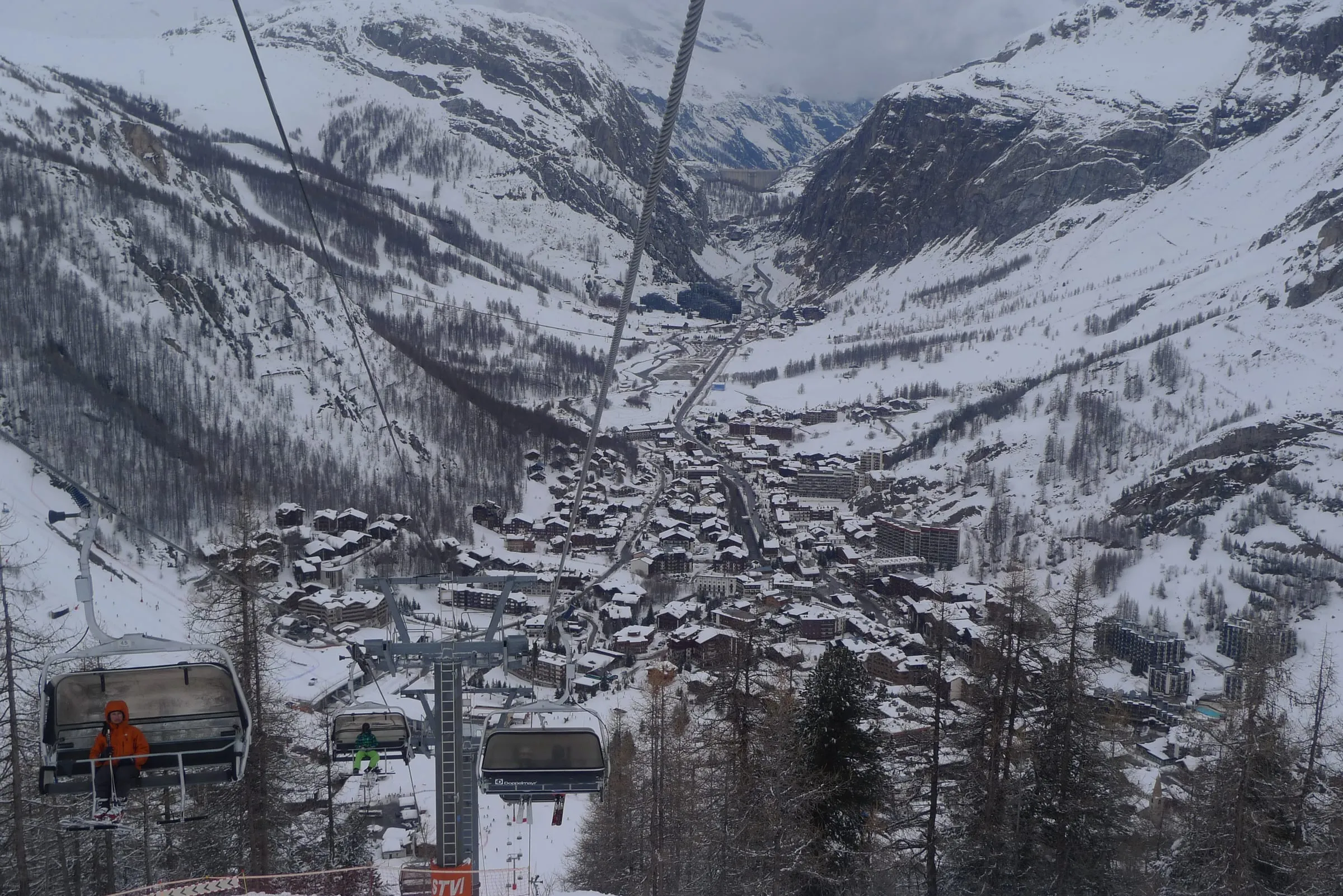
Tignes and Val d’Isère share one ski area, so this isn’t really a choice of slopes. The Tignes – Val d’Isère area has about 300 km of marked pistes, 160 runs and 71 lifts, rising to 3,456 m on the Grande Motte glacier, and one pass covers the lot. What you’re choosing is where you sleep: how high, how pretty, how lively, and how far from the lifts you most want to ski.
The short answer: choose Tignes for the most reliable snow, the easiest start for beginners and better value. Choose Val d’Isère for a real village, the famous après-ski and the classic steep runs on your doorstep. This guide compares the two on each point, using the facts on our resort pages for 2026/27, and picks hotels in each. For the rest of the region, see our best ski resorts in France.
Tignes vs Val d’Isère at a glance
| Tignes | Val d’Isère | |
|---|---|---|
| Village altitude | About 2,100 m (Les Brévières 1,550 m) | About 1,850 m |
| Top of the lifts | 3,456 m, shared | 3,456 m, shared |
| Season 2026/27 | 21 Nov 2026 to 2 May 2027 | 28 Nov 2026 to 2 May 2027 |
| Feel | Five villages, mostly purpose-built | One real village along the valley |
| Free beginner lifts | Nine | Three |
| Lift passes | Tignes – Val d’Isère, 300 km | The same, or a cheaper Val d’Isère pass for its own 150 km |
| Children under 8 | Ski free | Ski free |
| Resort nursery | No central nursery | Chalet des Aiglons, from about 18 months |
| Après-ski | Lively in Val Claret, quiet elsewhere | La Folie Douce, Cocorico, late bars |
| Best for | Snow, beginners, value | Atmosphere, experts, nights out |
Which is more snow-sure, Tignes or Val d’Isère?
Tignes, by a small margin. Its main villages sit above 2,000 m, the resort says 93% of its pistes are above 2,000 m, and it reports around 650 cm of snow in an average winter, backed by 400 snow guns. It also opens first: from 21 November 2026, a week before Val d’Isère.
Val d’Isère isn’t far behind. The village is at about 1,850 m, the resort says most of its slopes face north, which keeps the snow in better shape, and more than 65 km of pistes have snowmaking. Its lifts run from 28 November 2026 to 2 May 2027, the same closing day as Tignes, which makes either one a strong choice for late April when lower resorts have shut.
The weak point is the same for both. Above the tree line there’s little shelter, and in a storm or flat light the open bowls are hard work. On those days, Tignes skiers head down to the trees around Tignes 1800 and Les Brévières, and Val d’Isère skiers stay low around La Daille and the village. For other high options, see our most snow-sure ski resorts in Europe.
Village and atmosphere: purpose-built Tignes or traditional Val d’Isère?
This is the biggest difference between them. Val d’Isère is a real village stretched along the valley floor, with its own centre, the hamlet of Le Fornet further up the valley and La Daille at the downhill end. A free shuttle, the Train Rouge, runs between La Daille and the centre.
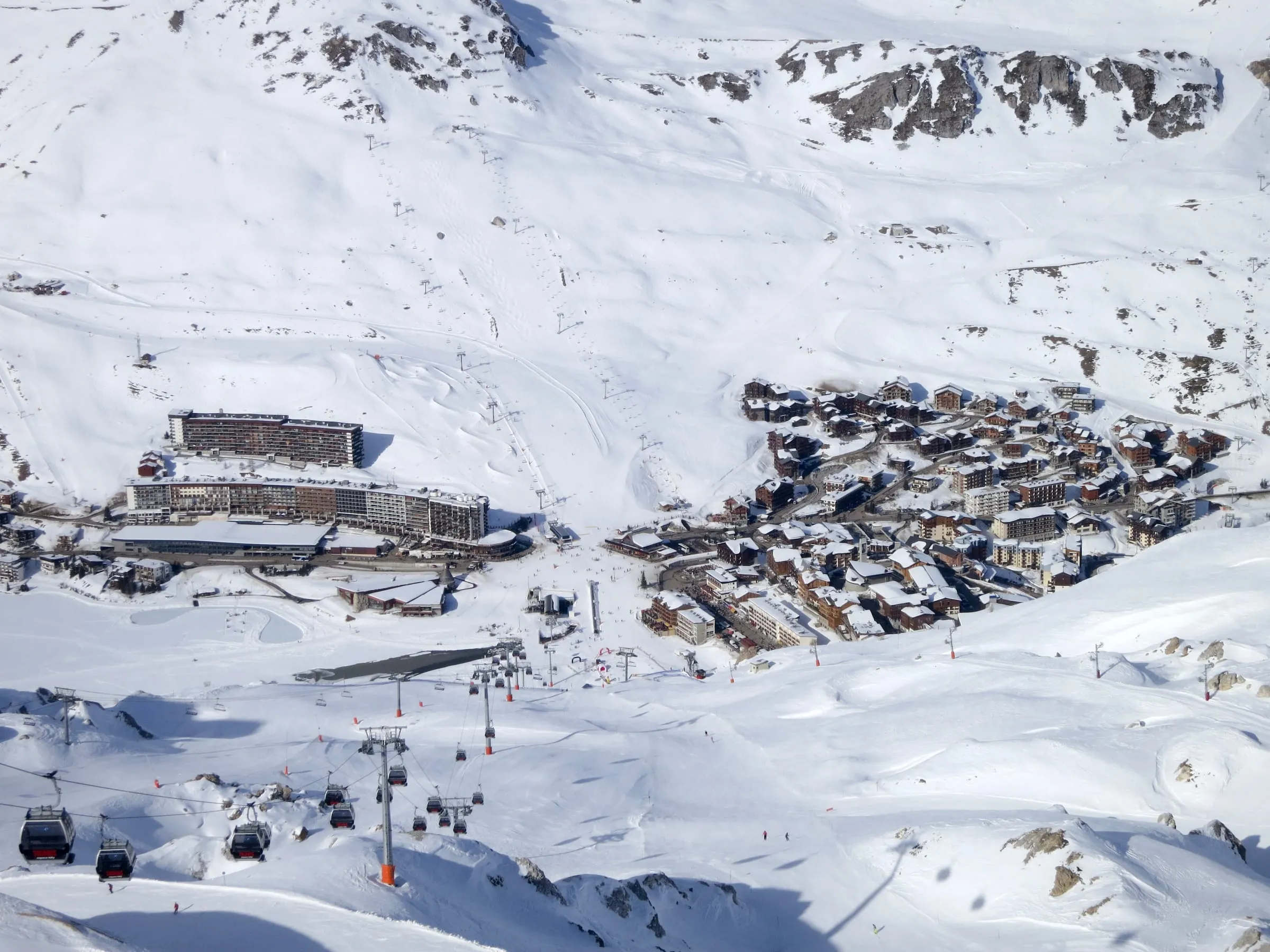
Tignes is five villages spread along the valley at different heights:
- Tignes le Lac (2,100 m), the main centre by the lake, with the most shops.
- Val Claret, at the head of the valley by the glacier funicular, and the liveliest at night.
- Le Lavachet, quieter, between the two.
- Tignes 1800, a newer village of stone and wood chalets with a gondola up to the slopes.
- Les Brévières (1,550 m), the traditional village at the foot of the dam, with tree-lined runs home.
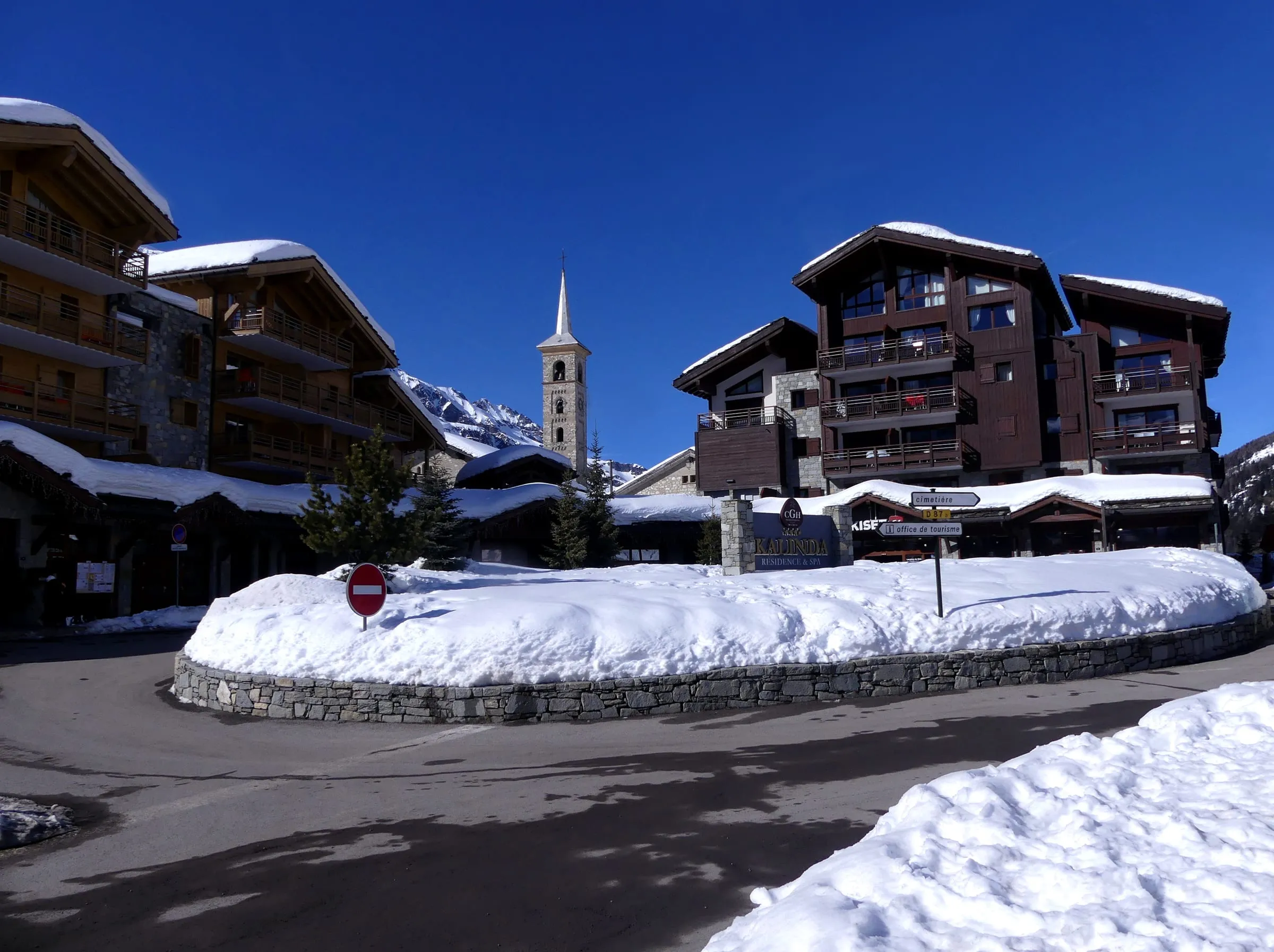
Le Lac and Val Claret are largely purpose-built. If a pretty chalet village matters to you, Val d’Isère wins easily, or choose Les Brévières or Tignes 1800 within Tignes. If you care more about skiing from the door at altitude, Tignes le Lac and Val Claret are hard to beat, and Le Levanna opens straight onto the pistes. Our where to stay in Tignes and where to stay in Val d’Isère pages compare each area in more detail.
Is Tignes or Val d’Isère better for beginners?
Tignes. Its free beginner areas are served by nine free lifts: four carpets, two drag lifts and three chairlifts, so first-timers don’t need a pass at all. Val d’Isère has three free lifts: the Savonnette ski tow and the Village chairlift in the centre, and the Lanches ski tow at La Daille. Its next step is the marked Easy skiing zones at the top of Solaise and Bellevarde.
The catch is the same in both. Across the shared area only 23 of the 160 runs are green, so most improvers move straight on to blues. Book lessons for the first week, whichever you choose. If you’re still deciding where to learn, our best ski resorts for beginners in Europe has gentler options.
Which is better for intermediates and experts?
The skiing is shared, so the question is which runs you want on your doorstep. There are 67 blue, 41 red and 29 black runs across the area, and you can cross between the resorts and back in a day.
- From Val d’Isère, the Bellevarde sector rises straight above the village and La Daille, reached by the Olympique cable car or the Funival funicular. Solaise is the gentler side. Le Fornet leads to the Pissaillas glacier, with long, high, open runs.
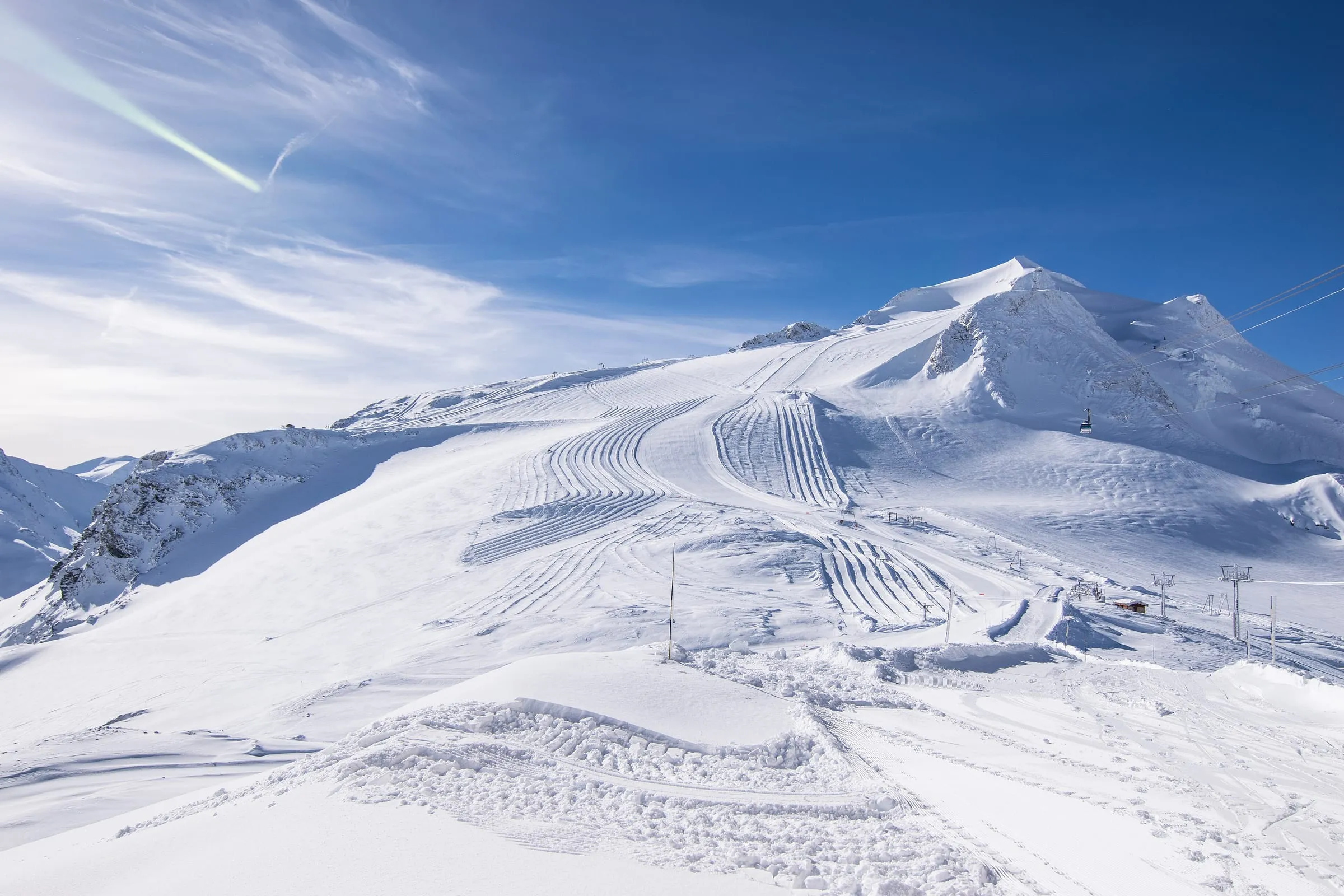
- From Tignes, the Perce-Neige funicular runs underground from Val Claret to 3,032 m, and the Grande Motte cable car continues to 3,456 m. The glacier has blue, red and black runs.
For experts, Val d’Isère has the name. The Face de Bellevarde, which hosted the men’s downhill at the 1992 Albertville Olympics, drops steeply from Bellevarde to the village, with Les Barmes de l’Ours at its foot, and the resort has two marked and secured ski touring zones. Tignes counters with 3,200 hectares of off-piste terrain, the resort says, and three groomed ski touring trails. Both are high, avalanche-prone terrain, so go off-piste with a qualified guide. There’s more in our best ski resorts for experts in Europe.
Is Tignes or Val d’Isère better for families?
Both are generous on passes. Children under 8 ski free in both, the child rate runs up to and including age 18, and skiers aged 75 and over ski free too. Families buying at least four passes together, with two adults and two children aged 8 to 18, get money off in both resorts; Tignes puts the saving at €300.
The differences are in childcare and terrain:
- Tignes has the free beginner lifts and the snow, but no central resort nursery. The tourist office keeps a list of childminders, and the club hotels have their own: mmv Les Brévières takes children from 18 months.
- Val d’Isère has the Chalet des Aiglons nursery for children from about 18 months to 3 years, with a leisure centre for ages 3 to 11 in winter, and the Jardin des Neiges, a fenced snow area for 3 and 4-year-olds run by ESF du Centre.
Both resorts’ ski schools teach children from age 3. Families with toddlers will find Val d’Isère easier to organise; families with beginners aged 5 and up will find Tignes cheaper and gentler to start. Read our guides to Tignes with kids and Val d’Isère with kids.
Which has better après-ski, Tignes or Val d’Isère?
Val d’Isère. La Folie Douce, at about 2,400 m above La Daille, is one of the best-known après spots in the Alps, with DJs and a cabaret-style show, and you can ski down afterwards on a green, blue or red run. In the village, Cocorico is an open-air bar at the foot of the slopes with dancing in ski boots and live music, and bars and nightclubs stay open late.
In Tignes, it depends on the village. Val Claret is the party end, with bars and clubs open until late. Le Lac is busier by day, and Le Lavachet, Tignes 1800 and Les Brévières are quiet. If you want quiet evenings, that’s a point for Tignes. Our best après-ski resorts in Europe has more.
Getting to Tignes and Val d’Isère
Both are reached the same way: the train or the road to Bourg-Saint-Maurice, then 30 km up the D902. Val d’Isère is further up the same road, past the turn for Tignes.
- By train, the Eurostar Snow runs from London to Bourg-Saint-Maurice in winter, with a change of platform at Lille. From the station, the S83 bus stops at all the Tignes villages, and Altibus buses reach Val d’Isère in about 40 minutes.
- By air, Tignes’s tourist office says Chambéry, Grenoble, Geneva and Lyon are all less than two and a half hours away. Val d’Isère’s puts Chambéry at about two hours and Geneva and Lyon at about three. Airport buses run to both in season.
- By car, Savoie’s mountain rules apply from 1 November to 31 March: carry chains or snow socks, or fit four winter tyres. The road up from Bourg-Saint-Maurice is slow on holiday Saturdays, so a Sunday-to-Sunday week helps. The Col de l’Iseran beyond Val d’Isère is closed in winter, so ignore any sat nav route over it.
Where to stay in Tignes: hotels we recommend
Three picks for three kinds of trip: Le Levanna to ski from the door in Tignes le Lac, mmv Les Brévières for a full-board family week, and VoulezVous for five-star comfort close to the slopes.
Where to stay in Val d’Isère: hotels we recommend
Our picks: Les Barmes de l’Ours for luxury on the Olympic run, Club Med for an all-in family week, and Hôtel Avancher for good value near the centre.
For more on the snow in each, see our best ski-in/ski-out hotels in France.
Tignes or Val d’Isère: our verdict
Choose Tignes if you want the safest snow at the start or end of the season, you’re beginners or have young learners, you want quiet evenings or value, or you want the glacier on your doorstep in Val Claret.
Choose Val d’Isère if you want a real village with life in the evenings, you’re strong skiers who want the Face de Bellevarde and Solaise above the hotel, or you have a toddler who needs a nursery.
Either way, you ski the same 300 km. If you’re booking at short notice, check the live lift openings first, then compare what’s free in each for your dates on Booking.com. For more late plans, see our last-minute ski trips guide.