France
 Austria
 Italy
 Switzerland
 English
 Deutsch
 Nederlands
 Español
 Čeština
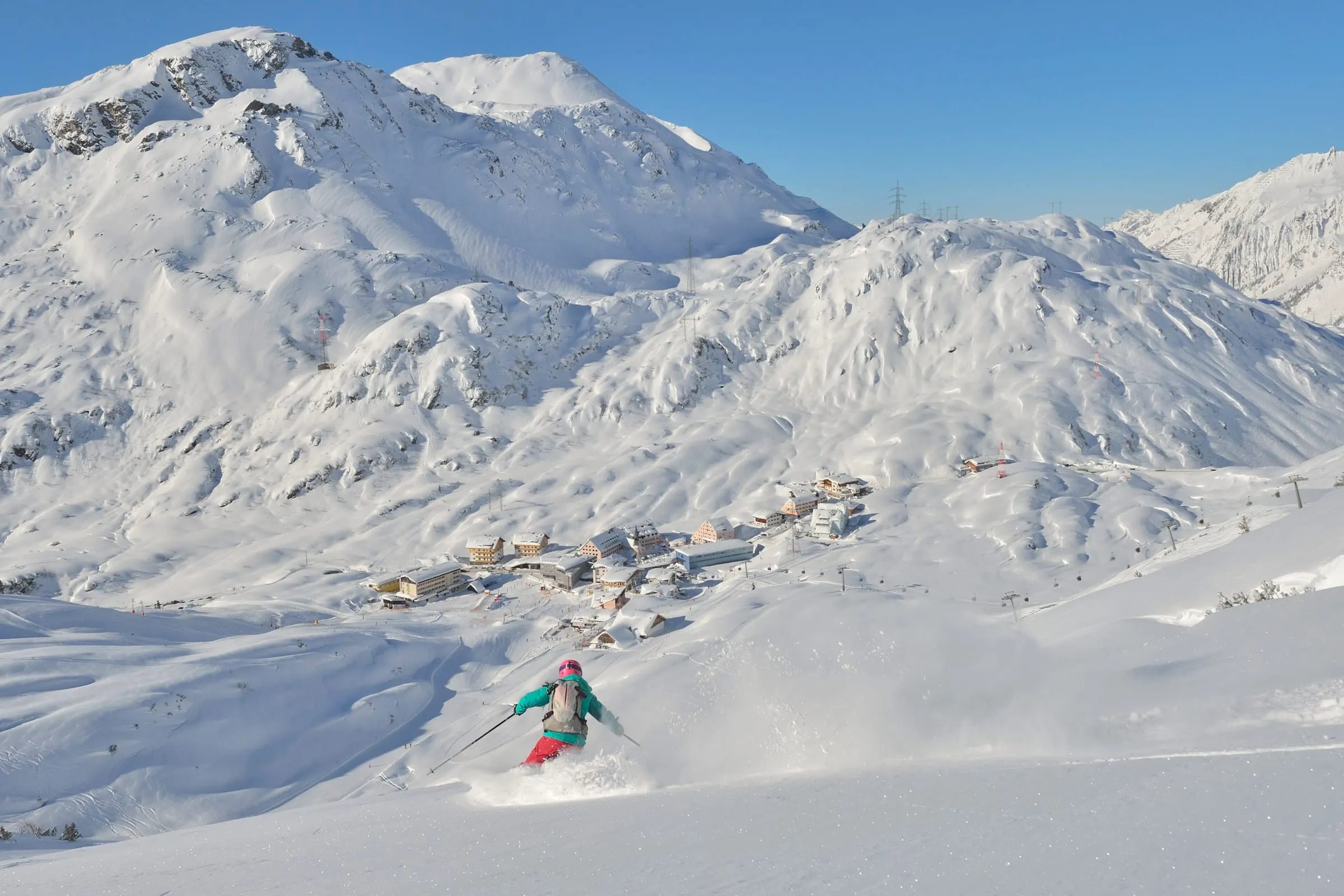
This guide is for strong skiers: people who can ski any piste in control and want steeper, longer and wilder terrain, whether that’s a famous black run, a marked freeride itinerary or a guided day on a glacier. We’ve picked resorts with real steep terrain, a recognised freeride scene and guiding on tap, using the terrain, lift and season facts on each resort’s own guide on this site.
One rule runs through the whole guide: off-piste means a guide and avalanche kit. The terrain that makes these resorts famous is uncontrolled, often glaciated and avalanche-prone.
If you’re booking at short notice, watch the snow and the avalanche bulletin first. The best week for experts is the one just after a big fall followed by settled weather. Then check live availability on Booking.com close to the lift you’ll use most, because on a powder morning the first lift matters.
Best ski resorts in Europe for experts compared
| Resort | Country | Village | Top | Why experts go |
|---|---|---|---|---|
| Chamonix | France | 1,035 m | 3,842 m (Aiguille du Midi) | Vallée Blanche, Grands Montets, high-mountain routes |
| Val d’Isère and Tignes | France | 1,850 m / 2,100 m | 3,456 m | Face de Bellevarde, 29 blacks, 3,200 ha of off-piste in Tignes |
| Verbier | Switzerland | 1,500 m | 3,330 m | Freeride itineraries, Gentianes-Tortin, Bec des Rosses |
| St. Anton and Lech Zürs | Austria | 1,304 m / 1,444 m | 2,811 m | About 200 km of off-piste variants, Valluga, Langer Zug |
| Engelberg | Switzerland | 1,000 m | 3,020 m | The Laub and the Big 5 freeride descents |
| Andermatt | Switzerland | 1,444 m | 2,962 m | The Gemsstock, 16.5 km of freeride runs, deep snow |
| Alagna Valsesia | Italy | 1,200 m | 3,275 m (Punta Indren) | Long glacier descents, couloirs to 55 degrees |
| Courmayeur | Italy | 1,224 m | 3,466 m (Skyway) | Mont Blanc’s Italian side with a guide |
| Zermatt | Switzerland | 1,608 m | 3,883 m | Long descents, guided glacier freeride |
Off-piste safety: why you need a guide and avalanche kit
Every resort in this guide says the same thing, in different words: beyond the markers, you’re on your own. Ski routes and freeride itineraries, such as Verbier’s yellow-marked runs, the Arlberg ski routes or Andermatt’s yellow freeride runs, are avalanche-protected but not groomed or patrolled like pistes. Everything beyond them is uncontrolled high-mountain terrain, with avalanches, crevasses, cliffs and weather to deal with.
- Hire a qualified mountain guide for anything off the marked network. In Chamonix the Compagnie des Guides runs the Vallée Blanche, in Courmayeur the Courmayeur Mountain Guides work from the town, and in Alagna UIAGM guides lead groups of every level. In St. Anton, the Valluga cable car only takes skis if you’re with a guide.
- Carry a transceiver, shovel and probe, and know how to use them. In Italy, all three are compulsory off-piste.
- Practise first. Engelberg has a free avalanche training centre below the Laubersgrat valley station, Andermatt runs an Avalanche Training Center with courses, and Fieberbrunn has transceiver training parks and checkpoints.
- Read the avalanche bulletin every day, and accept that big snowfalls close terrain as well as opening it up.
Best expert ski resort in France: Chamonix and the Vallée Blanche
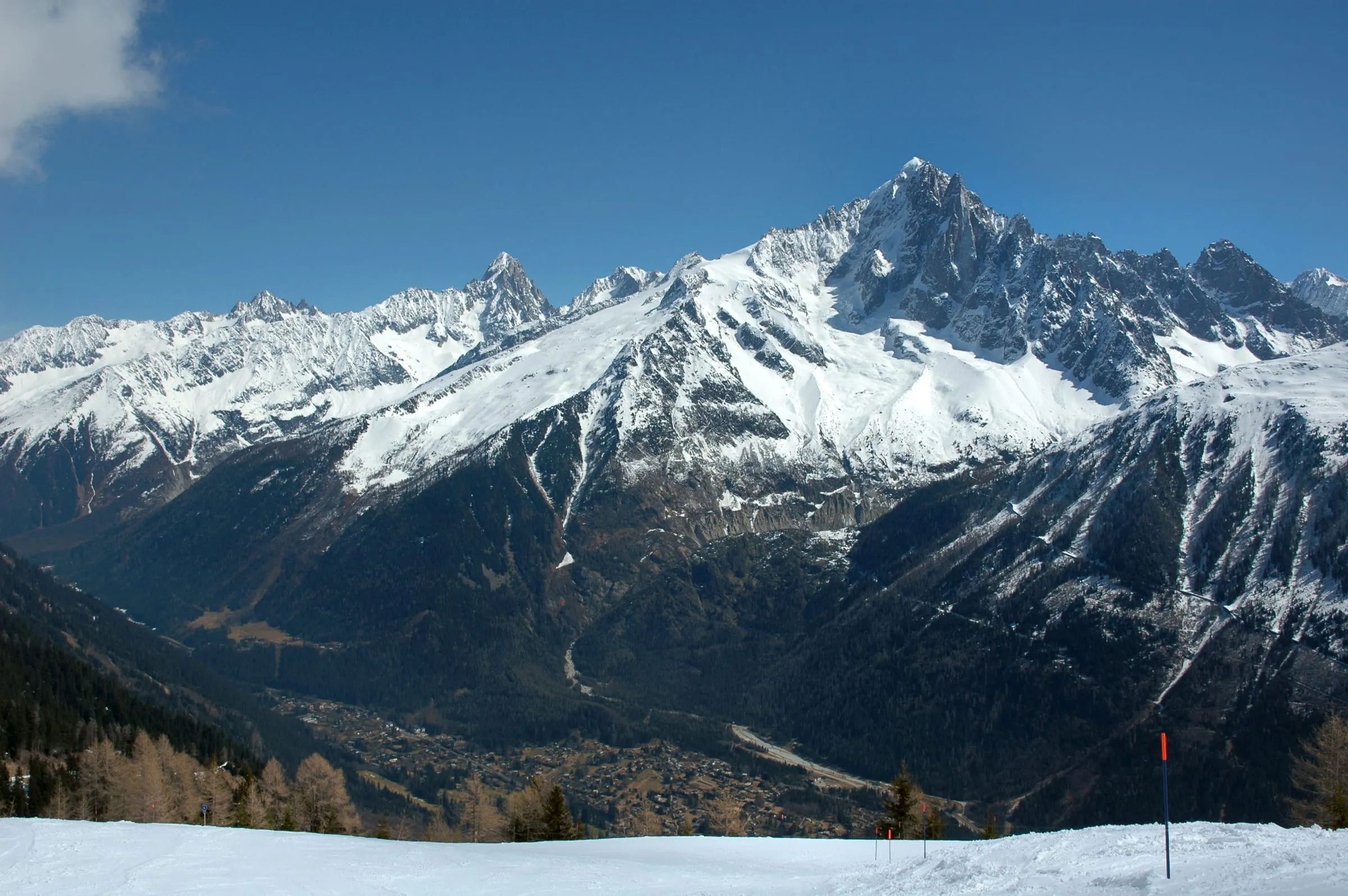
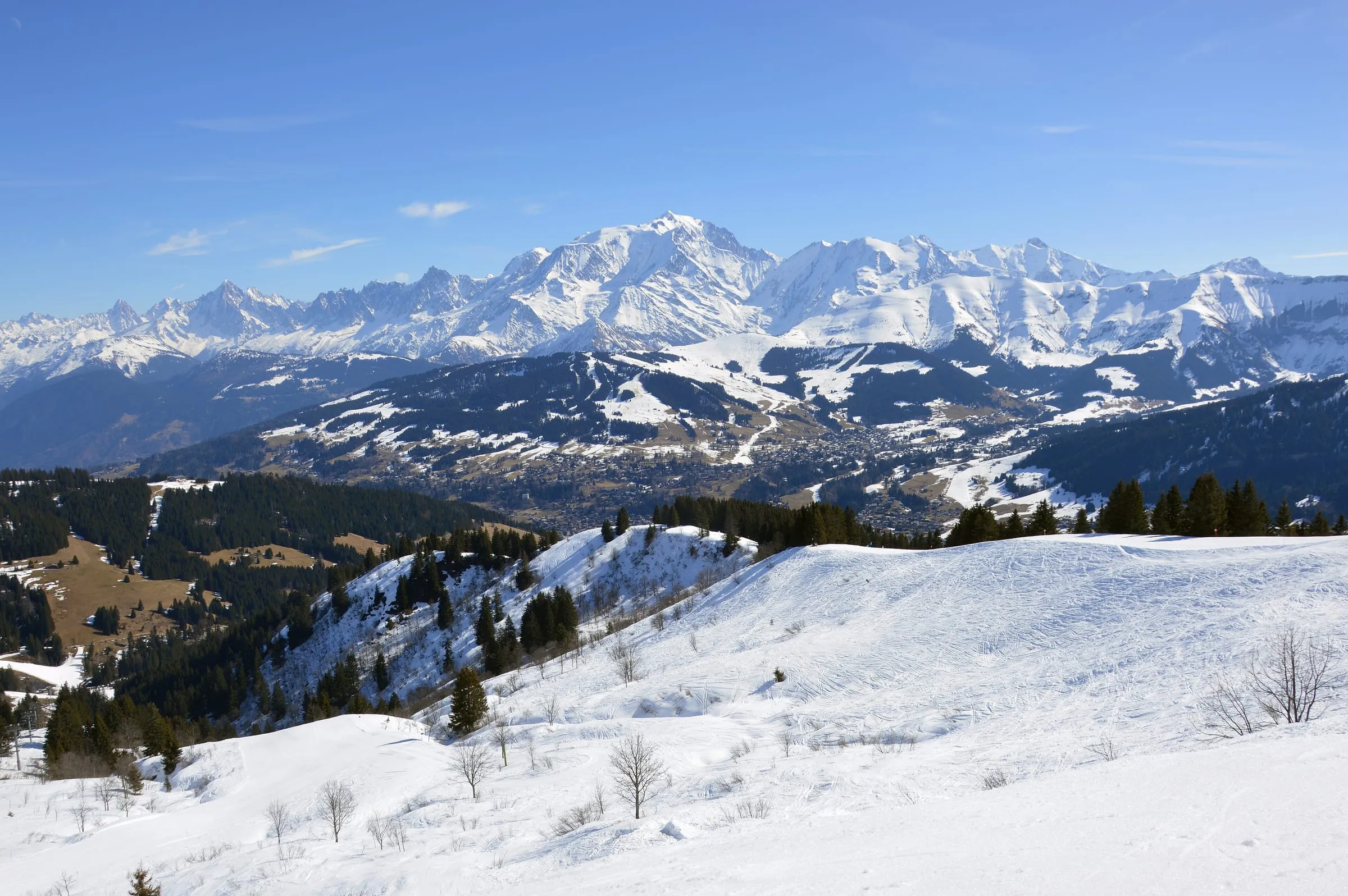
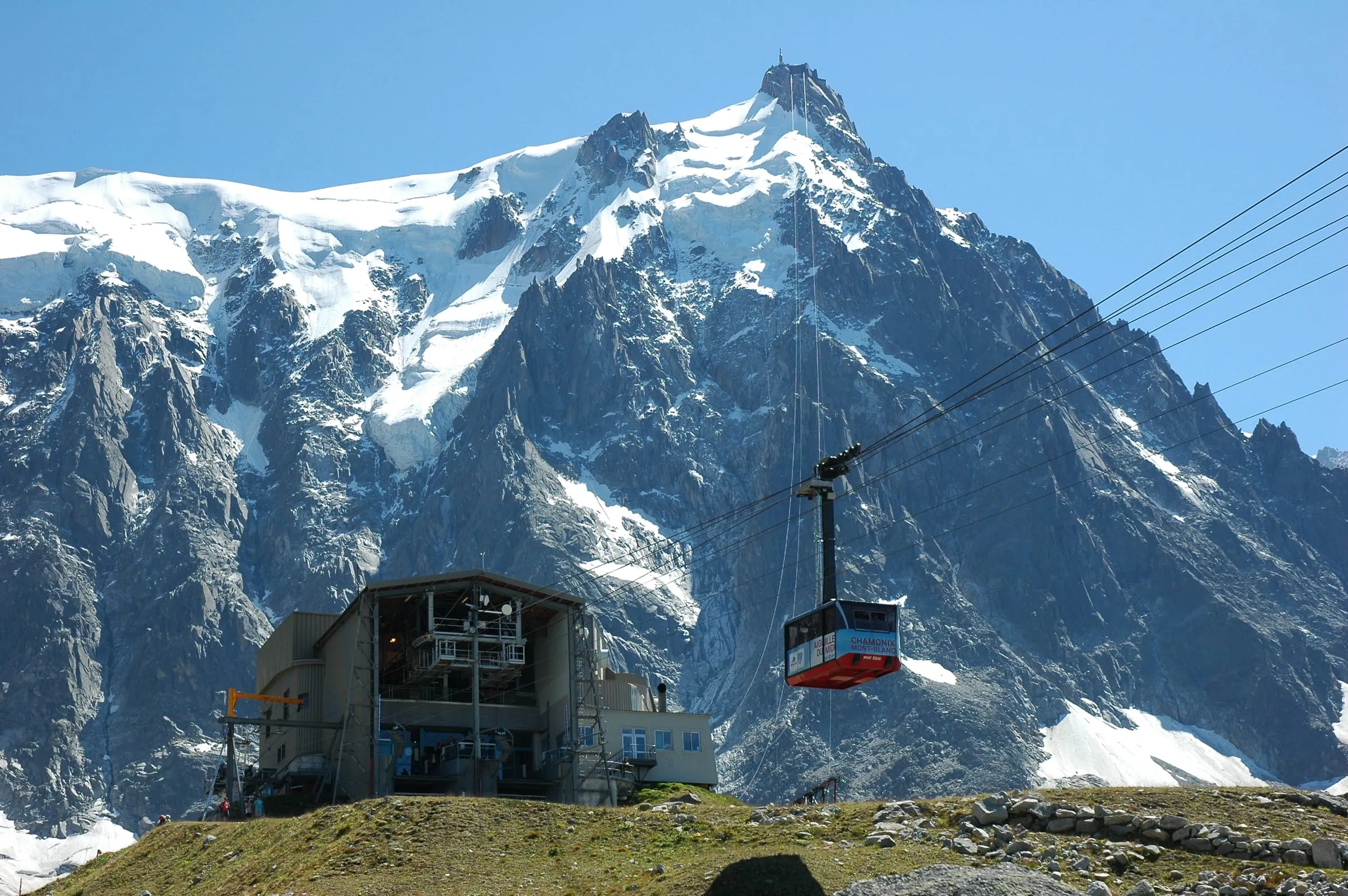
Chamonix is where many expert skiers’ lists begin. It’s a real mountain town at the foot of Mont Blanc, with separate ski areas strung along the valley, and it’s known for steep terrain, big off-piste and the Vallée Blanche. That route starts at the top of the Aiguille du Midi cable car at 3,842 m and runs for more than 20 km, with about 2,000 m of vertical, across the glaciers back towards town. It isn’t a piste: the first part is a roped walk down an exposed ridge. The Compagnie des Guides says you need to ski an ungroomed red run with ease, sets a minimum age of 15 for its group descents, and runs them from late January to early May. The Aiguille du Midi is scheduled to reopen on 19 December 2026.
The Grands Montets, above Argentière, is the steep, north-facing area that made Chamonix’s name, with long, sustained slopes and the valley’s best late-season snow. Know what you’re getting this winter: a new gondola from Argentière to Lognan is planned for December, and the area is scheduled to run from 5 December 2026 to 2 May 2027, but the summit cable car isn’t due until 2027/28, so the famous top runs are still off the lift network.
Chamonix is also quick to reach: Geneva is 88 km away. Compare where to stay in Chamonix, or base yourself right by the Grands Montets.
Most famous black run in France: the Face de Bellevarde in Val d’Isère
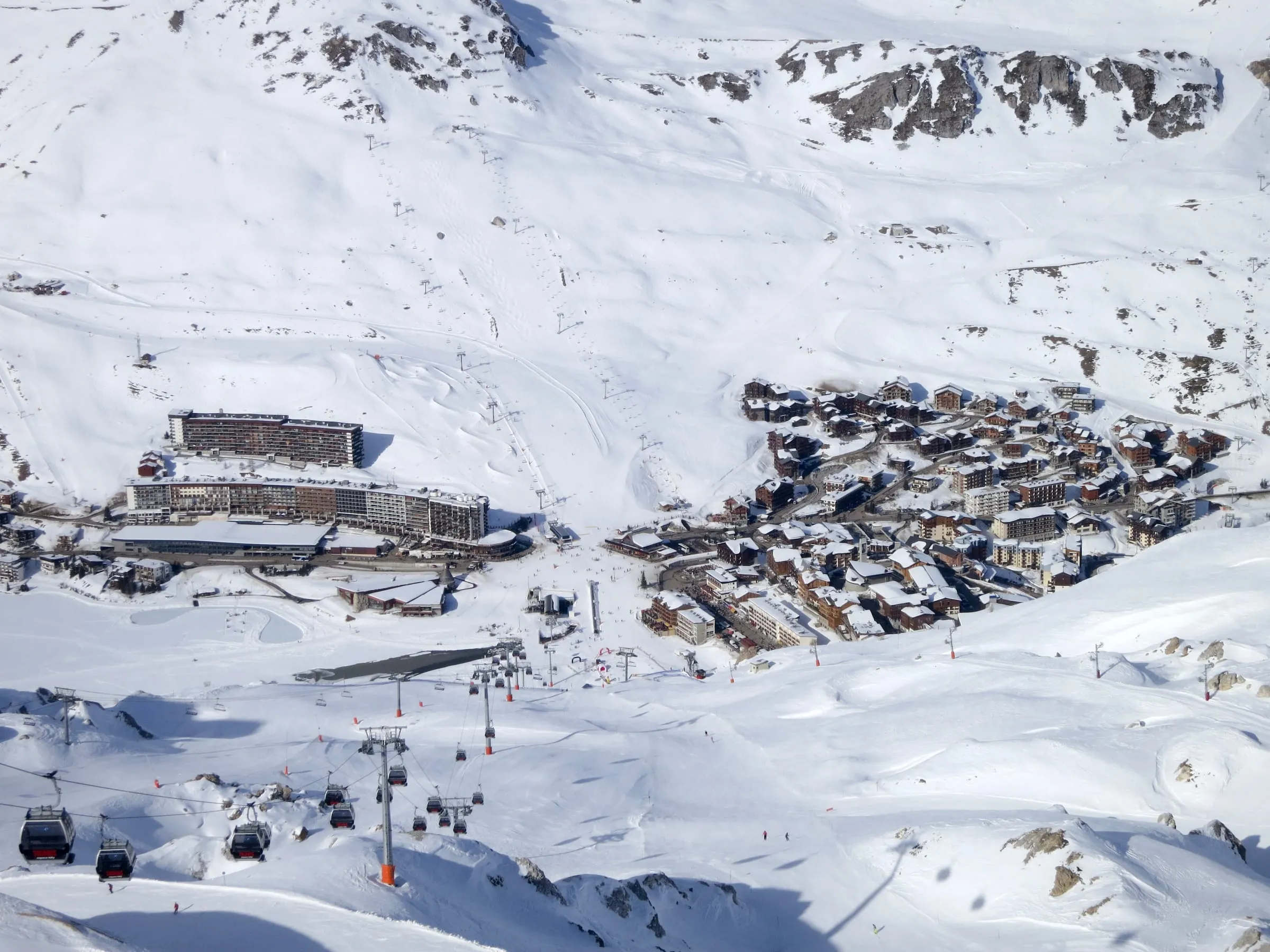
Val d’Isère and Tignes share about 300 km of runs up to 3,456 m on the Grande Motte glacier, and the piste mix tells you who they’re built for: 41 red and 29 black runs out of 160. The run everyone talks about is the Face de Bellevarde, which drops steeply from Bellevarde to the village. It hosted the men’s downhill at the 1992 Albertville Olympics and races at the 2009 World Championships, and the resort describes it as for advanced skiers only. It’s long, steep and often icy or mogulled, so save it for good snow and fresh legs.
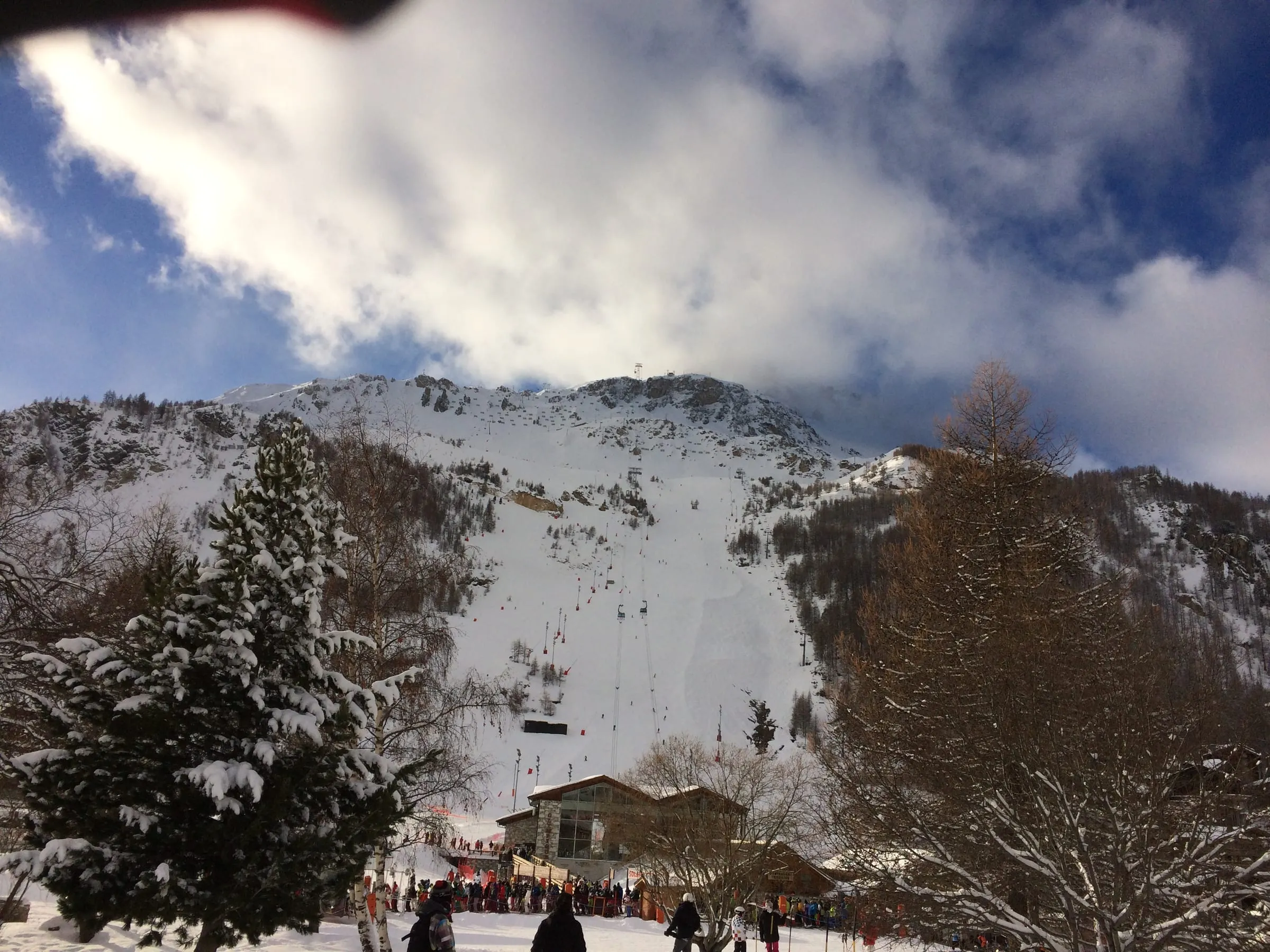
Off the pistes, there’s a vast amount of terrain on both sides. Tignes alone counts 3,200 hectares of off-piste, from the Grande Motte to the slopes below the Aiguille Percée, and Val d’Isère has two marked and secured ski touring zones. It’s high, serious and avalanche-prone ground, so go with a qualified guide. The other big plus is the season: Val d’Isère is scheduled to run from 28 November 2026 to 2 May 2027, and most of its slopes face north. The catch is the transfer, about three hours from Geneva or Lyon. See where to stay in Val d’Isère and hotels in Tignes.
Best freeride resort in Switzerland: Verbier and the Gentianes-Tortin
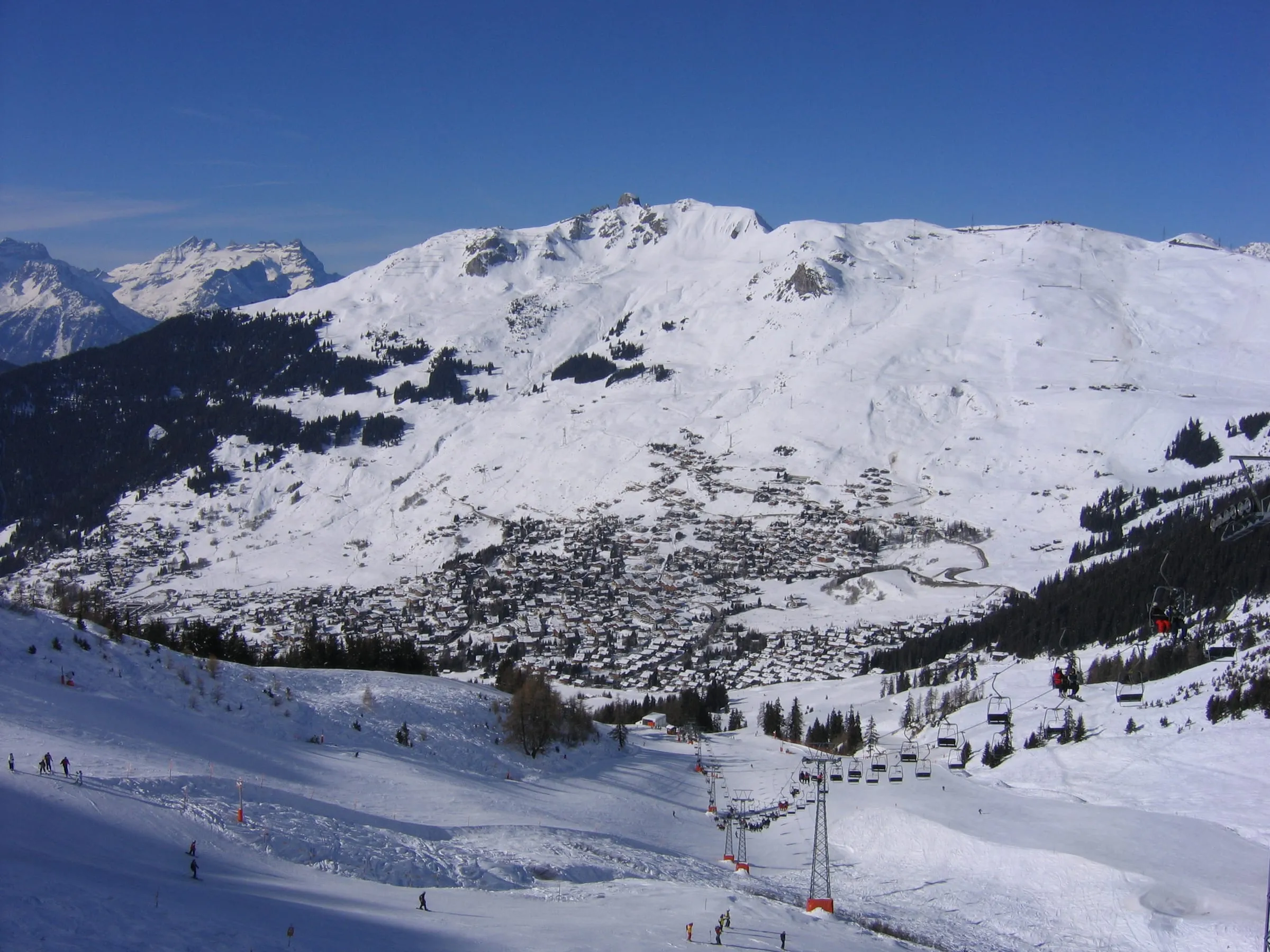
Verbier is the big Swiss name for freeride. It’s part of the 4 Vallées, with 410 km of pistes and a top point of Mont-Fort at 3,330 m, and its piste map marks signposted freeride itineraries with yellow lines. The famous one is Gentianes-Tortin, from the Col des Gentianes at about 2,950 m down to Tortin. Verbier Tourism says it’s rumoured to be the longest, most sustained mogul run in Europe. It’s marked by a single line of yellow poles, extends 15 m either side of them, and needs a valid 4 Vallées pass. Ski it when the snow is soft.
Verbier is also home to the Bec des Rosses, the steep face of the Freeride World Tour’s Xtreme Verbier contest, and heliskiing is available. Anything beyond the marked itineraries is unpatrolled high-mountain terrain with real avalanche risk, so hire a guide. Official 2026/27 dates hadn’t been published when we checked; the season usually runs from late November to late April. You can arrive by train and gondola from Martigny, and after the skiing there’s some of the liveliest après in Switzerland: see the best après-ski resorts in Europe.
Best off-piste in Austria: St. Anton and Lech Zürs on the Arlberg
St. Anton is the steeper, more demanding side of Ski Arlberg, Austria’s largest connected ski area, with more than 300 km of pistes, 85 lifts and about 200 km of off-piste variants. The slopes below the Valluga, such as the Mattun ski route, are classic freeride terrain. The small cable car to the Valluga top station at 2,811 m only takes skis or a snowboard if you’re with a qualified guide, because the way down is off-piste. For a big on-piste day, the Run of Fame is a marked 85 km circuit with 18,000 m of descent, rated advanced.
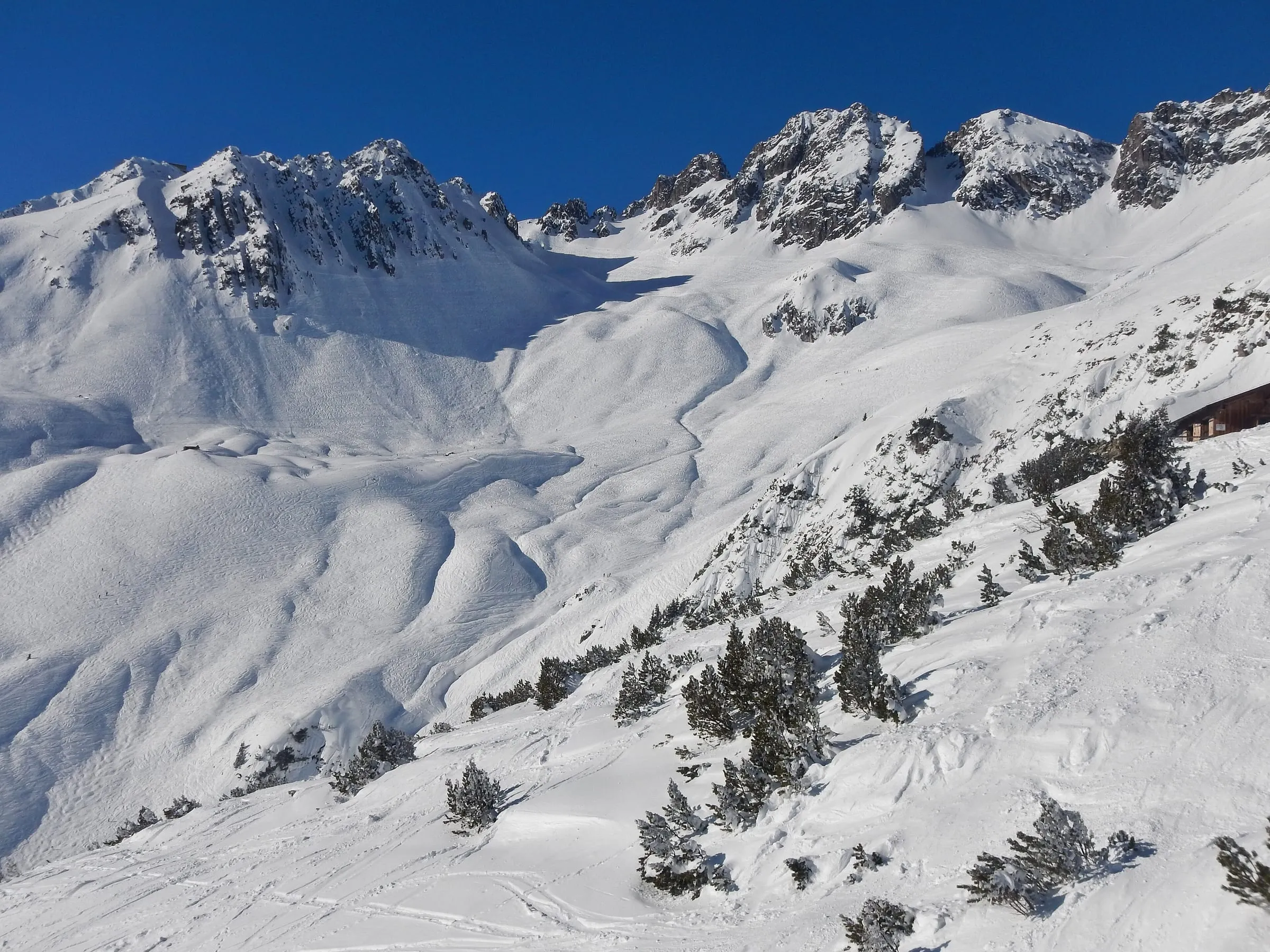
Over the hill, Lech Zürs brings the snow: the area averages around nine metres of fresh snow a season. Classic variants such as the Abendweide, Wöster, Zupert and Klemm start from its mountain stations, and the Langer Zug is the steep piste to tick off, 4.7 km long with an 80% gradient at its steepest. The trade-off of all that snow is avalanche risk, which can close off-piste terrain, lifts and occasionally the Flexen Pass road.
The Arlberg is scheduled to run from 2 December 2026 to 18 April 2027. St. Anton has a railway station in the village, so it’s an easy last-minute trip from Innsbruck or Zurich. Compare where to stay in St. Anton and hotels in Lech Zürs.
Engelberg freeride: the Laub and the Big 5
Engelberg is famous for off-piste rather than black runs. The resort says the most common Swiss weather systems, from the west and north-west, dump a lot of snow here, and the big descents start straight from the lifts. It markets five classics as the Big 5: the Laub, a huge open slope with about 1,200 m of vertical that made Engelberg famous; the Galtiberg, about 2,000 m from the Titlis down to the village; the Steinberg, with crevasses; the Sulz; and the north-west-facing Steintäli behind the Jochstock, which often holds good powder. Take a mountain guide, especially on the glaciated routes.
The Titlis glacier has been open since 29 October 2026 and usually runs into May, though the lower slopes need natural snow and normally open in December. It’s about an hour and a quarter by car from Zurich, or a train ride via Lucerne, which makes it one of the easiest high resorts to reach after a storm. See where to stay in Engelberg.
Andermatt and the Gemsstock: deep snow close to Zurich
Andermatt has two things experts want: snow, with an average maximum depth of almost 2 m in the village, and the Gemsstock. The cable car climbs to 2,962 m, with 1,521 m of vertical back to the village, steep gullies, deep-snow slopes and off-piste on the Gurschen glacier. The Bernhard Russi Run, named after Andermatt’s Olympic downhill champion, is a 6 km groomed black from the summit. The area has 16.5 km of yellow freeride runs, avalanche-protected but neither groomed nor patrolled, and an Avalanche Training Center for courses.
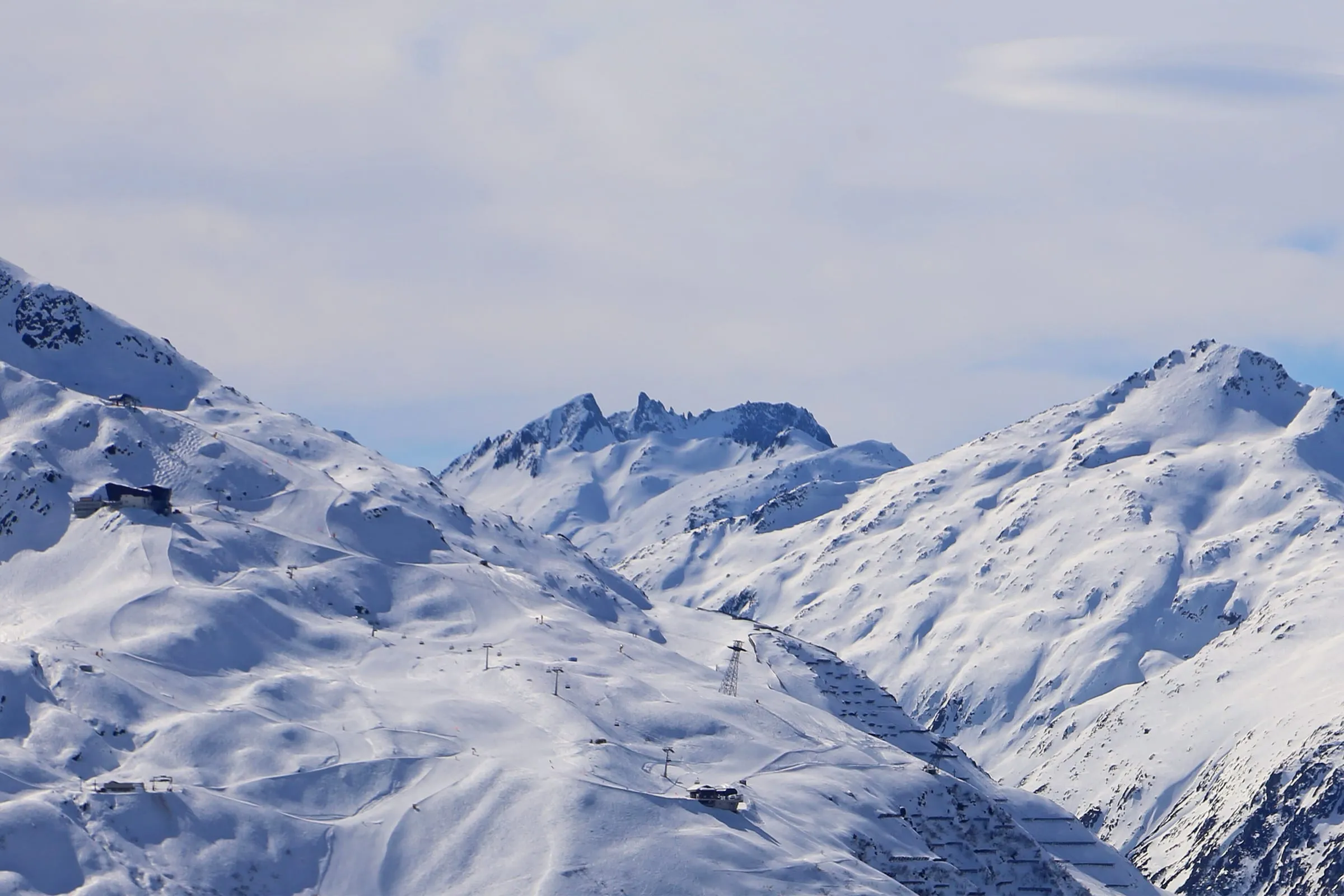
The Gemsstock is scheduled to open on 14 November 2026, weeks ahead of many Alpine resorts, and runs to 18 April 2027. It’s about 90 minutes’ drive from Zurich, and the Epic Pass is valid. Compare hotels in Andermatt.
Best freeride resort in Italy: Alagna and Monterosa Ski
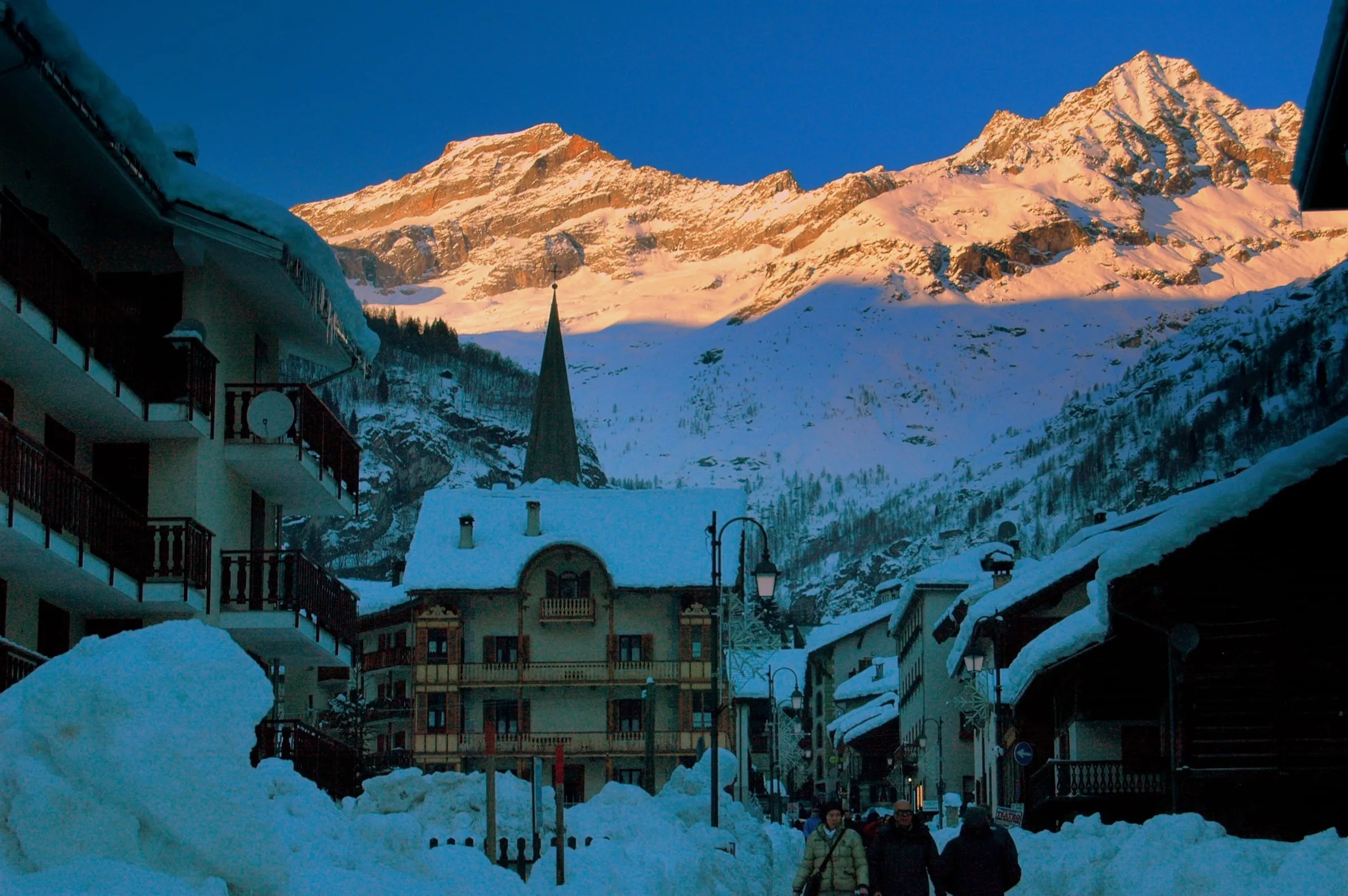
Alagna Valsesia is a small Walser village at about 1,200 m with a reputation far beyond its size. It’s the eastern end of Monterosa Ski, and its famous piste is the black Olen from the Passo dei Salati; carry on to the village and you’ve skied more than 1,800 m of vertical. The real draw is off-piste. With the Monterosa Freeride Paradise pass, a cable car continues from the Passo dei Salati to Punta Indren at 3,275 m, the start of descents such as the Balma across the Bors valley, with about 1,900 m of vertical, routes into the Olen and Otro valleys, and couloirs such as the Canale Perazzi, which reaches 55 degrees. This is glaciated, avalanche-prone terrain: Italian law makes a transceiver, shovel and probe compulsory off-piste, and unless you know the mountain, go with a local guide.
Monterosa Ski is scheduled to run from 28 November 2026 to 11 April 2027, and Milan Malpensa is about 100 km away. In strong wind, when the Salati link closes, the skiing is much more limited. See where to stay in Alagna.
Courmayeur and the Skyway Monte Bianco
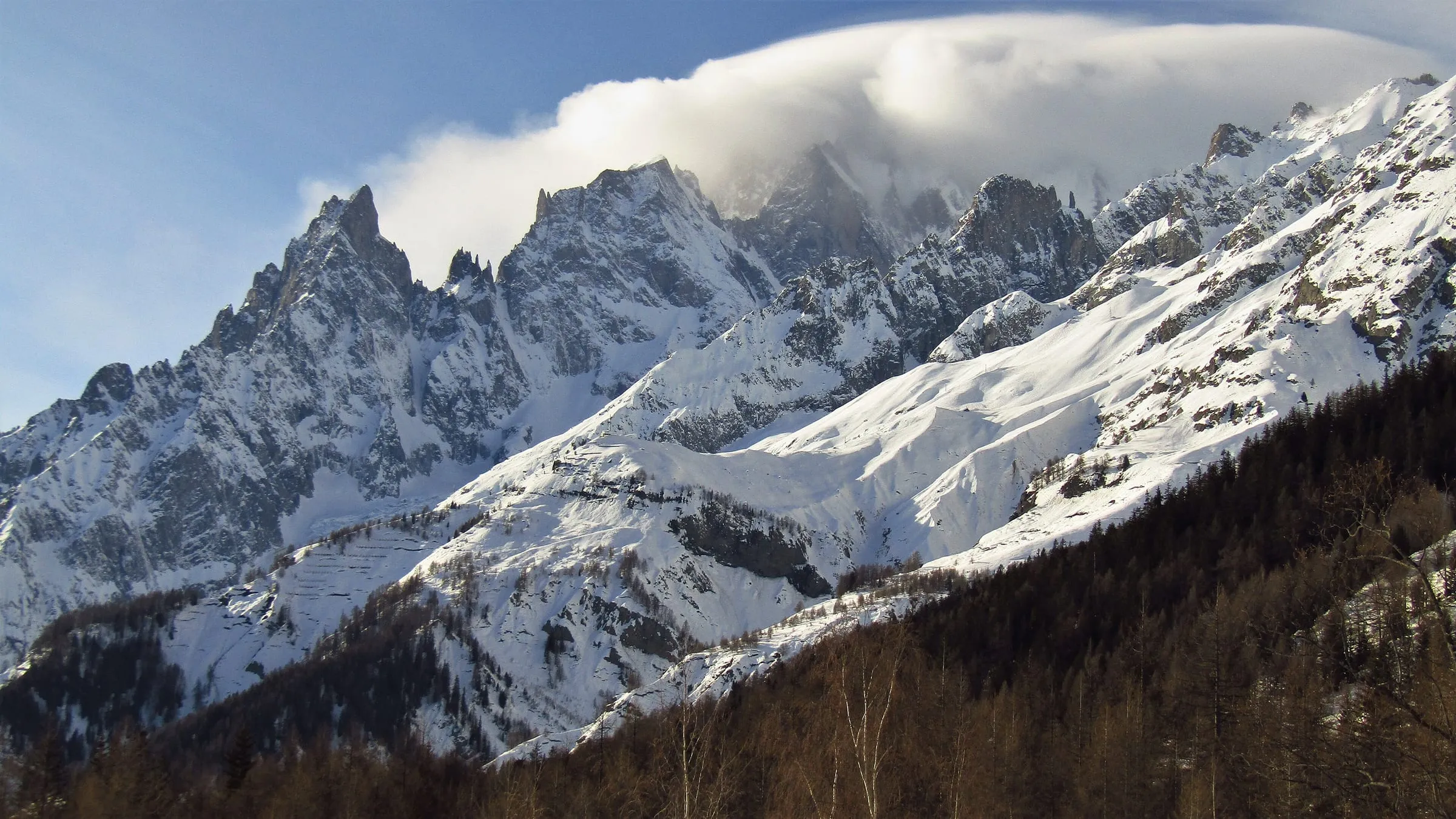
Courmayeur has only five black runs in its 100 km area, so experts come for what’s above it. The Skyway Monte Bianco climbs to Punta Helbronner at 3,466 m, the gateway to some of the most famous off-piste terrain in Europe. There are no pistes up there: the ski area says the routes are not marked, controlled or protected from the dangers of the high mountains, so go with a guide. Courmayeur is about 115 km from Geneva through the Mont Blanc Tunnel, and the season runs from 28 November 2026 to 11 April 2027. See hotels in Courmayeur.
Longest descents in the Alps: Zermatt
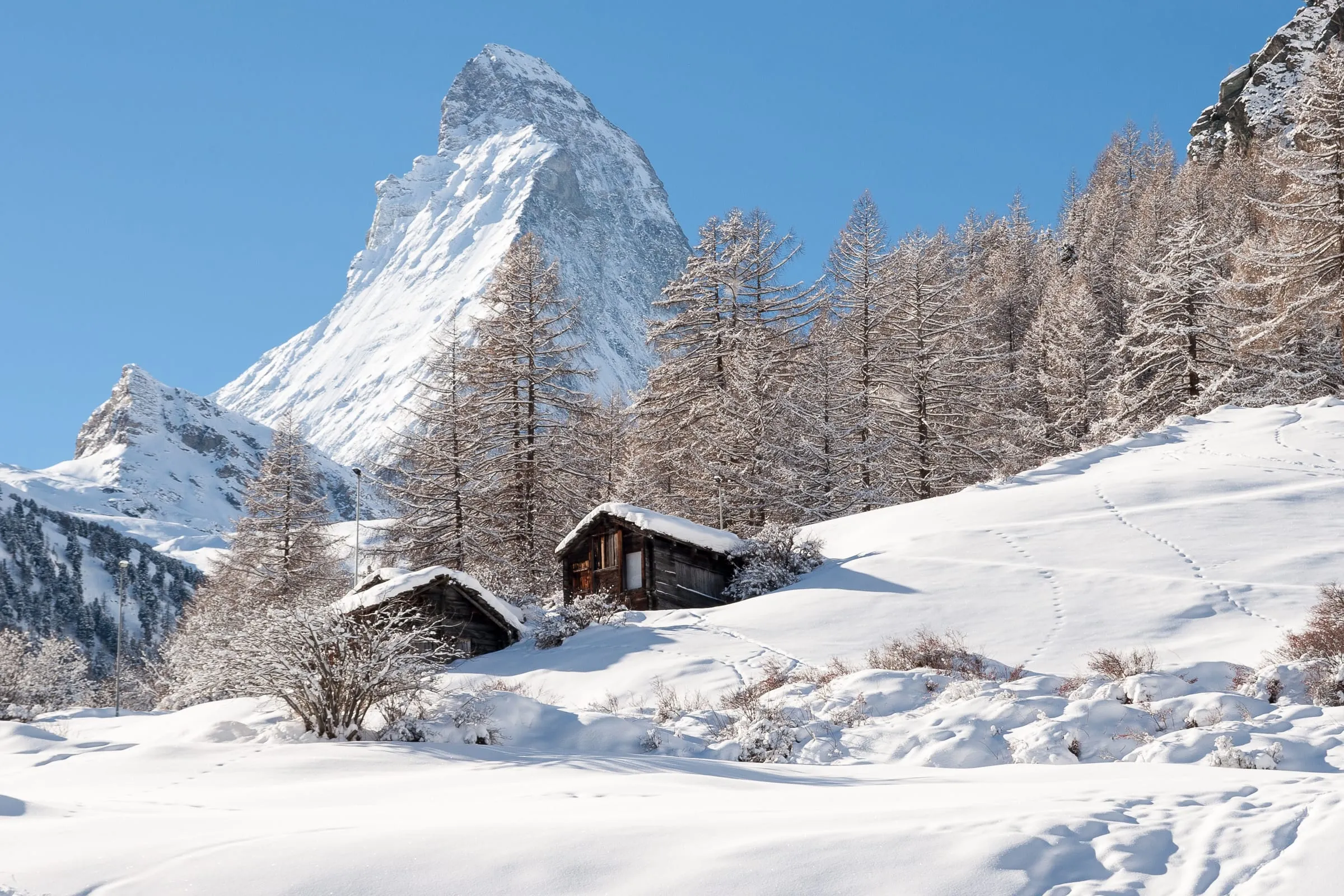
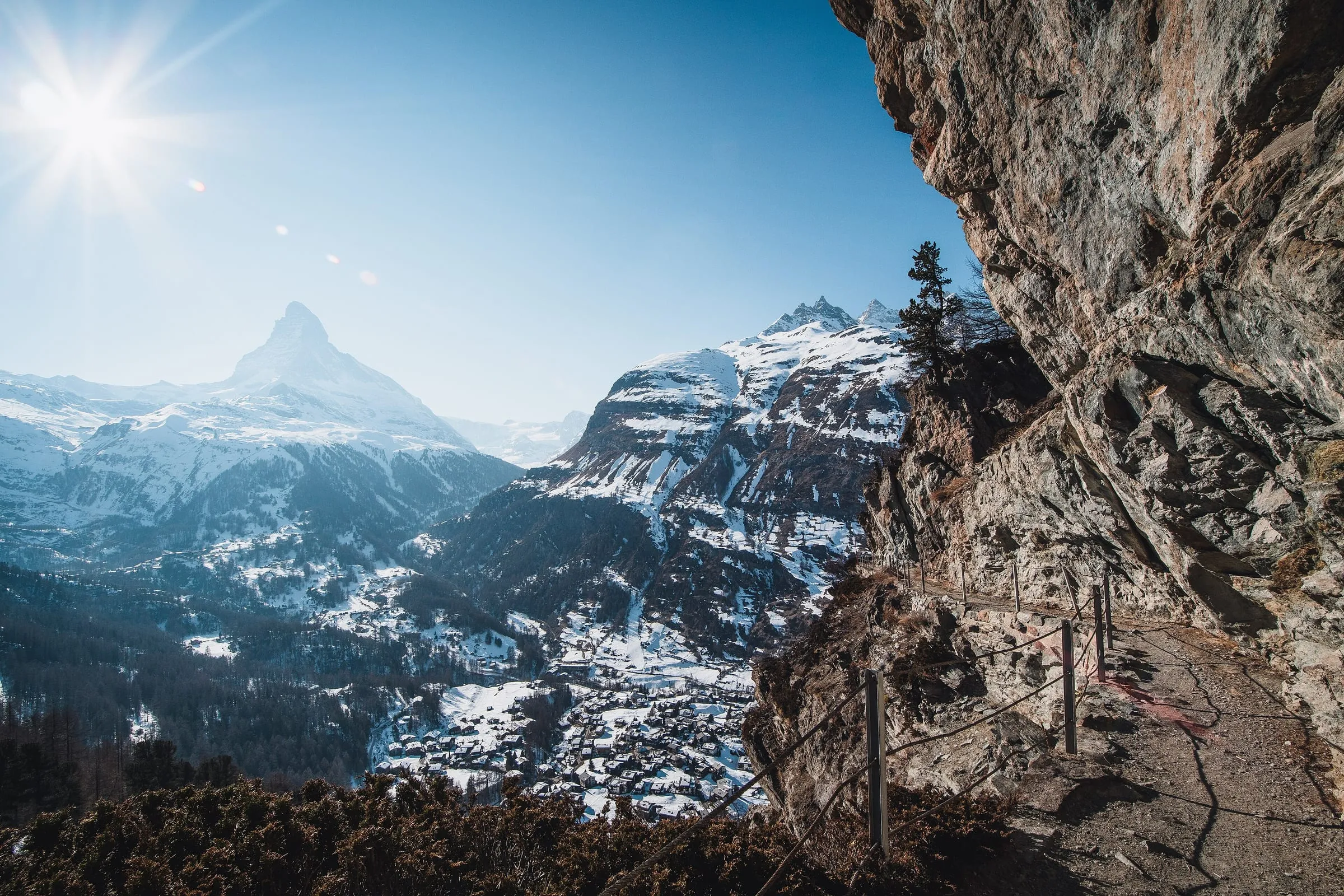
Zermatt gives strong skiers some of the longest descents in the Alps, from 3,883 m at Matterhorn Glacier Paradise, plus the ski route over the Theodul Glacier to Cervinia in Italy. Zermatt Tourism lists a guided freeride day with the ZERMATTERS guiding company from 14 December 2026 to 30 April 2027. The glaciers make off-piste here genuinely serious, because crevasses are a real hazard. The winter timetable runs from 1 November 2026 to 2 May 2027, glacier first, which makes Zermatt one of the safest bets early and late. More in our guide to snow-sure ski resorts in Europe, and compare where to stay in Zermatt.
Smaller freeride resorts: Sainte-Foy Tarentaise and Fieberbrunn
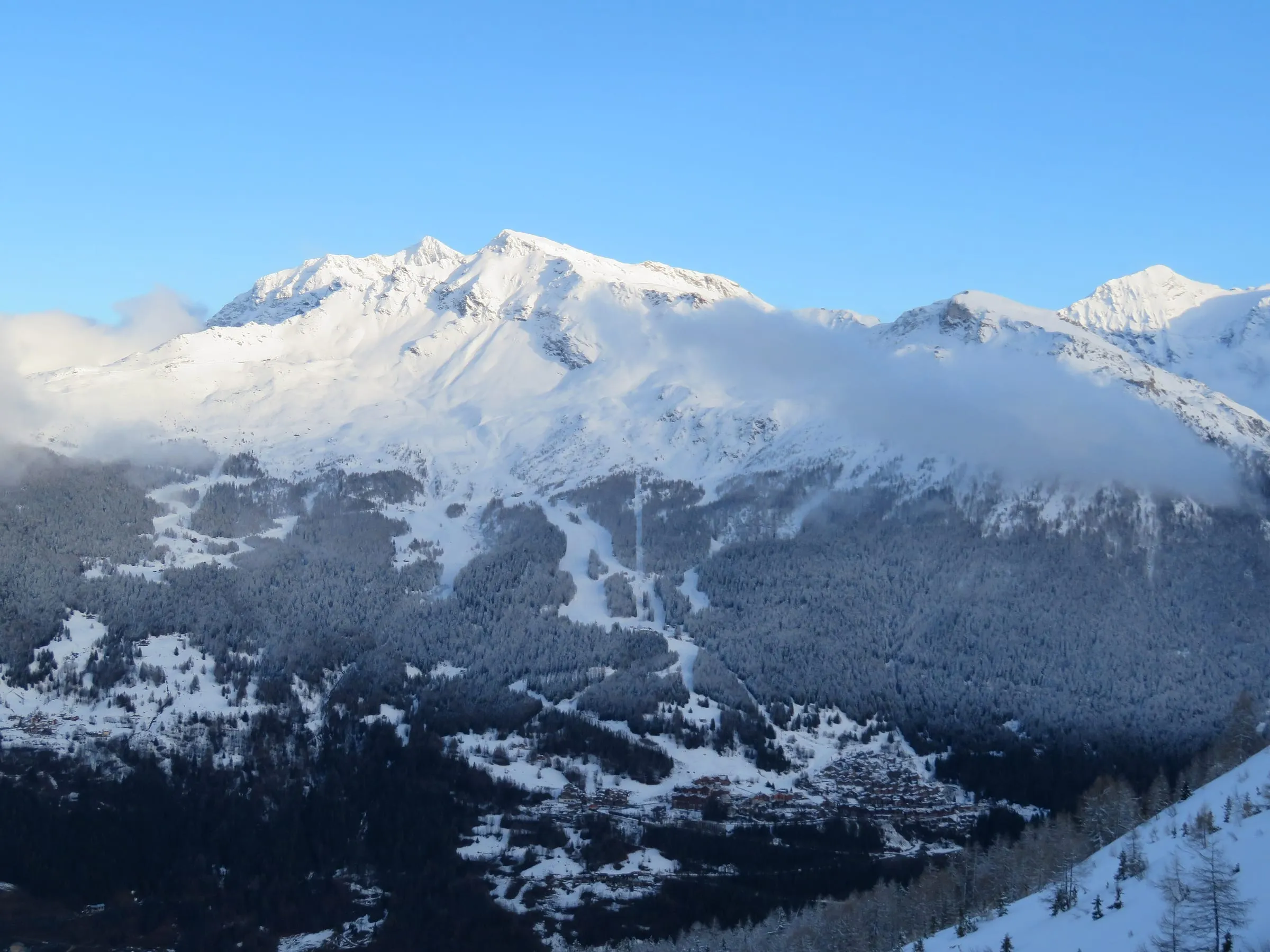
Sainte-Foy Tarentaise is a compact area of 25 runs from 1,550 m to 2,620 m, with a big reputation for forest skiing and off-piste and lifts that are rarely busy. The classic itineraries go to the hamlet of Le Monal and the Fogliettaz, and all three ski schools run off-piste outings. If you’re new to powder, start on the three Natur’ runs, which are ungroomed but marked and secured. It’s open from 12 December 2026 to 18 April 2027, and Les Arcs, Tignes and Val d’Isère are close.
Fieberbrunn, at the Tyrol end of the 270 km Skicircus, is really a freeride resort for experts. The Wildseeloder combines steep terrain with wide powder slopes and hosts the Freeride World Tour, scheduled for 3 to 9 March 2027. There are freeride routes of every difficulty, freeride parks and transceiver training parks, and the Pillerseetal markets itself as Tyrol’s snowiest region. The village is low, at 790 m, so the lower slopes suffer first in a mild spell. Compare hotels in Fieberbrunn.
Booking an expert ski trip at short notice
The best expert trips are often the late ones. When a storm has just come through, pick the resort the snow has hit and check the avalanche bulletin before you commit. Engelberg and Andermatt are quick from Zurich, Chamonix and Courmayeur from Geneva, and St. Anton is on the main railway line. Book a guide at the same time as your room, because good guides fill up on powder days too. Our guide to last-minute ski trips covers the planning, and the best ski resorts in Europe puts these resorts in context. Availability near the lifts can be checked live on Booking.com from each hotel above.