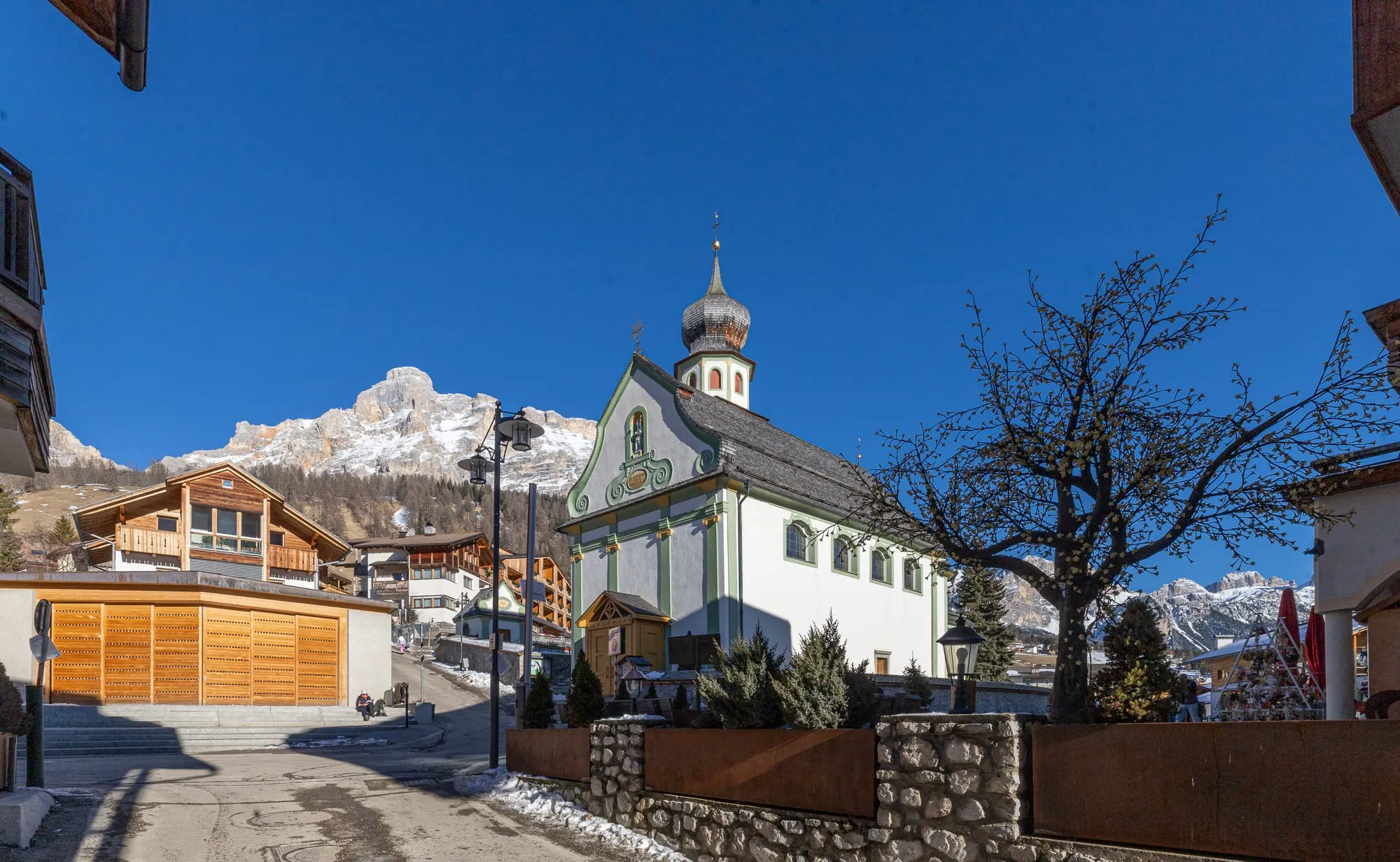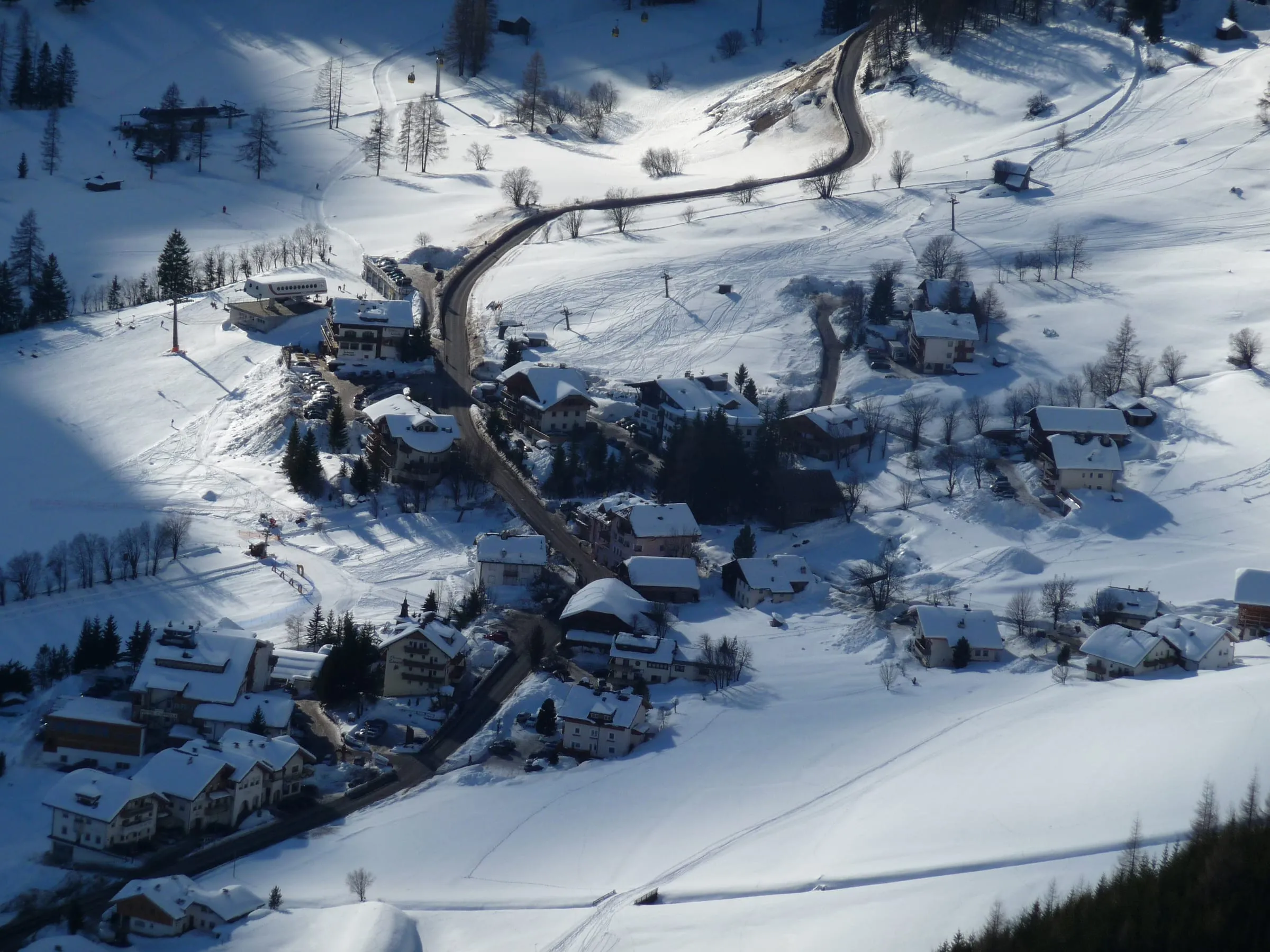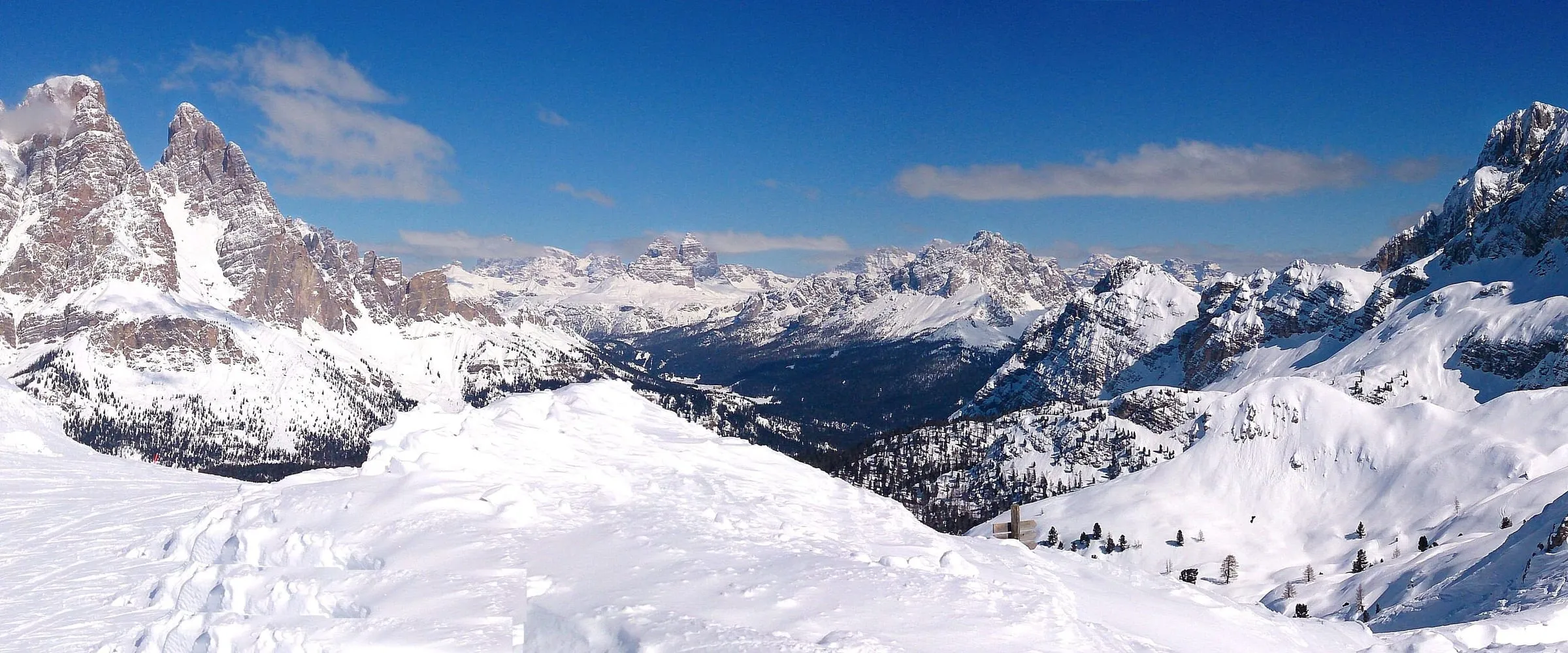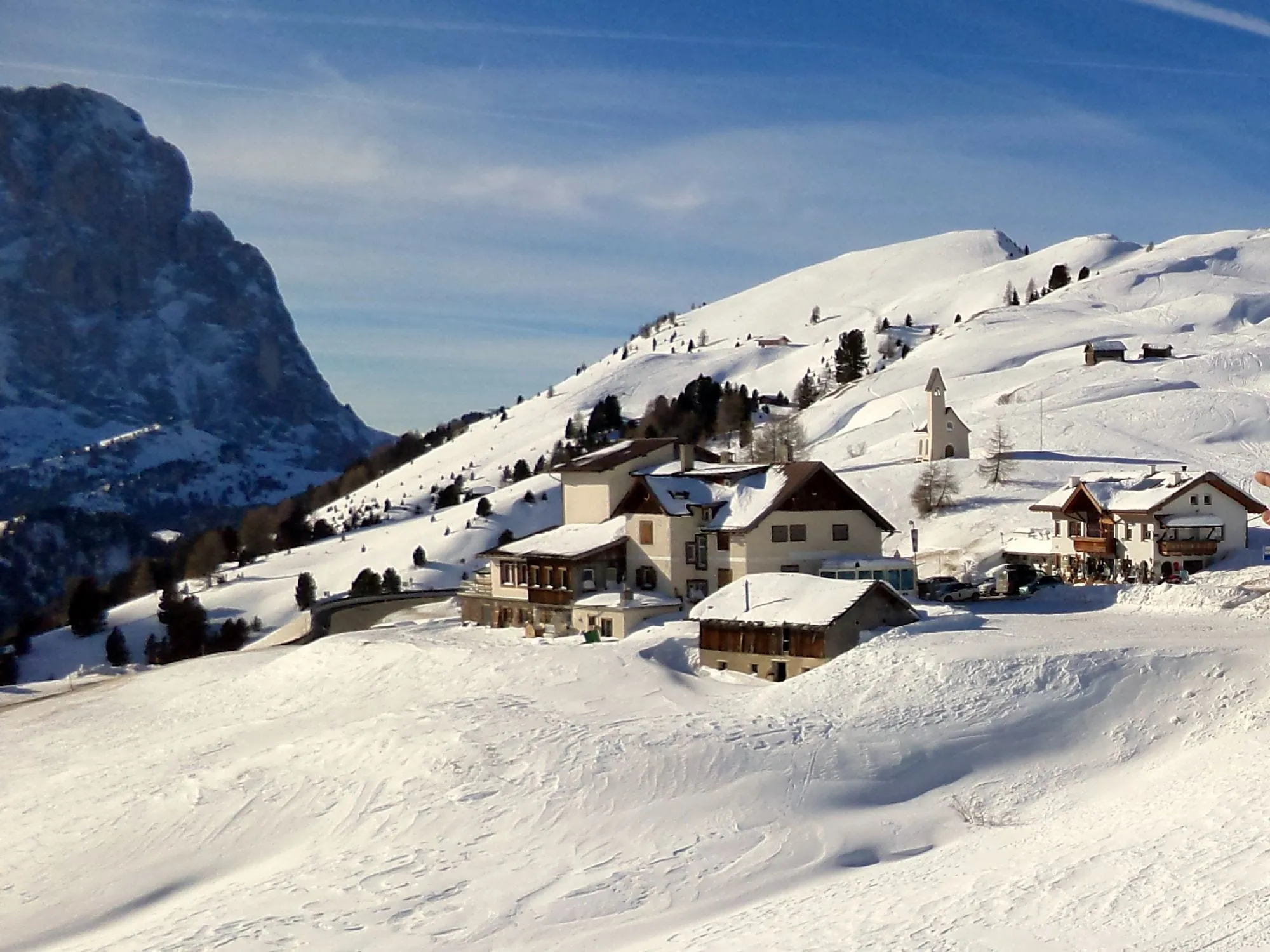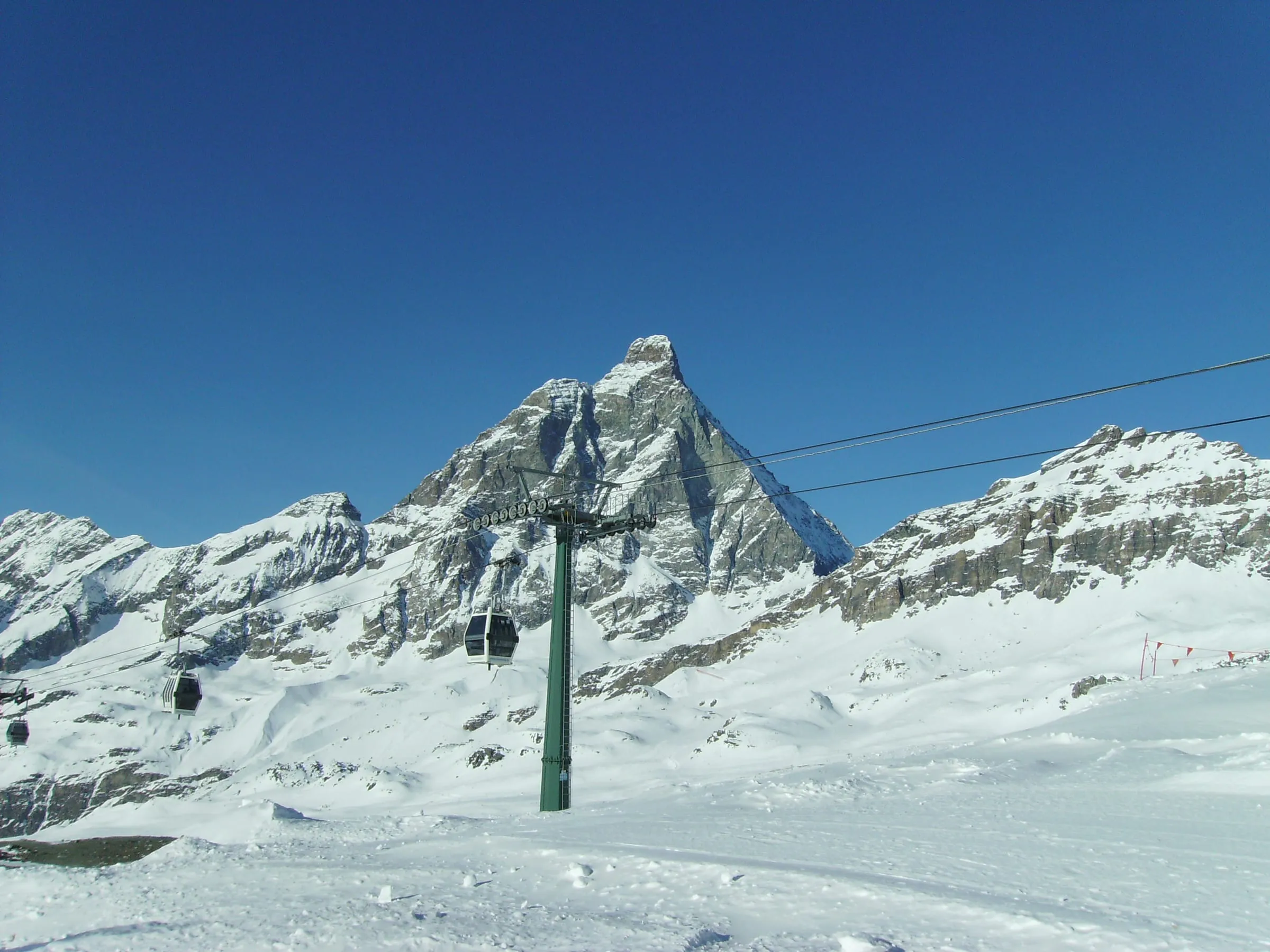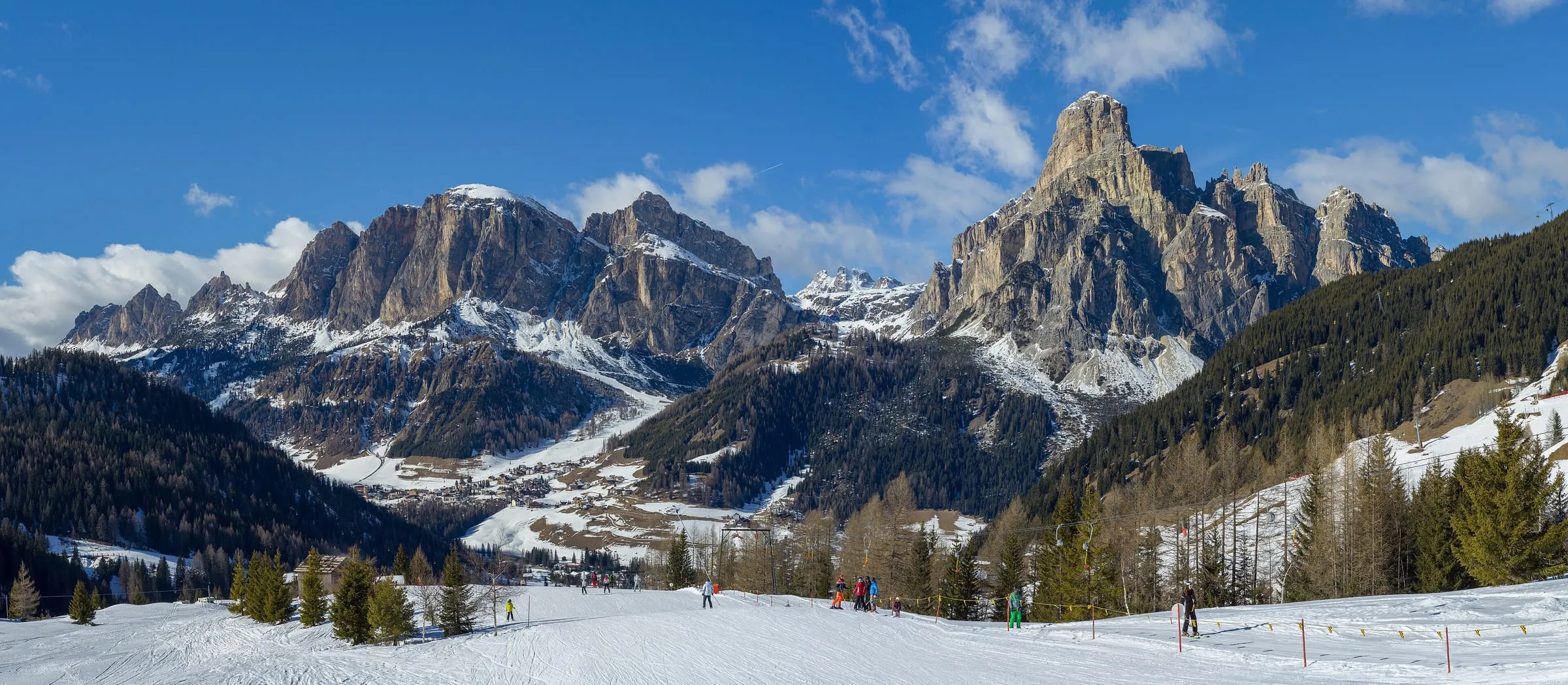
Alta Badia is a group of six Ladin villages at the top of the Val Badia in South Tyrol: Corvara, Colfosco, La Villa, San Cassiano, Badia and La Val. It’s on the Sellaronda, the ski circuit around the Sella massif, and part of Dolomiti Superski, which covers 12 ski areas, about 450 lifts and 1,200 km of pistes on one pass.
Alta Badia’s own area has 130 km of pistes and 54 lifts between about 1,300 m and 2,800 m. It’s best known for gentle, well-groomed skiing, long lunches and a serious food scene.
Alta Badia ski area: 130 km of mostly easy pistes
Of Alta Badia’s 130 km, 74 km are blue, 47 km red and just 9 km black. More than 90 snowcats groom the slopes every night, so corduroy is the norm in the morning. The lifts link Corvara, Colfosco, La Villa and San Cassiano across open plateaus such as Pralongia, and from the area you can ski about 500 km of linked runs, including the whole Sellaronda.
Skiing in Alta Badia for beginners
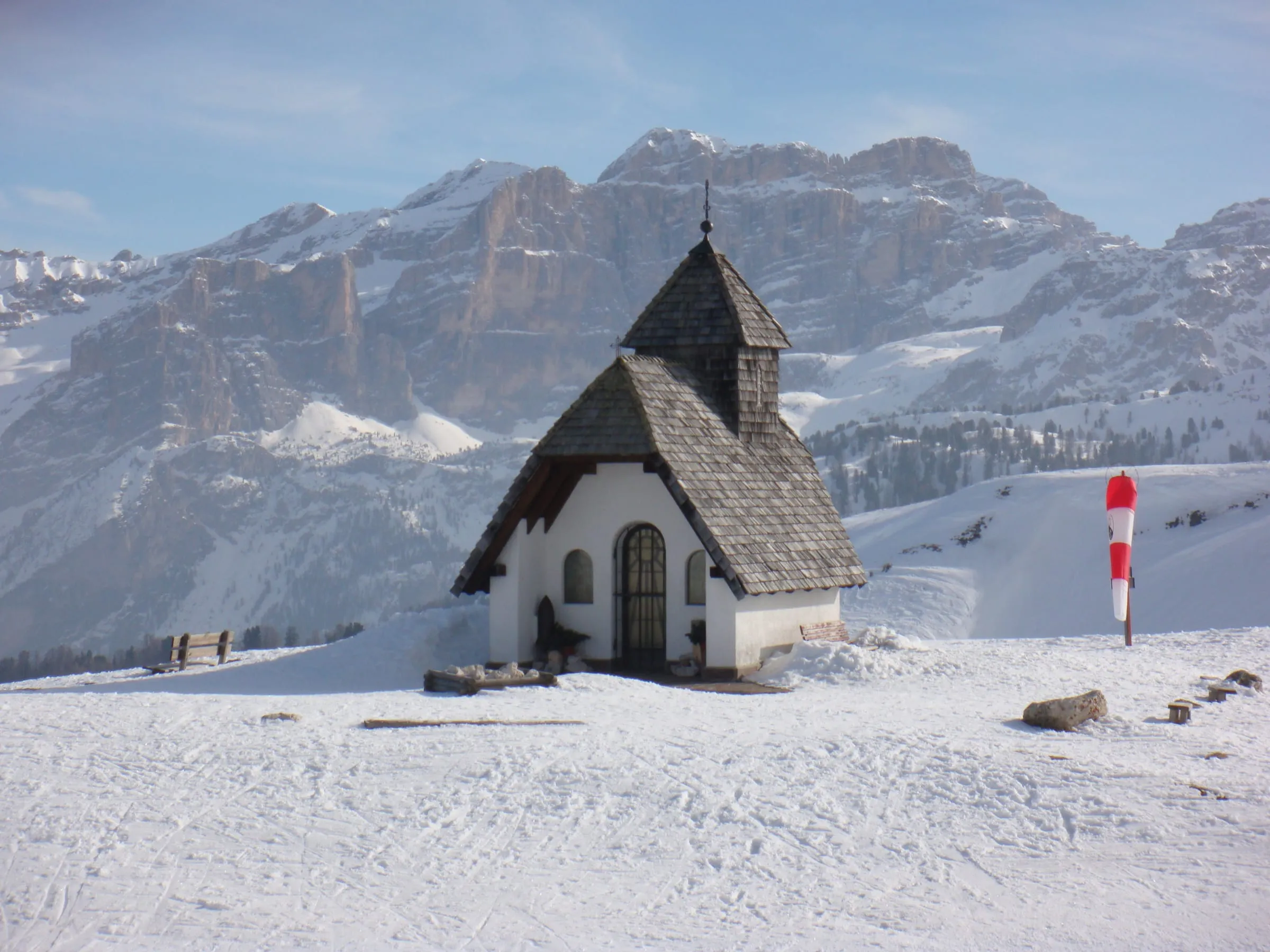
Alta Badia is one of the friendliest parts of the Dolomites to learn in. There are dedicated beginners’ areas and wide, easy slopes around the villages, and six ski schools with more than 350 instructors between them.
Skiing in Alta Badia for intermediates
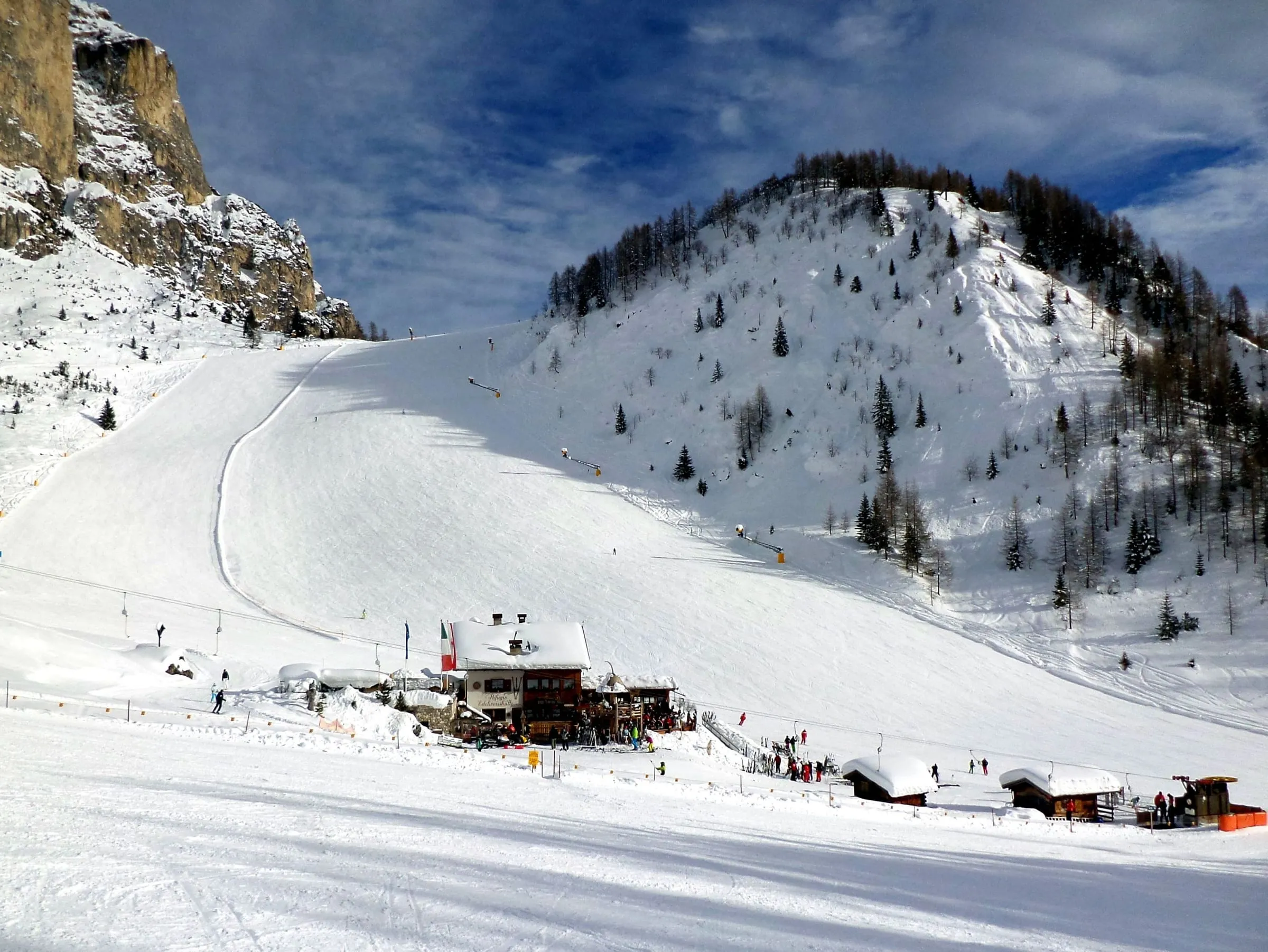
Intermediates can roam for days. Long cruising runs link Corvara, La Villa and San Cassiano, the Sellaronda is on the doorstep, and for strong skiers there are the First World War ski tours (below). New for 2026/27, a new piste, 5c, opens at Arlara.
Skiing in Alta Badia for experts
Advanced skiers have a few classics: the Gran Risa World Cup slope at La Villa, the black Vallon-Boé at Corvara and the spectacular run down from the Lagazuoi. But with just 9 km of black pistes, experts may run out of challenges on a week-long stay unless they hire a guide for off-piste.
The Gran Risa, the Sellaronda and the Great War tour: Alta Badia’s signature runs
The Gran Risa at La Villa is Alta Badia’s World Cup slope, and you can ski it yourself outside race days. In 2026, the men’s giant slalom is on Sunday 20 December and a night slalom on Monday 21 December, the first floodlit race in the course’s history.
The Sellaronda is the day out everyone wants to do. Each direction is 39.6 km, rated moderate. Clockwise (orange signs) goes from Alta Badia to Arabba and back via the Gardena Pass in about 4 hours. Anticlockwise (green signs) goes to Val Gardena and back via Arabba in about 4.5 hours. Start early and check the weather, as you don’t want to miss the last lift home.
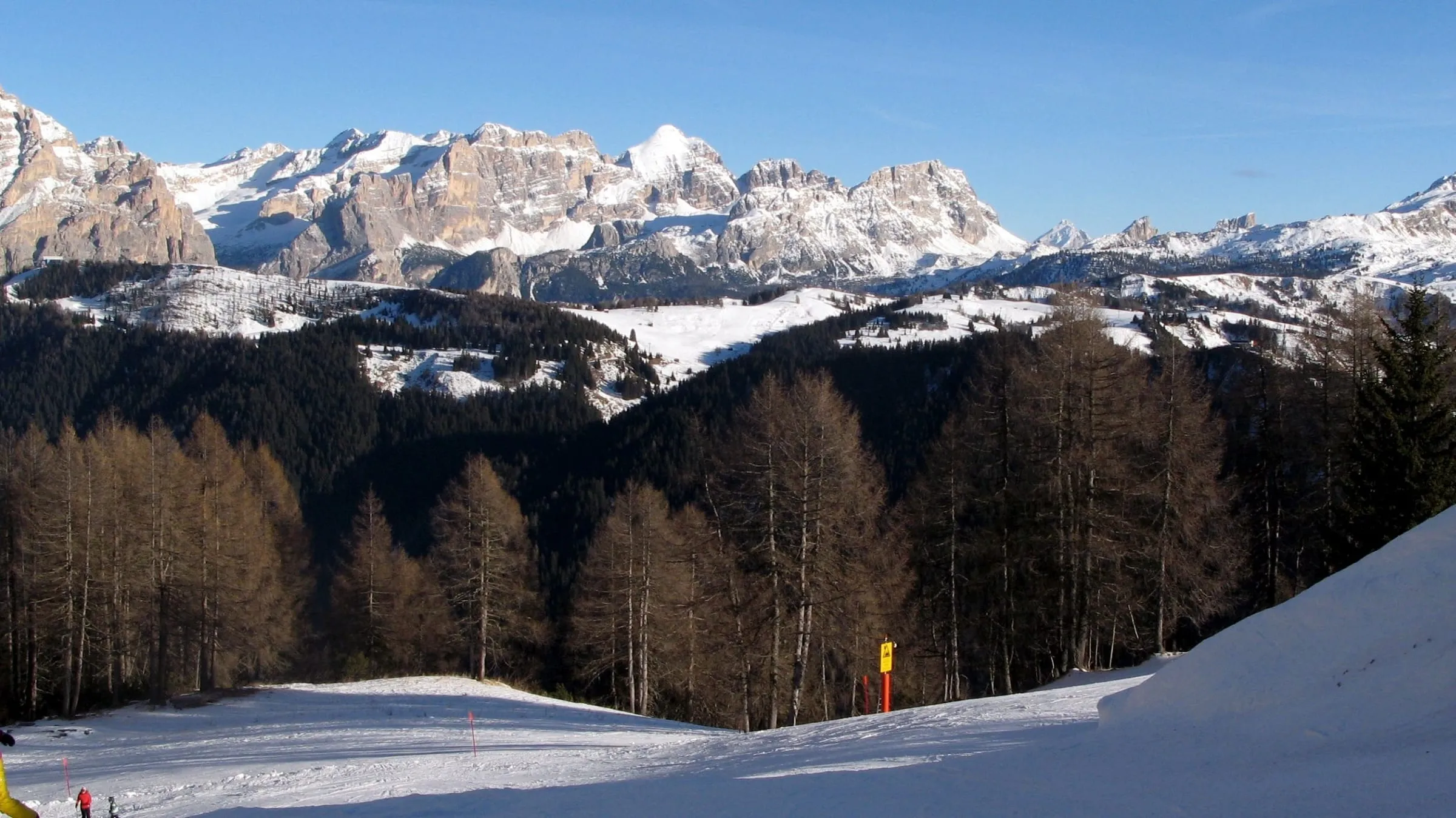
For strong skiers, the First World War ski tours are a step up: the red route anticlockwise is about 80 km and the violet route clockwise about 82.5 km, each around 8 hours and rated difficult. They pass the Civetta, Pelmo, Tofana, Lagazuoi and Marmolada.
Snow in Alta Badia and the 2026/27 season
For 2026/27, the Alta Badia lifts are scheduled to run from 4 December 2026 to 4 April 2027. The wider Dolomiti Superski season starts on 28 November 2026 in some other areas.
The villages sit at around 1,300 to 1,600 m (Corvara is at 1,568 m) and the top lifts at about 2,800 m, so the area relies heavily on snowmaking, especially early and late in the season. Dolomiti Superski says Alta Badia’s snowmaking system is being renewed for 2026/27, and some old drag lifts are being replaced. Pistes are usually in good shape, but don’t expect deep natural snow every winter.
Is Alta Badia good for a last-minute ski trip?
In midwinter, usually yes. The snowmaking and nightly grooming mean the pistes are reliable even after a dry spell, and the Sellaronda link gives you a huge area to explore. Bolzano, Verona, Venice and Treviso are the closest airports.
Be more careful at the edges of the season. With the top lifts at 2,800 m and villages around 1,300 to 1,600 m, natural snow can be thin in early December and late March, and the season ends on 4 April. Check how much of the area and the Sellaronda is open, and avoid the World Cup weekend (20 and 21 December) and Christmas if you want quiet slopes. Then find a place to stay in Alta Badia.
Alta Badia lift passes
The Dolomiti Superski pass covers Alta Badia, the Sellaronda and all 12 areas. A few things worth knowing:
- Young children can ski free with an adult who buys a pass for the same days. The birth-year cut-off changes every season, so check it when you buy.
- The Kids on Ski package for children aged 3 to 5 who’ve never skied includes a five-day pass, lessons and rental, with a week’s stay at participating accommodation.
- New for 2026/27, the Dolomiti Superski Family pass can be bought online.
Since 1 January 2022, Italian law has required everyone on the slopes to have third-party liability insurance. You can usually add it when you buy your pass, or check your travel insurance covers it.
Après-ski and things to do in Alta Badia
Food is the big draw. Alta Badia has Michelin-starred restaurants, including La Stüa de Michil at Hotel La Perla in Corvara, and its mountain huts serve Ladin dishes alongside more modern cooking. Look out for food events on the slopes before you book.
Off the slopes:
- Tobogganing on the Tru dla Liösa Foram, an easy 3 km run from Piz Sorega down to San Cassiano.
- Ice skating in Corvara.
- Snowshoeing and winter walks, including guided walks.
- Cross-country skiing, with a centre in San Cassiano.
Nightlife is low-key. This is a place for long dinners rather than late bars.
Who Alta Badia suits, and who it doesn’t
- Great for: beginners and intermediates, families, Sellaronda fans, and anyone who cares about lunch as much as the skiing.
- Think twice if: you want lots of steep runs, lively nightlife or deep natural snow, or you’re on a tight budget in peak weeks.
Skiing with children? Read our guide to Alta Badia with kids.
Helmets are now compulsory on all slopes for everyone, whatever their age, from the 2025/26 season onwards.
How to get to Alta Badia
Driving to Alta Badia
From the A22 Brenner motorway, there are two main routes. You can follow the Val Pusteria (Pustertal) east and turn up the Val Badia, or drive through Val Gardena and over the Gardena Pass, which is shorter but a high mountain road. From the east, you can arrive from Cortina d’Ampezzo over the Falzarego and Valparola passes, from Agordo, or from Lienz in Austria. Check pass status with South Tyrol’s traffic information before relying on a high road.
The villages are between 1,000 and 2,000 m, so you’ll need winter tyres or chains. Italian roads covered by a winter ordinance require winter tyres (marked M+S) or chains carried in the car, normally from 15 November to 15 April.
By train and bus
The nearest railway station is Brunico (Bruneck), just over 30 km away, with several buses a day up to Alta Badia. Bressanone (Brixen) and Bolzano stations are each about 65 km away, the Bolzano route via the Gardena Pass. Once you’re here, local buses link the villages.
Nearest airports
Bolzano, Verona, Venice and Treviso are the closest airports, with Innsbruck, Munich, Milan and Bergamo further away. You can transfer by taxi, airport shuttle or public transport.