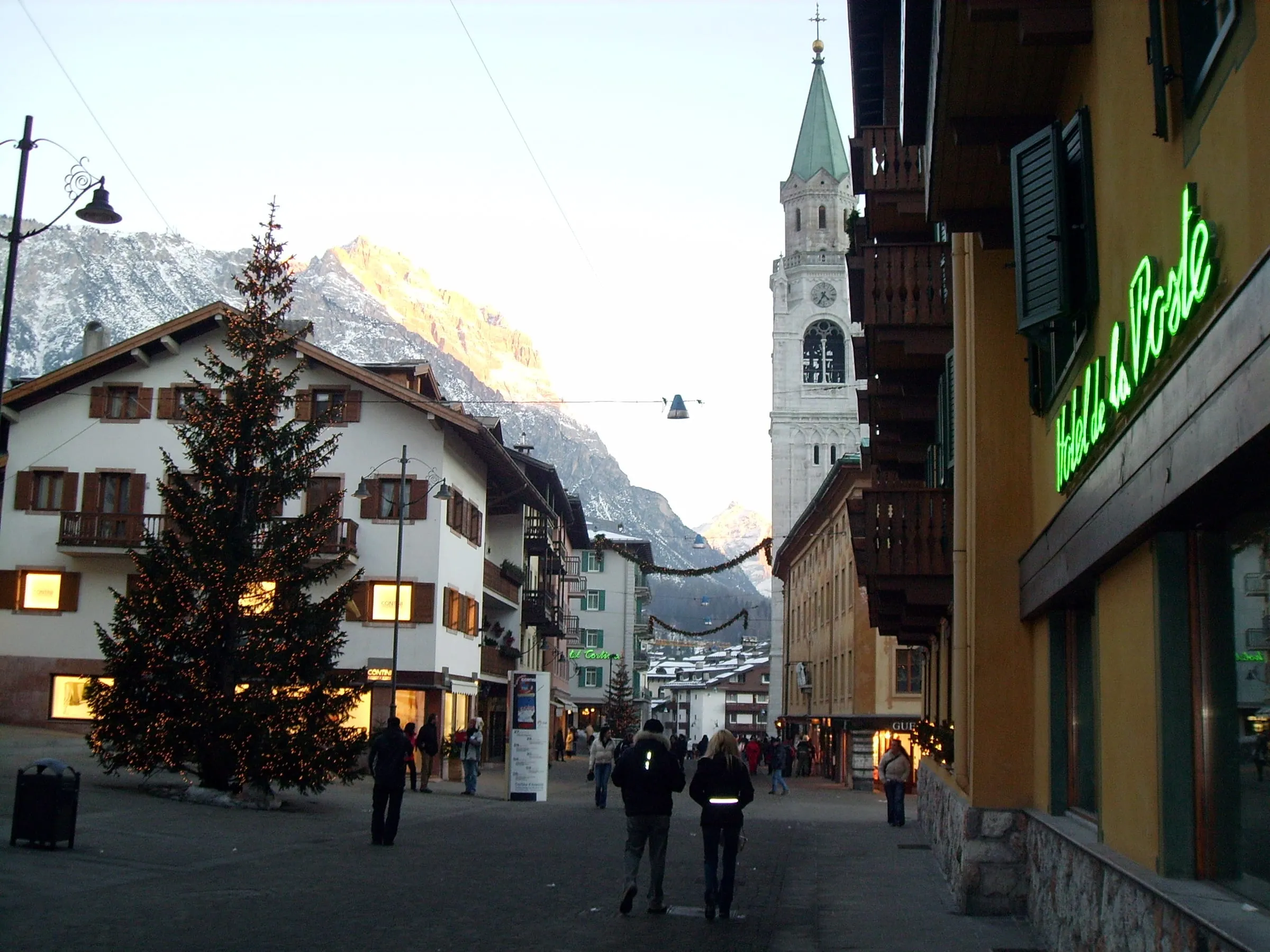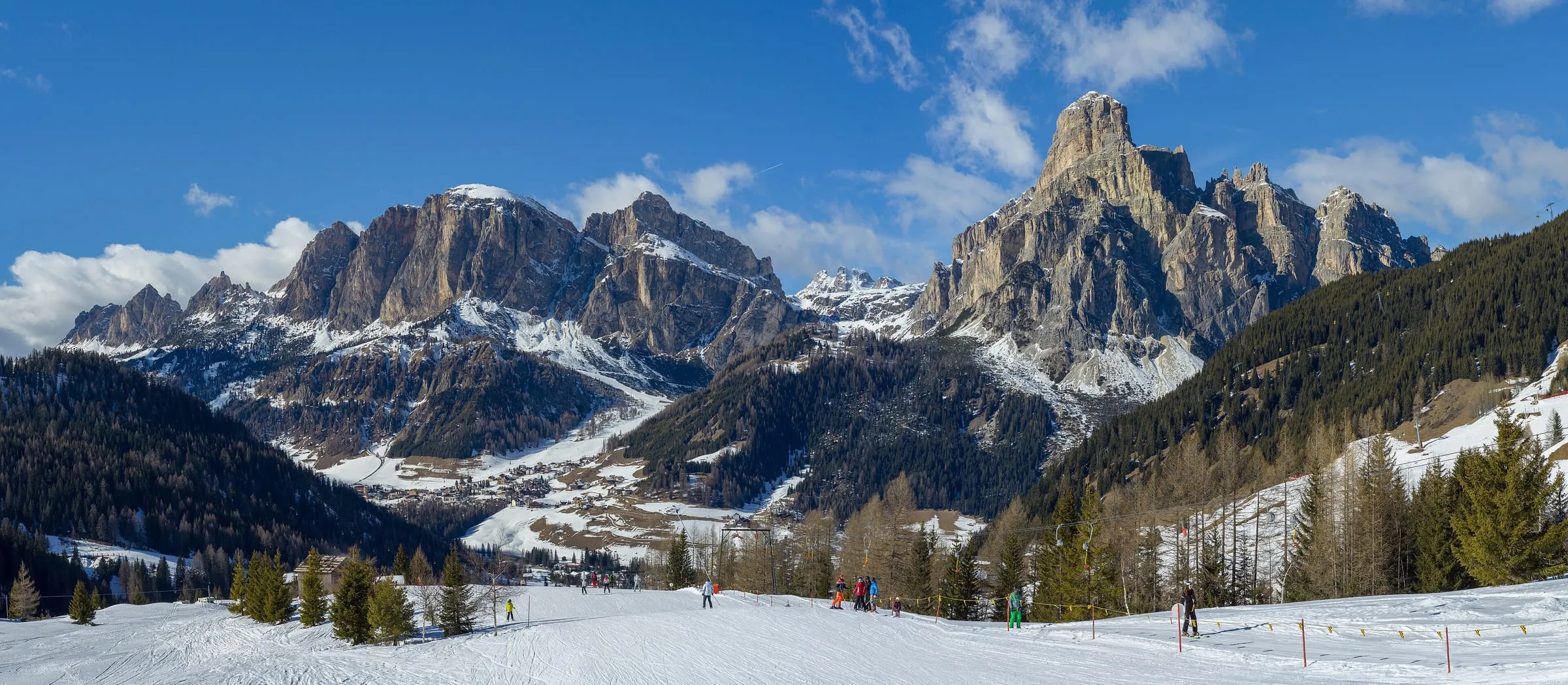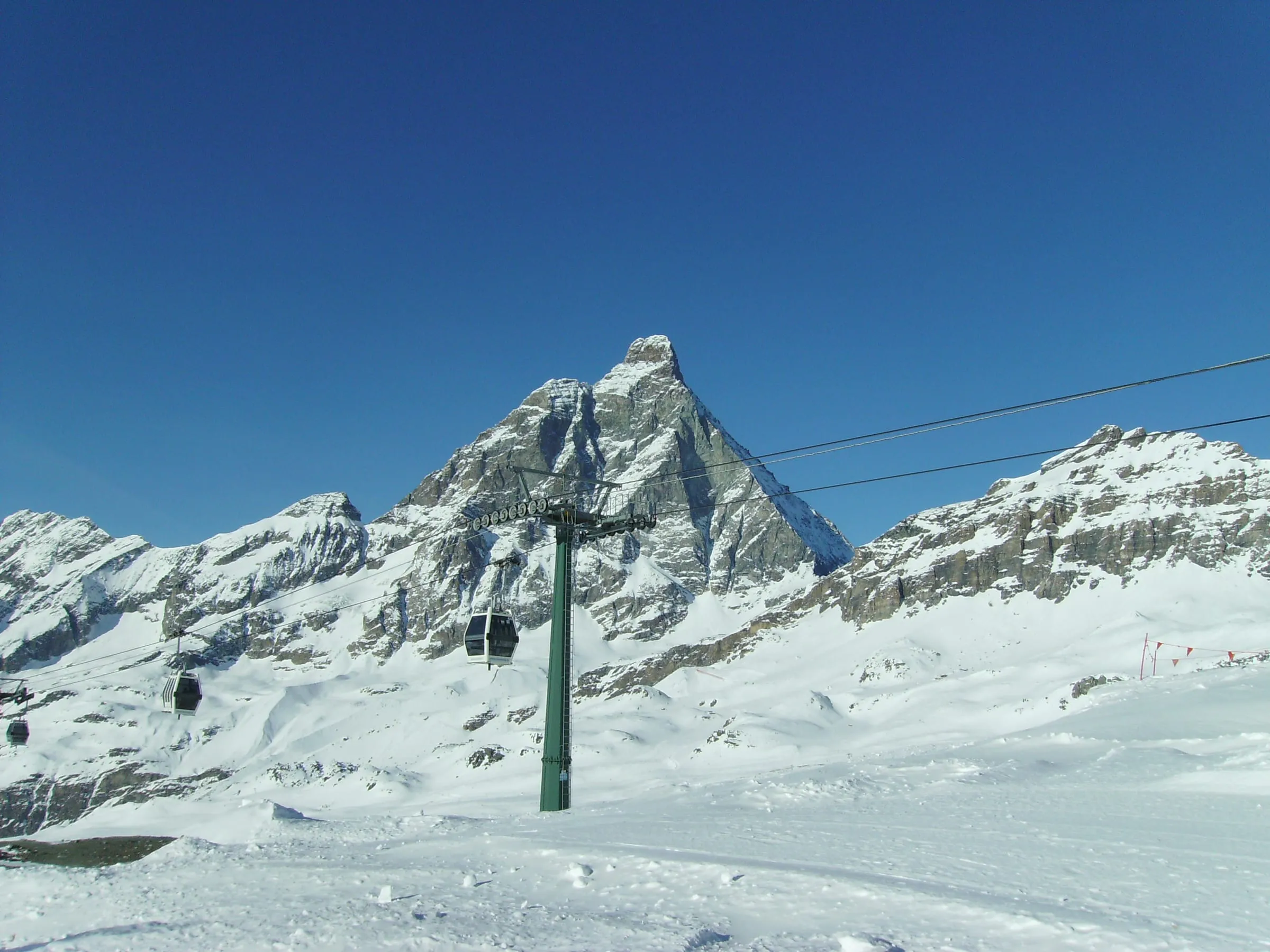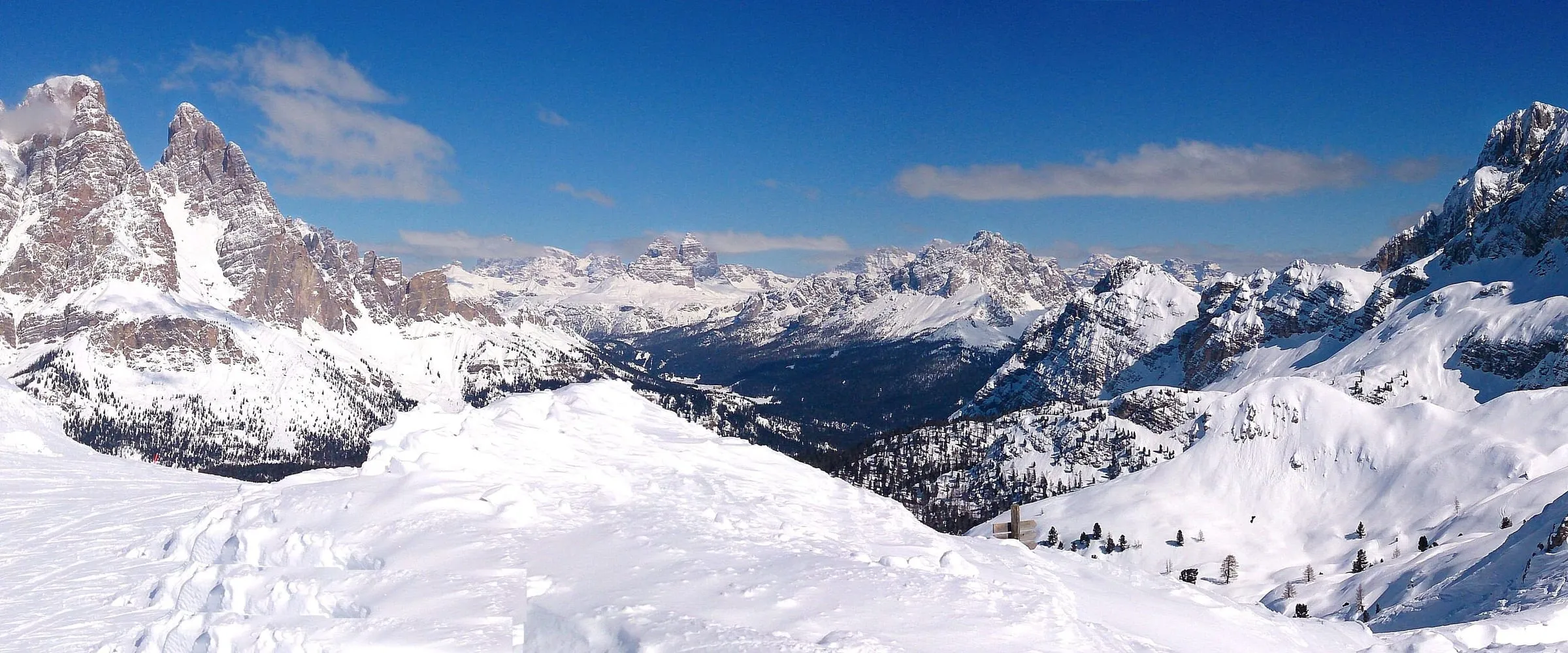
Cortina d’Ampezzo is one of the best-known ski towns in the Italian Dolomites, in the Veneto close to the South Tyrol border. It’s a real town rather than a ski village, with a busy pedestrian main street, Corso Italia, and big Dolomite peaks on every side. In February 2026 it co-hosted the Milano Cortina Winter Olympics, seventy years after it first hosted the Games in 1956.
Cortina d’Ampezzo ski area: 120 km around the valley
Cortina’s own ski area has 66 pistes served by 26 lifts, and many of the lifts carry pedestrians as well as skiers. The local Valle pass covers Cortina (including the Lagazuoi run down to Armentarola in Alta Badia), San Vito di Cadore and Auronzo-Misurina: 120 km of pistes in all. Cortina is also part of Dolomiti Superski, so you can upgrade to the full pass, which covers 1,200 km across 12 valleys.
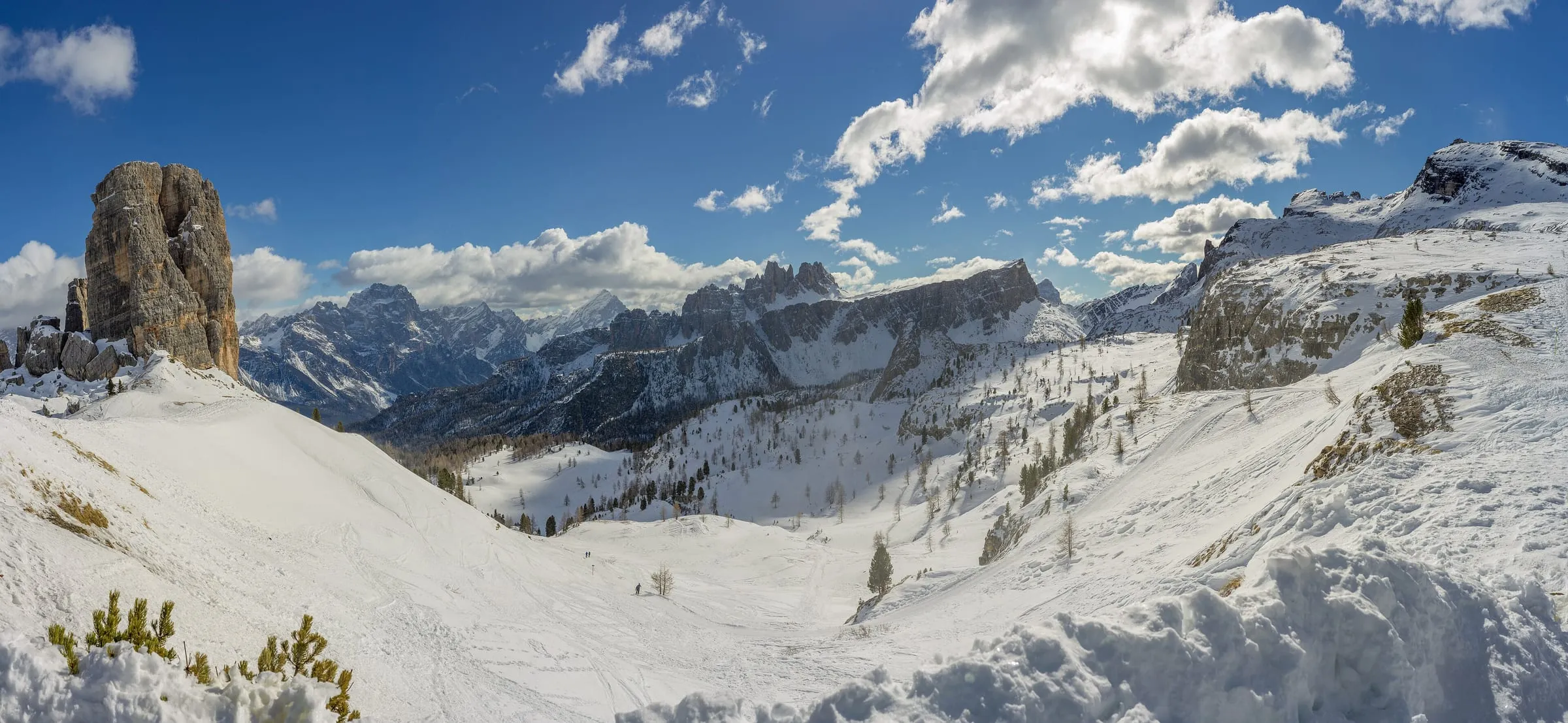
The skiing is split into separate areas around the valley:
- Tofana, above the town, with the Socrepes slopes at the bottom, the Olympia delle Tofane race piste and the Freccia nel Cielo cable car climbing towards 3,244 m.
- Faloria and Cristallo, on the other side of the valley.
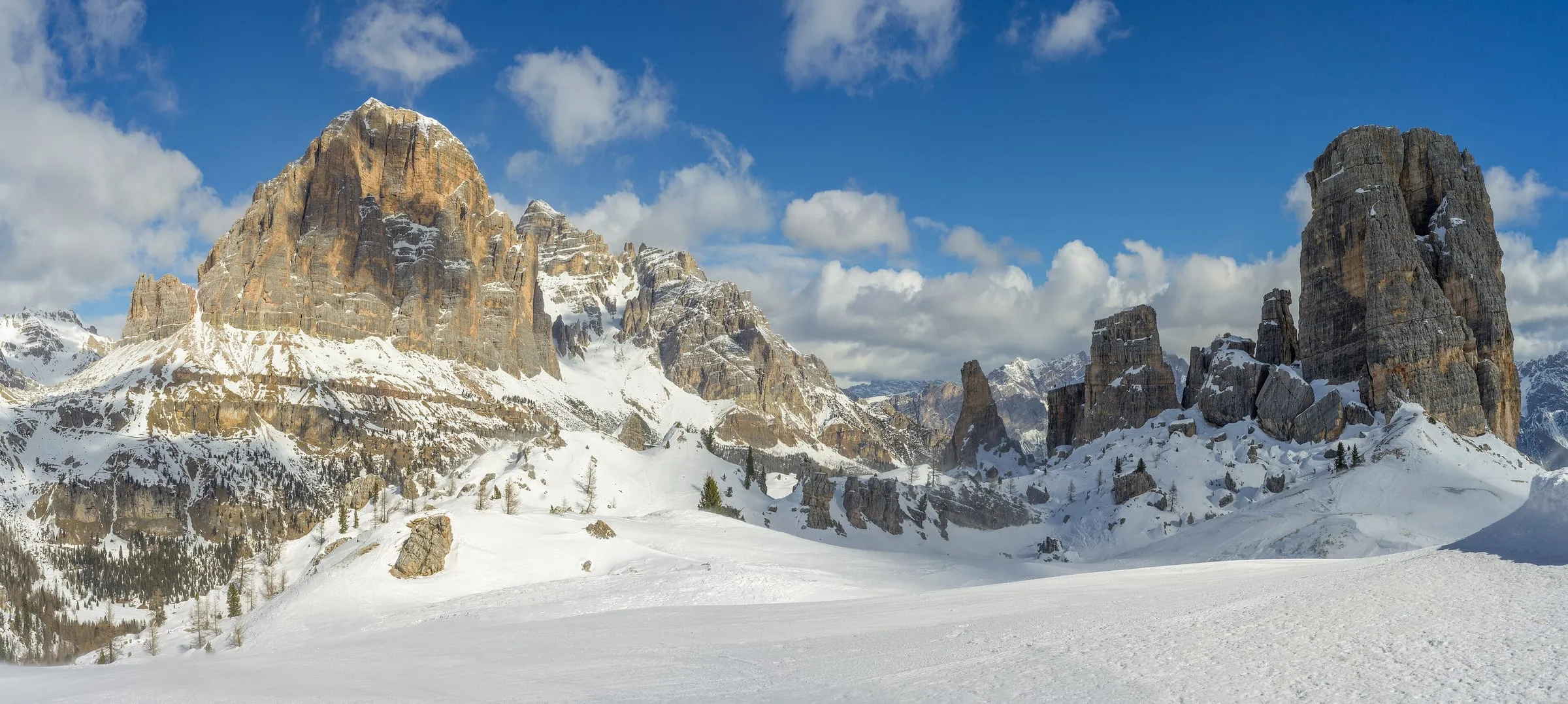
- Cinque Torri and Col Gallina, towards the Falzarego Pass.
- Lagazuoi, where a cable car rises to 2,732 m.
Not all of these areas are linked by piste, so expect to use the ski bus or the car to move between them. That’s the biggest practical downside of Cortina compared with the linked circuits in South Tyrol.
Skiing in Cortina d’Ampezzo for beginners
Beginners start at Socrepes, at the foot of the Tofana, where Scuola Sci Cortina has its base and a Baby Ski School area. The gentle slopes there are the place to learn, but remember that reaching the other areas means a bus or car ride.
Skiing in Cortina d’Ampezzo for intermediates
Intermediates have long, scenic runs, especially at Cinque Torri, Lagazuoi and the Tofana. A day on the Valle pass can take in San Vito di Cadore or Auronzo-Misurina for a change of scene, and the Dolomiti Superski pass opens up Alta Badia via the Lagazuoi.
Skiing in Cortina d’Ampezzo for experts
Advanced skiers can test themselves on the Olympia delle Tofane, where the women’s Olympic alpine races were held and a regular World Cup venue, and on the high runs served by the Freccia nel Cielo. For off-piste and ski touring, book one of the local mountain guides.
The Olympia delle Tofane and the Lagazuoi: Cortina d’Ampezzo’s signature runs
The Olympia delle Tofane is Cortina’s most famous slope. It has hosted many World Cup races, and in February 2026 it was the focal point of the Olympic alpine skiing.
The other must-do is the Lagazuoi. A cable car from the Falzarego Pass climbs to 2,732 m, and the Rifugio Lagazuoi, 50 m from the top station, serves food and has rooms. From the top, a long, spectacular run leads down towards Armentarola and the Alta Badia lifts. It’s covered by the Valle pass. The Lagazuoi is also on the Giro della Grande Guerra, the First World War ski tour.
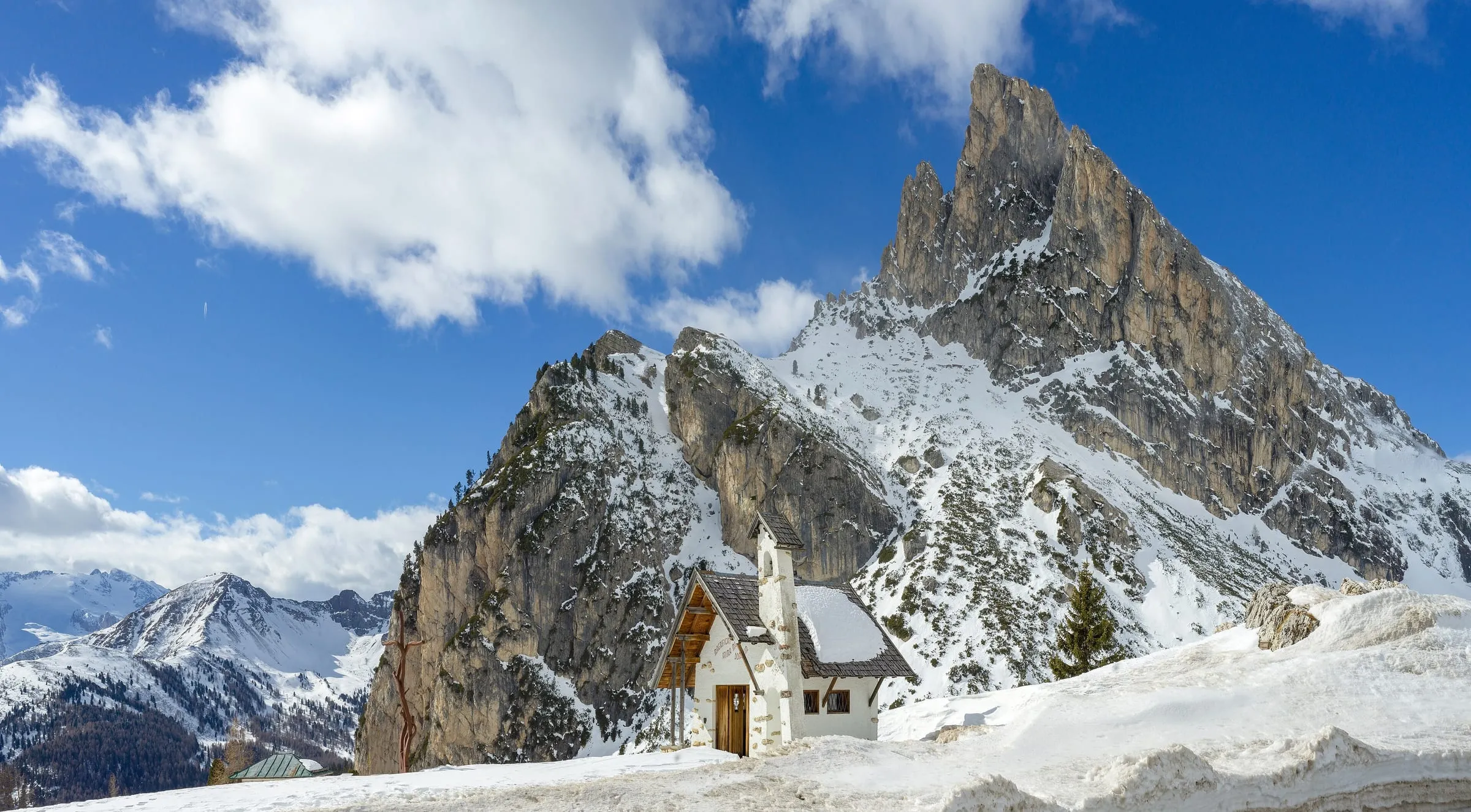
Cortina d’Ampezzo and the 2026 Winter Olympics
Cortina hosted the Olympic Winter Games from 6 to 22 February 2026, and the Paralympics from 6 to 15 March. Alpine skiing was held on the Olympia delle Tofane, curling in the renovated Olympic Ice Stadium, and bobsleigh, skeleton and luge at the new Sliding Centre. Para alpine skiing, wheelchair curling and para snowboard followed in March.
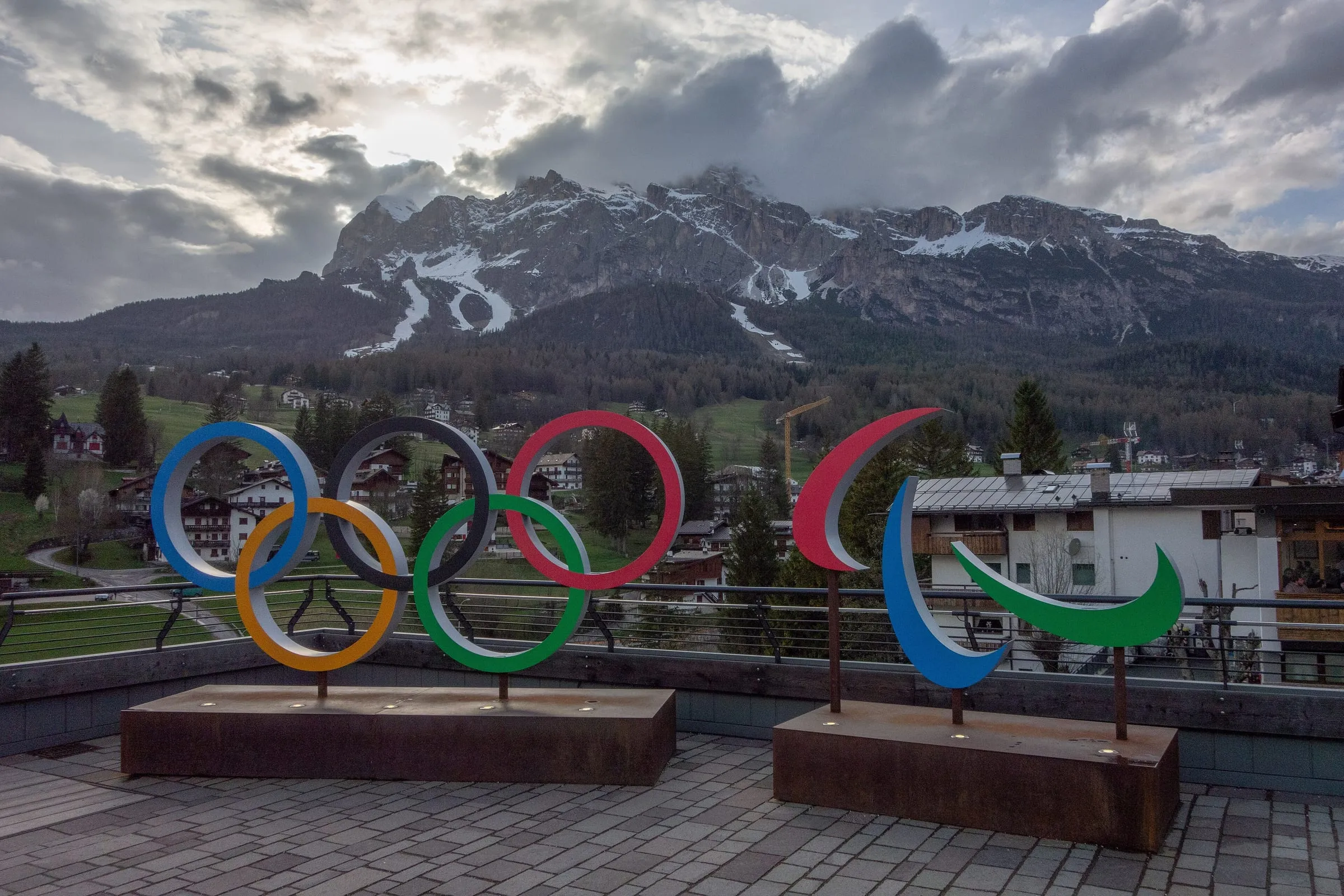
Not every Olympic project is in use yet. A new Apollonio–Socrepes gondola, meant to link the town with the Tofana slopes, wasn’t ready for the Games, and at the end of March 2026 it still wasn’t open to the public, with no date confirmed. Check whether it’s running before you plan around it.
Snow in Cortina d’Ampezzo and the 2026/27 season
As of late October 2026, Cortina’s 2026/27 opening and closing dates are still to be confirmed by Dolomiti Superski. Other Dolomiti Superski areas open from 28 November or 4 December 2026, so check the official sites before you book an early-season trip.
The town sits lower than many big Alpine resorts, so the pistes rely on snowmaking early and late in the season. Dolomiti Superski says Cortina’s snowmaking system is being renewed for 2026/27.
Is Cortina d’Ampezzo good for a last-minute ski trip?
Sometimes. In its favour, it’s one of the easiest Dolomites resorts to reach from Venice, with daily buses from the airport, and the town has plenty going on off the slopes if the snow is average. Against it, the ski areas are spread out and not all linked, and the opening dates for 2026/27 weren’t confirmed by late October.
Before you book, check which areas are open (especially the Tofana, Cinque Torri and Lagazuoi) and whether the passes to Alta Badia are clear. Avoid Christmas, New Year and Carnival if you can. Then find a place to stay in Cortina.
Cortina d’Ampezzo lift passes
- Valle pass: Cortina, San Vito di Cadore and Auronzo-Misurina, including the Lagazuoi run to Armentarola. 120 km of pistes.
- Dolomiti Superski: all 12 areas and 1,200 km. Young children can ski free with an adult who buys a pass for the same days; the birth-year cut-off changes each season, so check it when you buy.
- My Dolomiti Card: a personal card that holds your pass. Buying online gives 5% off, if you buy up to 2 days before the pass starts.
- Ticket offices at the lifts sell passes of up to 7 days. Longer and season passes are sold at the Skipass Office.
Since 1 January 2022, everyone on Italian slopes has needed third-party liability insurance. You can usually add it when you buy your pass, or check that your travel insurance covers it.
Après-ski and things to do in Cortina d’Ampezzo
Cortina has an upmarket, sociable feel, with smart hotels, shops and bars along Corso Italia. There’s plenty to do if you’re not skiing:
- Ice skating and curling lessons, in a town with Olympic history on the ice.
- Snowshoeing, including night walks with dinner at a mountain hut.
- Indoor climbing, useful on a bad-weather day.
- Cross-country skiing around the valley.
- Lift rides for non-skiers, as many lifts carry pedestrians too.
Who Cortina d’Ampezzo suits, and who it doesn’t
- Great for: couples and groups who want scenery, food and a lively town as much as skiing, Olympic fans, and confident skiers happy to hop between areas.
- Think twice if: you want to ski from your door, a big linked circuit with no buses, or a budget week. Cortina isn’t cheap, and high-season traffic and parking can be hard work.
Coming with children? Read our guide to Cortina d’Ampezzo with kids.
Helmets are compulsory for all ages on Italian slopes from the 2025/26 season onwards.
How to get to Cortina d’Ampezzo
Driving to Cortina d’Ampezzo
Two main roads cross Cortina: the SS51 Alemagna (north to south) and the SR48 bis, the Great Dolomites Road (east to west). From the A22 Brenner motorway, leave at Bressanone/Brixen (87 km away), follow the Val Pusteria east to Dobbiaco, then head south on the SS51. From the south, leave the A27 at Belluno (72 km). From Alta Badia you can also drive over the Valparola and Falzarego passes, which are high mountain roads, so check their status in winter.
Italian roads covered by a winter ordinance require winter tyres (marked M+S) or chains carried in the car, normally from 15 November to 15 April. Check the signs and the current rules before you travel.
There are several paid car parks in town, including the Pontechiesa multi-storey (190 spaces), and a large car park at Acquabona (500 spaces) with a free shuttle.
By train and bus
The nearest railway stations are Dobbiaco (31 km), with SAD buses, and Calalzo di Cadore (35 km), with Dolomiti Bus connections. Cortina Express, Flixbus and ATVO run daily buses to Venice airport and Venice-Mestre station, and in high season there are also links to Treviso airport, Bologna, Ferrara and Rovigo. The bus terminal is at the Ice Stadium.
Nearest airports
Treviso (130 km) and Venice (162 km) are the closest airports, followed by Innsbruck (170 km). For a splurge, helicopter transfers can land at the Fiames heliport.