France
 Austria
 Italy
 Switzerland
 English
 Deutsch
 Nederlands
 Español
 Čeština
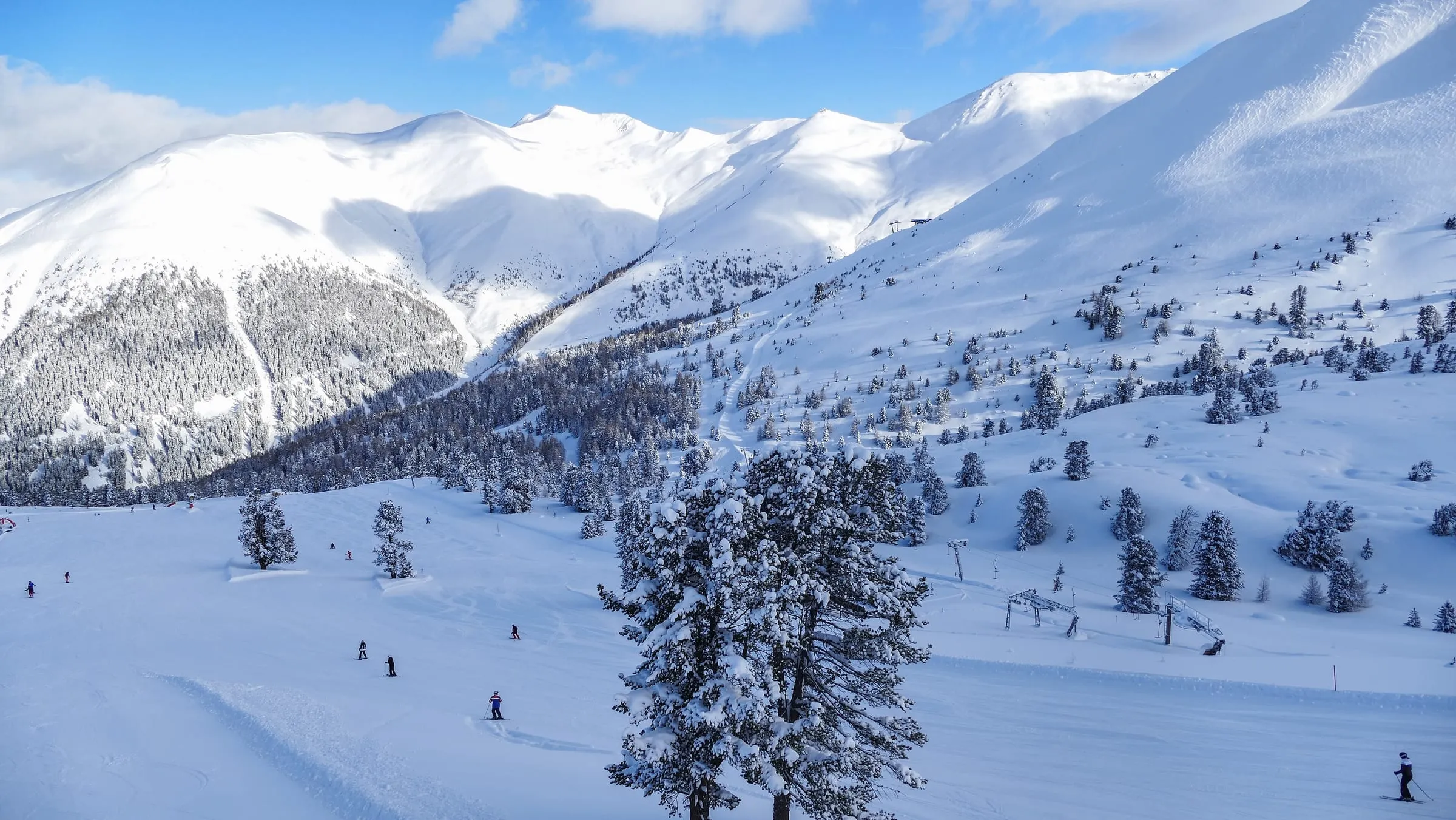
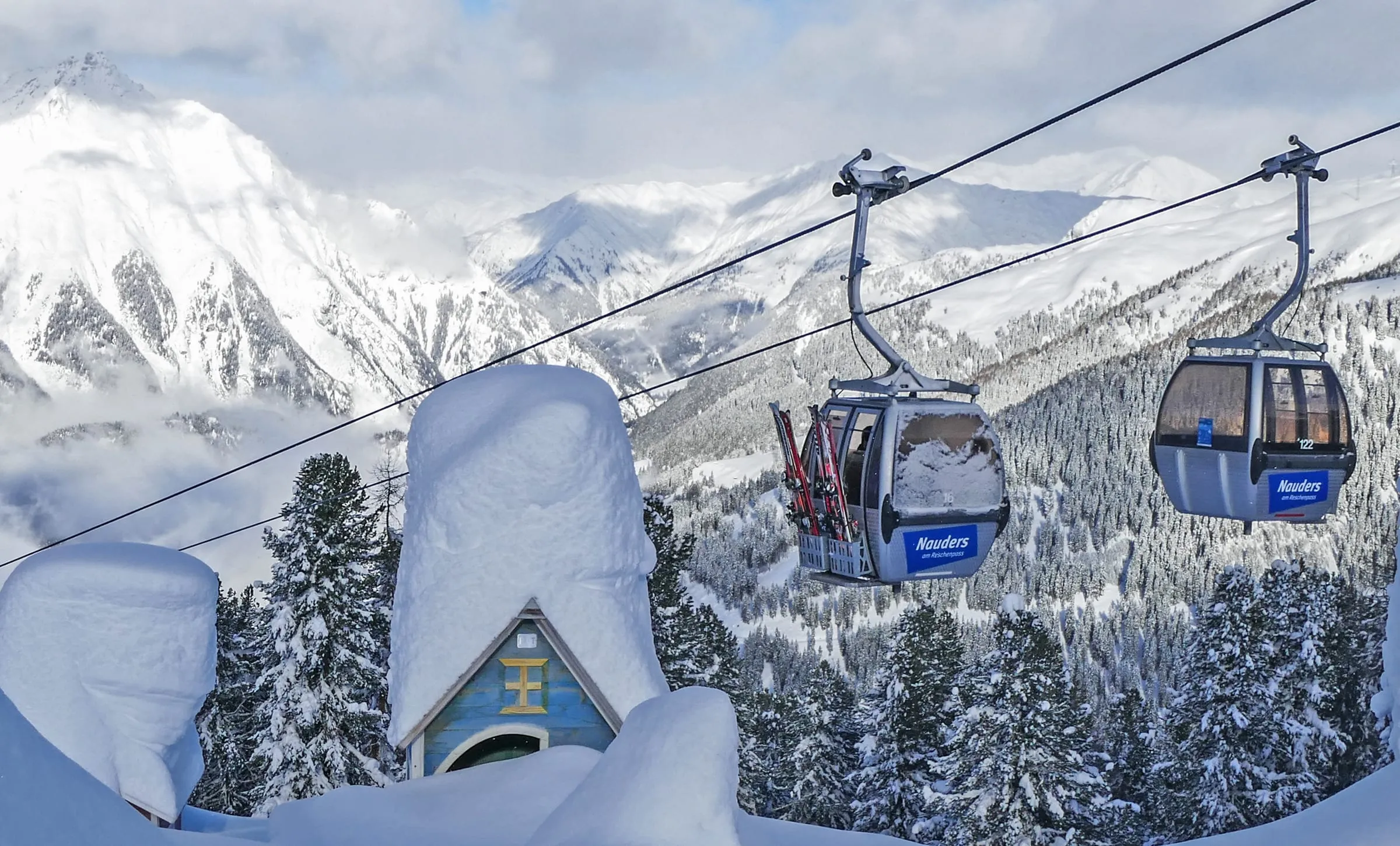
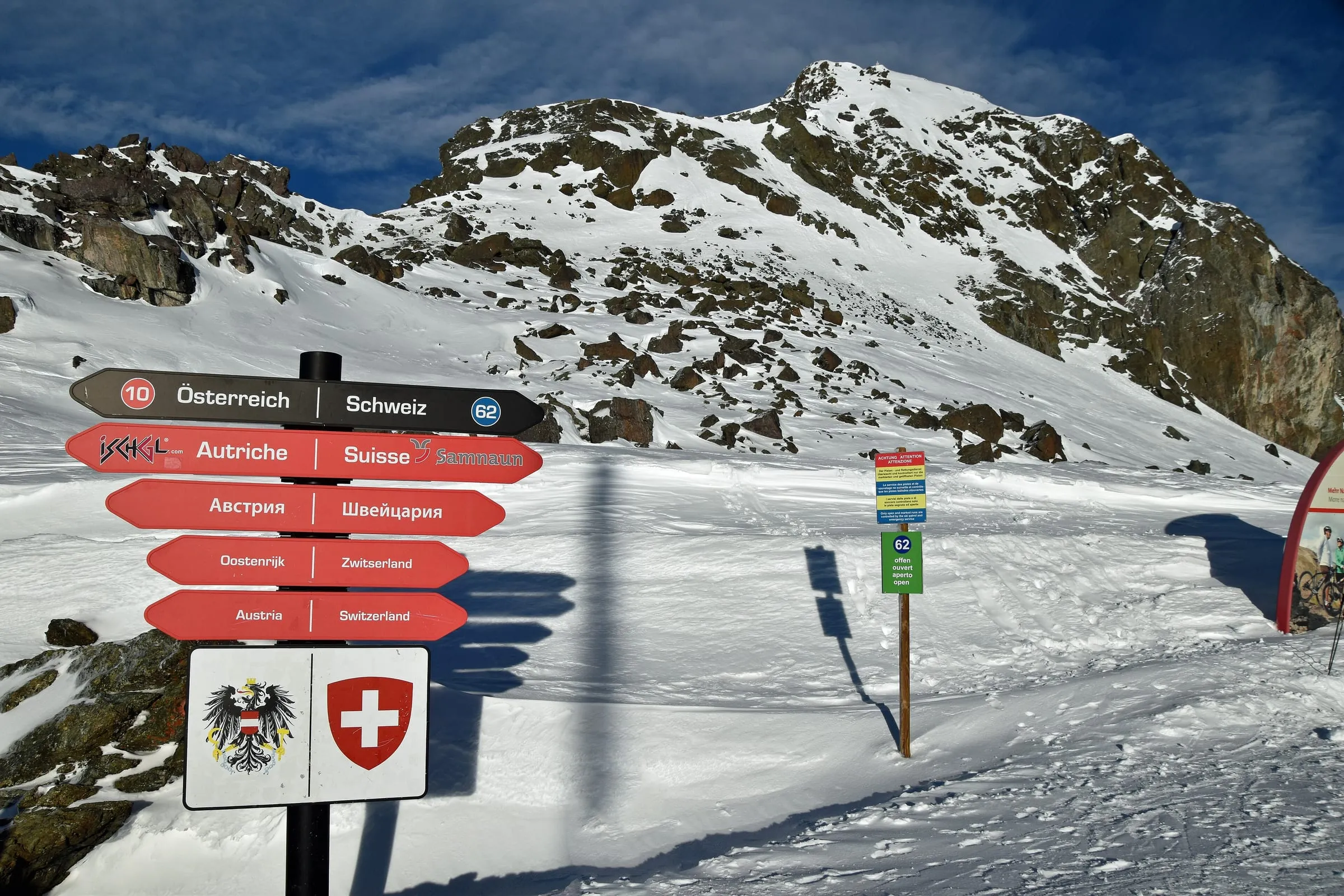
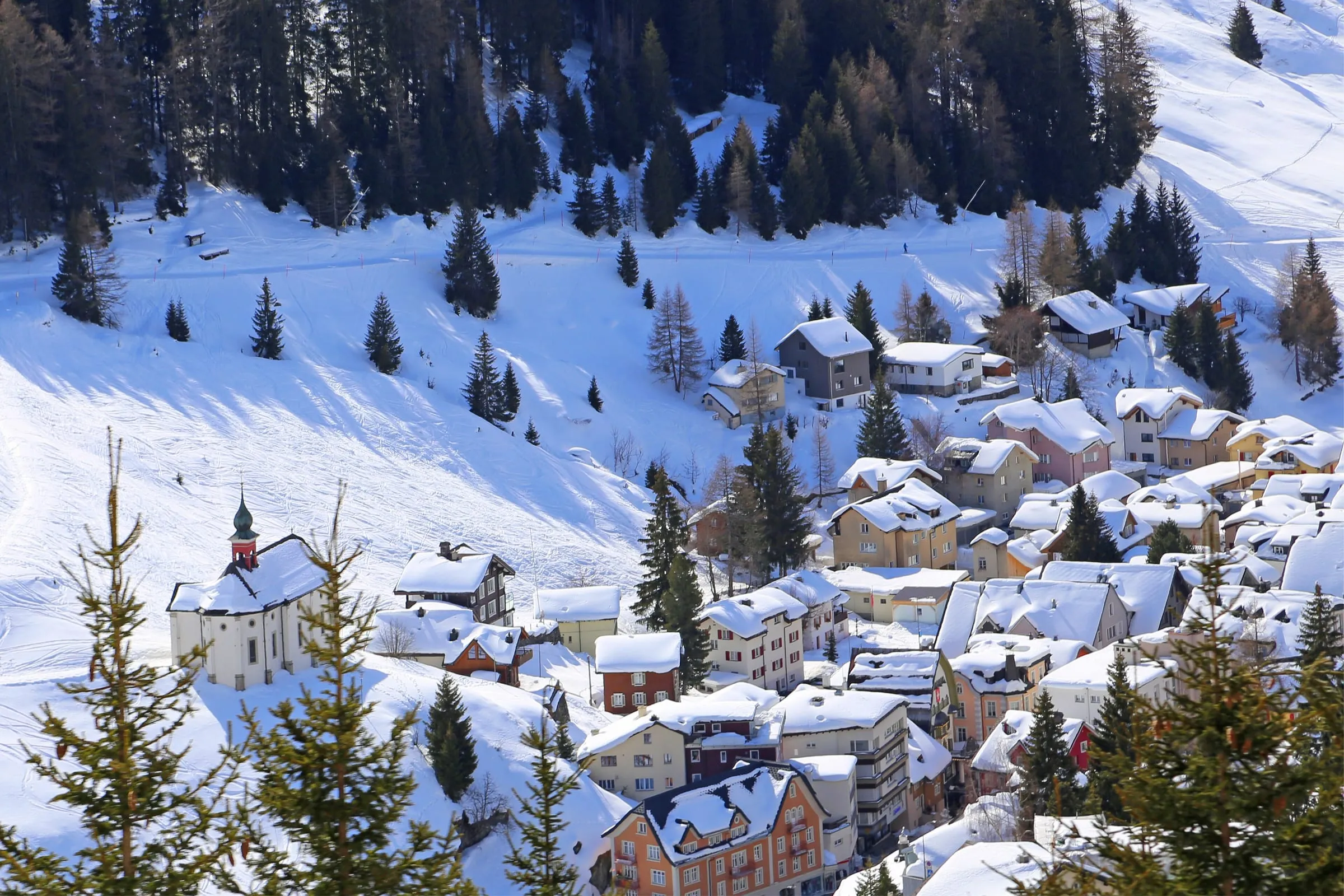
Nauders sits at about 1,400 m on the Reschen Pass, in the far west of Tyrol where Austria, Italy and Switzerland meet. It’s a proper village rather than a purpose-built resort, with a castle on the hill and the ski area rising above it. The Nauders am Reschenpass – Bergkastel ski area has 75 km of pistes and 13 lifts between about 1,400 and 2,750 m, and one pass of two days or more also gets you into two South Tyrolean ski areas over the border.
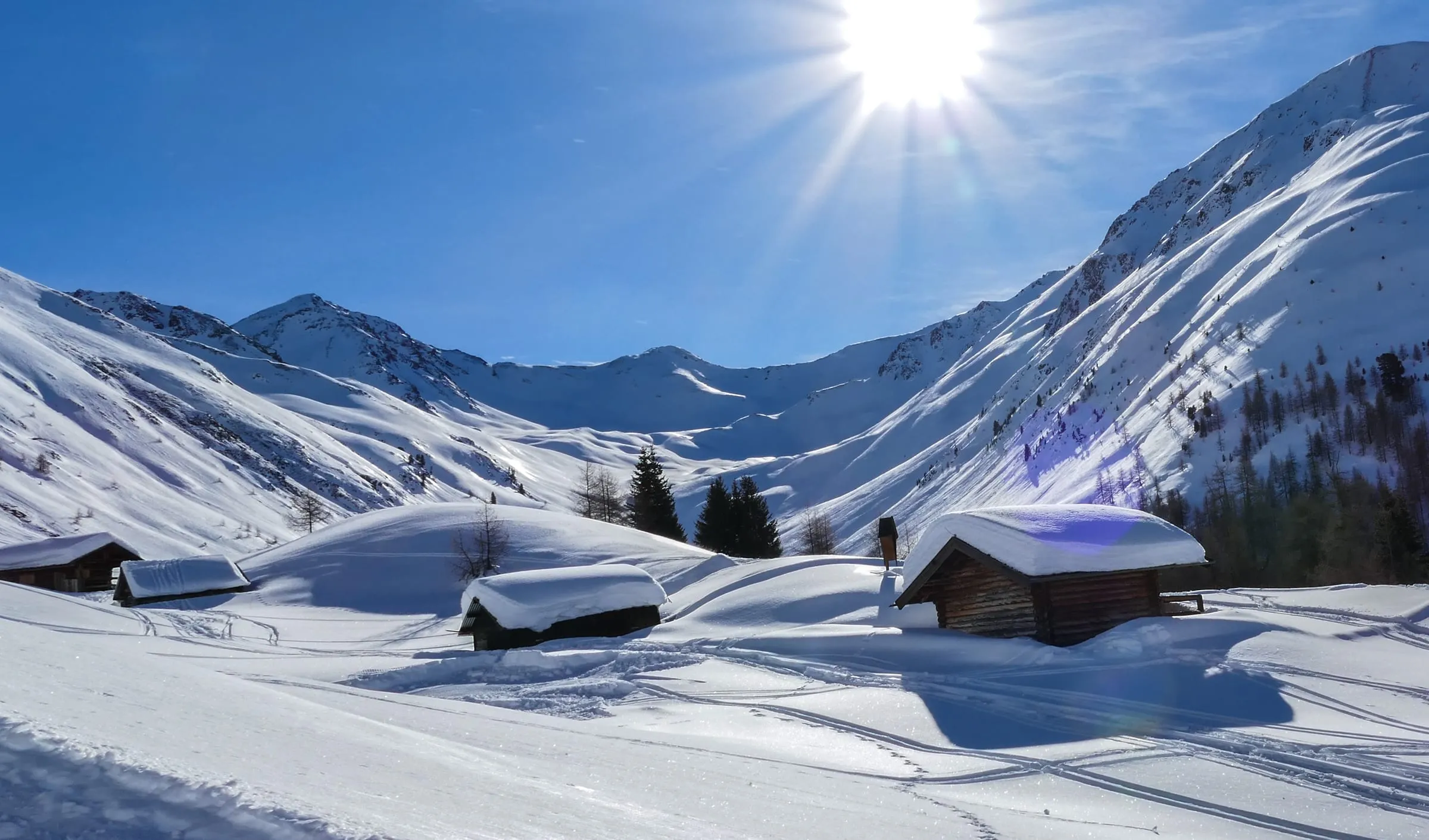
It’s less famous than its neighbours in the Inn valley and the Paznaun, and that’s a large part of the appeal. The skiing is high and sunny, the village is relaxed, and it’s built around families, with a children’s area, a ski kindergarten and a children’s restaurant all up at 2,200 m.
Nauders ski area: 75 km on the Reschen Pass
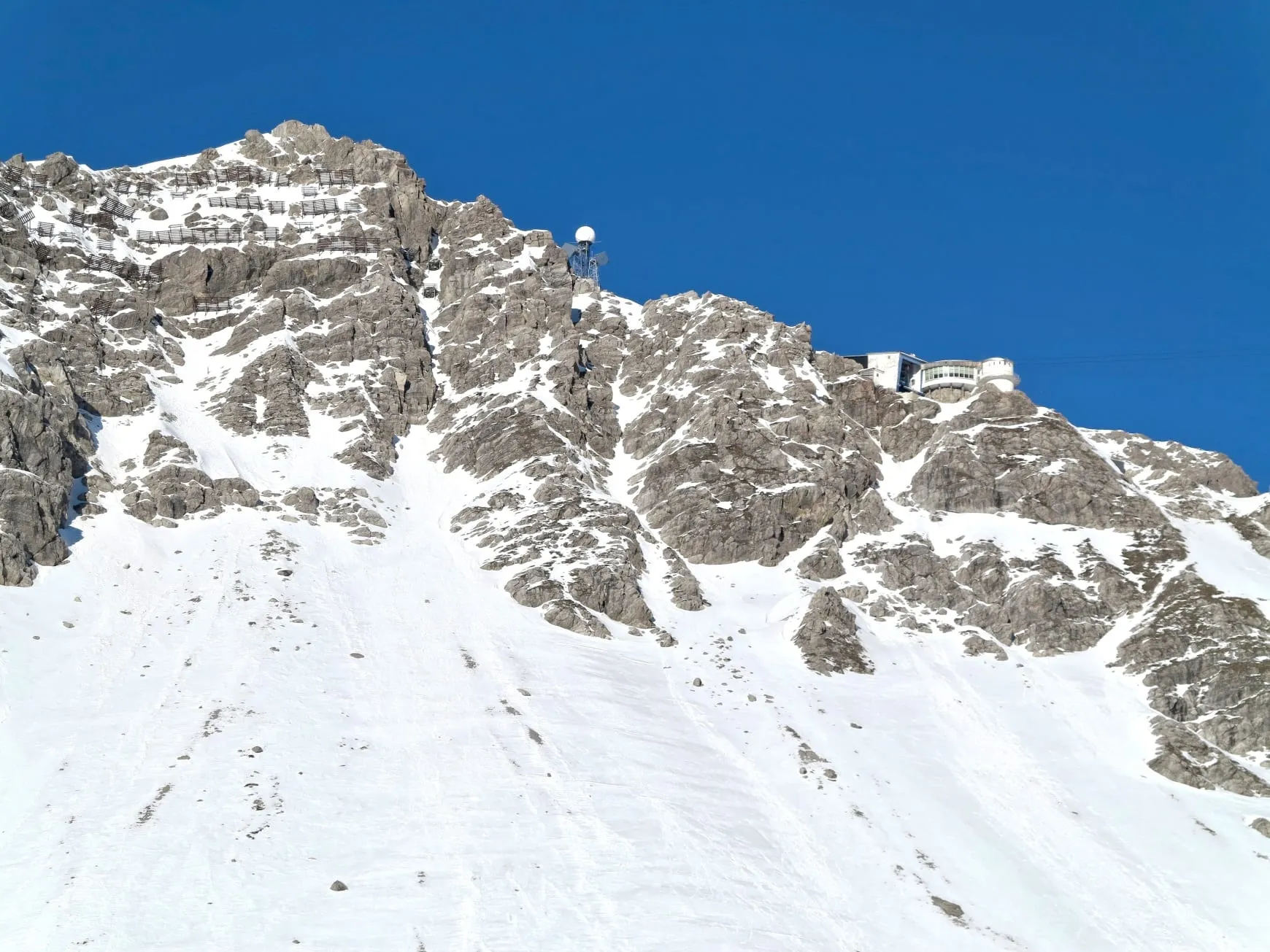
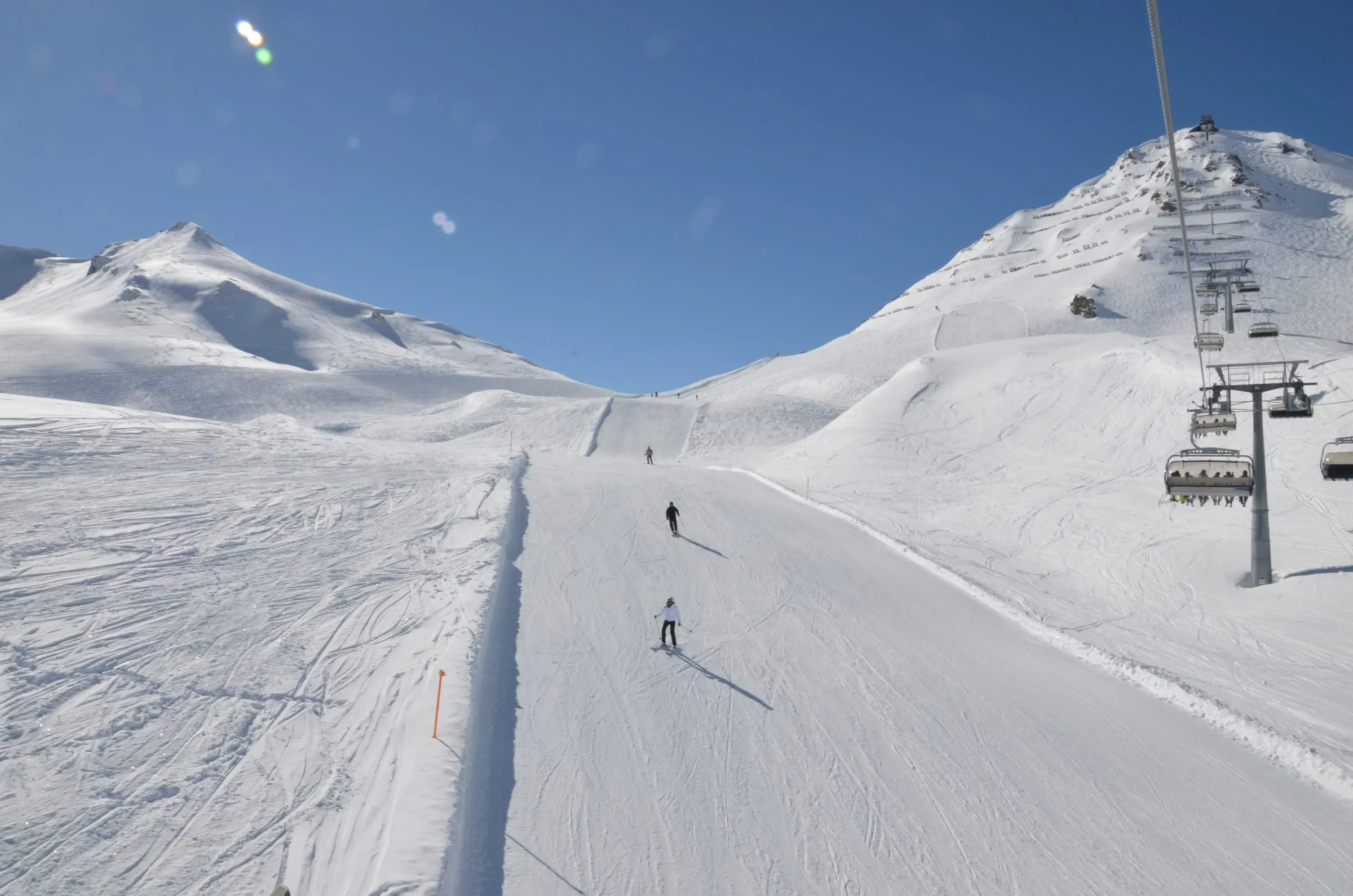
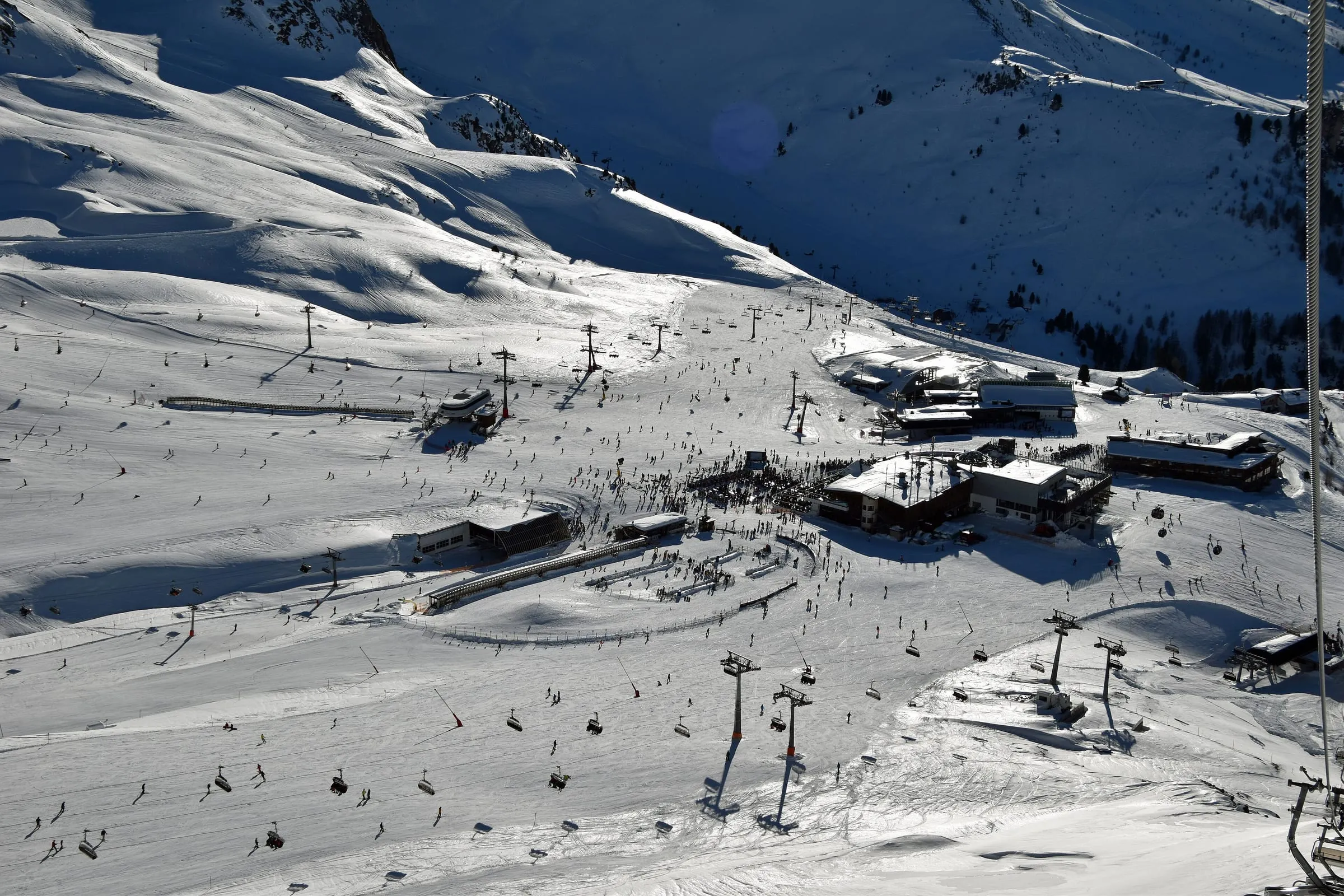
The Bergkastel gondola takes you from the valley up to the Bergkastel plateau at about 2,200 m, the hub of the ski area. From there, chairlifts fan out to the higher slopes: the Zirmbahn, the Gaisloch six-seater and the Tscheyeck chairlift, which climbs towards the Gueser Kopf, the highest point in Nauders at 2,750 m. The Tirol tourist board lists 24 km of easy, 34 km of intermediate and 17 km of difficult runs, plus marked ski routes.
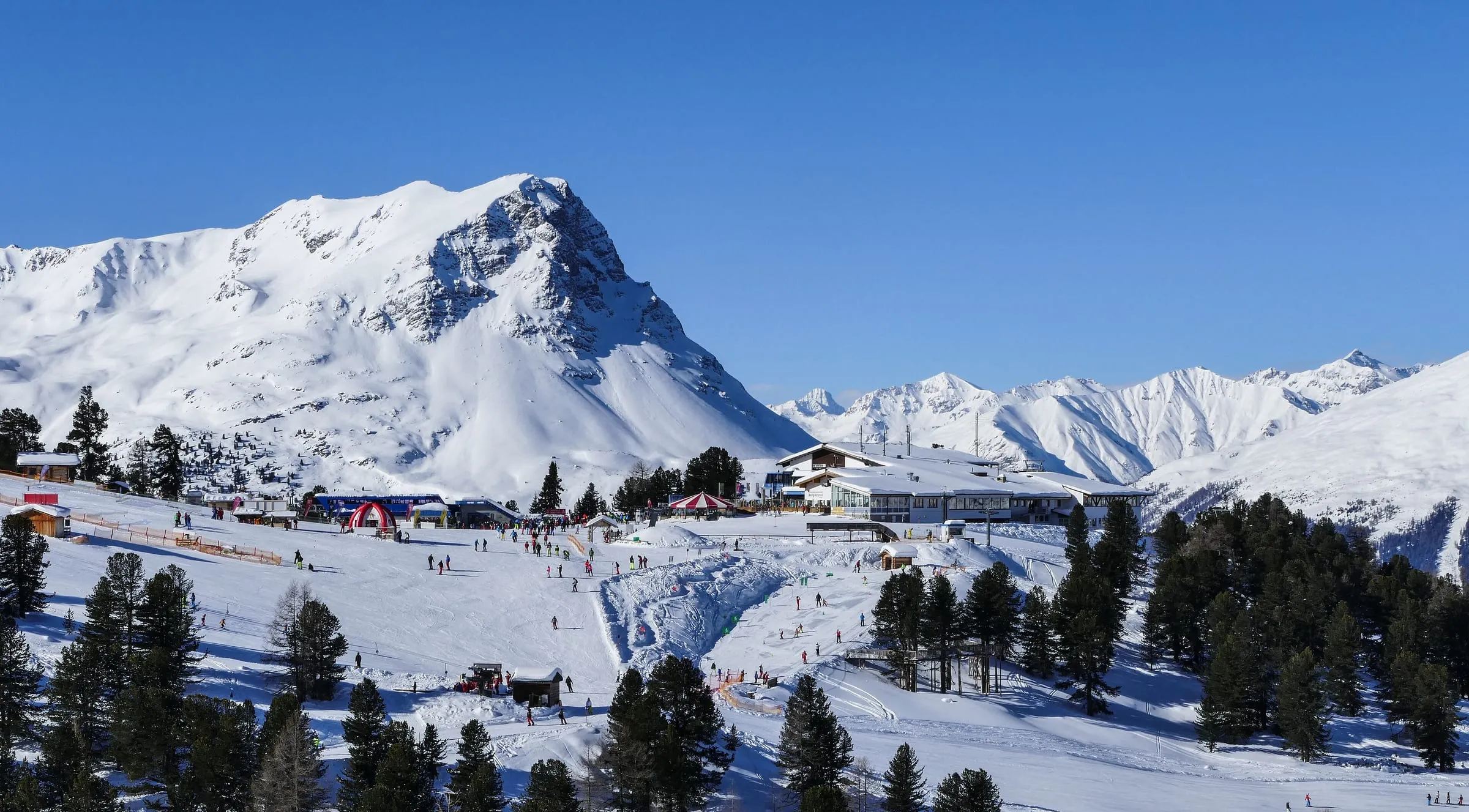
Skiing in Nauders for beginners
Beginners start at the Snow Base Bergkastel, which has two covered conveyor belts, 45 m and 20 m long, right by the top of the gondola. Next door, the Goldpark area has the Goldseebahn lift and the wide blue Goldsee run, a sensible next step once you can turn and stop. Because the beginner terrain is up at 2,200 m rather than at the bottom of the valley, the snow there is usually better than the village’s altitude suggests. The catch is that you need the gondola to get up and down.
Skiing in Nauders for intermediates
With 34 km of intermediate runs, most of the area suits confident intermediates, and the long, open slopes above the treeline are good for cruising. Seventy-five kilometres is enough for a few days. For a full week, buy a pass of two days or more: it adds Schöneben-Haideralm and Watles in South Tyrol (the Zwei Länder Skiarena, 159 km in total), and the Nauders+ pass adds one day at the Kaunertal Glacier or Winterberg Fendels.
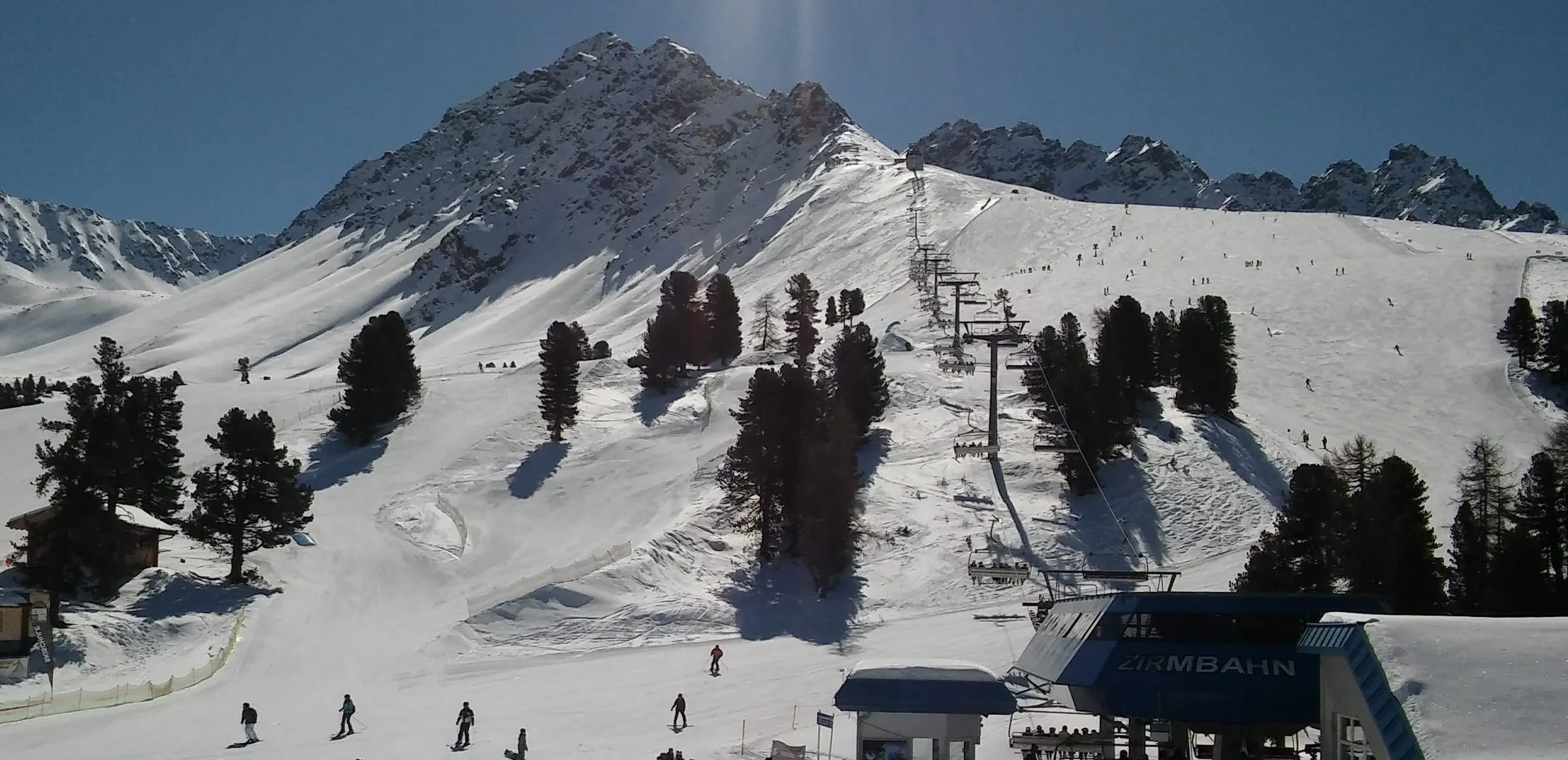
Skiing in Nauders for experts
There are 17 km of difficult pistes, and the steepest descent in the ski area is piste no. 25 from the Zirmhang. The real draw for strong skiers is off-piste, below.
Freeride in Nauders: 10 ski routes from the Gueser Kopf
Nauders has built up its freeride terrain to 10 marked ski routes and one variant. Several start at the Gueser Kopf at 2,750 m, including G3000 and Cannonrun. The Gipfellinie (Summit Line) drops from the Tscheyeck, Grenzroute (Border Route) runs along the Austria–Italy border from the top of the Almlift, and Down Under goes below the Gaisloch lift. Austria’s tourist board gives the biggest of them, the Gipfellinie and the Valdafur variant, around 800 vertical metres each.
Know the difference before you go. The ski routes are marked and secured against avalanches, but they aren’t groomed or patrolled, and you can meet rocks, bare patches and open streams. The Valdafur variant from the Tscheyeck top station is a “wild descent”: not marked, not controlled and not secured against avalanches. Carry a transceiver, shovel and probe, check the avalanche bulletin, and hire a guide for anything beyond the marked routes.
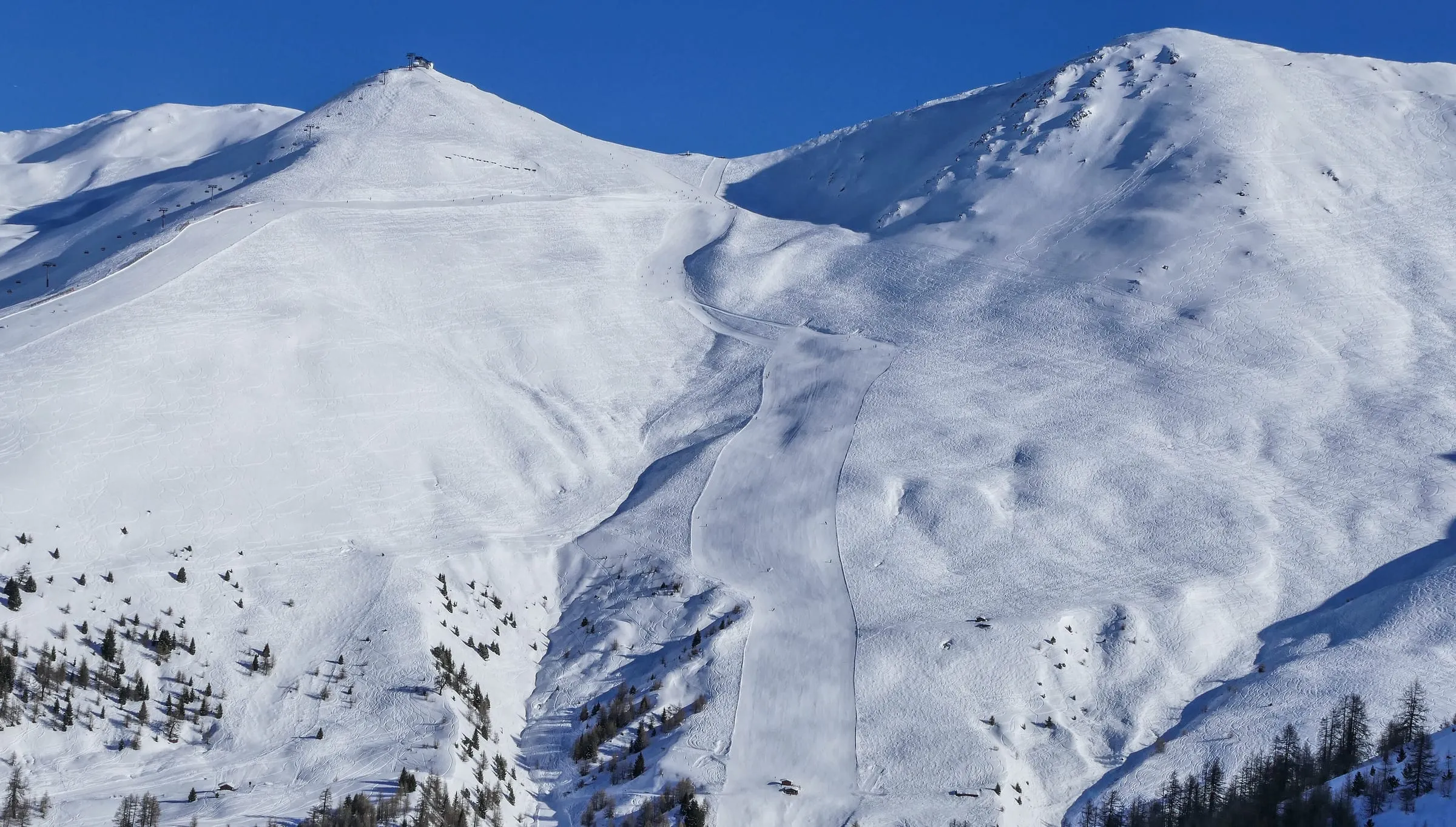
Snow in Nauders and the 2026/27 season
For 2026/27, the ski area opens on 11 December 2026, with an opening weekend of events on 12 and 13 December. The lift company’s pass seasons for the winter run until 4 April 2027, so plan on skiing until early April, snow permitting. Later in the winter, a slope food festival runs from 11 to 14 March 2027 and the Golden Mountain Beats music week from 15 to 21 March.
The ski area runs from about 1,400 m up to 2,750 m, and its hub at Bergkastel is at 2,200 m. The resort backs that height up with snowmaking and describes itself as snow-sure into spring. The weak point is the bottom of the mountain: in a thin or warm spell, the lowest runs back towards the valley are the first to suffer, so be ready to ride the gondola down.
Is Nauders good for a last-minute ski trip?
Often, yes. It works at short notice because:
- The skiing is high. The beginner areas and the children’s area are at 2,200 m and the lifts reach 2,750 m, so a mild spell in the valley matters less than at lower resorts.
- One pass covers three areas from two days, so a smaller resort doesn’t feel small.
- It’s easy to reach by public transport, with a direct bus timed to meet trains at Landeck.
The downsides: it’s a long way from most airports, the season is shorter than at glacier resorts, and the last stretch of the drive crosses a mountain pass. If you’re coming early in December, note that the Landeck tunnel is closed for renovation from 12 October until 7 December, with traffic diverted through Landeck. Then find a place to stay in Nauders.
Nauders lift passes
- Buy online in advance at the lift company’s ticket shop: the online rate is cheaper than at the ticket desk, and an online-only Winterstart rate covers 11 to 18 December 2026.
- Nauders+ passes cover the Nauders ski area and, from two days, one day at the Kaunertal Glacier or Winterberg Fendels.
- Zwei Länder Skiarena passes add Schöneben-Haideralm and Watles in South Tyrol.
- For 2026/27, the child rate covers children born from 2012 to 2020 and the youth rate those born from 2009 to 2011. Seniors born in 1962 or earlier get a reduced rate.
- Families have several offers, including a young family pass and Family Weeks at Easter. See Nauders with kids.
Après-ski and things to do in Nauders
Nauders isn’t a party resort. The après is mostly on the mountain, at places such as the Sunnabar, the rustic Lärchenalm and the Stieralm, and the Bergkastel panoramic restaurant at 2,200 m has a big sun terrace.
Off the slopes, there’s plenty to do:
- Tobogganing on the 8 km Bergkastel run, one of the longest natural toboggan runs in Tyrol, from the gondola’s top station down to the valley. The 4 km Lärchenalm run is floodlit on Thursday evenings.
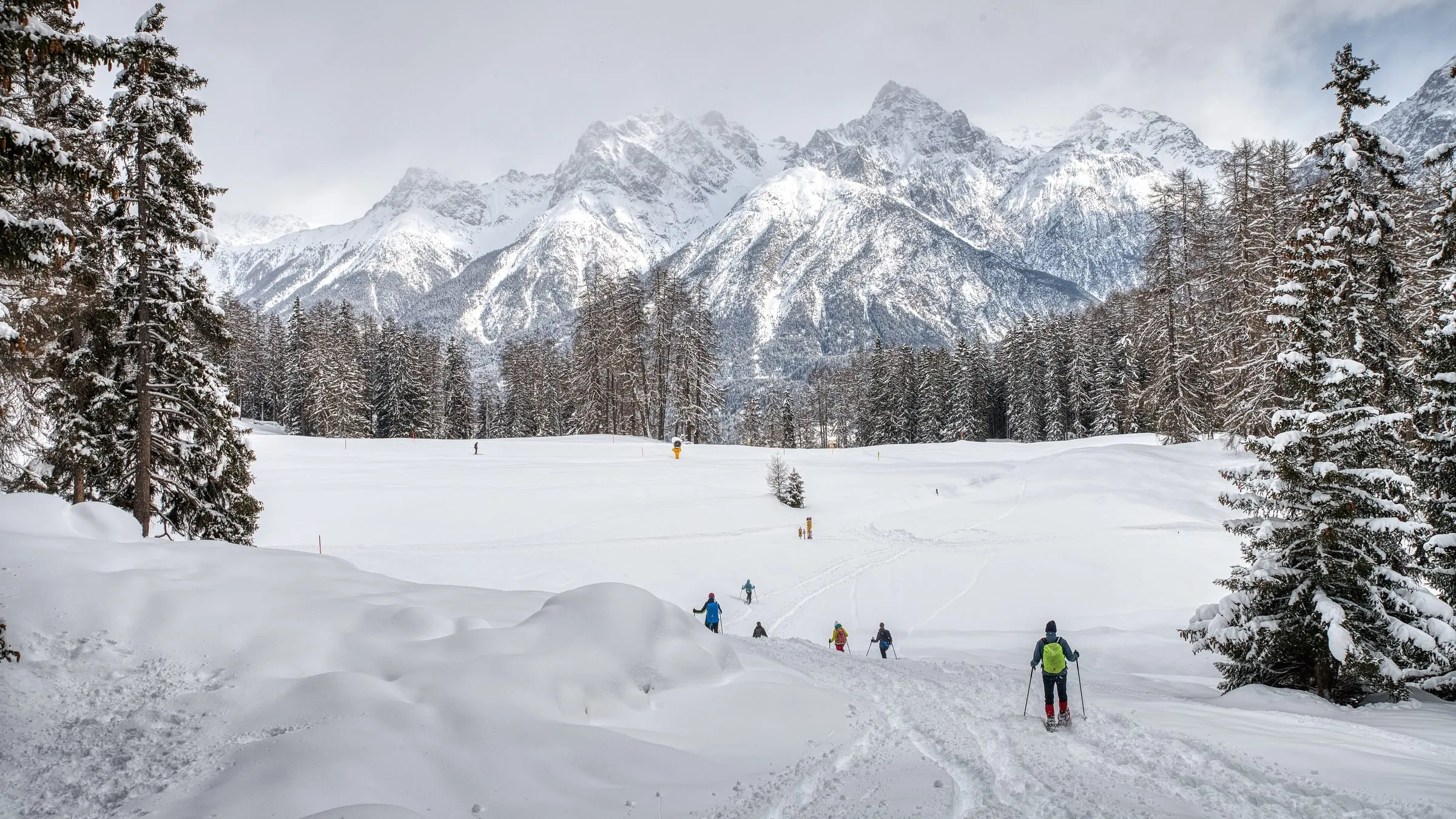
- Cross-country skiing on 70 km of trails around Nauders, or 90 km including the Italian side, some of them at between 1,440 and 1,900 m.
- 110 km of cleared winter walking routes, plus snowshoe trails.
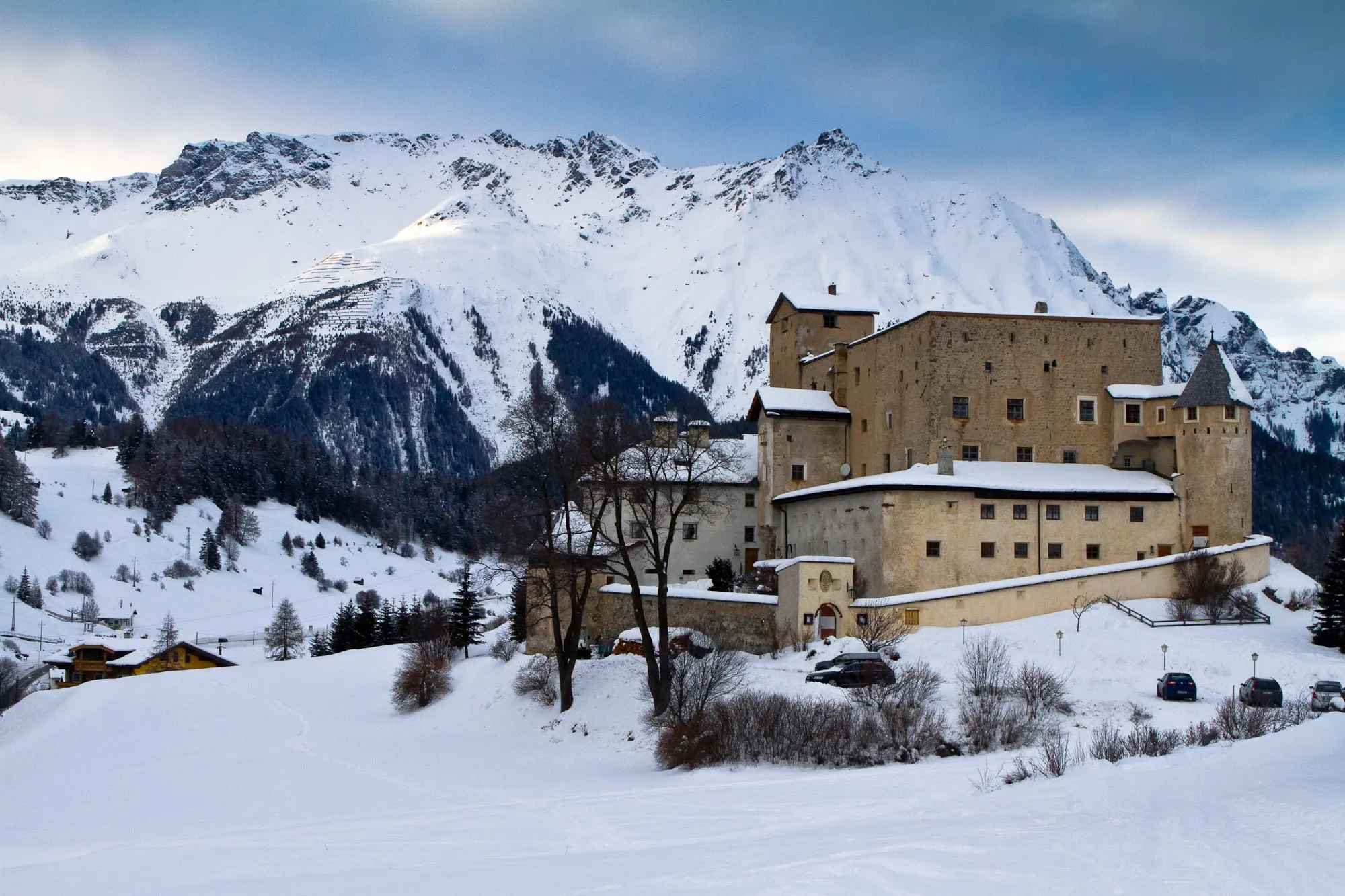
- The Winter Wonderland below Schloss Naudersberg, with a natural ice rink, a tubing run and a mini bob run.
Who Nauders suits, and who it doesn’t
- Great for: families, beginners and intermediates who want high, uncrowded slopes, freeriders on a budget, cross-country skiers, and anyone who likes a real village over a purpose-built resort.
- Think twice if: you want lively après-ski, a short transfer from a big airport, lots of steep pistes, or skiing after early April. The ski area is reached by gondola rather than from your door, so check how your hotel gets you there.
How to get to Nauders
Driving to Nauders
From Germany and the Inn valley, head for Landeck, then follow the Reschen road south up the Inn valley to Nauders. From the west, come through the Arlberg tunnel to Landeck; from South Tyrol, drive up from Merano over the Reschen Pass. The road is good, but it’s a mountain road in winter.
Austria’s winter equipment rule applies from 1 November to 15 April: in wintry conditions you need winter tyres, and chains may be required too, depending on the weather. You need a vignette for Austrian motorways and for the Landeck tunnel. From 1 December 2026, only digital vignettes are sold for 2027. One-day and 10-day vignettes bought online are valid straight away; two-month and annual ones bought online by private buyers generally start after 18 days.
By train and bus
Take the train to Landeck-Zams, which has long-distance connections, including a daily direct Railjet from Frankfurt via Stuttgart and the Arlberg. From the station, the direct bus route 273 runs 14 times a day, seven days a week, timed to meet the Railjets, and reaches Nauders in under an hour. Plan the trip on the VVT route planner.
Nearest airports
Innsbruck is the closest airport, with onward travel by train to Landeck and the bus to Nauders. Munich and Zurich are the bigger alternatives, both connected to Tyrol by rail; Memmingen, Friedrichshafen and Salzburg are also options.