France
 Austria
 Italy
 Switzerland
 English
 Deutsch
 Nederlands
 Español
 Čeština
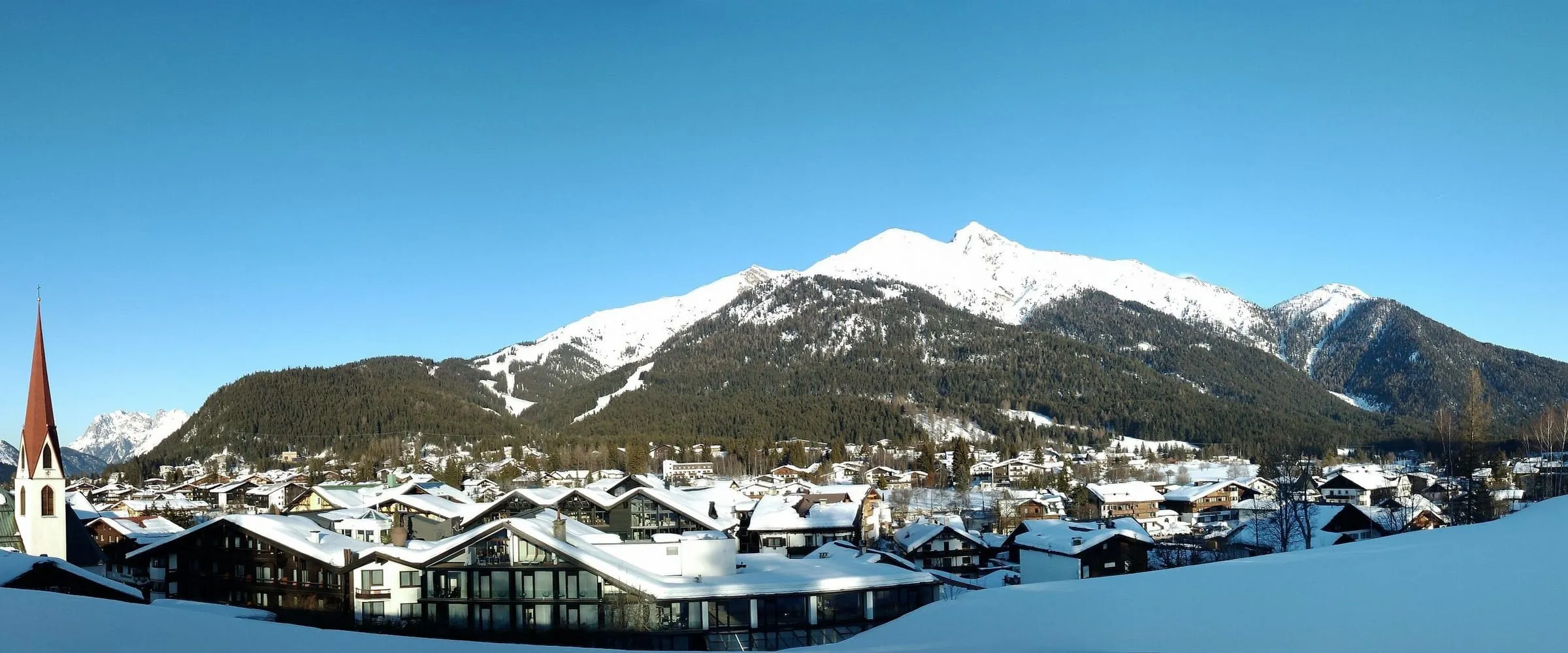
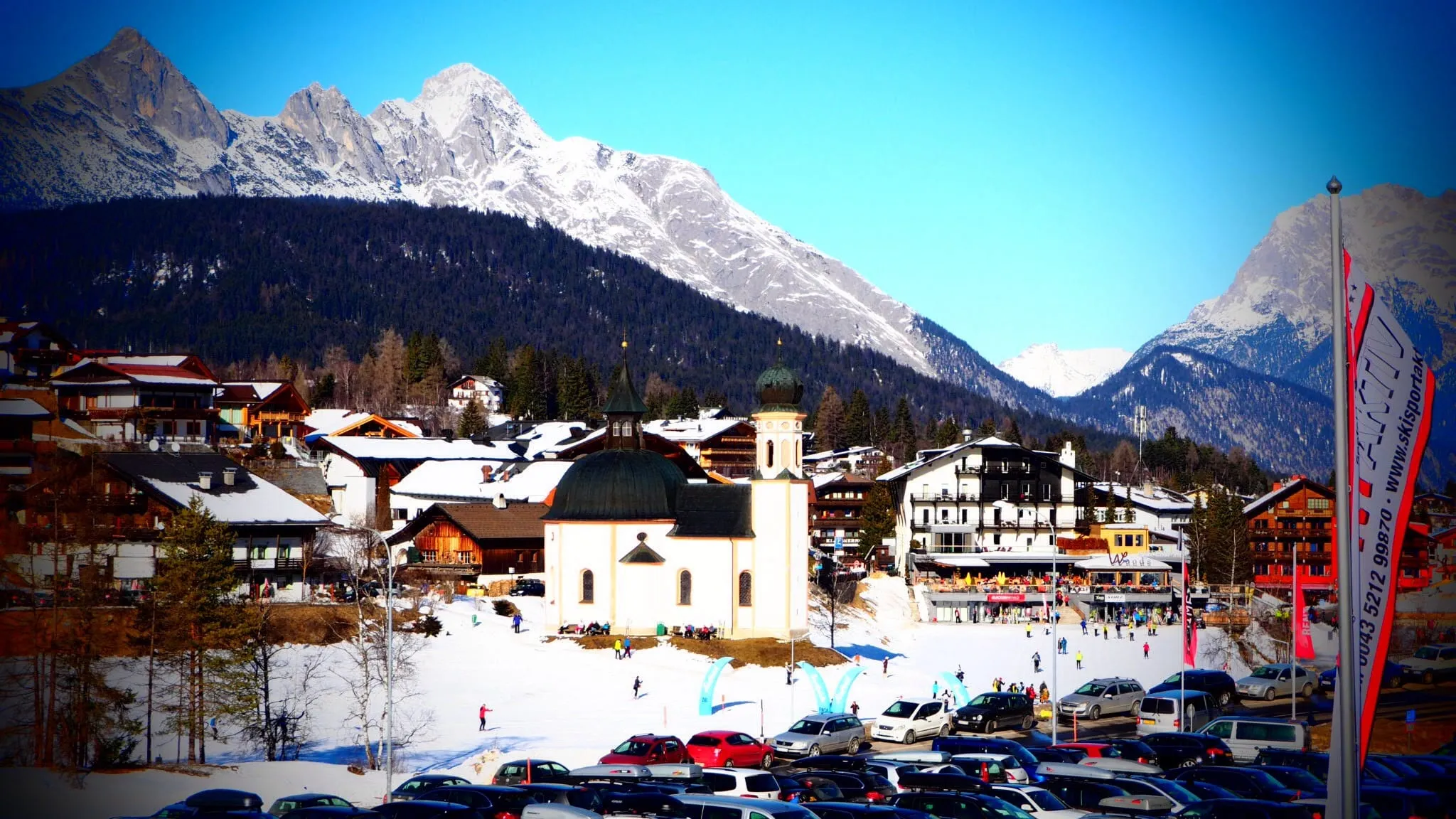
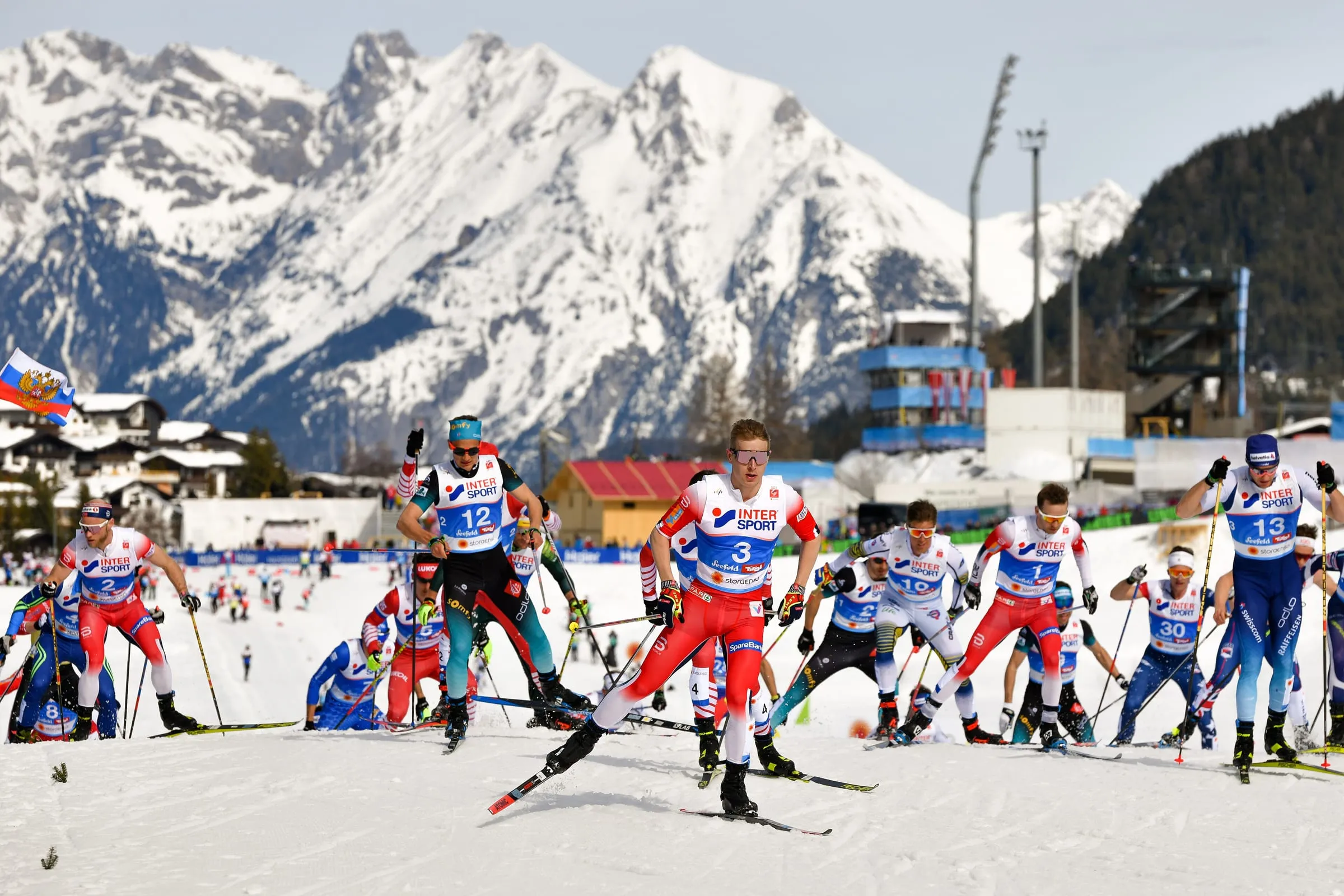
Seefeld sits on a sunny, open plateau at around 1,200 m, between the Wetterstein and Karwendel mountains, about 25 km from Innsbruck. It’s the main village of the Region Seefeld, alongside Leutasch, Mösern, Reith and Scharnitz. Seefeld is a big name in Nordic skiing: it hosted the cross-country events of the 1964 and 1976 Winter Olympics and the 2019 Nordic World Ski Championships.
That shapes what kind of trip this is. Seefeld has 245 km of cross-country trails and a modest 31 km of downhill pistes, plus a smart, car-free village centre with a railway station on its doorstep. It’s a great pick for families, beginners, cross-country skiers and groups where not everyone skis. It’s not one for keen downhillers looking for mileage.
Seefeld ski area: four small areas on one pass
Seefeld’s downhill skiing is spread over four separate areas with 33 lifts. They aren’t linked on skis, but free ski buses connect them, and one lift pass, the Happy Ski Card, covers them all.
- Rosshütte is the biggest and highest: 17.5 km of pistes and 12 lifts, between 1,234 m and 2,064 m. A funicular climbs from the valley station above the village, and lifts continue up to the Seefelder Joch and the Härmelekopf.
- Gschwandtkopf, just outside the centre, runs from 1,160 m to 1,470 m, with about 6 km of easy runs, including a 1.7 km family run.
- Geigenbühel and Birkenlift are two tiny beginner areas a few minutes’ walk from the centre, with gentle slopes and magic carpets.
- Katzenkopf, in Leutasch, has 5 km of pistes and 3 lifts, and night tobogganing.
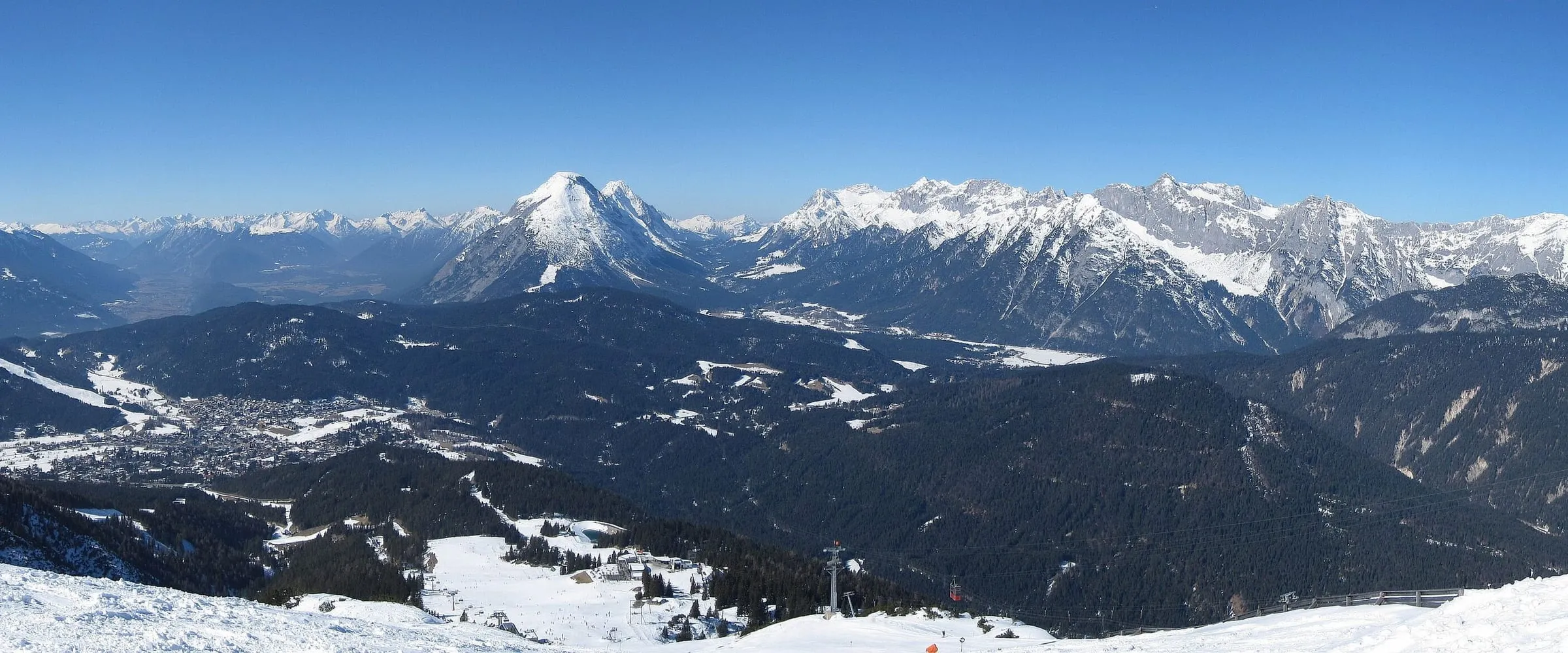
Skiing in Seefeld for beginners
This is where Seefeld does best. Geigenbühel and the Birkenlift are made for first turns, with magic carpets right by the village. Gschwandtkopf’s runs are all graded easy, so once you can turn and stop, there’s a whole hill to practise on. The Rosshütte adds a children’s area and wide, easy slopes higher up.
Skiing in Seefeld for intermediates
Intermediates will be happiest at the Rosshütte, with longer runs from the Seefelder Joch and views over the plateau to the Inn valley. Expect to know the area well within a couple of days. Mixing in Katzenkopf or a cross-country lesson keeps a week varied.
Skiing in Seefeld for experts
There’s little here for strong piste skiers. The most challenging terrain is high on the Rosshütte, below the Seefelder Joch and the Härmelekopf. In autumn 2026, Bergbahnen Rosshütte reported its Härmelekopf cable car closed with a technical fault, so check before you go if that’s why you’re coming. Off-piste needs a guide and avalanche gear.
Cross-country skiing in Seefeld: 245 km of trails
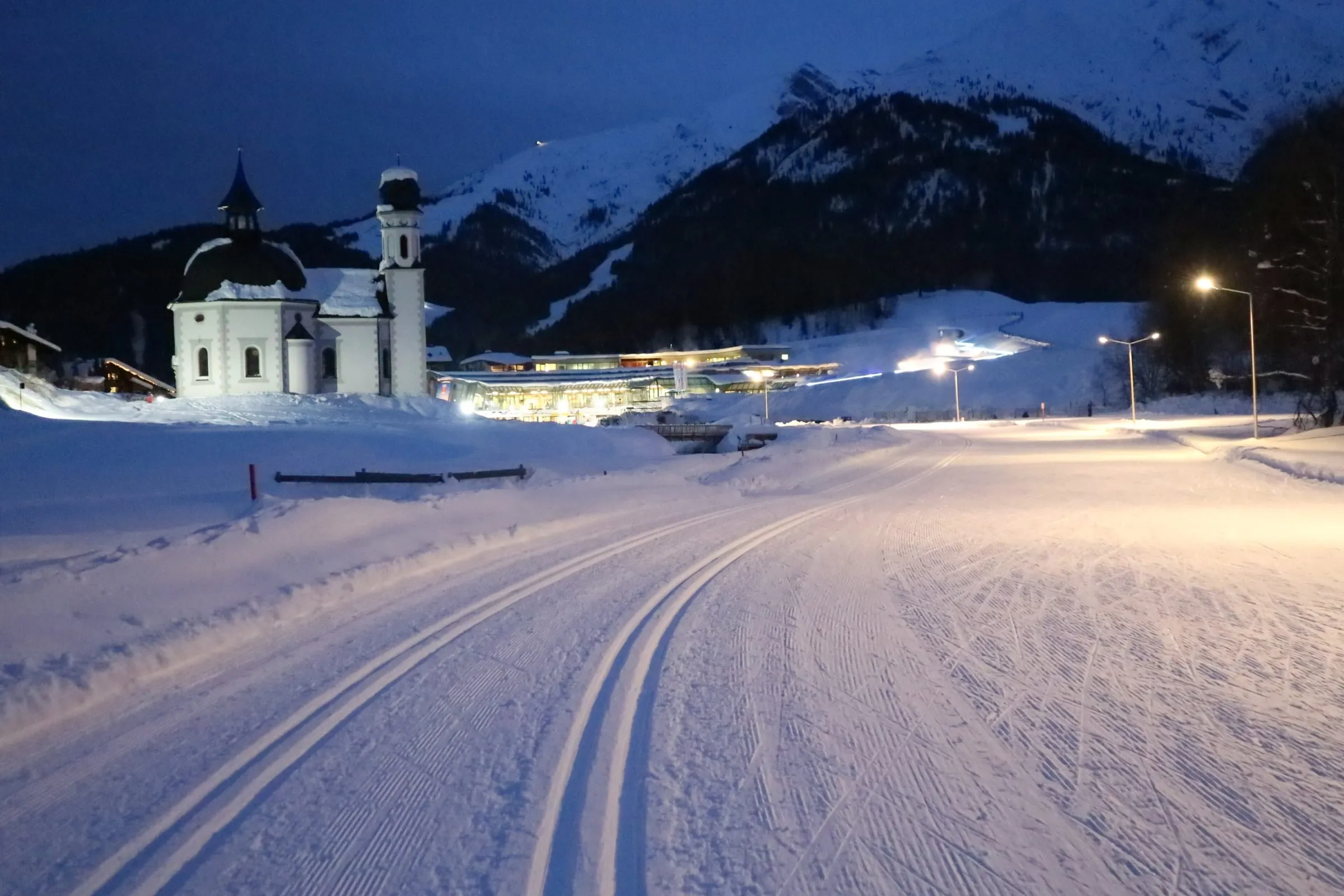
Seefeld is one of the classic cross-country destinations in the Alps. The region grooms around 245 km of trails across its five villages, prepared daily for both classic and skating. A few highlights:
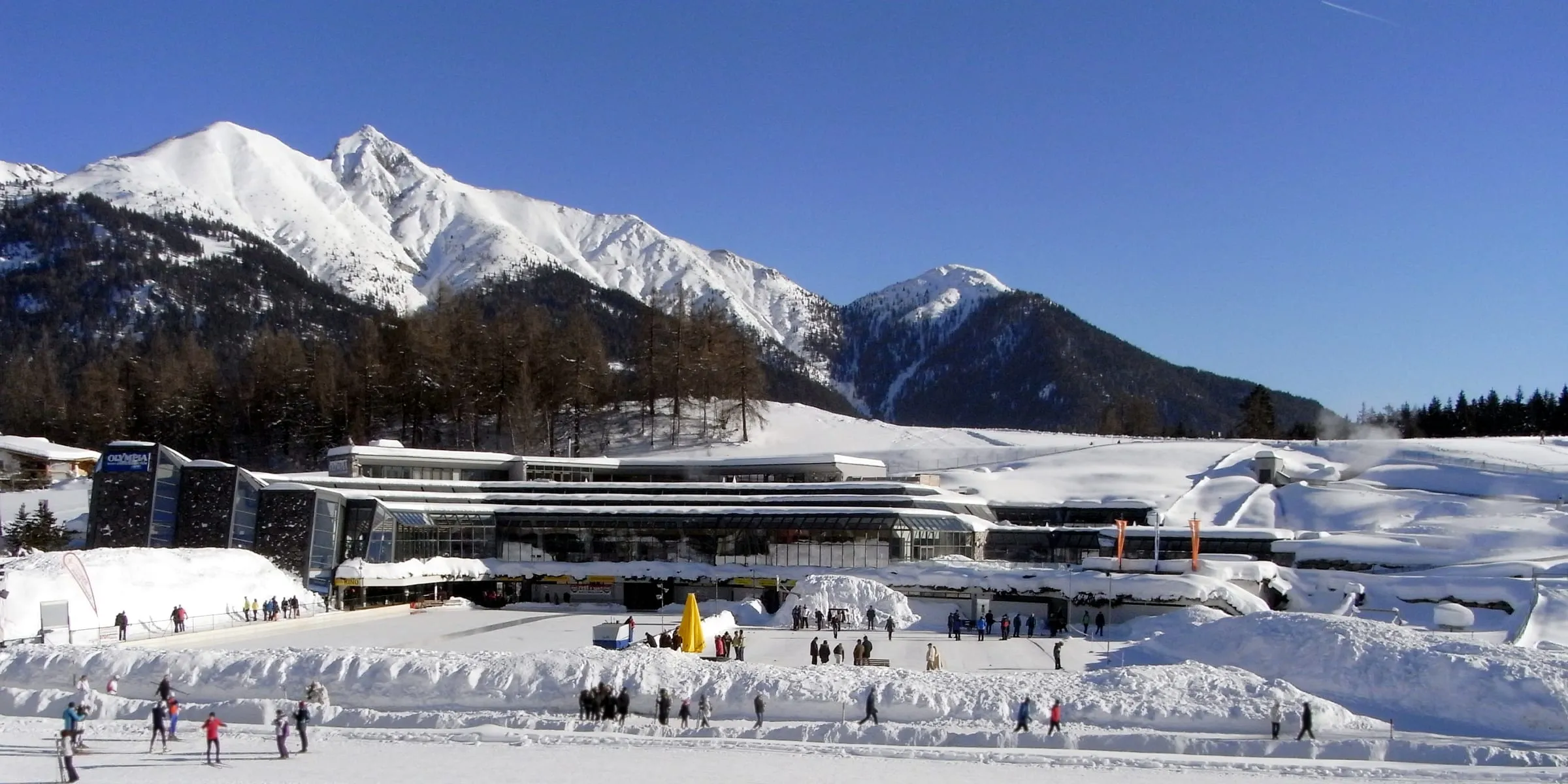
- The Arena365 cross-country centre in Seefeld, with three trails starting right there.
- The A1 floodlit night trail, open Monday to Friday from 5 pm to 8.30 pm.
- The Snowfarming trail in Leutasch, built from snow stored over the summer. It’s due to open on 13 November 2026, temperature and ground permitting, so it’s often the first trail of the season.
- The Leutasch-Wildmoos high trail, from the top of the Katzenkopf lift to the Wildmoosalm, with free lift access when the trail is open.
Adults need a trail ticket. Children up to their 15th birthday use the trails free. There are cross-country schools and rental shops in the region if you want to learn.
Snow in Seefeld and the 2026/27 season
The provisional opening dates for 2026/27, all depending on snow, are:
- Rosshütte: 4 December 2026.
- Gschwandtkopf: 11 December 2026 to 21 March 2027.
- Geigenbühel: 12 December 2026 to 14 March 2027.
- Birkenlift: 18 December 2026 to 14 March 2027.
- Katzenkopf, Leutasch: 19 December 2026.
The Rosshütte hadn’t published its closing date when we checked. The lifts run from 9 am to 4 pm.
Be realistic about the altitude. Most of the downhill skiing is between 1,160 m and 1,500 m, and only the Rosshütte goes above 2,000 m. Seefeld relies on snowmaking and, for cross-country, on snow farming and stored snow. In a mild spell, the low slopes suffer first.
Is Seefeld good for a last-minute ski trip?
For the right group, yes. It’s easy to reach at short notice: trains run from Innsbruck in about 40 minutes and there are regular connections from Munich. It’s also one of the most reliable bets for early-season cross-country, thanks to the Snowfarming trail.
It’s a poor last-minute pick if you want a big ski area or high, snow-sure slopes. In that case, look at a glacier resort instead. Before you book, check how many of the four areas are open, then find a place to stay in Seefeld.
Seefeld lift passes
- The Happy Ski Card covers the Rosshütte, Gschwandtkopf, Katzenkopf, Geigenbühel and the Birkenlift. You can buy it for a single day or longer, and there are “Choice” passes for 4 of 6 or 5 of 10 days.
- Age bands: children 6 to 15, youth 16 to 18, adults 19 and over. Under-6s aren’t free: they need a reduced “Snowman” ticket.
- Each area also sells its own tickets, and there are point cards for the small lifts.
- The tourist office advertises 25% off multi-day Happy Ski Cards for two promotional periods: buy by 15 December for 8 to 24 January 2027, or by 15 February for 1 to 14 March 2027.
- Ski buses are free with a guest card, a valid ski pass or ski equipment.
Après-ski and things to do in Seefeld
Seefeld is more about relaxed evenings than wild après. On the Rosshütte, the Schirmbar and the Ski Alm are the après spots, and huts such as the Hochegg Alm and the Reitherjochalm serve Tyrolean food. In the village, the pedestrian zone has plenty of restaurants, cafés and shops.
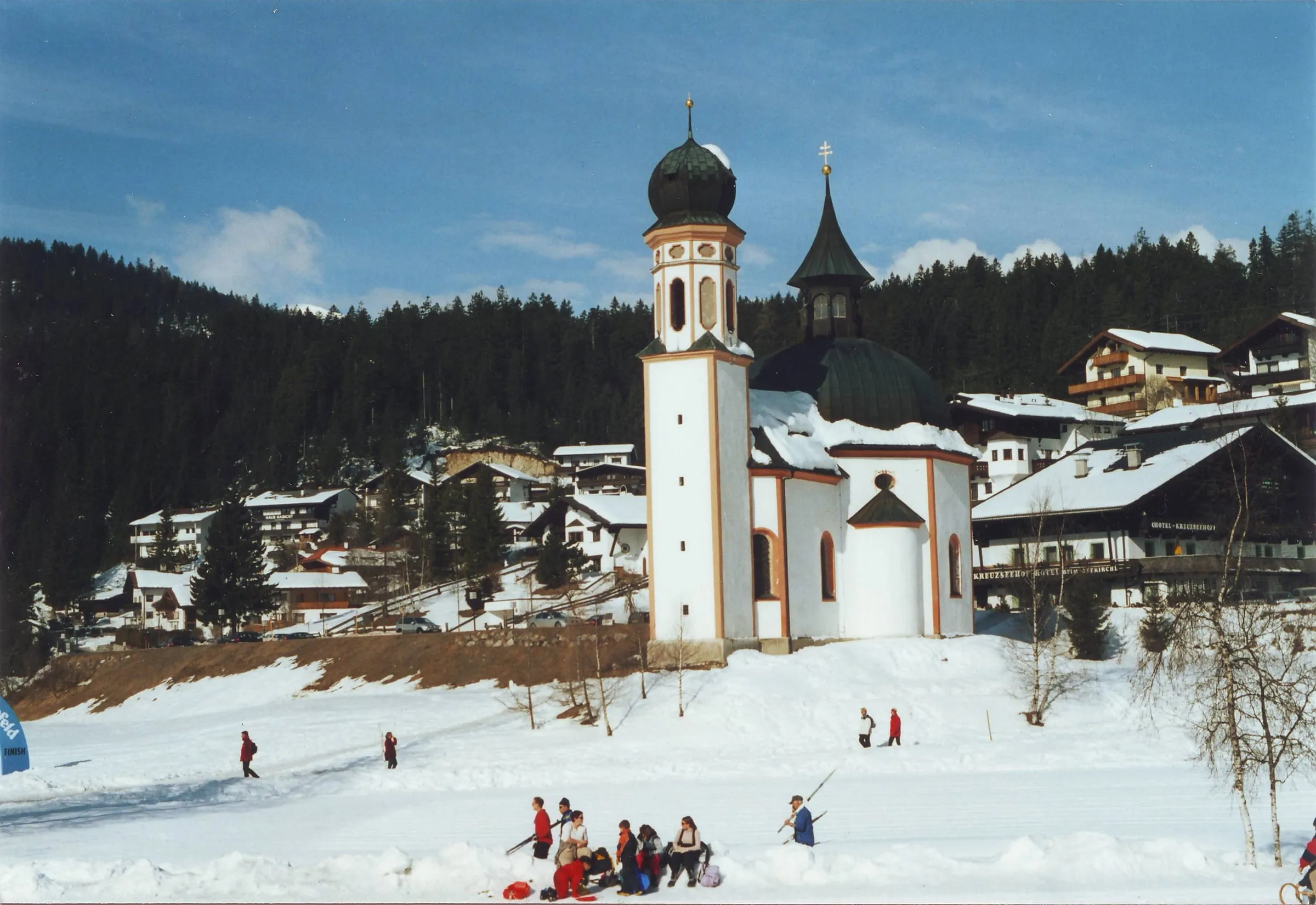
Off the slopes, the region lists winter hiking, sledging (including night tobogganing at the Katzenkopf), ice skating and curling, indoor and adventure pools, and a petting zoo. The Seekirchl, a small baroque chapel by the trails, is the village’s best-known sight.
Who Seefeld suits, and who it doesn’t
- Great for: cross-country skiers, families with young children, beginners, couples who want spa hotels and gentle skiing, and groups where some people don’t ski.
- Think twice if: you want a big, linked ski area, steep pistes or reliable snow at altitude. The four areas are small and not linked, and most of the downhill skiing is below 1,500 m.
Skiing with children? Read our guide to Seefeld with kids.
How to get to Seefeld
Driving to Seefeld
From Innsbruck, take the A12 motorway west to the Zirl exit, then the B177 up the Zirler Berg, a long, steep climb to the plateau. From Munich, take the A95 to Garmisch-Partenkirchen, then the B2 through Mittenwald to Scharnitz and the B177 to Seefeld.
You need a vignette for Austrian motorways. From 1 December 2026 it’s digital only: buy it from ASFINAG or an official reseller. One-day and 10-day vignettes bought online are valid immediately; two-month and annual ones start on the 18th day. From 1 November, cars must have winter tyres (at least 4 mm of tread) whenever there’s snow, slush or ice on the road, and you should carry chains.
By train and bus
Seefeld is one of the easiest Alpine resorts to reach by rail. The station is right at the entrance to the pedestrian zone, with regular trains from Innsbruck, about 40 minutes away, and connections from Munich. Once you’re there, the guest card gives free use of the regional buses and the train between Seefeld and Scharnitz. Ask your accommodation to issue it before you arrive.
Nearest airports
Innsbruck is the closest airport, about 25 km away. Munich is about 130 km away, by car or by train.