France
 Austria
 Italy
 Switzerland
 English
 Deutsch
 Nederlands
 Español
 Čeština
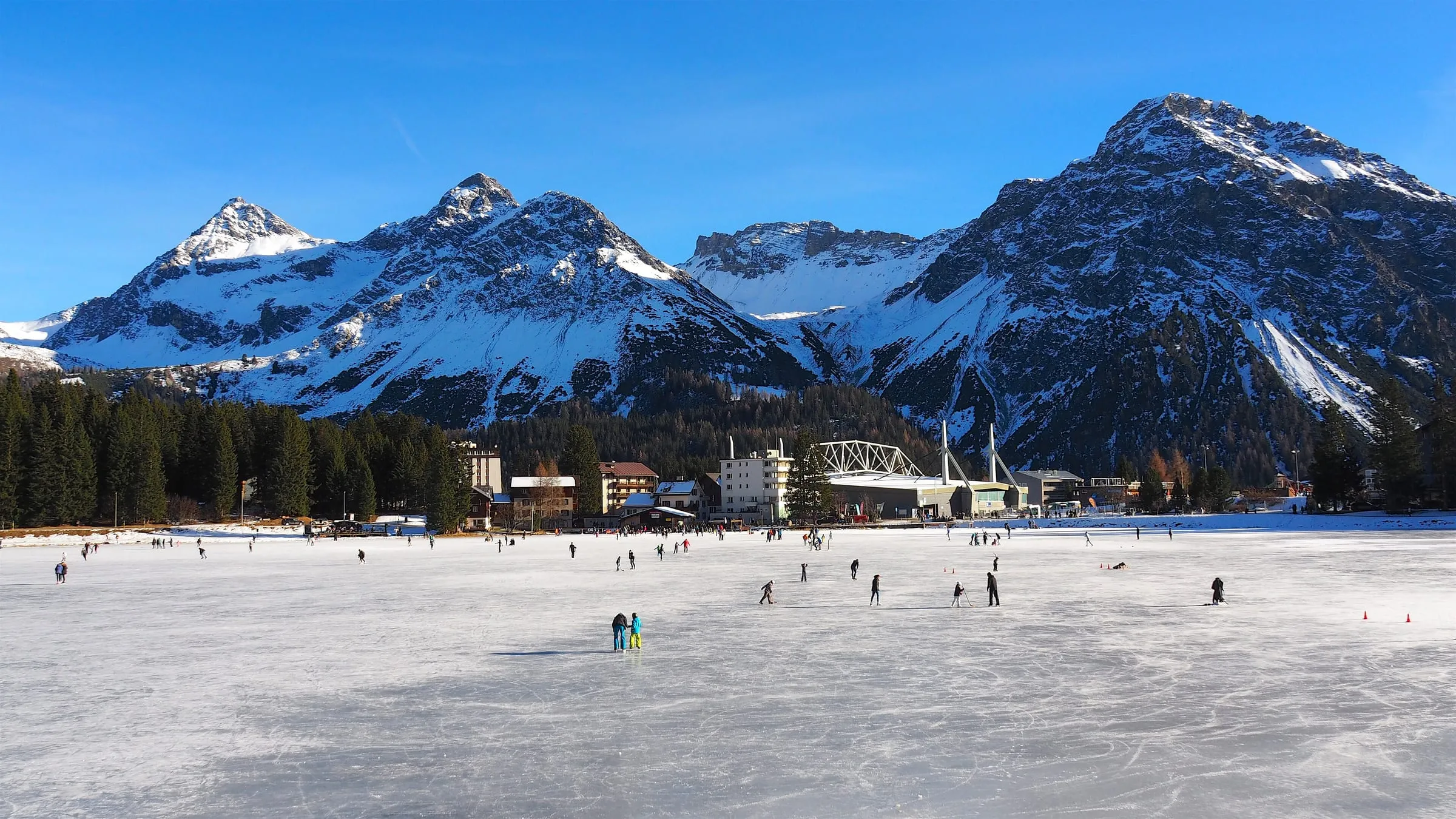
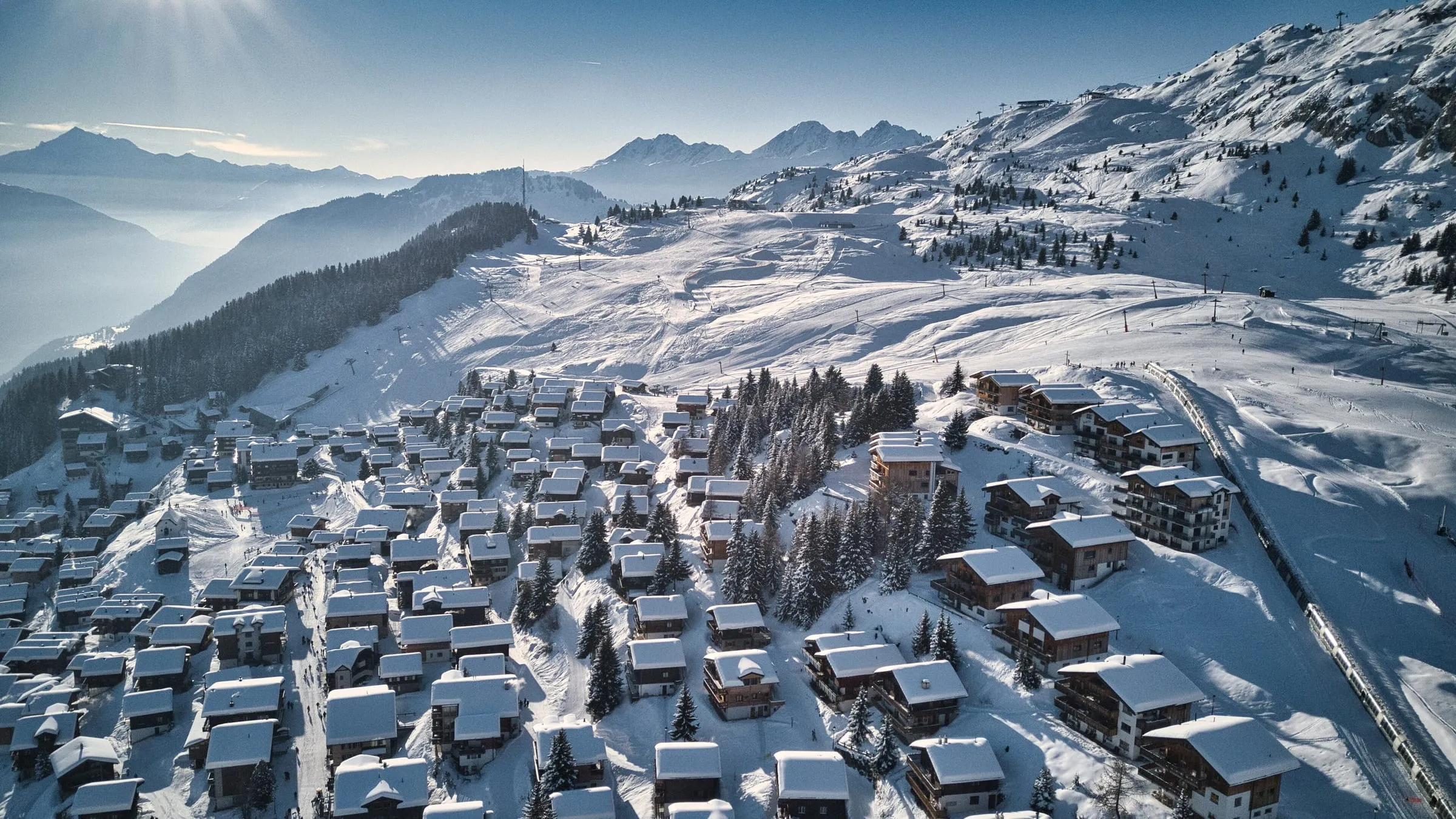
Arosa sits at the very top of the Schanfigg valley in Graubünden, about 30 km above Chur, at roughly 1,800 m. That makes it one of the highest village resorts in Switzerland. The road ends here and so does the railway, so it feels like a proper mountain village: two lakes in the middle, forest on the slopes and a bowl of peaks all around.
Arosa is linked by cable car to Lenzerheide, and together they form Arosa Lenzerheide: 225 km of pistes and 43 lifts on one pass. The Arosa side tops out at the Weisshorn (2,653 m). It’s a sunny, relaxed resort that suits families, beginners and intermediates best, with a short list of serious runs for stronger skiers.
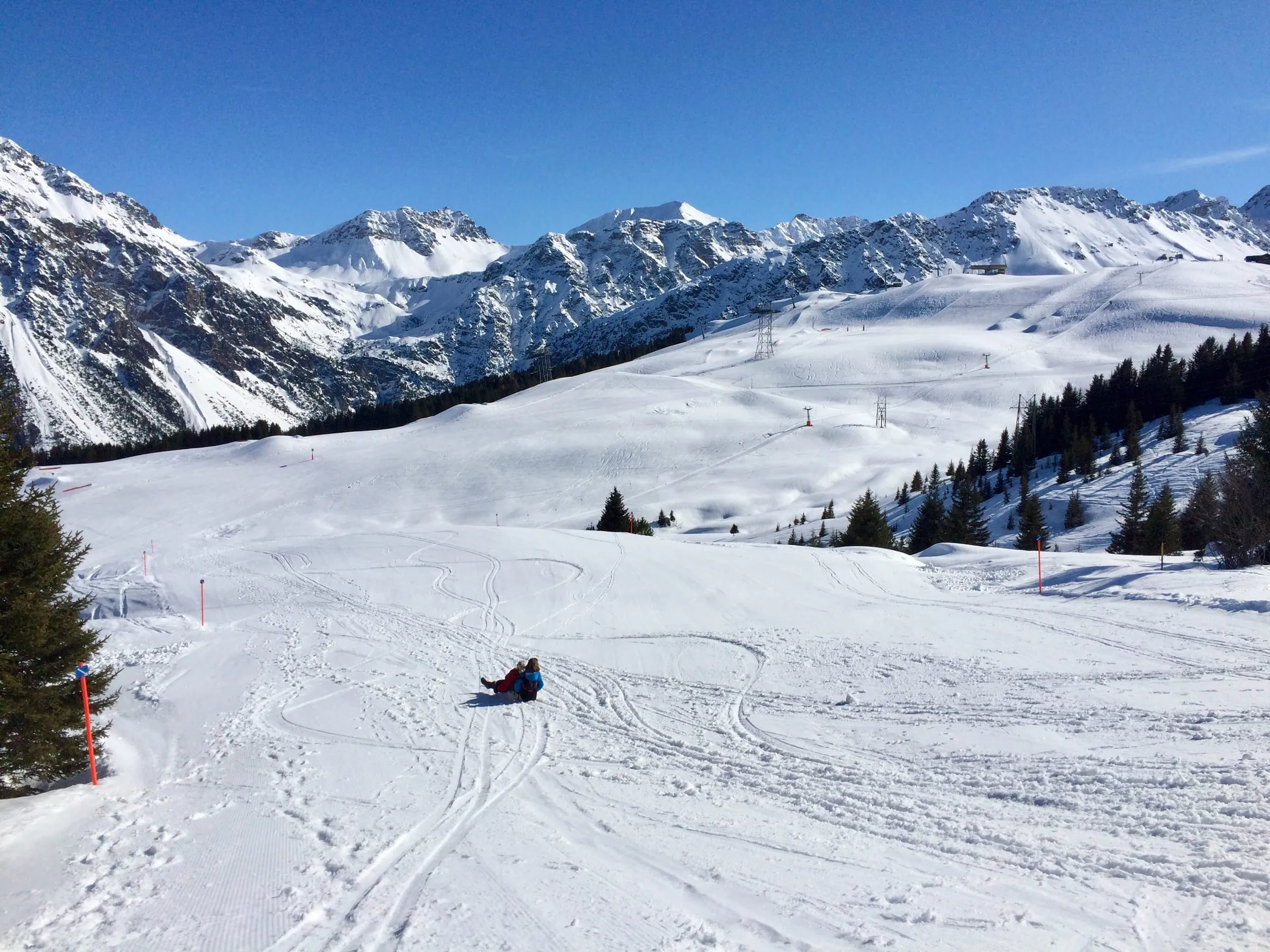
Arosa ski area: 225 km with Lenzerheide
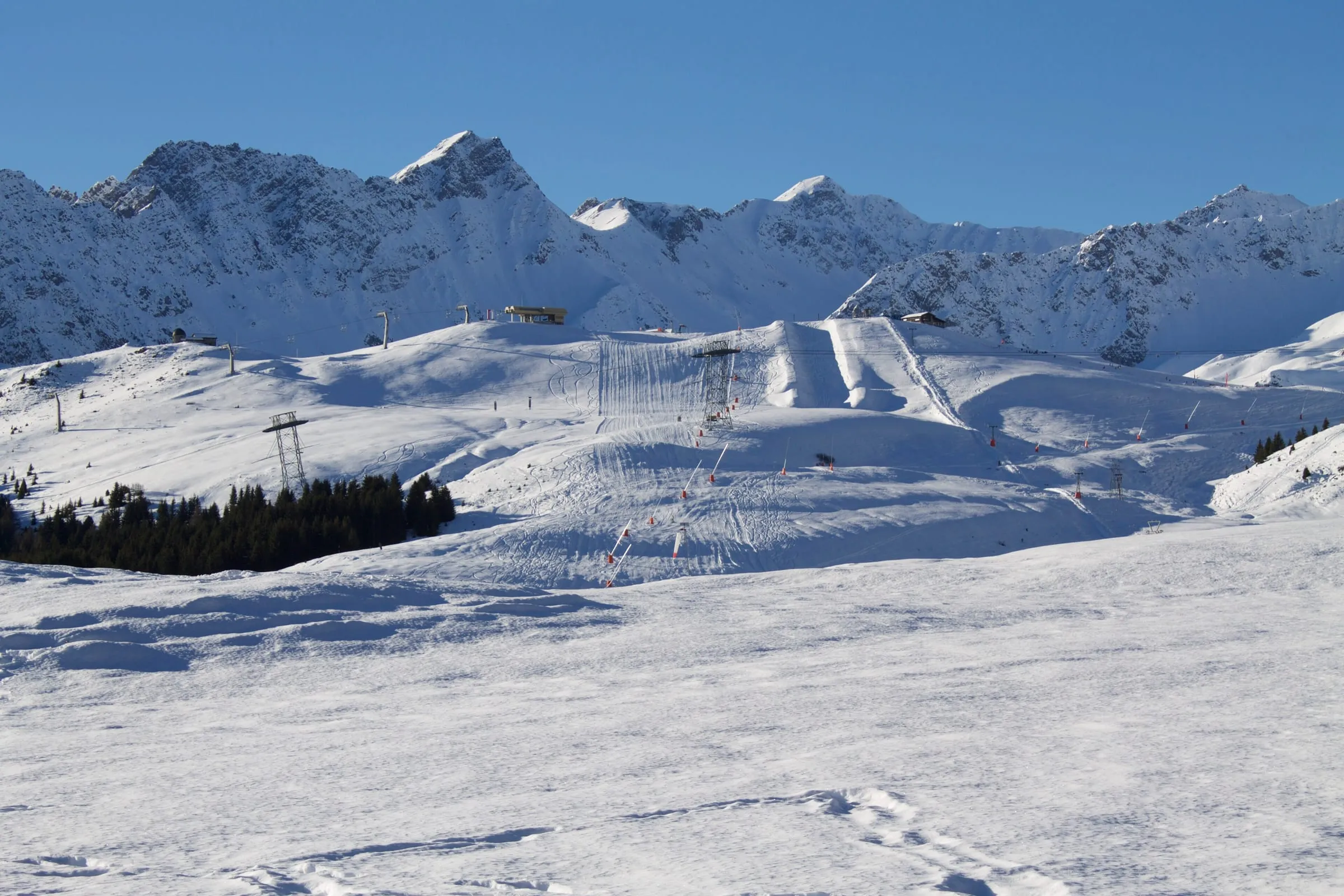
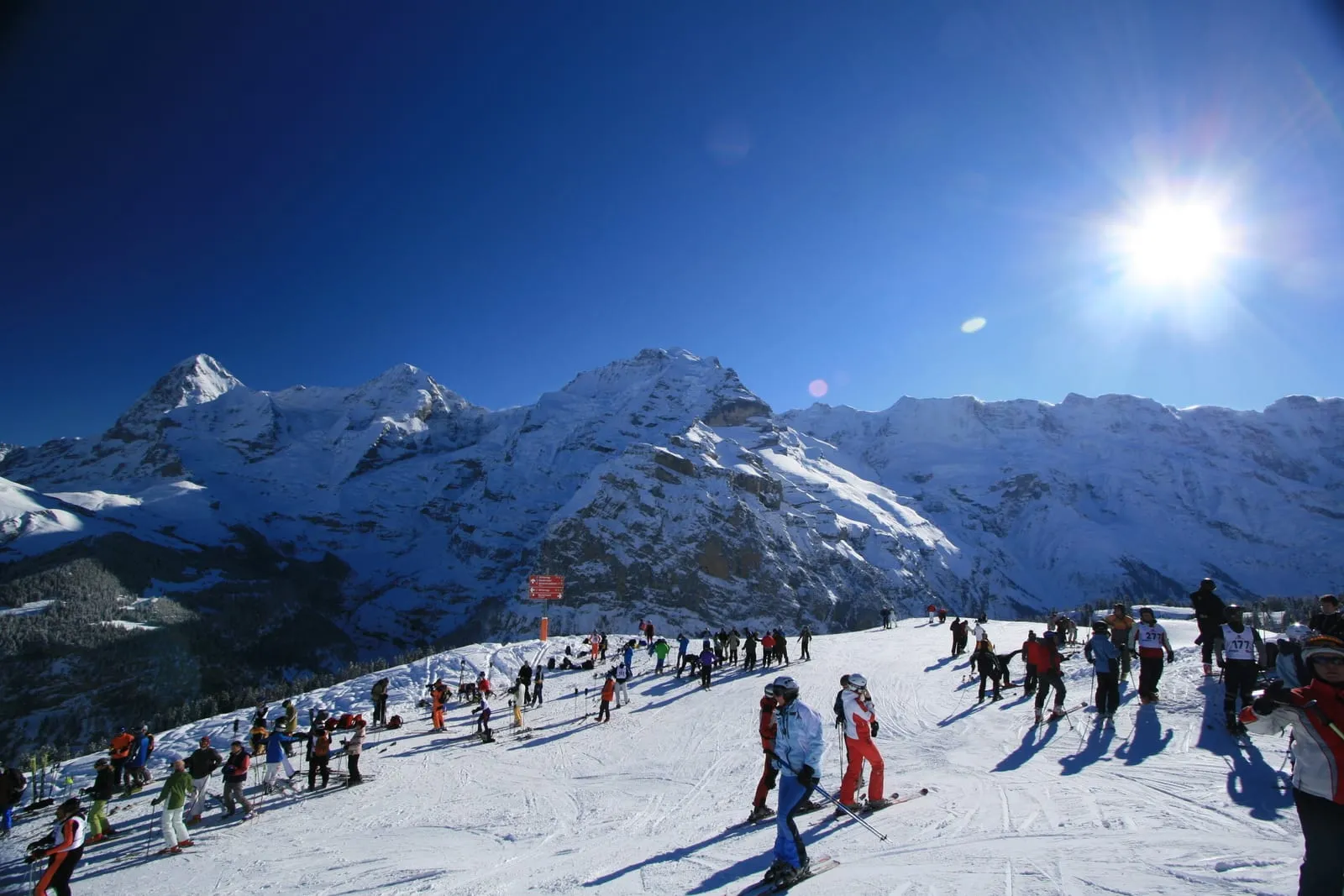
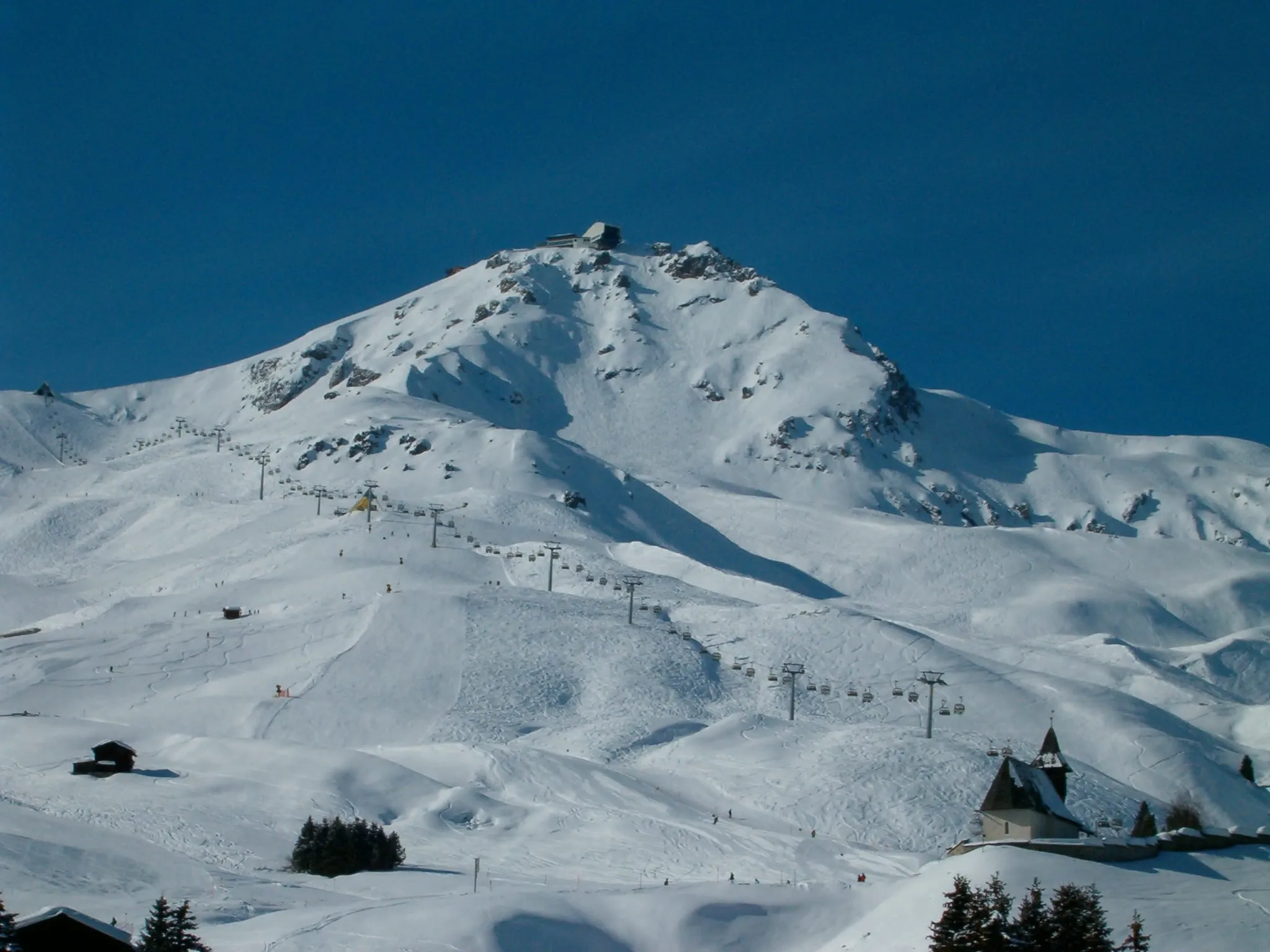
Arosa’s own slopes fill the bowl above the village, with over 60 km of pistes on the Arosa side. There are three main lift bases:
- The Weisshorn cable car, by the Obersee and the railway station, climbs via a middle station at 2,013 m to the Weisshorn summit at 2,653 m, the highest point on the Arosa side and the start of the longest runs home.
- The Hörnli side, from a valley station at 1,832 m in Innerarosa, climbs to the Hörnli at 2,511 m. This is where you cross to Lenzerheide.
- Prätschli (1,908 m) and Tschuggen, closer to the village, have gentler slopes and the children’s areas.
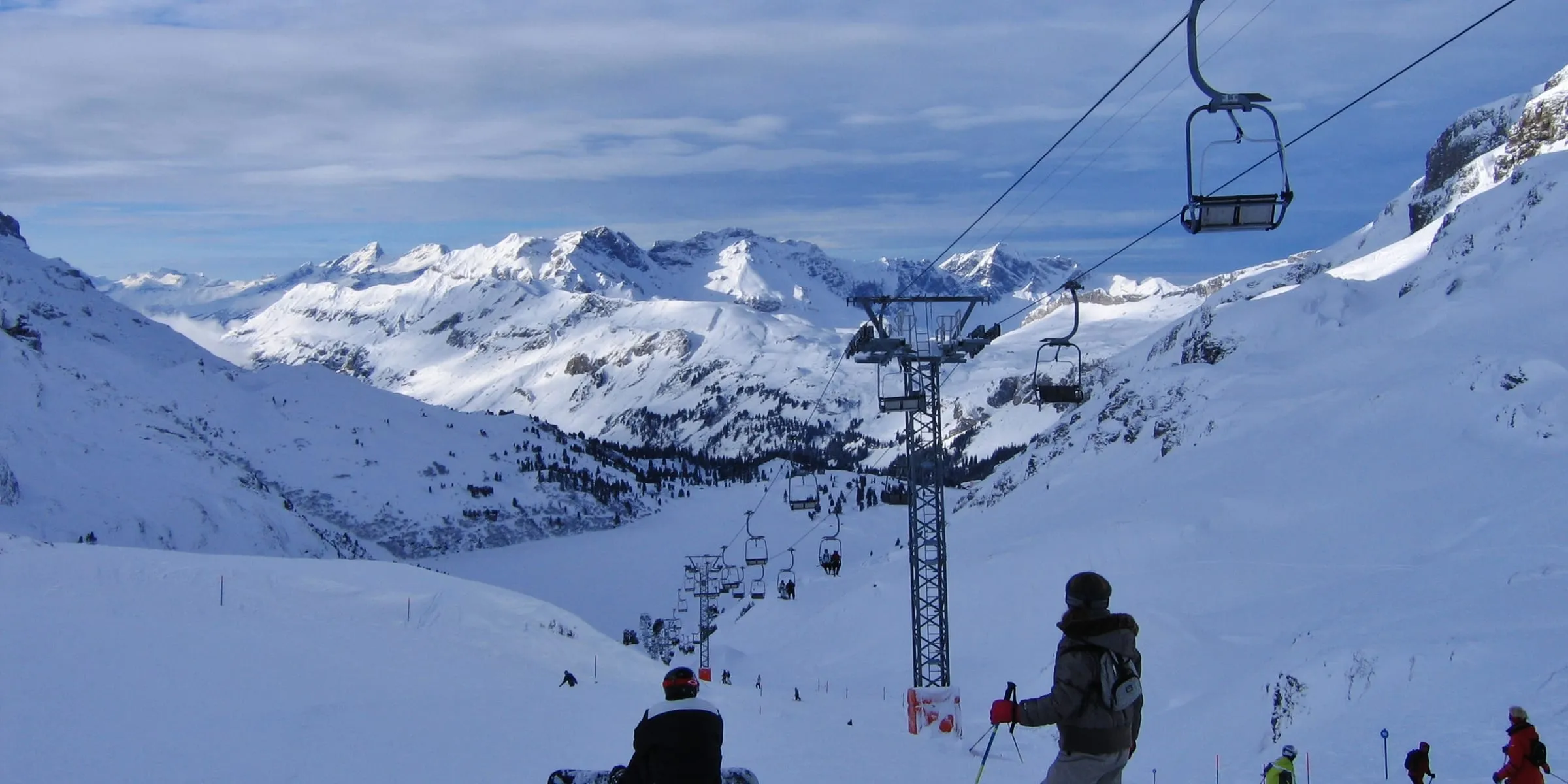
From the Hörnli, the Urdenbahn cable car crosses the Urdental to the Urdenfürggli on the Lenzerheide side. From there you can ski on towards the Parpaner Rothorn at 2,865 m, the highest point of the whole area. The link means a day in Lenzerheide fits into any week in Arosa, as long as the Urdenbahn is running.
Skiing in Arosa for beginners
Arosa is a good place to learn. The children’s areas, Honeyland at Prätschli and Berry Land in Innerarosa, have gentle slopes close to the village, and the lift company says most of its children’s areas are free. The Tschuggen area is recommended for families, with blue runs and a search game for children. Adults start in the same areas, then move on to the blue runs that link them.
Skiing in Arosa for intermediates
Intermediates get the most out of Arosa. The sunny bowl between the Weisshorn, the Hörnli and Prätschli is ideal cruising ground, with long views across the valley. Add the Urdenbahn and the whole of Lenzerheide, and there’s enough variety for a full week without repeating yourself.
Skiing in Arosa for experts
The Weisshorn is where advanced skiers head first: it’s the highest lift on the Arosa side, with about 850 m of vertical from the summit back down to the village. The Urdental between Arosa and Lenzerheide is popular with freeriders. For off-piste, go with a qualified guide. If steep, high terrain is your priority every day of the week, Arosa on its own is on the small side.
The Weisshorn and the Urdenbahn: Arosa’s signature lifts
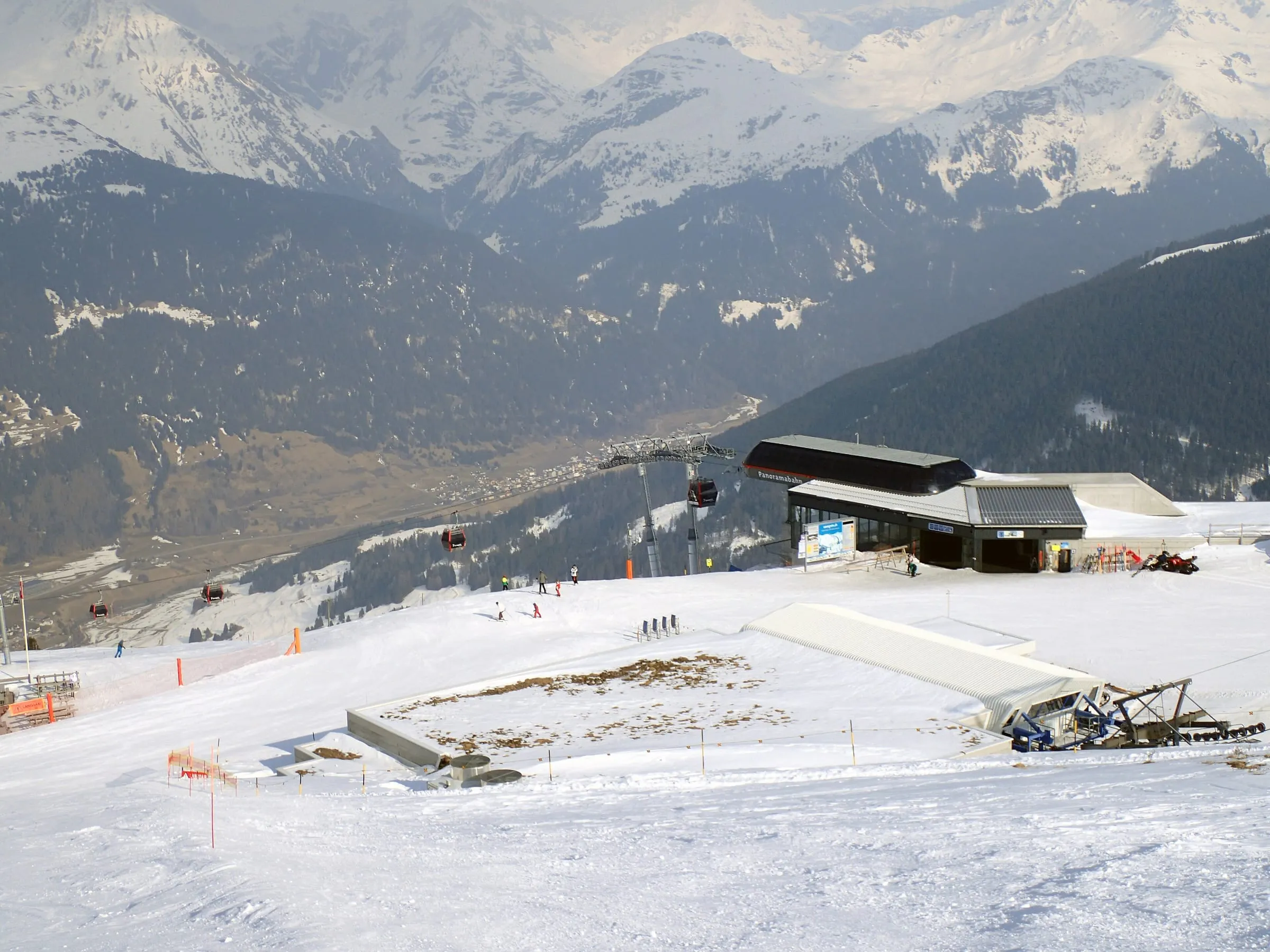
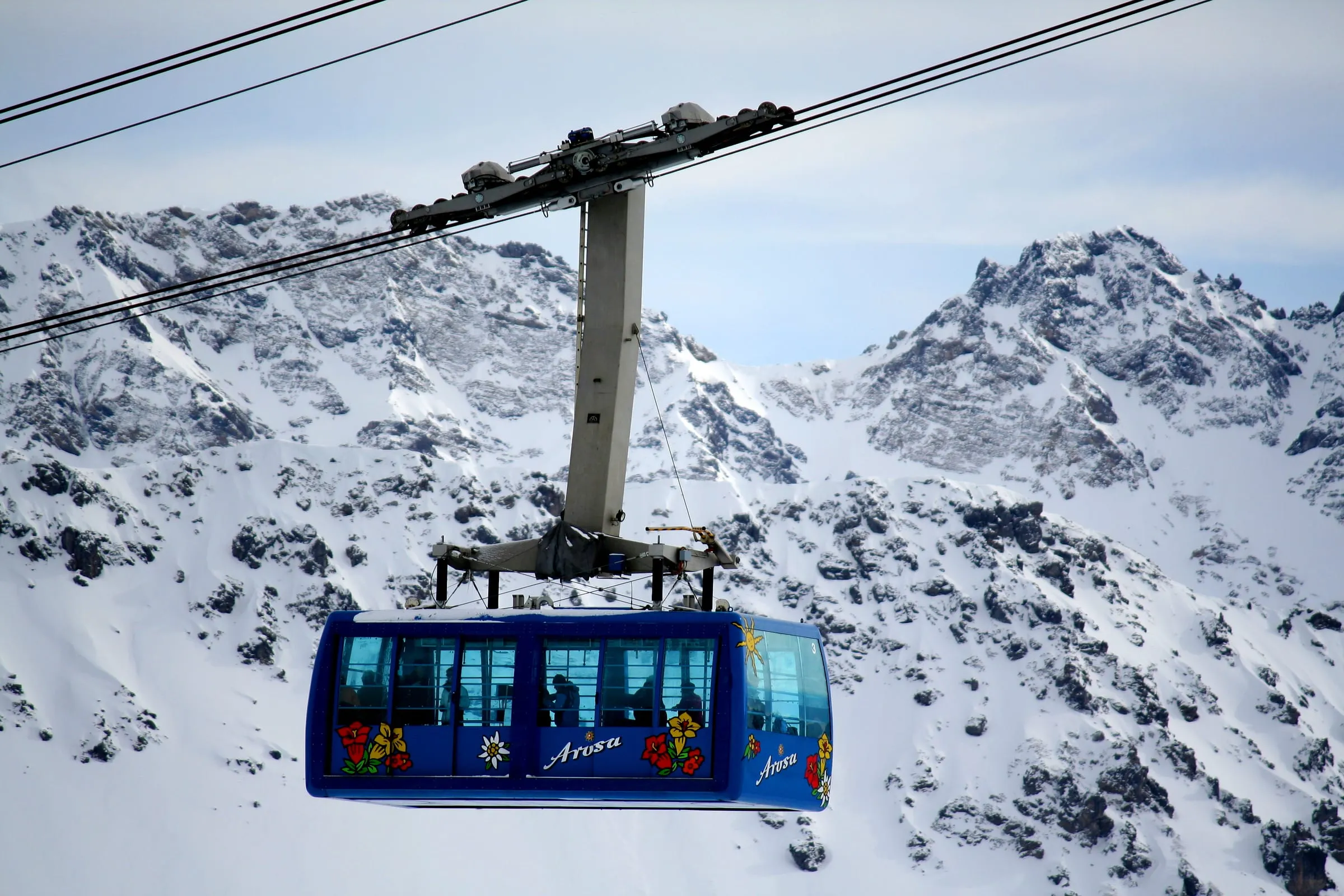
The Weisshorn cable car is the lift that defines Arosa. It runs in two sections from the Obersee, past the middle station at 2,013 m, to the summit at 2,653 m, where there’s a panoramic restaurant. On a clear day, it’s the best viewpoint in the resort.
The Urdenbahn is the link with Lenzerheide. It crosses the Urdental between the Hörnli above Arosa and the Urdenfürggli (2,546 m) on the Lenzerheide side. Check its status in strong wind or bad weather: if it isn’t running, you’ll be skiing one side only.
Snow in Arosa and the 2026/27 season
The official operating periods for Arosa Lenzerheide in 2026/27 are:
- 30 October to 22 November 2026: “November up above”, with weekend operation.
- 28 November to 18 December 2026: pre-season, with partial daily operation while the area is prepared.
- 19 December 2026 to 4 April 2027: full daily operation.
- 5 to 11 April 2027: limited daily operation, with most Arosa lifts open.
Arosa’s altitude is its main strength. The village is at about 1,800 m and the Weisshorn reaches 2,653 m, so you’re skiing high from the first lift, and snow at village level is more dependable than in many lower Swiss resorts. The bowl is sunny, which is lovely in midwinter but means softer snow on south-facing slopes in a warm spring spell. In late season, ski the higher runs in the morning.
Is Arosa good for a last-minute ski trip?
Yes, especially if you’re in Zurich or anywhere on the Swiss rail network. There’s a direct InterCity from Zurich to Chur, and the train from Chur to Arosa takes about an hour, so you can decide on the forecast and be skiing the same day. Once you arrive, you don’t need a car: the local bus is free, and in winter your ski ticket includes public transport between Arosa, Chur, Lenzerheide and Tiefencastel.
Before you book, check how much is open if you’re coming in the pre-season, before 19 December, and whether the Urdenbahn is running if you want to ski Lenzerheide. The lift company says the earlier you book tickets, the lower the price. Then find a place to stay in Arosa.
Arosa lift passes
Arosa Lenzerheide tickets cover both sides of the area and are cheapest when booked early online. Worth knowing:
- Age bands: children 6 to 12, youths 13 to 17, young adults 18 to 26, adults from 27. Under-6s ski free.
- Family Bonus: on multi-day tickets from 4 days, the fourth and each further child skis for CHF 5 a day.
- Young families: two adults with children under 4 can share one multi-day ticket, so one parent skis while the other looks after the baby.
- Start early: with a multi-day ticket of 4 days or more, you ski free from 1 pm the day before.
- Free lessons for kids: with Ski School Included, children up to 17 get a free half-day group lesson for each night of a stay of two nights or more in a participating hotel or apartment. See Arosa with kids.
Après-ski and things to do in Arosa
Arosa’s evenings are relaxed rather than rowdy. Après starts at the mountain huts, such as the Tschuggenhütte, Carmennahütte and Hörnlihütte on the piste map, and moves down to the hotel bars in the village. You can toboggan home on Arosa’s runs after dinner on the mountain.
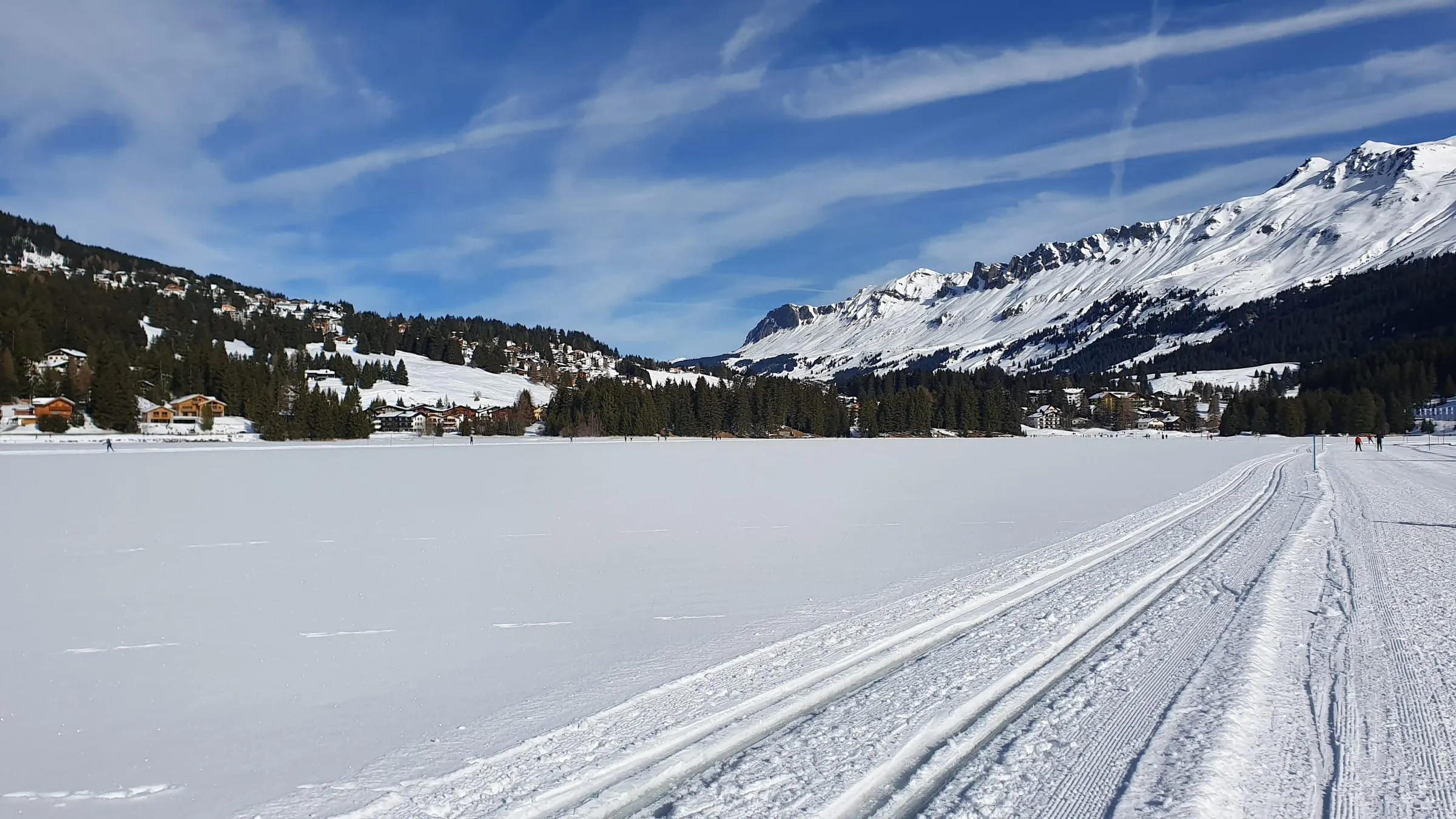
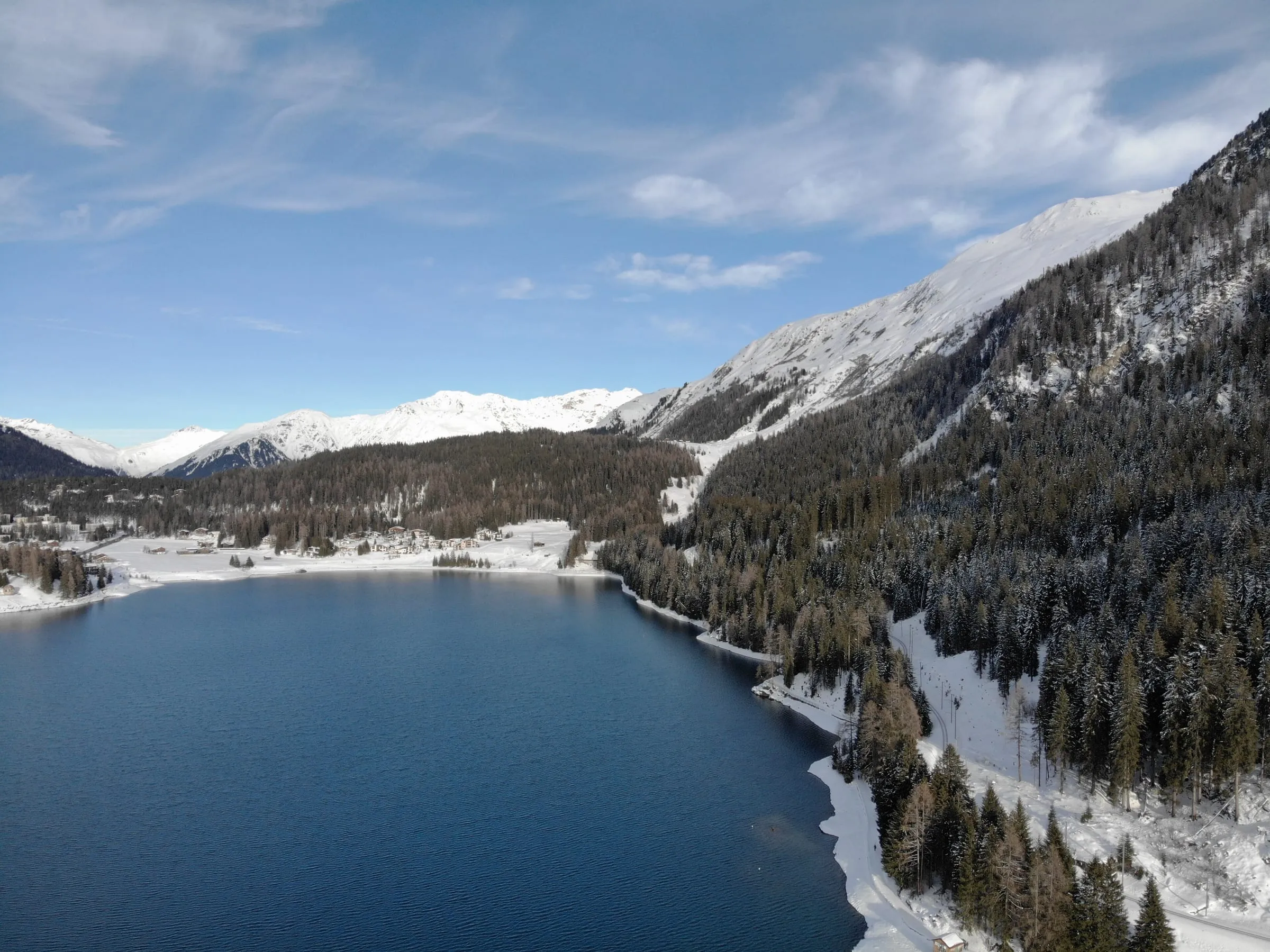
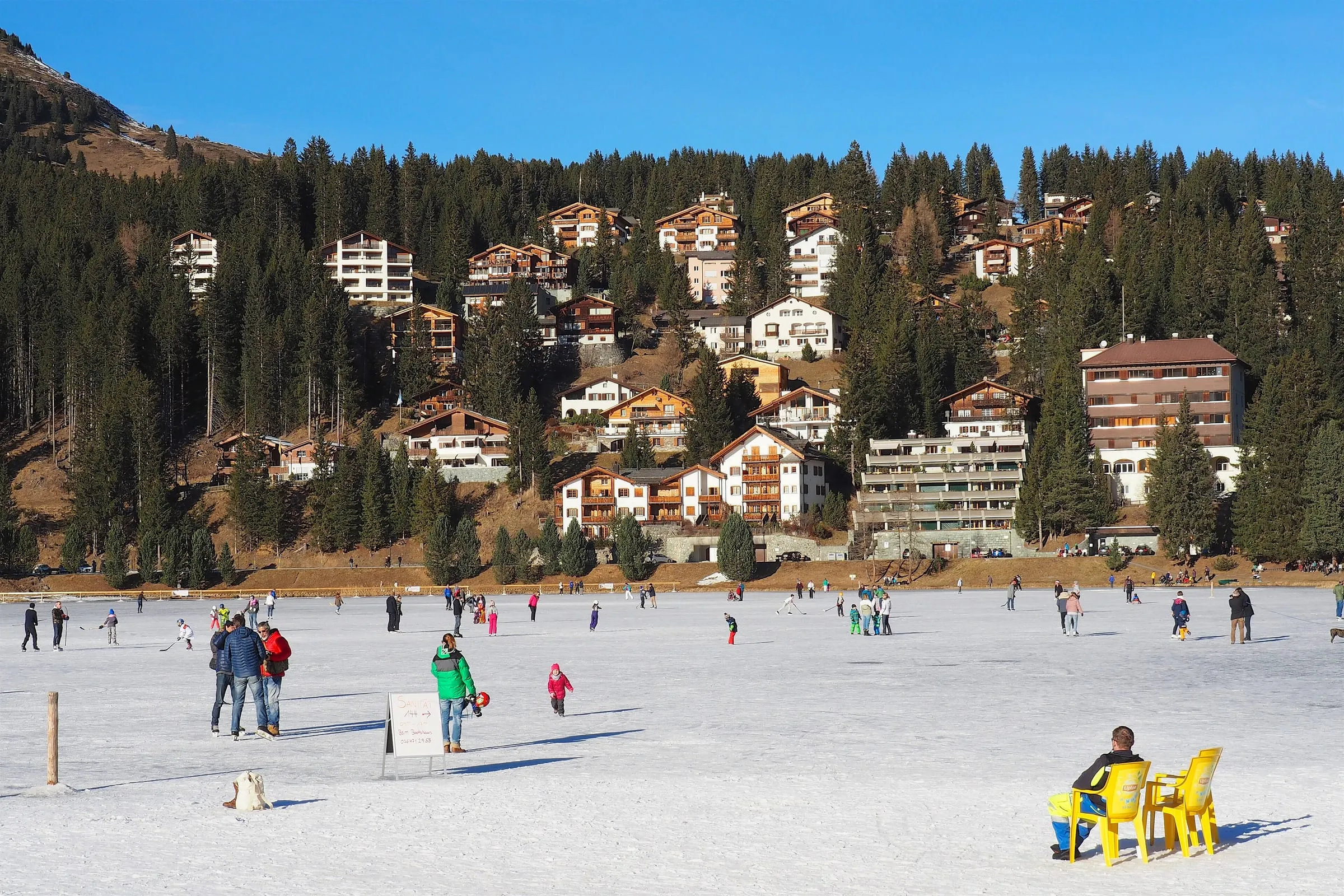
Off the slopes, the frozen Obersee is the heart of the village in winter, with skating and walking. The ice sports hall has ice hockey, curling and public skating, and there’s ice mini golf and an ice bath at the Untersee. Arosa has three toboggan runs totalling 4.7 km, free to use, plus winter hiking, snowshoeing and cross-country skiing, including the Prätschalp trail of almost 8 km. The Arosa Bear Sanctuary runs guided winter tours.
The 2026/27 calendar has some big dates: the Arosa Humorfestival (3 to 13 December 2026, its 35th edition, in a circus tent by the Tschuggenhütte), the FIS Ski Cross World Cup (15 December 2026) and Arosa Gay Ski Week (16 to 23 January 2027).
Who Arosa suits, and who it doesn’t
- Great for: families, beginners, intermediates, train travellers, anyone who wants a high, snow-reliable village without a party scene, and skiers who like a bigger area on the same pass via Lenzerheide.
- Think twice if: you want lots of steep terrain on your doorstep, a lively nightlife, or a short drive: the road from Chur is famously twisty.
Skiing with children? Read our guide to Arosa with kids.
How to get to Arosa
By car
From Chur, follow the Schanfiggerstrasse up the valley to Arosa: about 30 km and 360 bends, climbing 1,320 m, which takes around 40 minutes. In winter, check road conditions before you set off. Coaches over 2.3 m wide, 4 m high or 18 tonnes can’t use the road. Alternatively, use Park & Rail: leave the car in the Chur parking garage and take the train up.
By train and bus
Take the train to Chur, then the Rhaetian Railway’s Arosa line, which climbs 26 km to Arosa in about an hour, across the Langwies viaduct. Snow’n’Rail tickets combine the train and the lift pass, and an après-ski train runs back to Chur. In Arosa, the local bus is free, and in winter your ski ticket covers public transport between Arosa, Chur, Lenzerheide and Tiefencastel.
Nearest airports
Zurich is the nearest major airport, with InterCity trains to Chur and the Arosa line from there. From Friedrichshafen, the Graubünden Express shuttle bus runs to Chur.