France
 Austria
 Italy
 Switzerland
 English
 Deutsch
 Nederlands
 Español
 Čeština
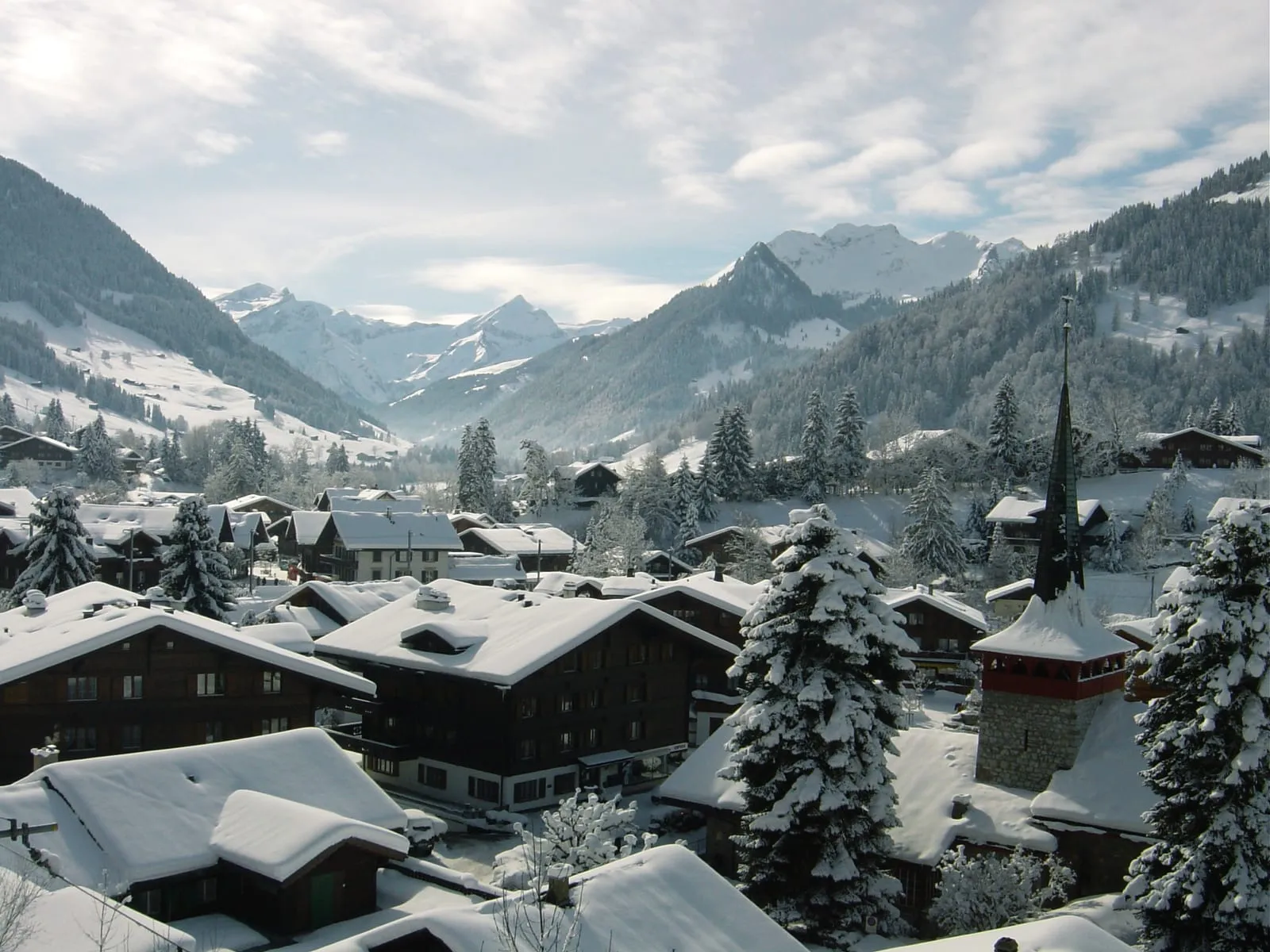
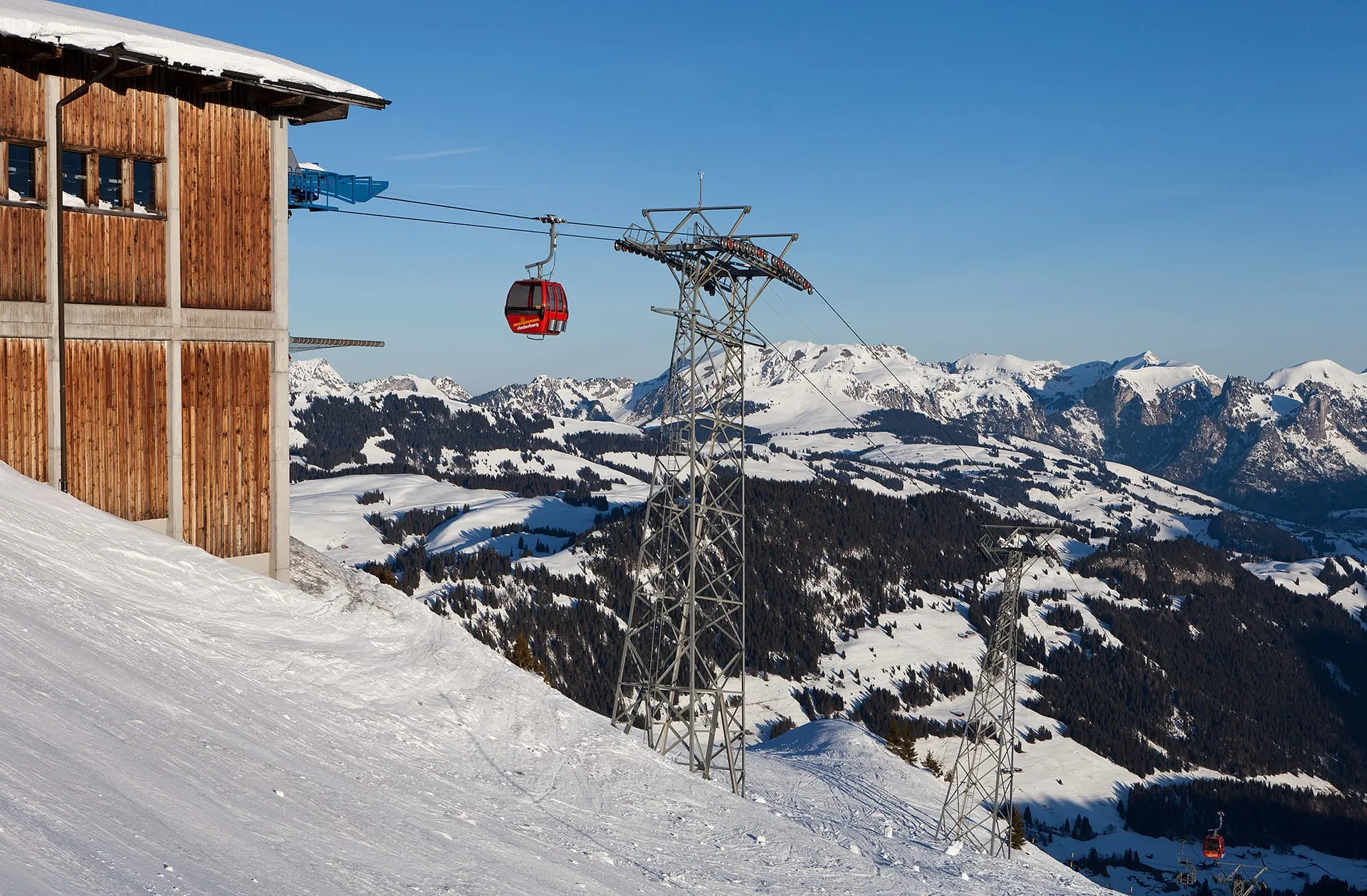
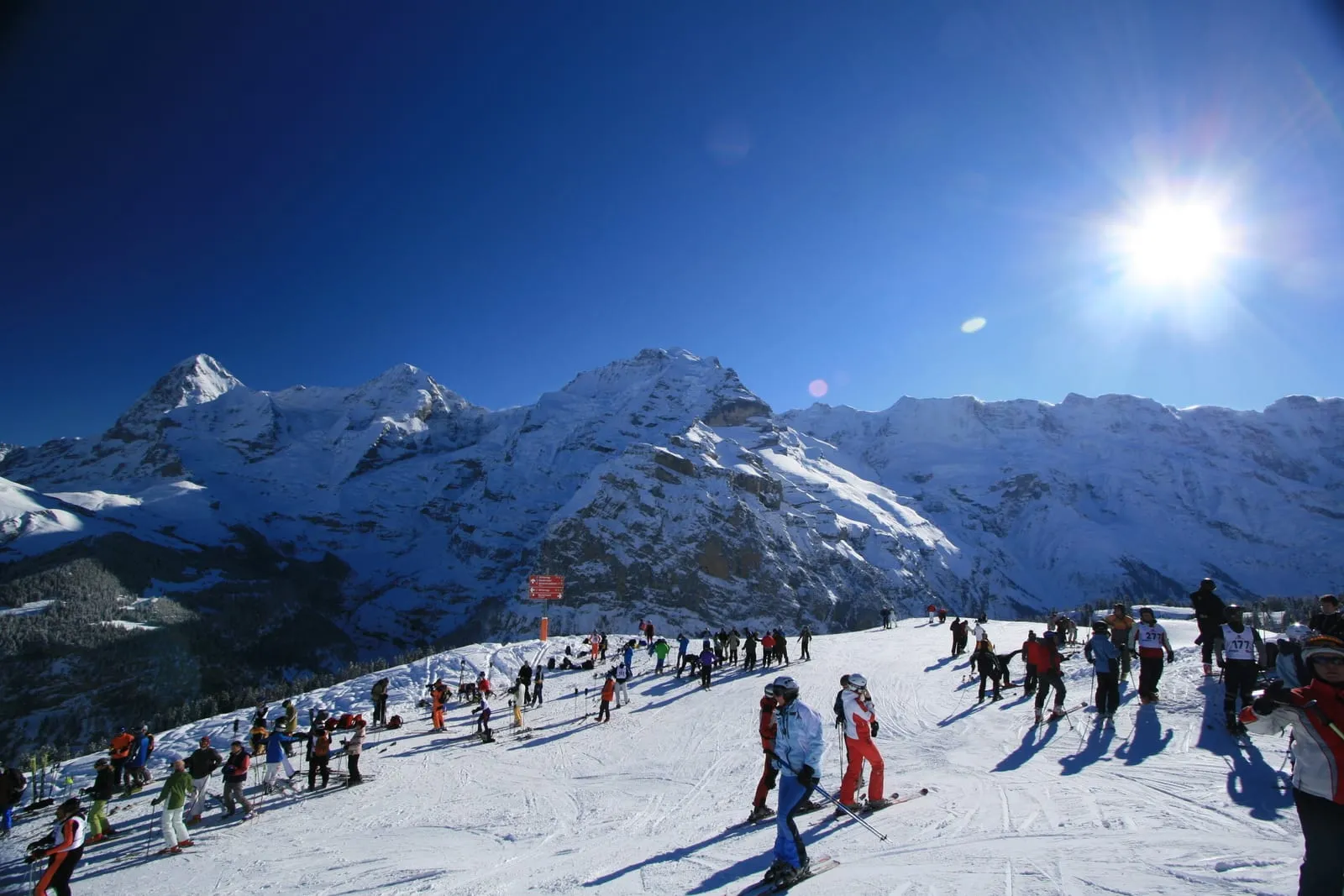
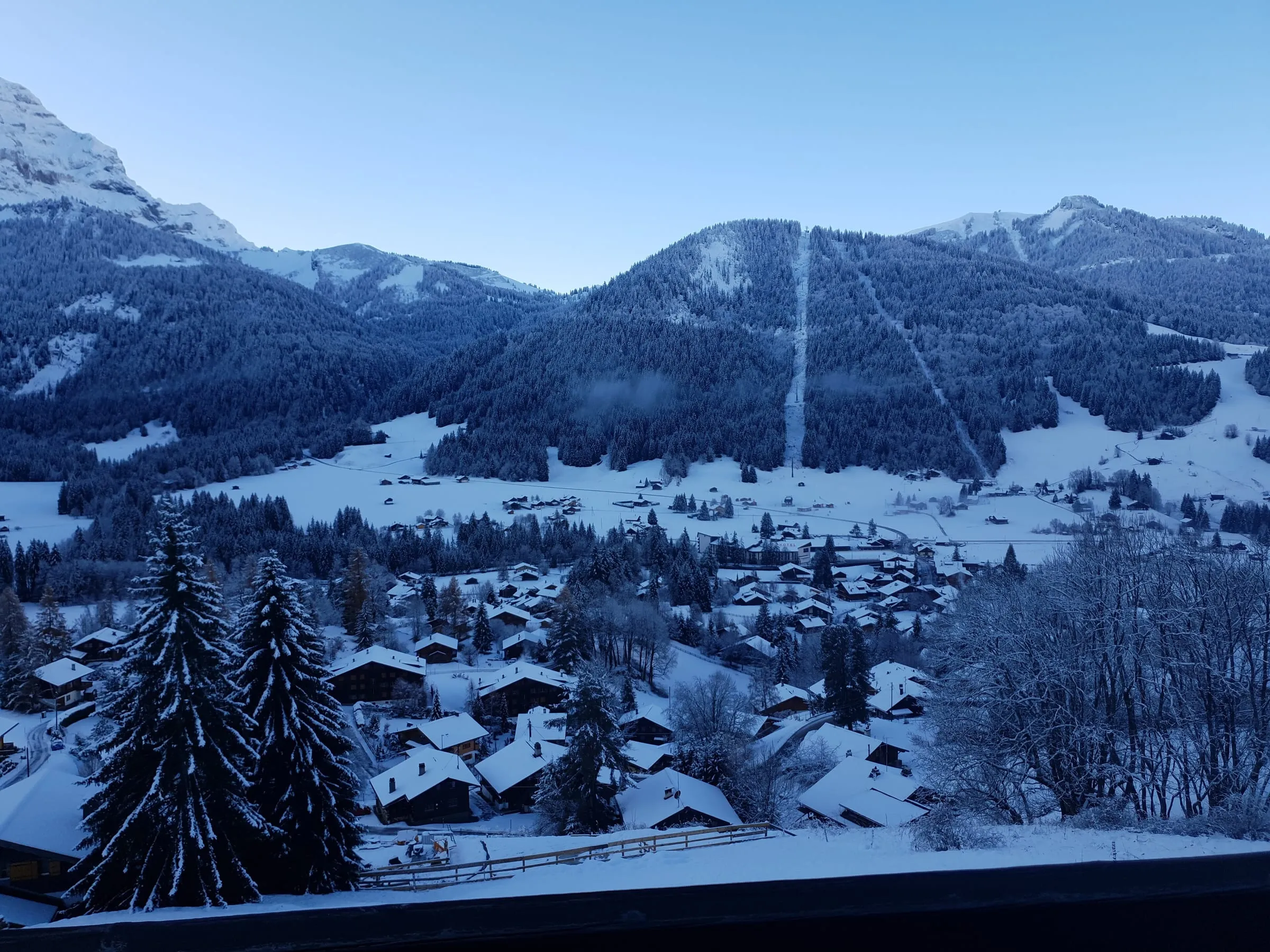
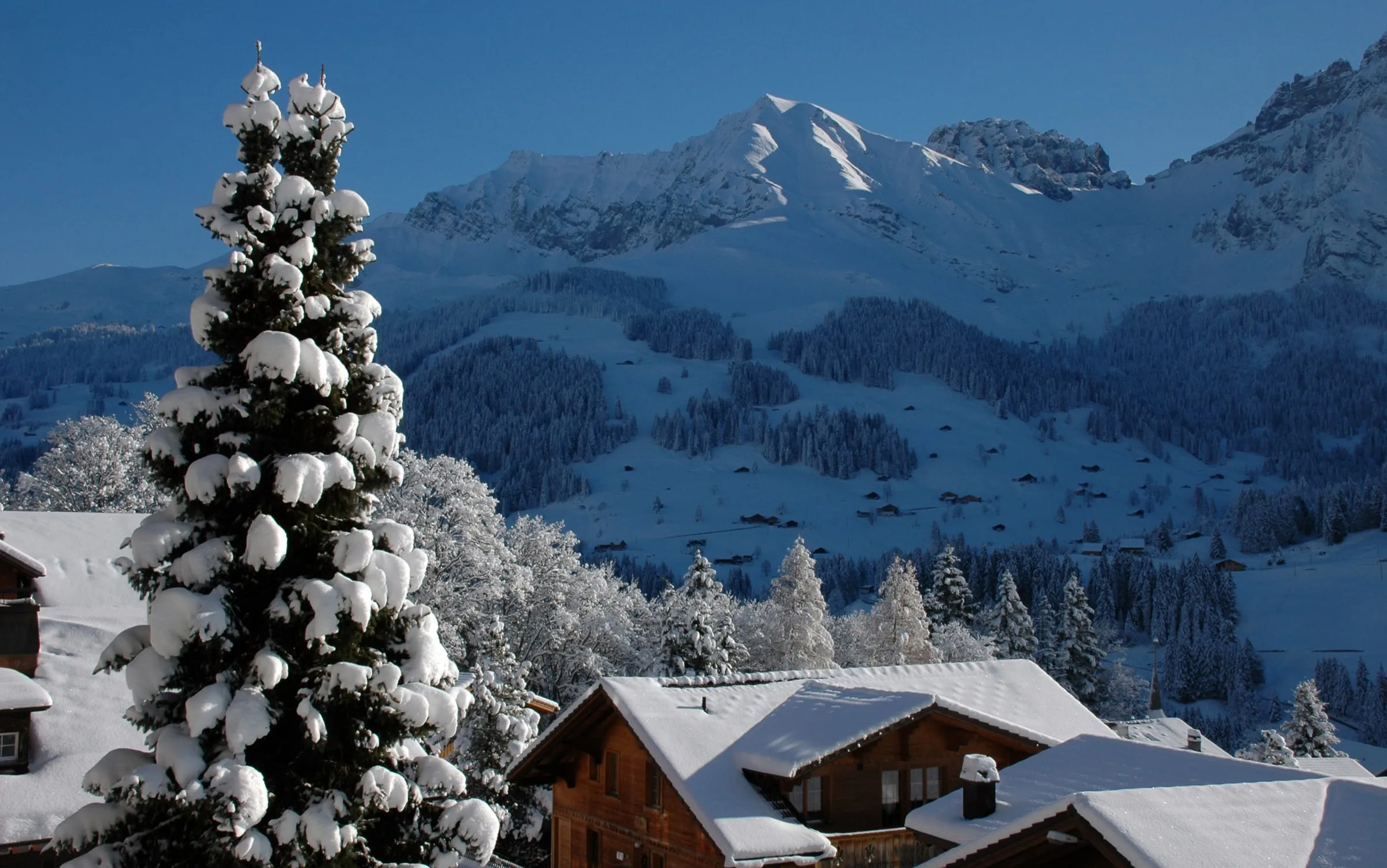
Gstaad, at about 1,050 m in the Saanenland of the Bernese Oberland, is famous for its chalets, its hotels and its guests. Behind the reputation is a big, varied ski region: over 200 km of pistes between about 1,000 and 3,000 m, spread across several mountains around ten chalet villages.
The village itself is pedestrianised, with a car-free promenade of shops, restaurants and hotels. Three cable cars leave from Gstaad itself, the biggest linked ski area starts a few minutes away in Schönried and Saanenmöser, and Glacier 3000 adds snow-sure skiing near the Col du Pillon. It’s a resort for relaxed cruising, long lunches and families, with a few properly steep runs too.
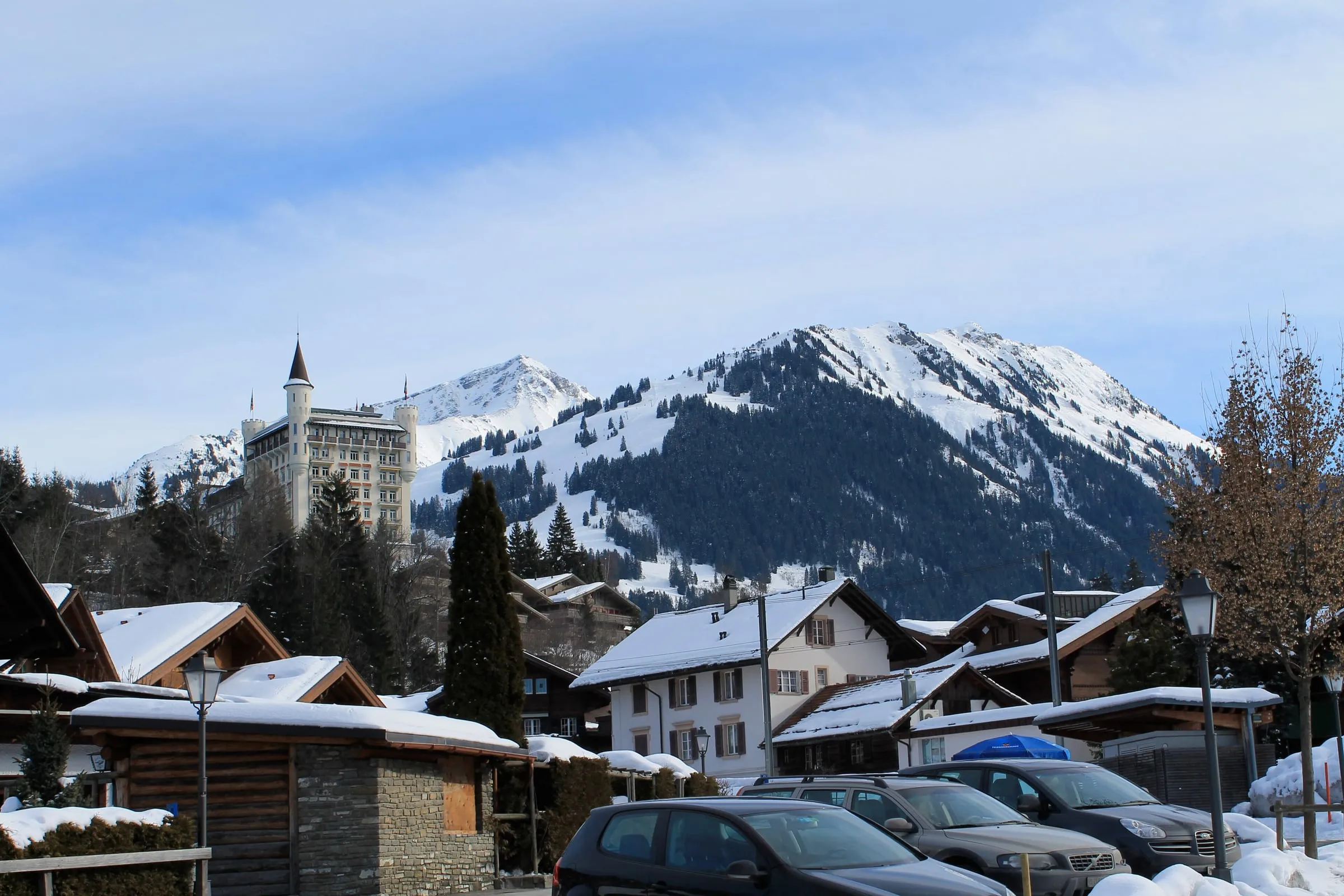
Gstaad ski area: over 200 km across several mountains
Gstaad isn’t one linked ski area but a collection of them, all on the Gstaad mountain railways’ multi-day ticket. The main ones are:
- Rinderberg, Saanersloch and Horneggli: the region’s largest interconnected area, with over 105 km of pistes, linking Schönried, Saanenmöser, Zweisimmen and St. Stephan.
- Eggli and La Videmanette: a smaller area between Gstaad and Rougemont, with the region’s longest run.
- Wasserngrat: a small mountain above Gstaad at 1,920 m, with about 10 km of slopes and the region’s steepest piste.
- Wispile: Gstaad’s family mountain, with easy slopes and a beginner area in the valley.
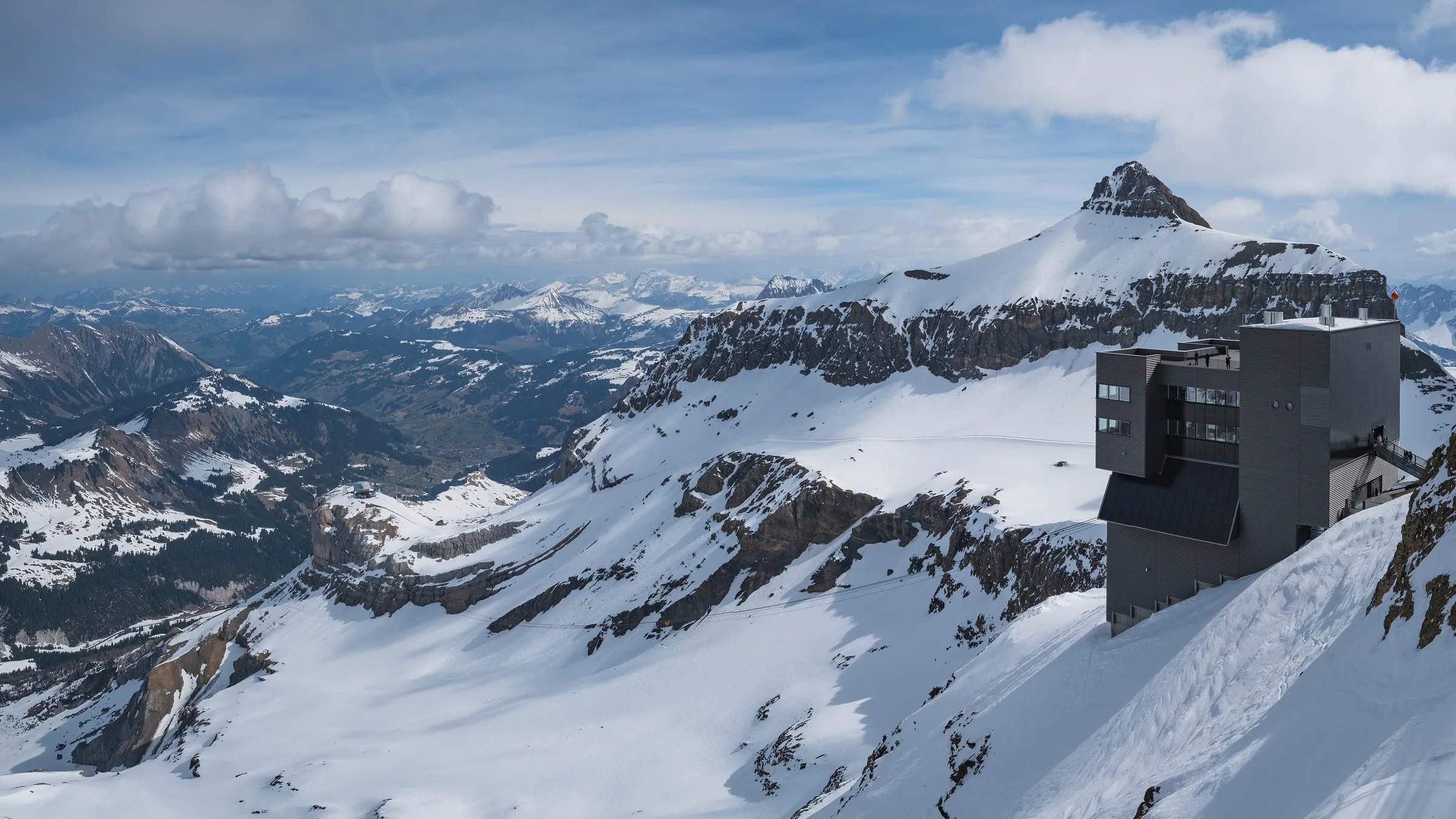
- Glacier 3000: the only glacier ski area in the Bernese Oberland, near the Col du Pillon, with 28 km of slopes up to about 3,000 m.
Lauenen and Gsteig each add a single ski lift. Getting between the areas means a bus or train ride, but the ski buses in Gstaad and Saanen are free from mid-December to mid-March, even without a ski pass.
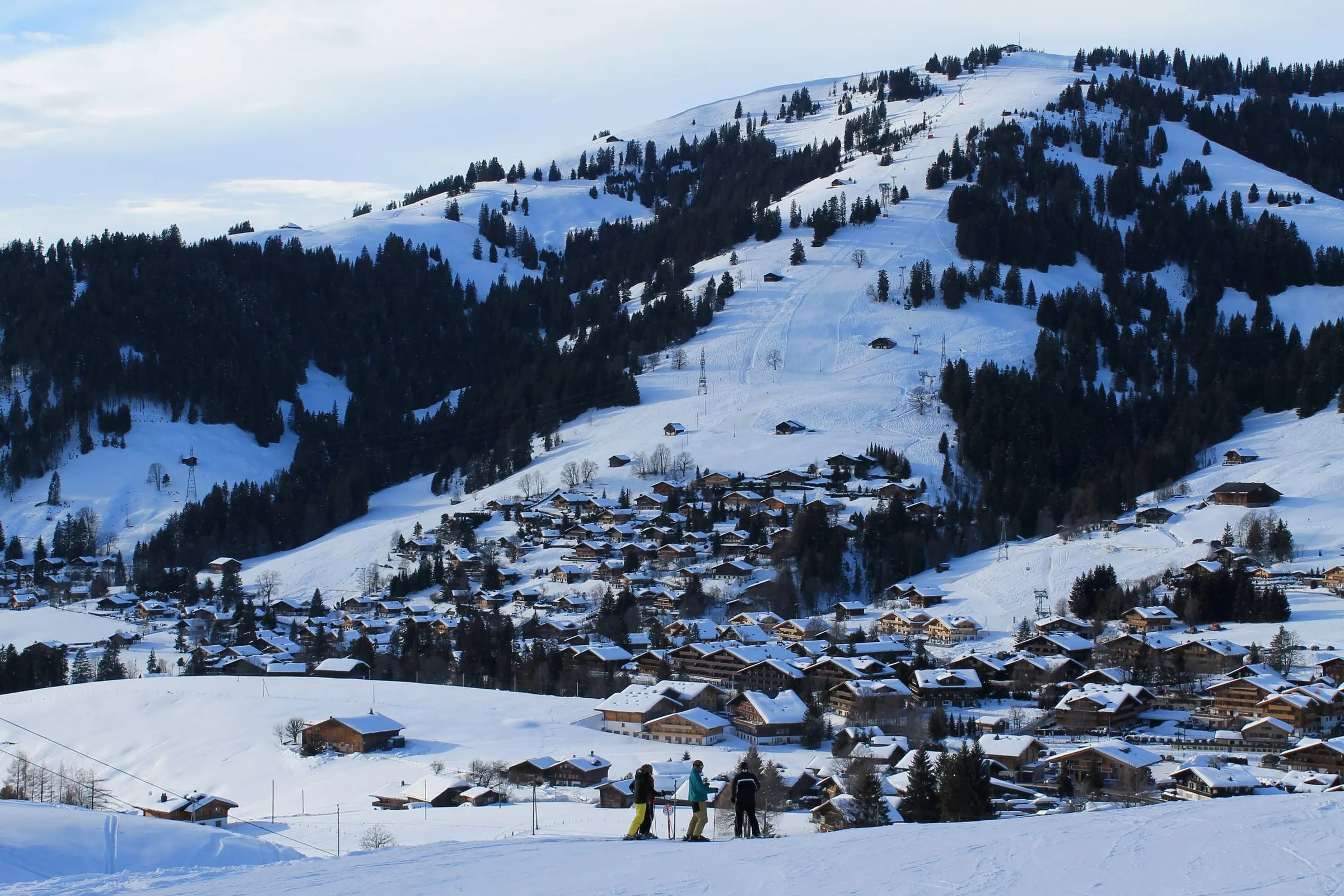
Skiing in Gstaad for beginners
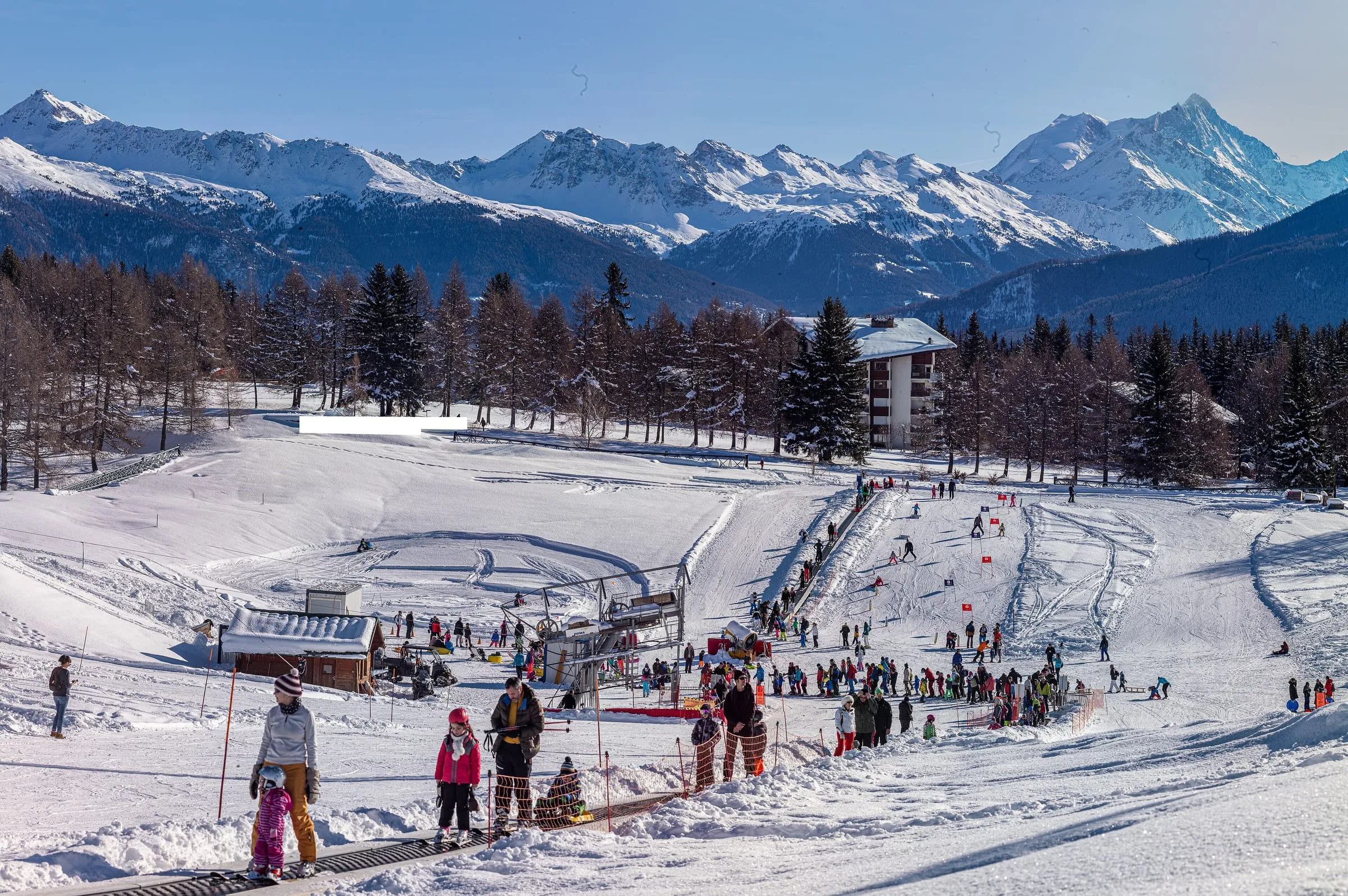
Beginners are well looked after. There are learning parks in Zweisimmen, Saanenmöser, Schönried, Gstaad and Lauenen, and the Wispile has a beginner area in the valley with a platter lift. Instead of a full pass, the cheaper Saani’s trial ski ticket covers easy slopes on the Rinderberg, the Saanerslochgrat and the Wispile.
Skiing in Gstaad for intermediates
Intermediates will spend most of their time in the Rinderberg, Saanersloch and Horneggli area. The Rinderberg Ronda ski safari takes in three mountains and valleys without repeating a run or lift, in about two hours from Zweisimmen. The wide Parwenge-Lengebrand slope near St. Stephan is a favourite for big carving turns, and the 3.1 km Mike von Grünigen run on the Horneggli is named after the local world champion.
Skiing in Gstaad for experts
Strong skiers head for the Tiger Run on the Wasserngrat, whose 2.5 km black section is the steepest piste in the region, and the Black Wall at Glacier 3000. Glacier 3000 also has renowned freeride routes. For off-piste, go with a qualified guide.
Glacier 3000 and La Videmanette: Gstaad’s signature runs
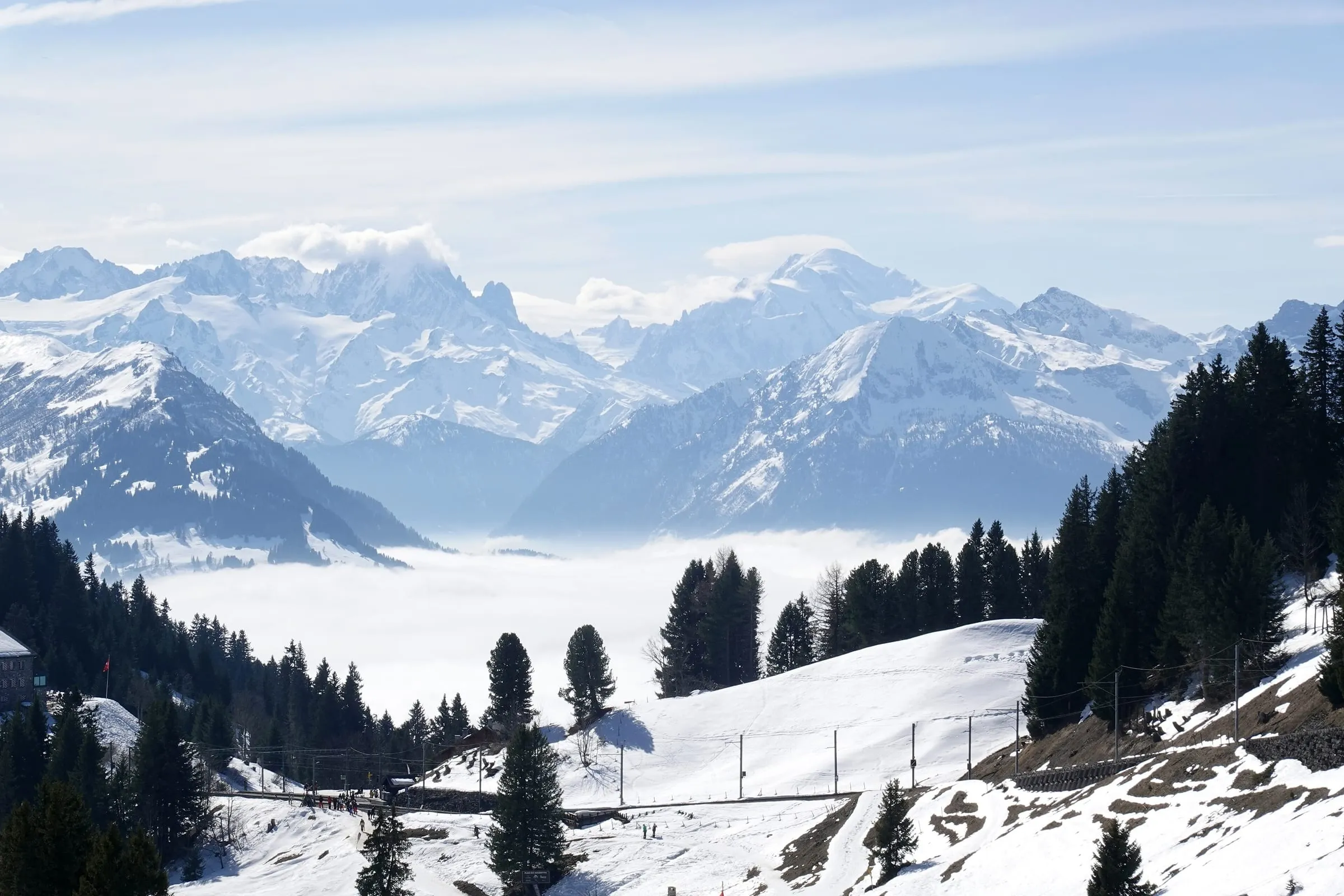
Glacier 3000 is what makes Gstaad a real option early and late in the season. It runs from November to May, and its Red Run is one of Europe’s longest slopes: 8 km from the Scex Rouge, beneath the Oldenhorn, down to about 1,300 m. Up top, the Peak Walk by Tissot is a suspension bridge between two peaks, with views of Mont Blanc and the Matterhorn on a clear day.
On the other side of the valley, the longest run in the Gstaad area starts on La Videmanette: 7.5 km and 1,160 m of descent down to Rougemont, with red and blue sections, so confident intermediates can manage it.
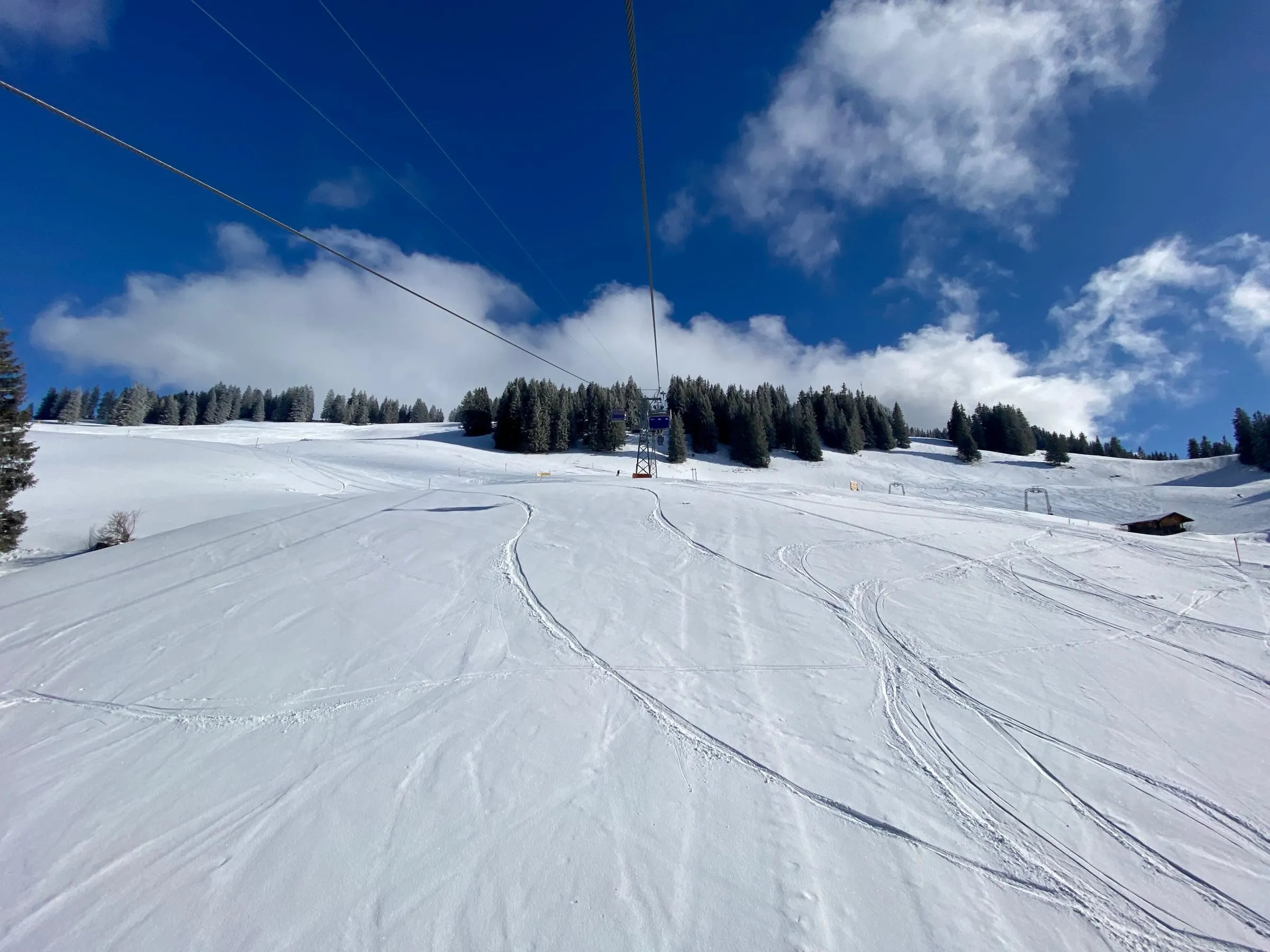
Snow in Gstaad and the 2026/27 season
The Gstaad mountain railways’ provisional opening plan for 2026/27, subject to snow and weather:
- 20 November 2026: Saanersloch, followed by the Horneggli on 21 November.
- From 5 December: La Videmanette at weekends.
- 18 December: Rinderberg and Lengebrand-Parwengesattel.
- 19 December: the whole network, with the opening of Eggli and La Videmanette.
- Wispile: daily between Christmas and New Year, then Thursday to Sunday from 4 January to 28 February 2027.
Glacier 3000 opens on 7 November 2026, and the Magic Pass lists it until 30 April 2027.
Gstaad’s weak point is altitude. The village is at about 1,050 m and, outside Glacier 3000, most of the skiing tops out at around 2,000 m, so in a mild winter or a warm spell, the lower runs suffer first. Glacier 3000 is the insurance policy. Closer to Gstaad, the lift company describes the Hornberg area above Schönried and Saanenmöser as snow-reliable, and the Saanersloch is the first area to open this season.
Is Gstaad good for a last-minute ski trip?
It depends on the snow. When there’s been a good fall down to valley level, Gstaad is lovely and easy to reach by train from Bern, Lausanne or Geneva. When the snow line is high, check what’s open before you book: in poor conditions, you may be relying on Glacier 3000, which is a bus or car ride from the village.
The good news for short-notice trips is the price list. From 2026/27, day tickets have fixed seasonal prices, so you know the cost in advance, while multi-day tickets are cheaper the earlier you book online. Then find a place to stay in Gstaad.
Gstaad lift passes
- Day tickets cover all the Gstaad areas except Glacier 3000, at fixed seasonal prices from 2026/27.
- Multi-day tickets cover every area, including Glacier 3000, and are cheaper booked early online.
- Flexible passes for 5, 6 or 7 days, which you can use on any days in the season.
- Children up to and including 5 travel free, and children’s prices apply from 6 to 15.
- Families get discounts on day and multi-day tickets when buying three or more tickets, including at least one adult.
- The Magic Pass is valid on the Gstaad mountain railways in 2026/27, except the Gsteig-Sanetsch cable car, and at Glacier 3000.
Après-ski and things to do in Gstaad
Après in Gstaad is relaxed rather than rowdy, and it centres on the car-free promenade, with its bars, restaurants and hotels. On the mountain, EGGLI Night Vibes combines night skiing, fondue and a party from 7 January to 25 February 2027, and there’s floodlit skiing on the Eggli, Rinderberg and Rougemont. The Caprices Festival runs from 12 to 21 March 2027, and the Slopesound Festival on 2 and 3 April 2027.
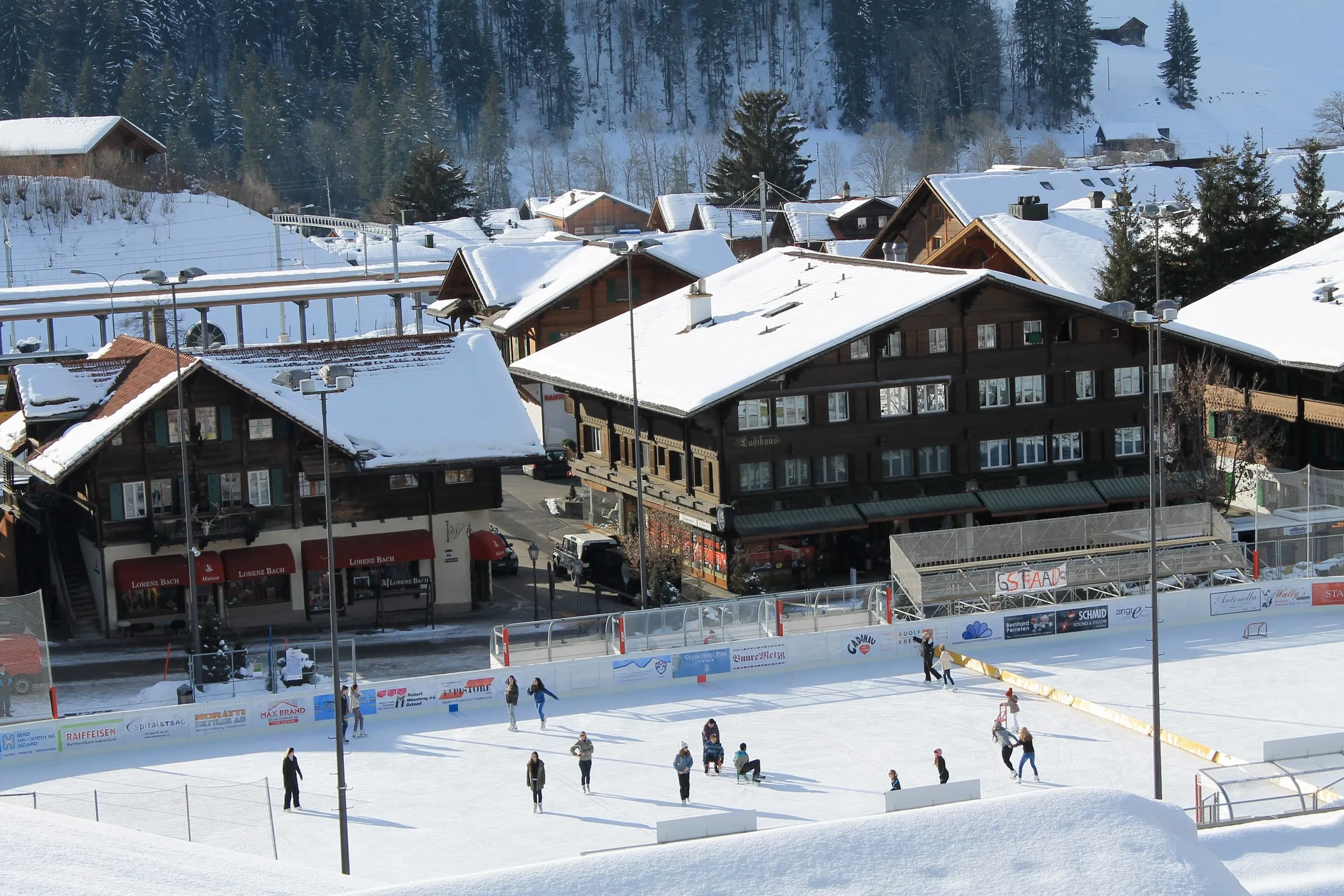
Off the slopes, the region has around 30 km of sledging runs, including the 6.4 km Eggli run, plus full-moon sledding on the Saanersloch, winter hiking, cross-country skiing, ice rinks in Gstaad and Saanenmöser, and an indoor pool with a water slide at the sports centre. Fondue picnics at giant fondue-pot shelters are a local speciality.
Who Gstaad suits, and who it doesn’t
- Great for: families, relaxed intermediates, food lovers, train travellers, and anyone who wants a traditional chalet village with a car-free centre.
- Think twice if: you want one big linked ski area you can ski from door to door, steep high terrain every day, or reliable snow at village level in a mild winter.
Skiing with children? Read our guide to Gstaad with kids.
How to get to Gstaad
By car
From Bern and northern Switzerland, take the A6 to Spiez and leave at Wimmis, then follow the main road through the Simmental via Zweisimmen and Saanen to Gstaad. From Lausanne, take the A9/A12 to the Bulle exit, then the road via Château-d’Oex. From the Valais, leave the A9 at Aigle and cross the Col du Pillon via Gsteig. Overnight guests get the Gstaad Card, which includes free public transport in the region, so you can leave the car once you’re there.
By train and bus
Gstaad is on the line between Zweisimmen and Montreux. From Bern, trains run via Spiez and Zweisimmen. From Geneva and Lausanne, trains run via Montreux. At weekends and on busy days in winter, snow trains run directly from Bern, Solothurn, the Emmental, Bulle and Palézieux to the region’s valley stations.
Nearest airports
Geneva is about 2 hours by car or 2 hours 50 minutes by train. Bern is about 1 hour 30 minutes by car or 2 hours 30 minutes by train. Zurich is about 3 hours by car or 3 hours 15 minutes by train. Air taxis use Gstaad’s airport at Saanen.