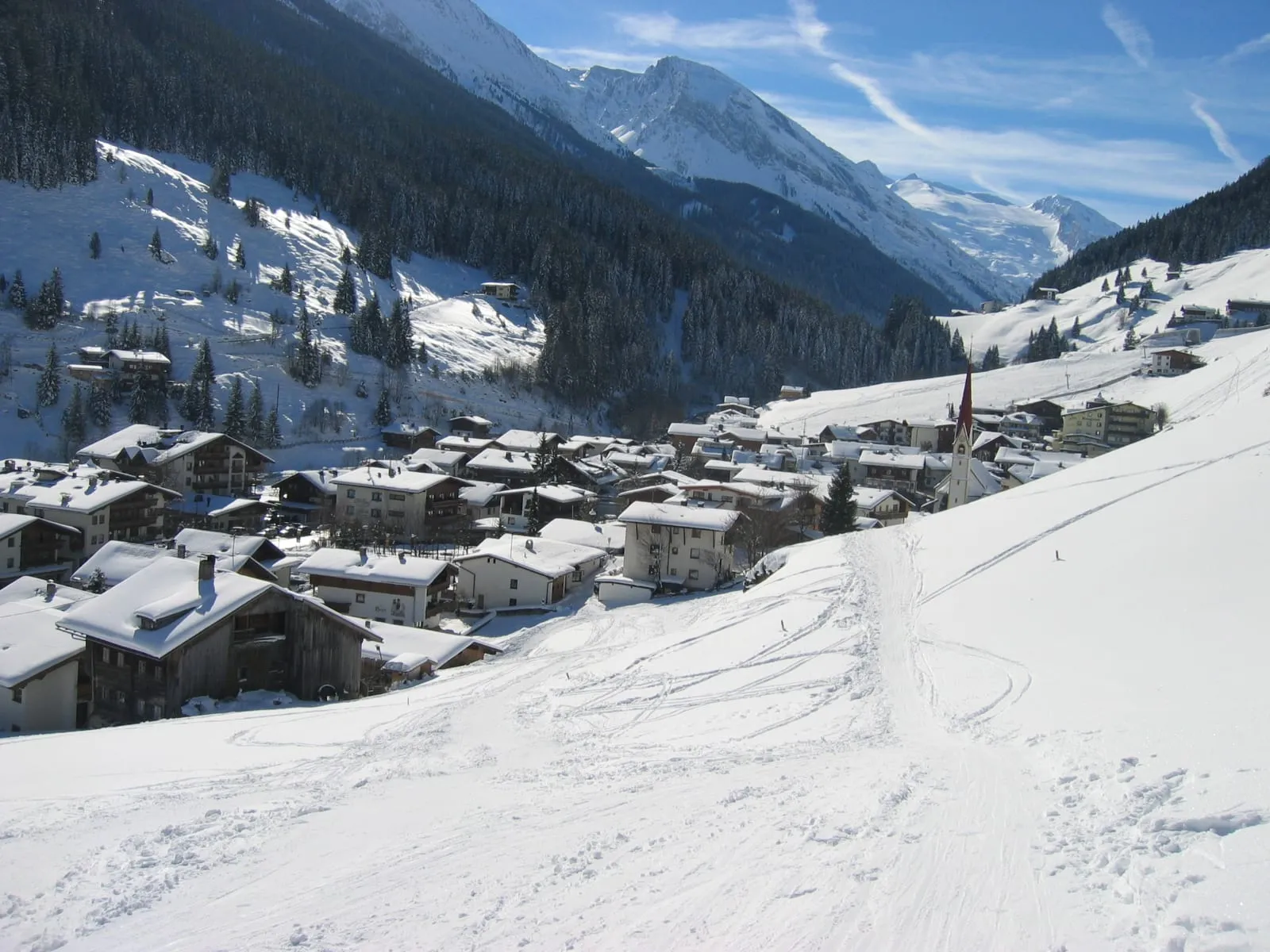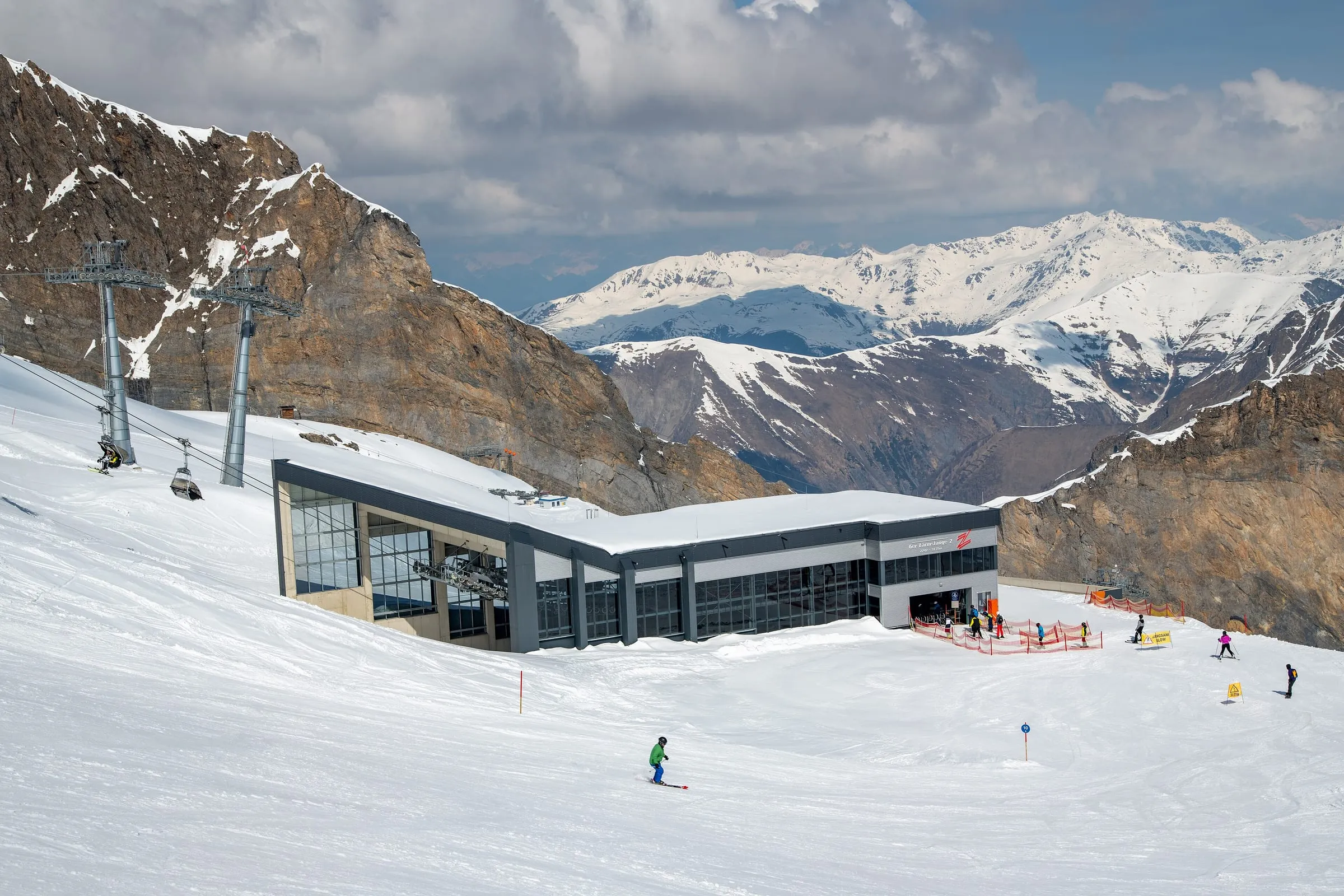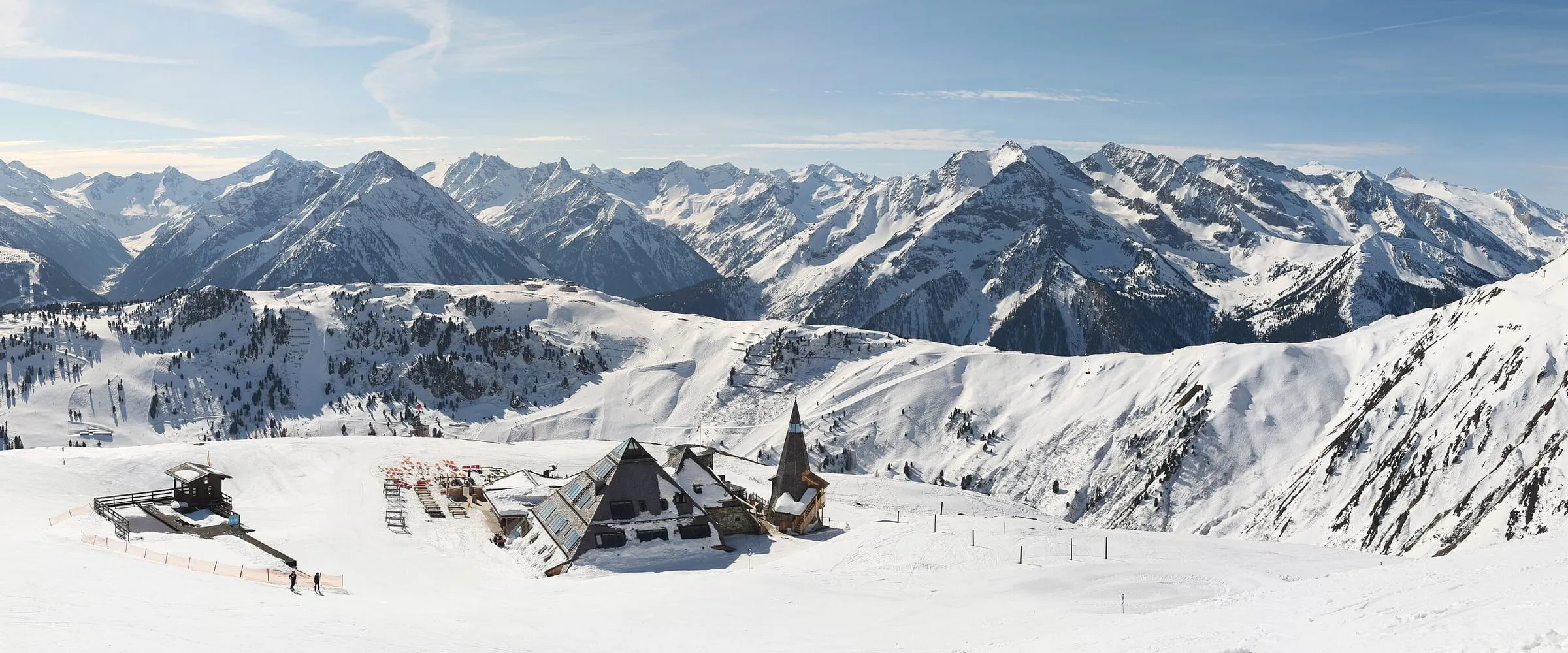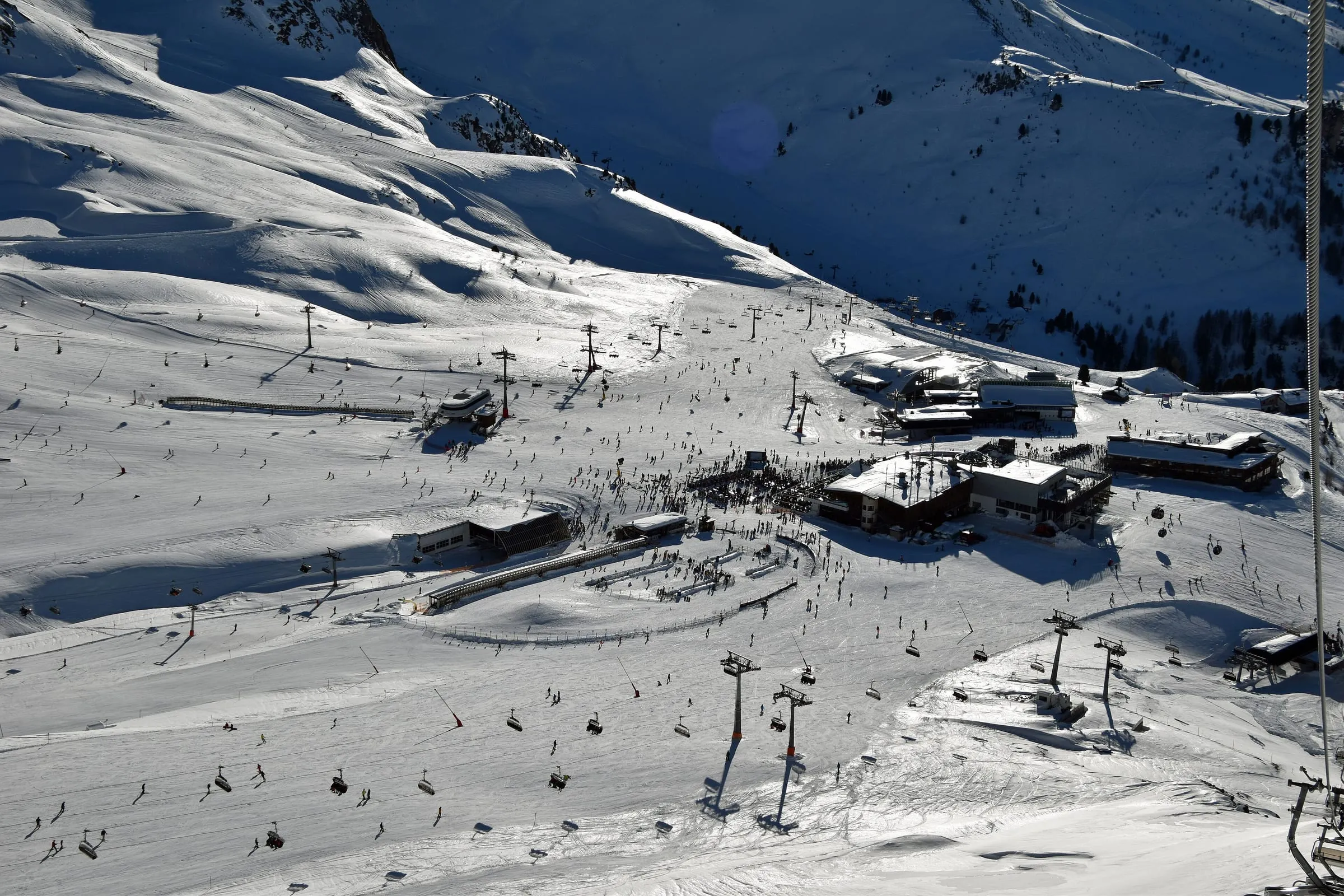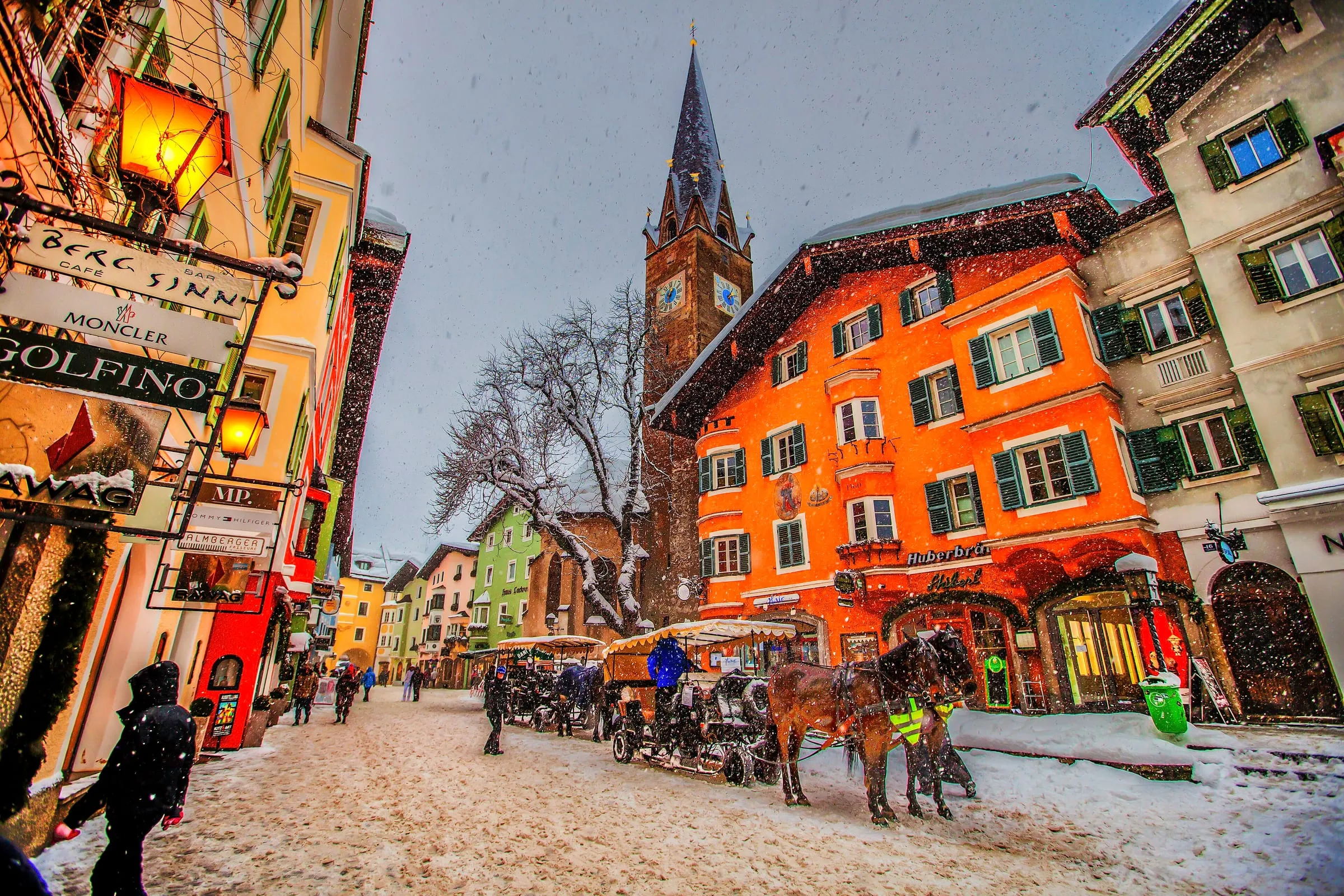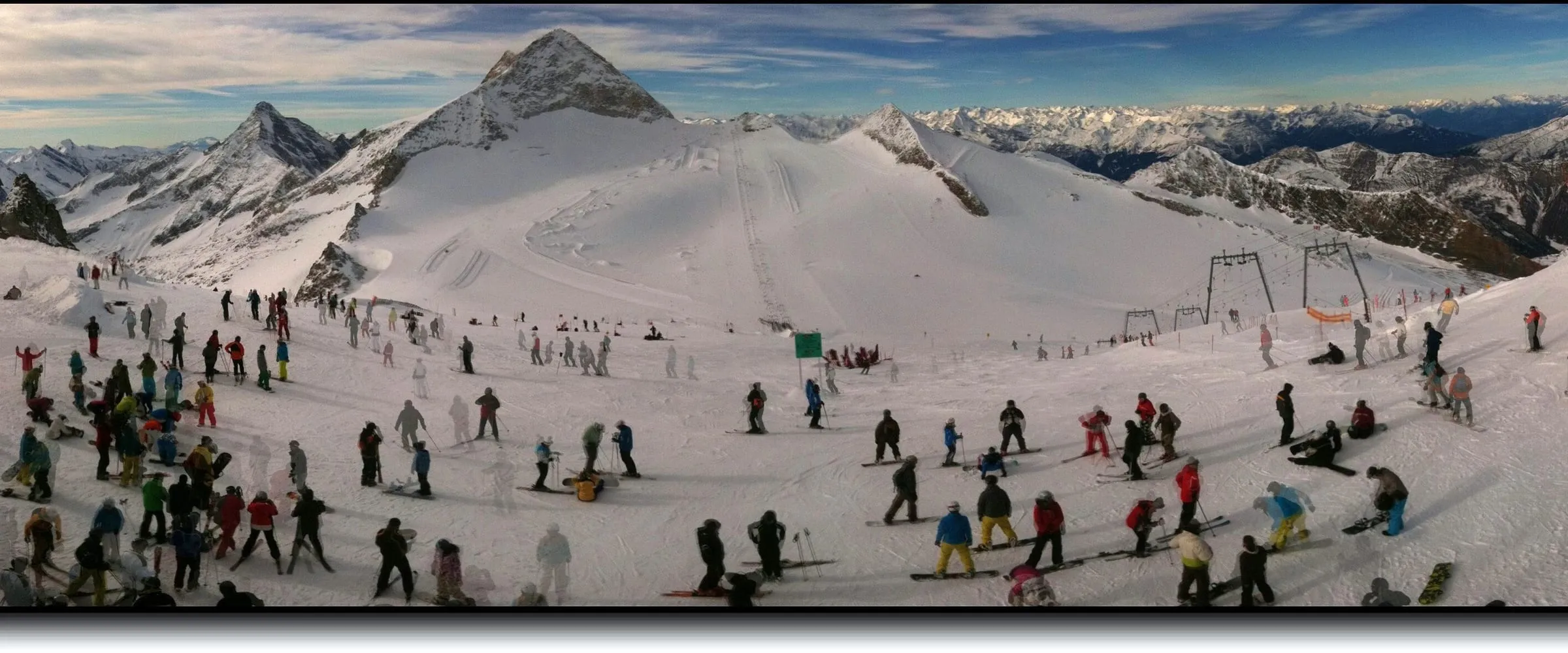
Hintertux is a small village at the very end of the Tux valley, a side valley of the Zillertal in Tyrol. Above it is the Hintertux Glacier, which skis up to 3,250 m and has the longest ski season in Austria. In autumn and late spring, when almost everywhere else is closed, this is where Austrian skiing happens.
It’s also the resort this site watches most closely in October and November. When you want to ski before the main season starts, Hintertux is usually the first answer. Just be clear what “year-round” means today.
Hintertux ski area: a glacier above the Tux valley
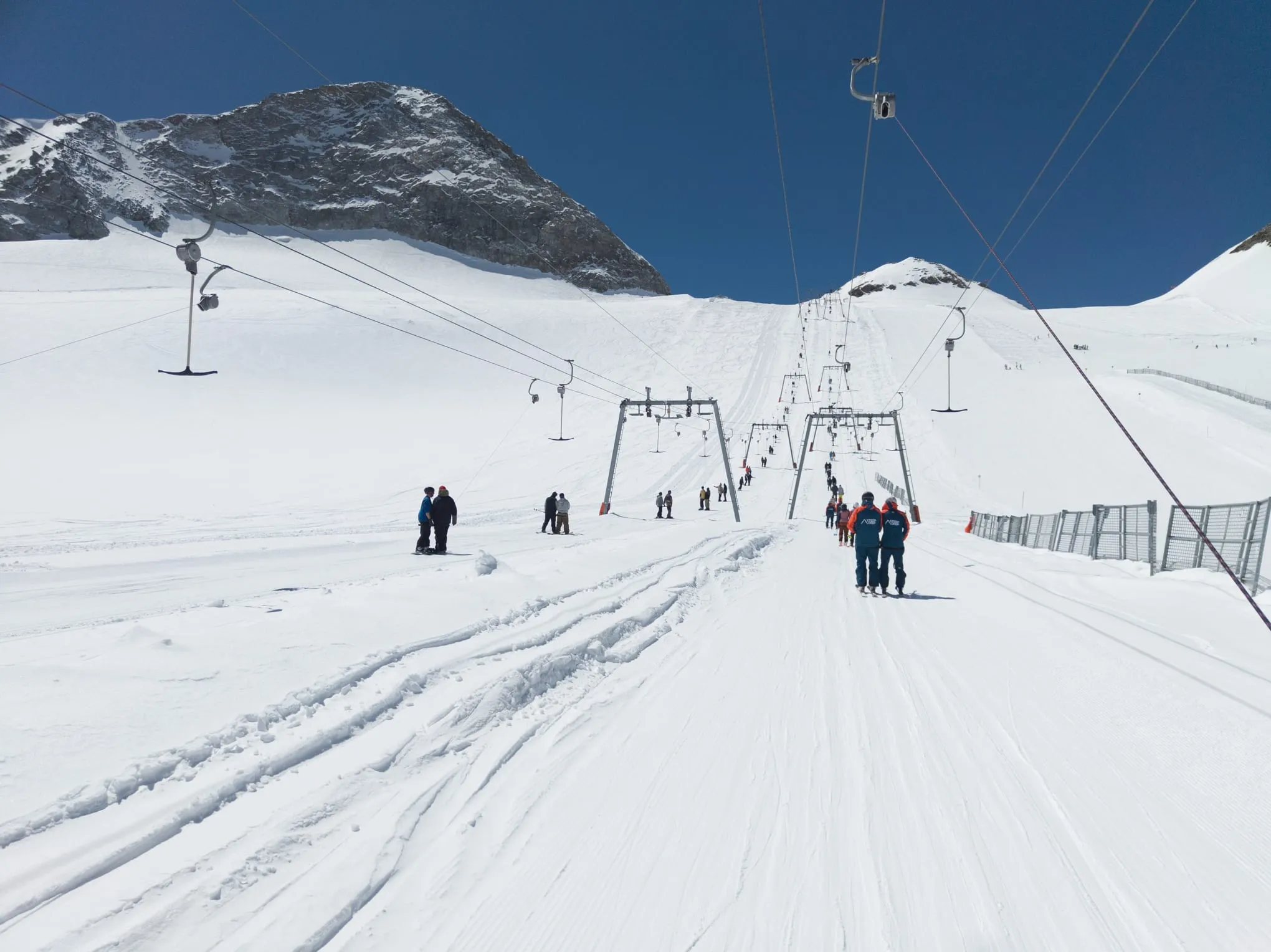
The glacier ski area has around 60 km of pistes and ski routes and 21 lifts, from the Sommerberg area above the village to the Gefrorene Wand at 3,250 m. The ride to the top takes about 40 minutes, on the Sommerberg gondola and then three Gletscherbus gondolas.
From early December to April, the glacier joins Eggalm (above Lanersbach), Rastkogel, Finkenberg and Penken/Mayrhofen to form the Ski- & Gletscherwelt Zillertal 3000: 206 km of pistes and 65 lifts, from 630 m to 3,250 m. The glacier isn’t linked to the other areas on skis, so a tour of the whole region involves the ski bus.
Skiing in Hintertux for beginners
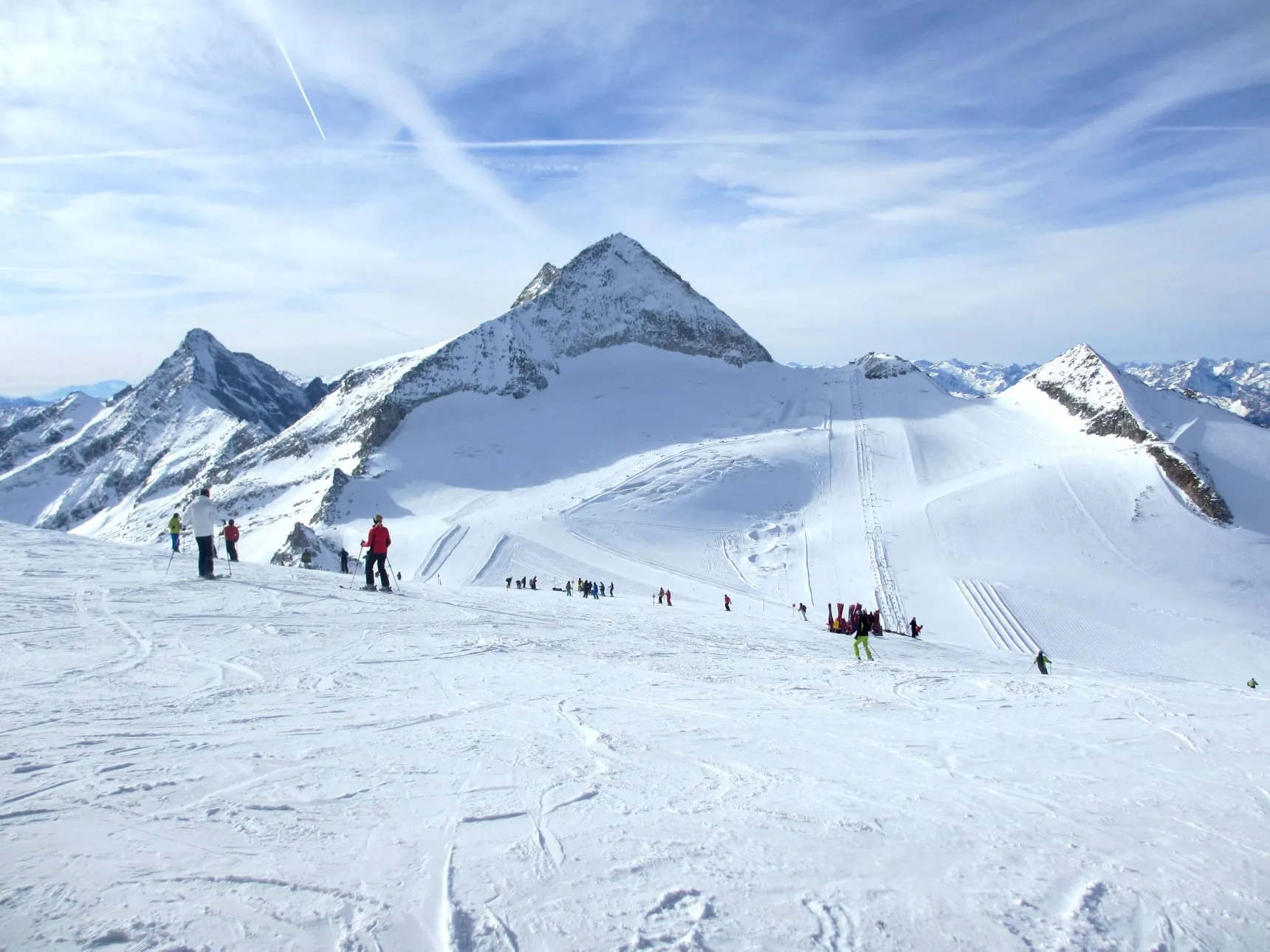
There’s a free beginner area, the Flohpark, near the valley station car park, with conveyor belts, beginner lifts and a carousel. No ski pass needed. On the glacier, some of the pistes are gentle. But learning at over 3,000 m is cold and exposed, and the snow can be hard in the morning. In midwinter, Eggalm, above Lanersbach, is a kinder place for first-timers.
Skiing in Hintertux for intermediates
Intermediates get the most from the glacier, where most of the pistes are red. The top lifts give long, high runs with views of the Olperer, and from December the Zillertal 3000 pass adds Eggalm, Rastkogel and the Penken.
Skiing in Hintertux for experts
Strong skiers come for the long descent. Tyrol’s tourist board puts the run from the Gefrorene Wand at about 12 km and around 1,750 vertical metres, from high alpine terrain to the valley. Freestylers come for the Betterpark Hintertux, billed as Austria’s highest freestyle spot, with a jump line, jib line and halfpipe in the shoulder seasons. Off-piste on the glacier means crevasses: go with a guide.
Year-round skiing on the Hintertux Glacier: what’s open when
The lifts run every day of the year, from 8.15 am to 4.30 pm. Skiing doesn’t. Hintertux had its last uninterrupted year-round ski season in 2022. In 2026, the operator announced a summer break in advance: skiing stopped in late July, the lifts kept running for sightseeing and the ice cave, and skiing restarted on 2 October 2026. Summer 2027 dates haven’t been published.
Autumn 2026. The glacier’s season started on 2 October 2026, and the Betterpark opened on 2 to 4 October. Until early December, only the glacier is open, so all the skiing is at the top of the mountain.
Winter 2026/27. Eggalm, Rastkogel and Finkenberg open on 4 December 2026 and run to 11 April 2027.
Spring. The glacier keeps going after the valley areas close. In 2026, the Betterpark ran from 18 April to 1 June.
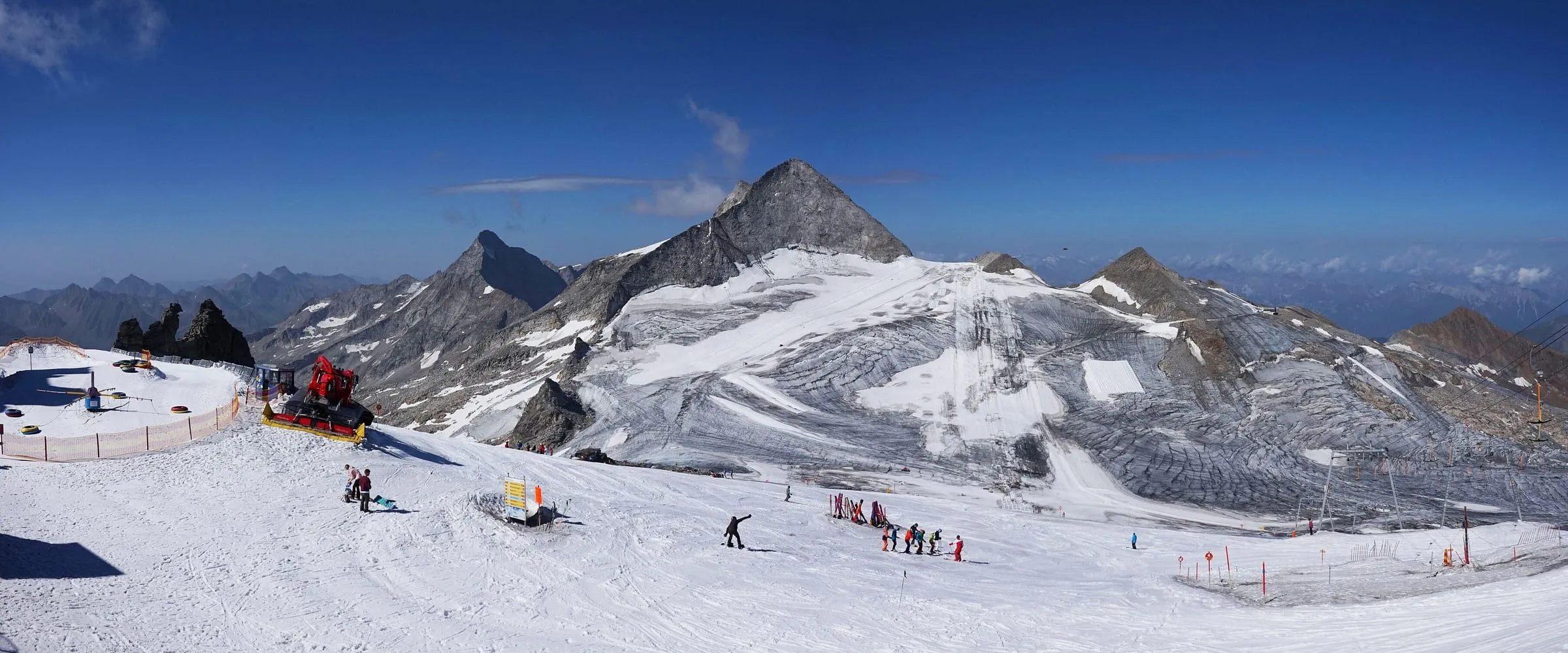
Summer. When summer skiing runs, it’s a reduced area at the top, with the snow best early in the morning and soft by late morning.
Snow in Hintertux and the 2026/27 season
The glacier is what makes Hintertux reliable from October to May: in autumn, the skiing is on the high glacier slopes below the 3,250 m top station, well above where most Austrian resorts start. That said, the glacier needs looking after. Parts of it are covered with fleece in summer, summer ski closures have grown longer since 2022, and in a warm, dry autumn the open area can be small. When the valley areas open in December, the lower slopes depend on snowmaking and natural snow like anywhere else in the Zillertal.
Is Hintertux good for a last-minute ski trip?
In autumn and late spring, yes: it’s often the best option in Austria. It’s at the end of the valley road, 90 to 230 km from Innsbruck, Salzburg and Munich airports, and the glacier gives reliable snow when lower resorts are closed or bare.
Two cautions. Autumn weekends are busy, because it’s one of the few places open, and race teams train here. And in summer, don’t assume you can ski: check the lift company’s status first. Then find a place to stay in Hintertux.
Hintertux lift passes
- Glacier passes cover the Hintertux Glacier when it’s the only area open.
- From December, the Zillertal 3000 pass covers the glacier plus Eggalm, Rastkogel, Finkenberg, Penken and Ahorn.
- The Zillertal Superskipass covers every ski area in the valley.
Children’s rates and free ages are set by the lift company and vary by season, so check them when you buy and bring ID.
Après-ski and things to do in Hintertux
Hintertux is quiet. Evenings are spent in hotel spas and a few bars; for nightlife, Mayrhofen is down the valley.
The big attraction off the pistes is the Natur Eis Palast, a cave inside the glacier, 30 m below the slopes and about a 10-minute walk from the Gletscherbus 3 top station. Tours run daily, 365 days a year, every hour from 10.30 am to 2.30 pm. They take about 70 minutes, include a boat trip on a glacier lake, and are for visitors aged 6 and over. Down in the valley there’s tobogganing, winter walking, ice skating and curling, and the Playarena Tux indoor play centre.
Who Hintertux suits, and who it doesn’t
- Great for: autumn and spring skiing, snow-sure midwinter trips, racers and freestylers training out of season, and families who want reliable snow and a quiet valley.
- Think twice if: you hate the cold (it’s often windy and bitter at 3,250 m), you want lively après-ski, or you’re planning a summer ski trip without checking first.
Skiing with children? Read Hintertux with kids.
How to get to Hintertux
By car
Leave the A12 Inntal motorway at the Zillertal exit and follow the B169 up the Zillertal to Mayrhofen, then continue through Finkenberg into the Tux valley. Hintertux is at the end of the road. The tourist office advises sticking to the motorway rather than toll-avoiding back roads, which can mean long delays, so turn off “avoid toll roads” in your sat nav.
You need a vignette for Austrian motorways. From 1 December 2026 it is digital only: buy it from ASFINAG’s webshop or app, or an official reseller. One-day and 10-day vignettes bought online are valid immediately; two-month and annual ones only start on the 18th day. From 1 November to 15 April, cars must have winter tyres (M+S, at least 4 mm of tread) whenever there’s snow, slush or ice on the road. The Tux valley road climbs to 1,500 m, so treat winter tyres as essential even in October, and carry chains.
By train and bus
Take the train to Jenbach, then the Zillertalbahn train or bus to Mayrhofen, which runs every half hour, and a bus up the Tux valley. Within the valley, the Tuxer Sportbus runs on seven electric buses.
Nearest airports
Innsbruck, Salzburg and Munich airports are 90 to 230 km from the Tux valley.