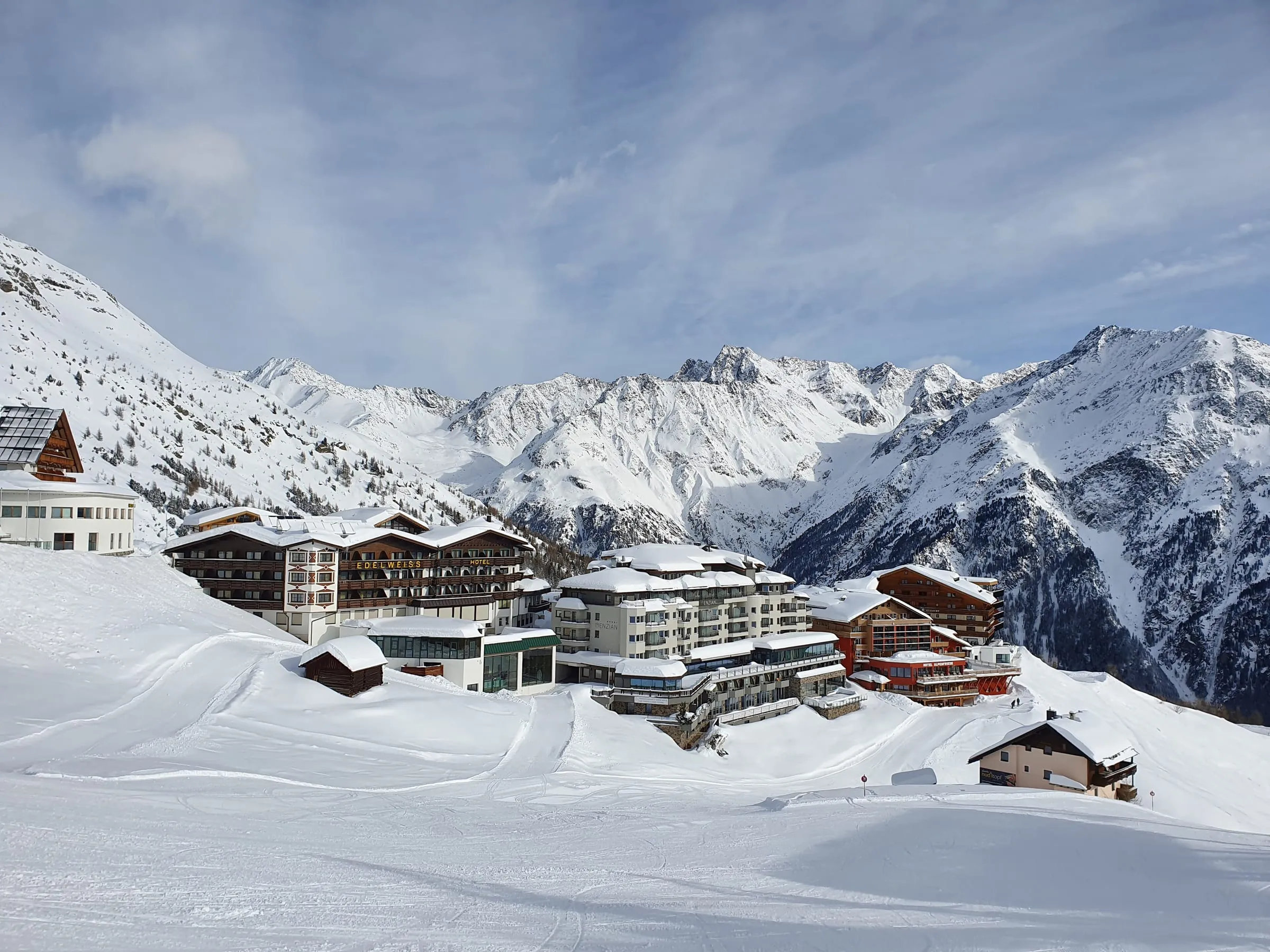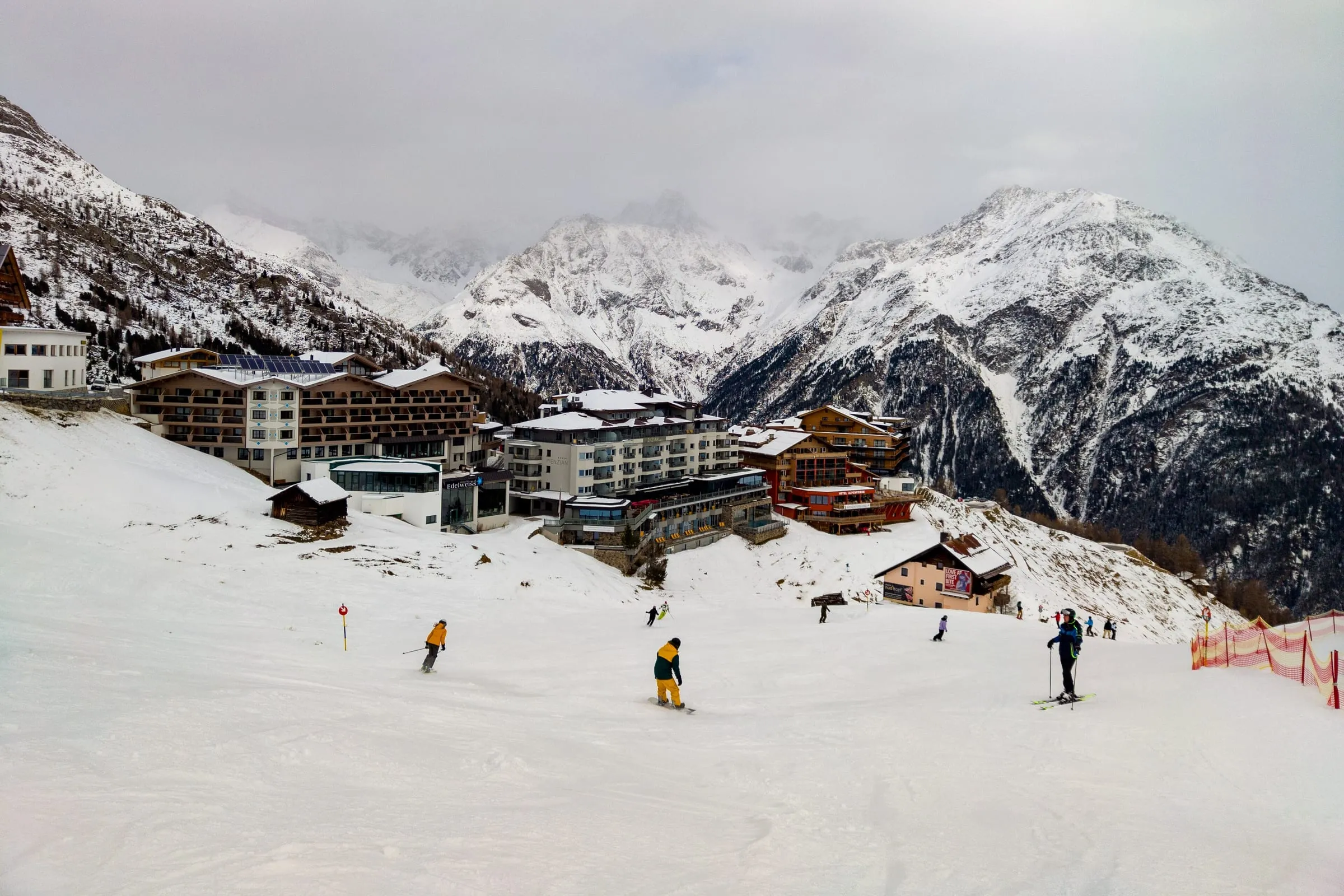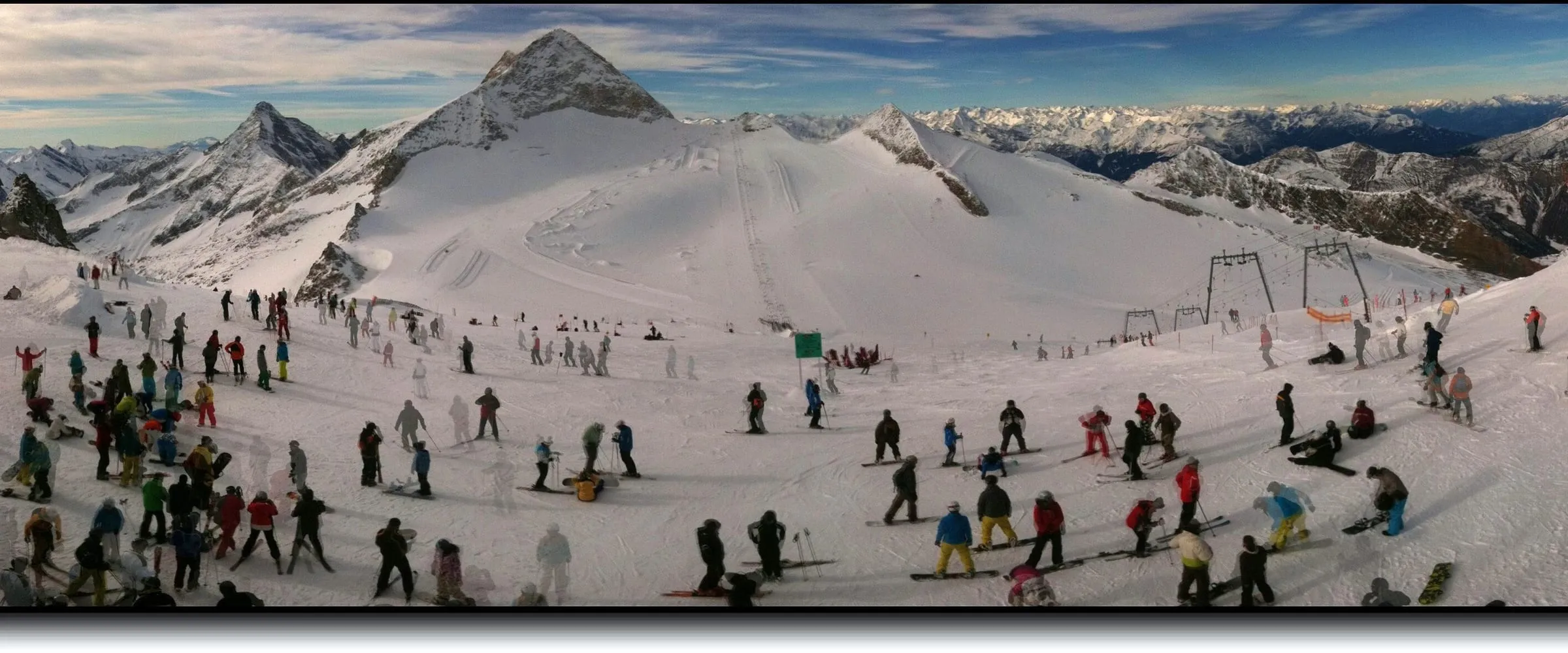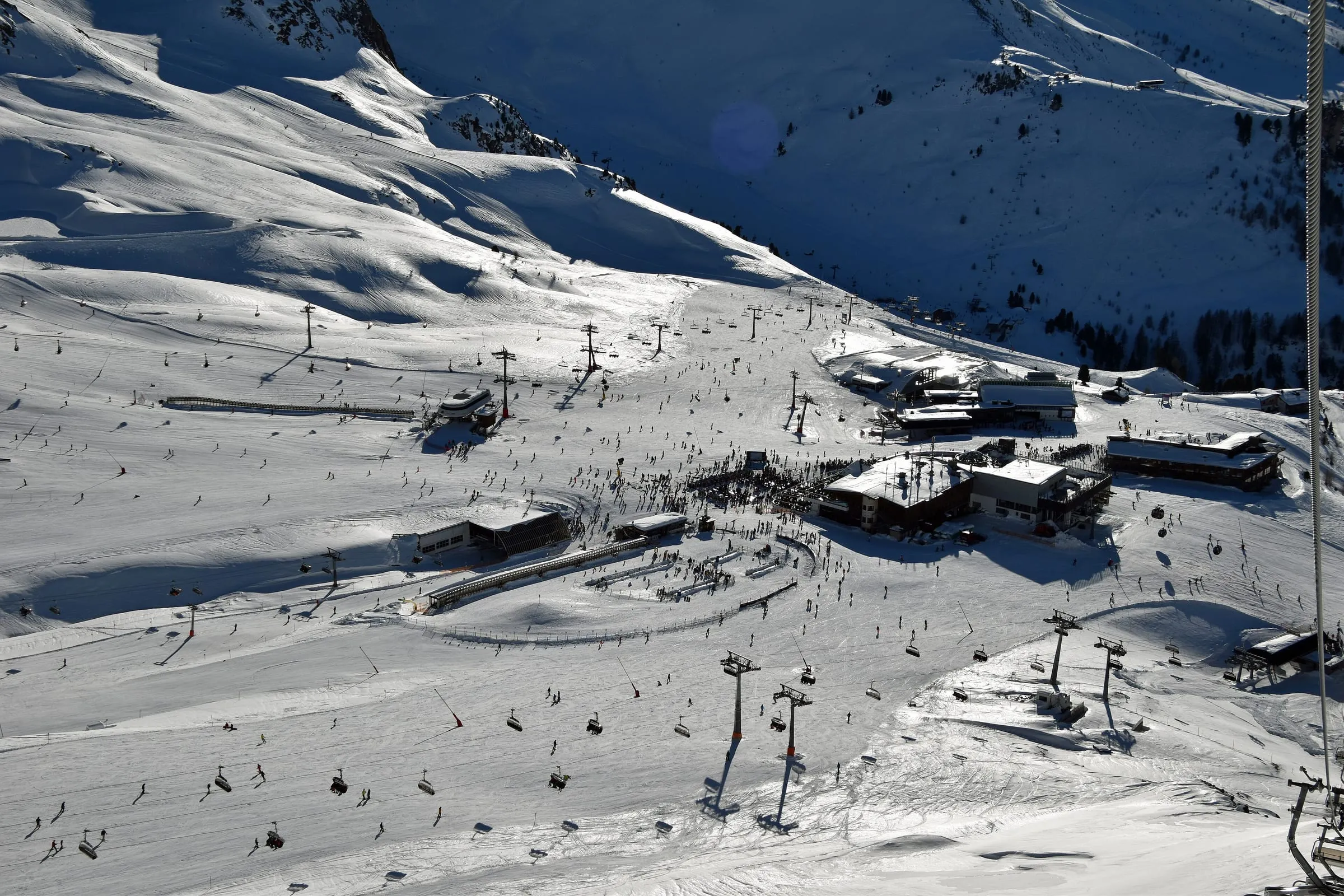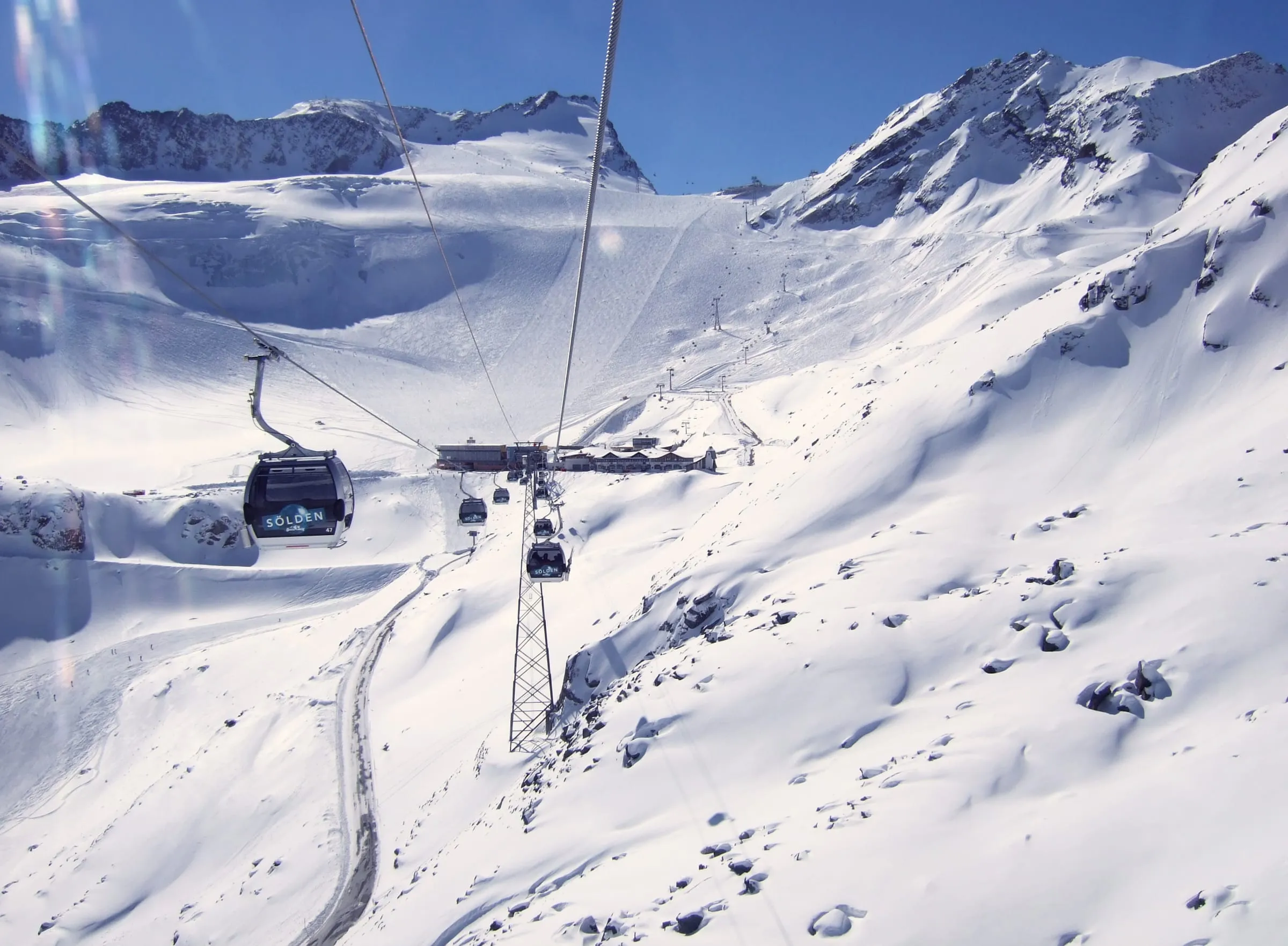
Sölden is the big-hitter of the Ötztal in Tyrol, and one of the most snow-sure resorts in Austria. Its ski area runs from 1,350 m to 3,340 m, with 147 km of pistes, 31 lifts and 33 huts, and it includes two glaciers, the Rettenbach and the Tiefenbach. That glacier terrain is why Sölden opens in early October and hosts the first race of the alpine World Cup season every autumn.
It’s also a resort with a reputation. The village is long, busy and loud after dark, and the après-ski is some of the rowdiest in the Alps. If that’s what you want, good. If not, there are quieter ways to do Sölden, starting with where you sleep.
Sölden ski area: two glaciers and the BIG3
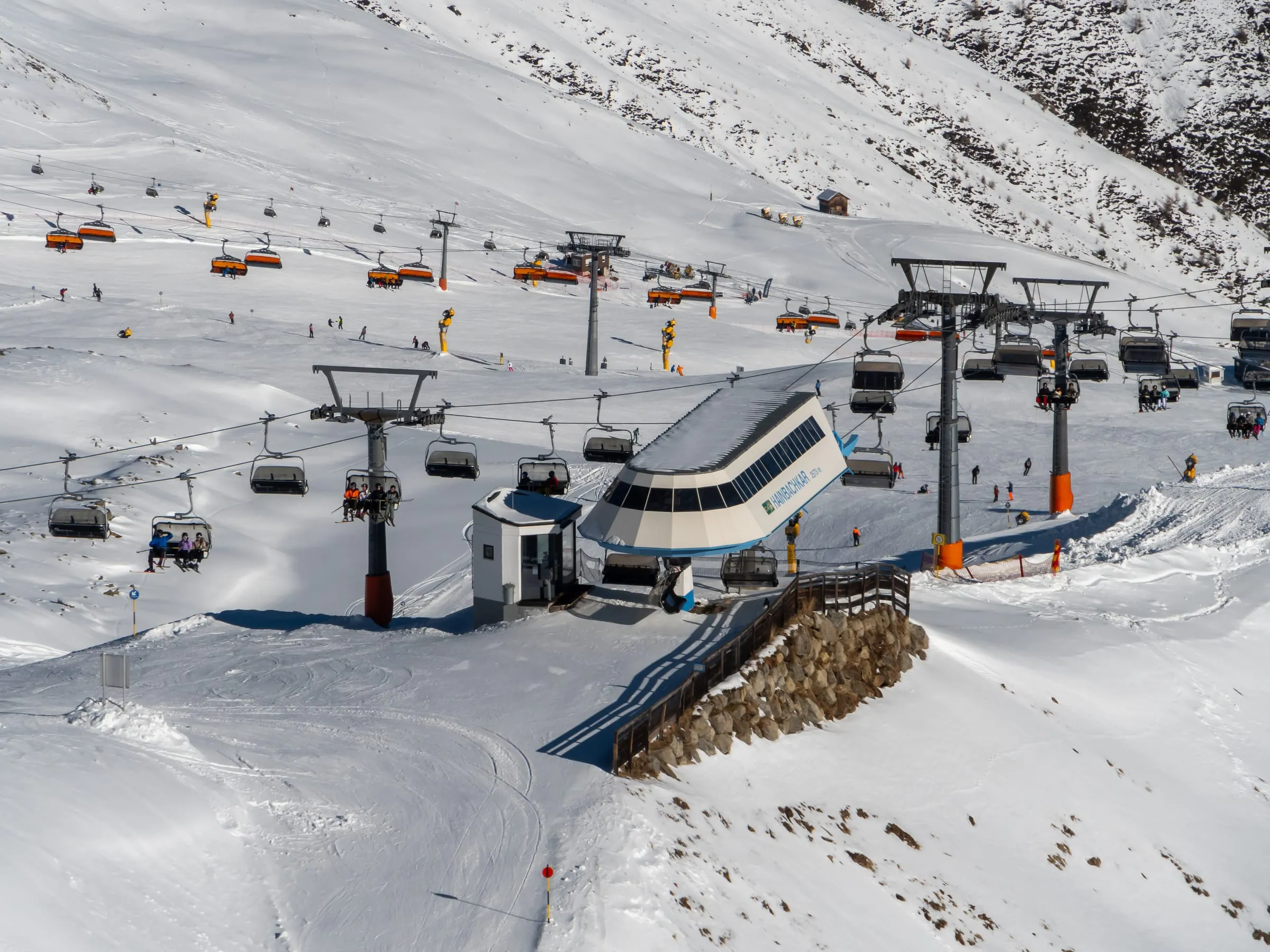
Sölden is a single, self-contained ski area rather than part of a bigger linked network, but with almost 2,000 m of vertical it skis bigger than its 147 km suggests. Two high-capacity gondolas, the Giggijochbahn and the Gaislachkoglbahn, lift up to 8,100 people an hour out of the village. The slopes split into three parts: the wide bowls around Giggijoch and Hochsölden, the steeper Gaislachkogl side, and the glaciers, reached by the Glacier Express gondola.
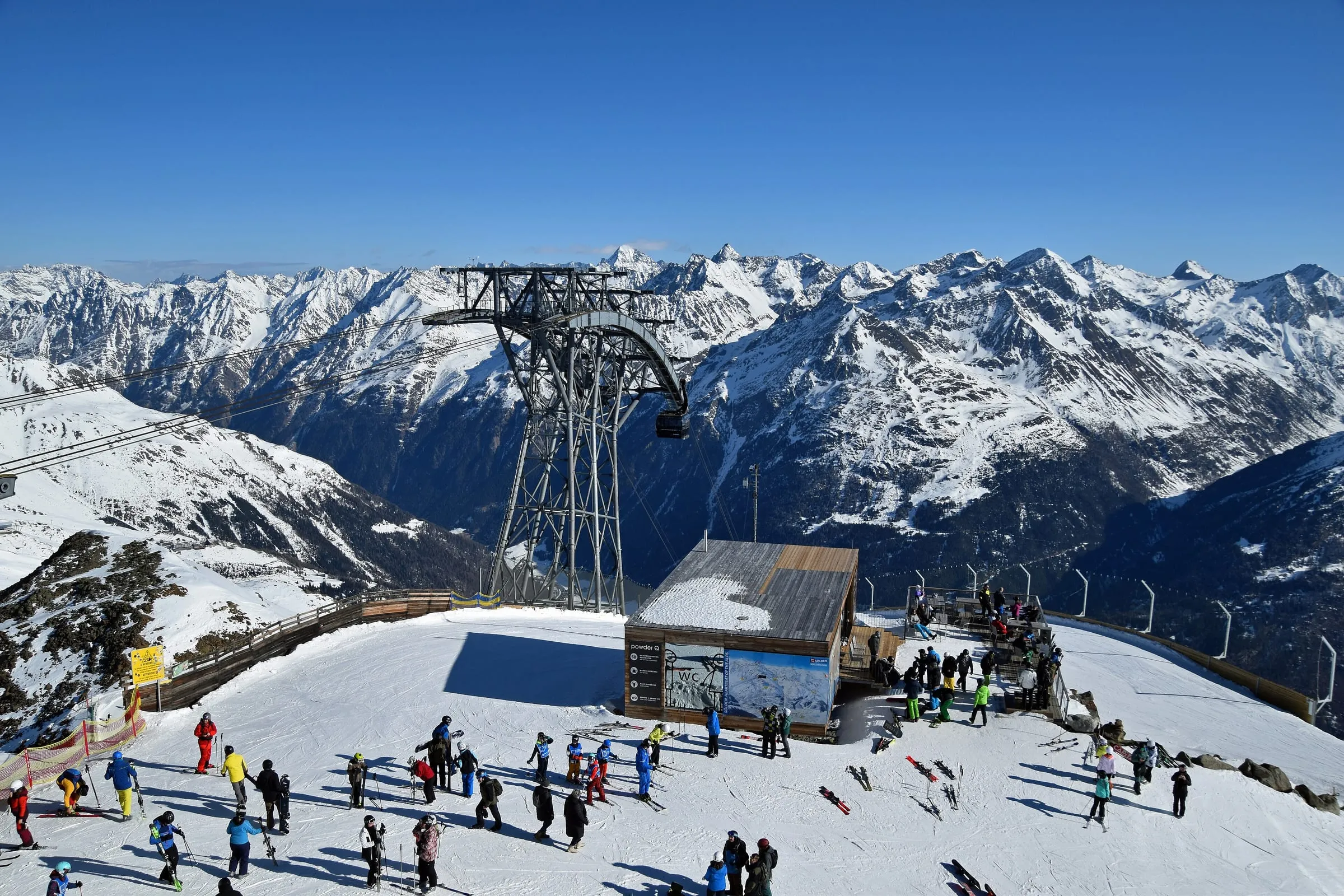
Sölden is Austria’s only ski area with three lift-served summits above 3,000 m, the BIG3, each with a viewing platform:
- Gaislachkogl (3,048 m): a short walk from the gondola to a suspension bridge and a 360° roof terrace. Walkers can reach it in winter.
- Tiefenbachkogl (3,250 m): a 15 m pyramid and a footbridge over the glacier, reachable on skis or a board.
- Schwarze Schneid (3,340 m): the highest point of the ski area, with a larch-wood deck about 15 to 20 minutes’ walk above the top station.
Skiing in Sölden for beginners
Sölden sells cheaper beginner tickets for three beginner-friendly areas in the ski area, and the ski schools have their own children’s zones. On the glaciers, almost all the terrain is blue. For 2026/27, the lift company has widened and flattened the merged pistes at Wasserkar to make them clearer and safer for beginners. Even so, the main slopes are busy, and the runs back to the valley are no place for a nervous first-week skier.
Skiing in Sölden for intermediates
This is the sweet spot. Long reds and blues fan out around Giggijoch and Hochsölden, and the glacier pistes are long, wide cruisers. The Gratl lift has been replaced for 2026/27 by a six-seater chairlift with weather hoods, carrying 2,300 people an hour and cutting the ride from eight minutes to about four. A new blue piste, 1b, comes with it.
Skiing in Sölden for experts
Strong skiers get sustained, steep descents on the Gaislachkogl side and plenty of black and red terrain. The BIG3 Rally (below) is a proper day out. There is freeride terrain off the high lifts, but much of it is glaciated and avalanche-prone, so go with a guide.
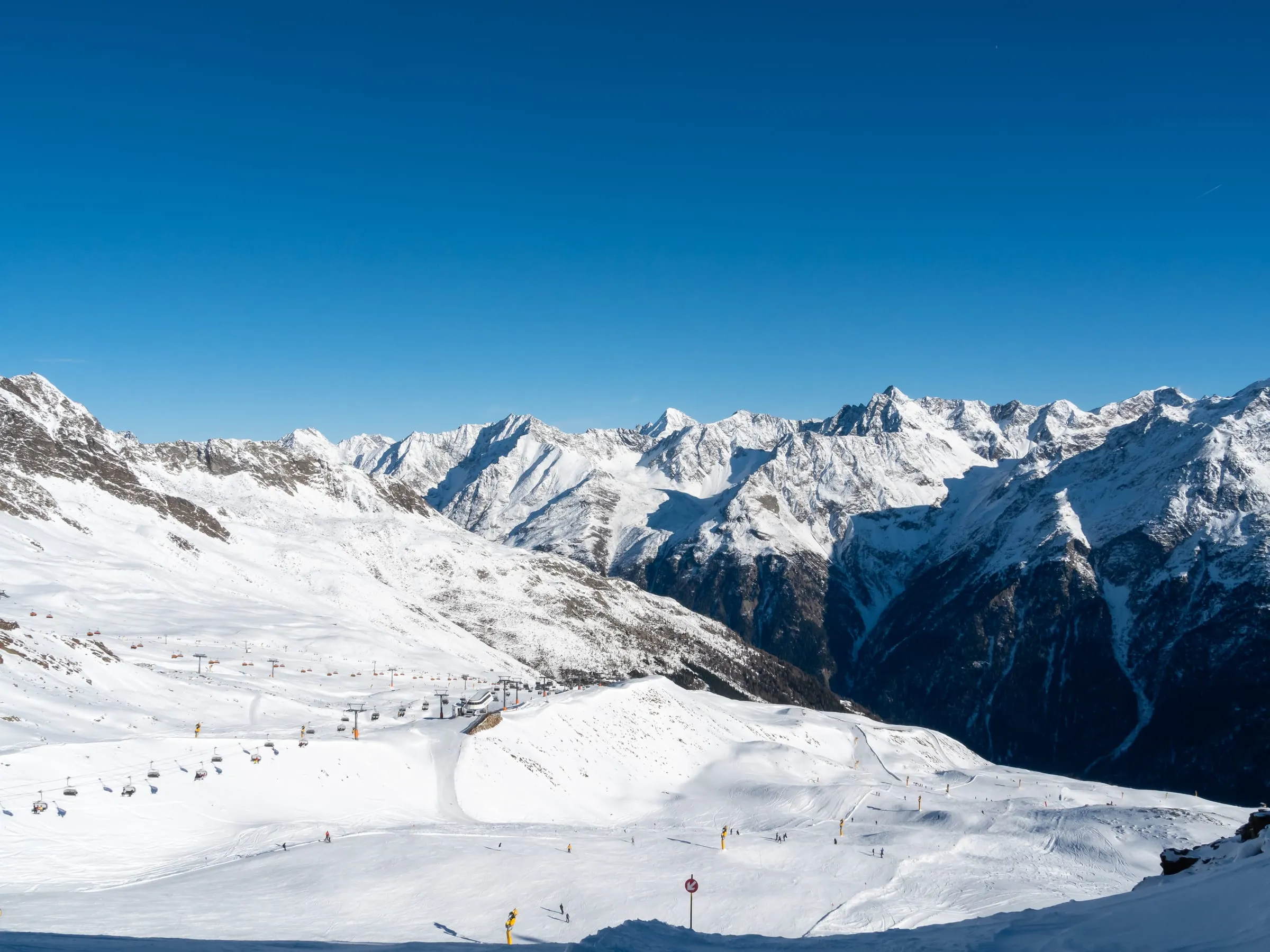
The BIG3 Rally and Sölden’s longest run
The BIG3 Rally takes in all three summits in one day: almost 50 km and more than 5,200 m of vertical, starting and finishing at the Gaislachkogl base station. The route goes Schwarze Schneid, then Tiefenbachkogl, then Gaislachkogl, and includes a run of about 12 km from the Seiterjöchl (3,051 m), with about 1,650 m of descent.
The other bucket-list run is the descent from the glaciers to the valley. Sölden describes it as Austria’s longest ski run, starting from the highest point of the ski area at the Schwarze Schneid. Tyrol’s tourist board puts it at about 15 km and around 2,000 vertical metres in one go. Start early: the bottom section gets soft and busy in the afternoon.
Snow in Sölden and the 2026/27 season
Sölden has one of the longest seasons in Austria. For 2026/27:
- Autumn glacier skiing started at the beginning of October 2026. The World Cup opener ran on the Rettenbach glacier on 24 and 25 October 2026.
- Winter season: 12 November 2026 to 18 April 2027. The pre-season, to 4 December, depends on snow.
- Spring glacier skiing: 19 April to 2 May 2027.
The glaciers are what make this possible. The Rettenbach skis from 2,675 m to 3,250 m and the Tiefenbach from 2,795 m to 3,249 m, with 8 lifts and 35.1 km of slopes between them, almost all of it blue. For 2026/27, the lift company is also adding snowmaking on the Gaislachkogl and the Schwarzkogl.
The catch is at the bottom. The village is at about 1,350 m, so in a mild spell the lowest runs suffer first, and the glaciers are cold and exposed in wind or flat light. When the valley runs are poor, ride the gondola down.
Is Sölden good for a last-minute ski trip?
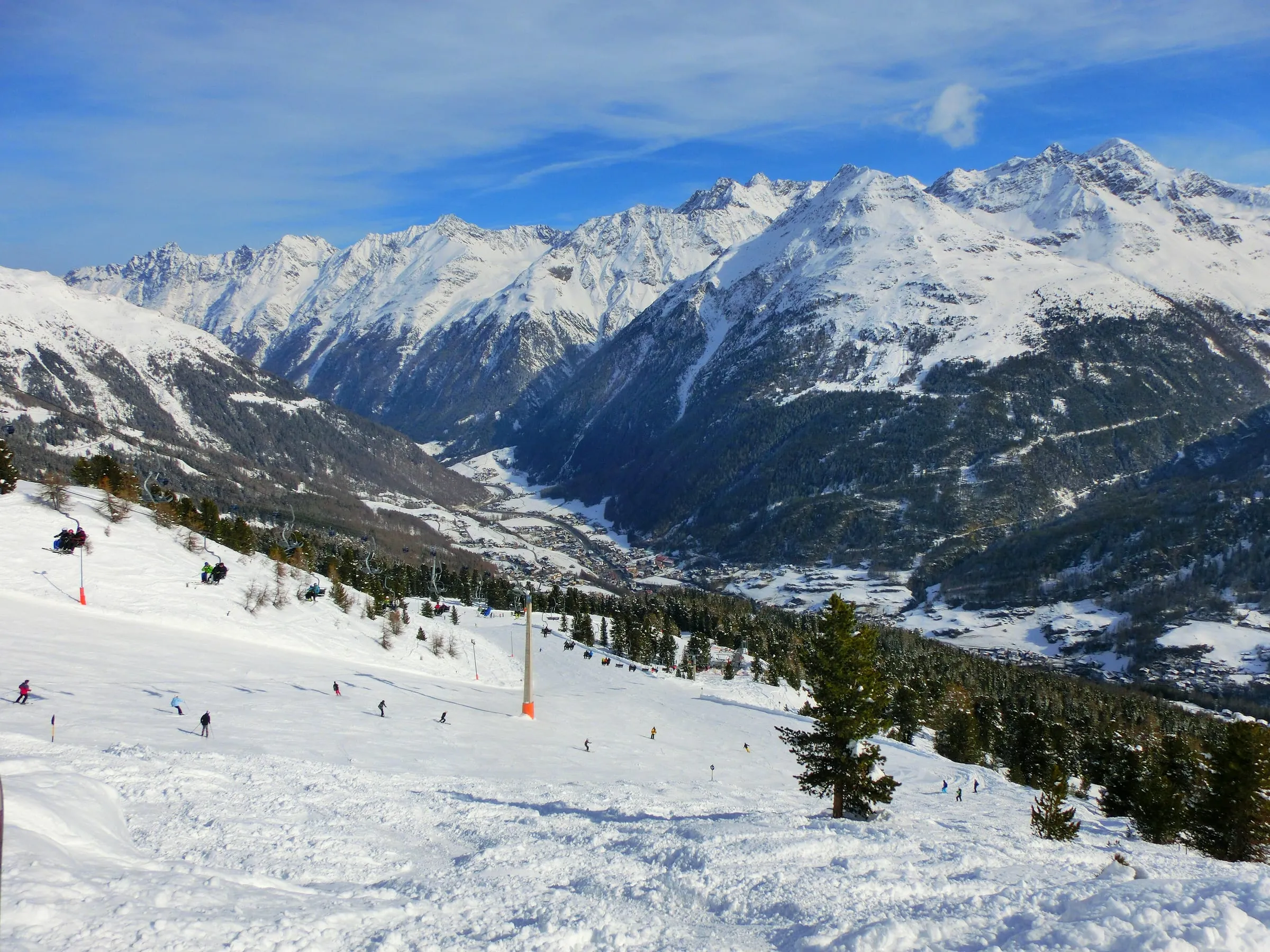
Yes, especially at the edges of the season. In October, November and late April, Sölden’s two glaciers make it one of the few places in Austria where you can count on real skiing, and the upper slopes hold snow well when lower resorts are struggling. Giggijoch is about 37 km from the motorway exit, so it’s a realistic short-notice trip from Innsbruck or Munich.
Before you book, check how much is open: until the pre-season starts on 12 November, only the glacier lifts run. Avoid the World Cup weekend in late October and the peak weeks (19 December to 6 January and 30 January to 26 February) if you want quiet slopes. Then find a place to stay in Sölden.
Sölden lift passes
Passes are sold online, at the ticket offices and at ticket machines. Buying online is cheaper, and earlier is cheaper still: the discounted online price runs until 5 days before your first ski day.
- 1- and 2-day passes cover the Sölden ski area only. There are also 1.5-day passes and staggered day tickets from 11:00, 12:00 or 13:00.
- From 3 days, you get the Ötztal Superskipass, valid in six Ötztal ski areas with 90 lifts and 363 km of pistes, including Obergurgl-Hochgurgl.
- 6-day and longer passes include entry to 007 ELEMENTS and the Top Mountain Motorcycle Museum.
- Children born 2019 to 2022 get a “Snowkids” pass at a reduced daily rate. Children’s rates cover those born 2012 to 2018.
- Beginner tickets cover the three beginner-friendly areas.
Après-ski and things to do in Sölden
Après-ski in Sölden is loud, late and starts on the mountain. Expect busy bars in the village from mid-afternoon, especially on weekends and in peak weeks. Light sleepers should read our where to stay in Sölden guide before booking.
Off the slopes:
- 007 ELEMENTS, a James Bond installation at the top of the Gaislachkogl.
- Tobogganing on the 7.3 km Gaislachkogl run, from the middle station at 2,170 m to the valley, floodlit on Wednesday evenings. There’s also a 3.2 km natural run from the Lenzenalm at Zwieselstein.
- The Freizeit Arena, a leisure centre with pools, saunas and indoor sports.
Who Sölden suits, and who it doesn’t
- Great for: early- and late-season trips, intermediates who want big vertical and long runs, strong skiers chasing the BIG3, and groups who want après-ski.
- Think twice if: you want a quiet, traditional village, a ski area linked to its neighbours, or gentle valley runs. Complete beginners can learn here, but there are calmer, cheaper places to start.
Skiing with children? Read Sölden with kids.
How to get to Sölden
By car
Leave the A12 Inntal motorway at exit 123 (Ötztal) and follow the B186 south up the valley. The Giggijoch gondola is about 37 km from the exit, around 40 minutes in clear conditions, and the Gaislachkogl gondola a kilometre further. The road is good, but avalanches can occasionally close it, and it jams on World Cup weekend. For Hochsölden, follow the signposted Gletscherstraße (glacier road) at the end of the village; hotels there advise carrying snow chains. In autumn, the glacier road toll is waived if you have a valid ski pass.
You need a vignette for Austrian motorways. From 1 December 2026 it is digital only: buy it from ASFINAG’s webshop or app, or an official reseller. One-day and 10-day vignettes bought online are valid immediately; two-month and annual ones only start on the 18th day. From 1 November to 15 April, cars must have winter tyres (M+S, at least 4 mm of tread) whenever there’s snow, slush or ice on the road. Carry chains too, as signs can require them.
By train and bus
Take the train to Ötztal station, on the main line west of Innsbruck. The valley bus (line 320) runs every half hour between Ötztal station and the upper valley, and buses and ski shuttles are free with the Guest Card in winter. In autumn, a free glacier ski bus runs between the village and the glacier lifts.
Nearest airports
Innsbruck is the closest, with buses from the airport to Sölden. Munich and Salzburg are further, but have more flights.