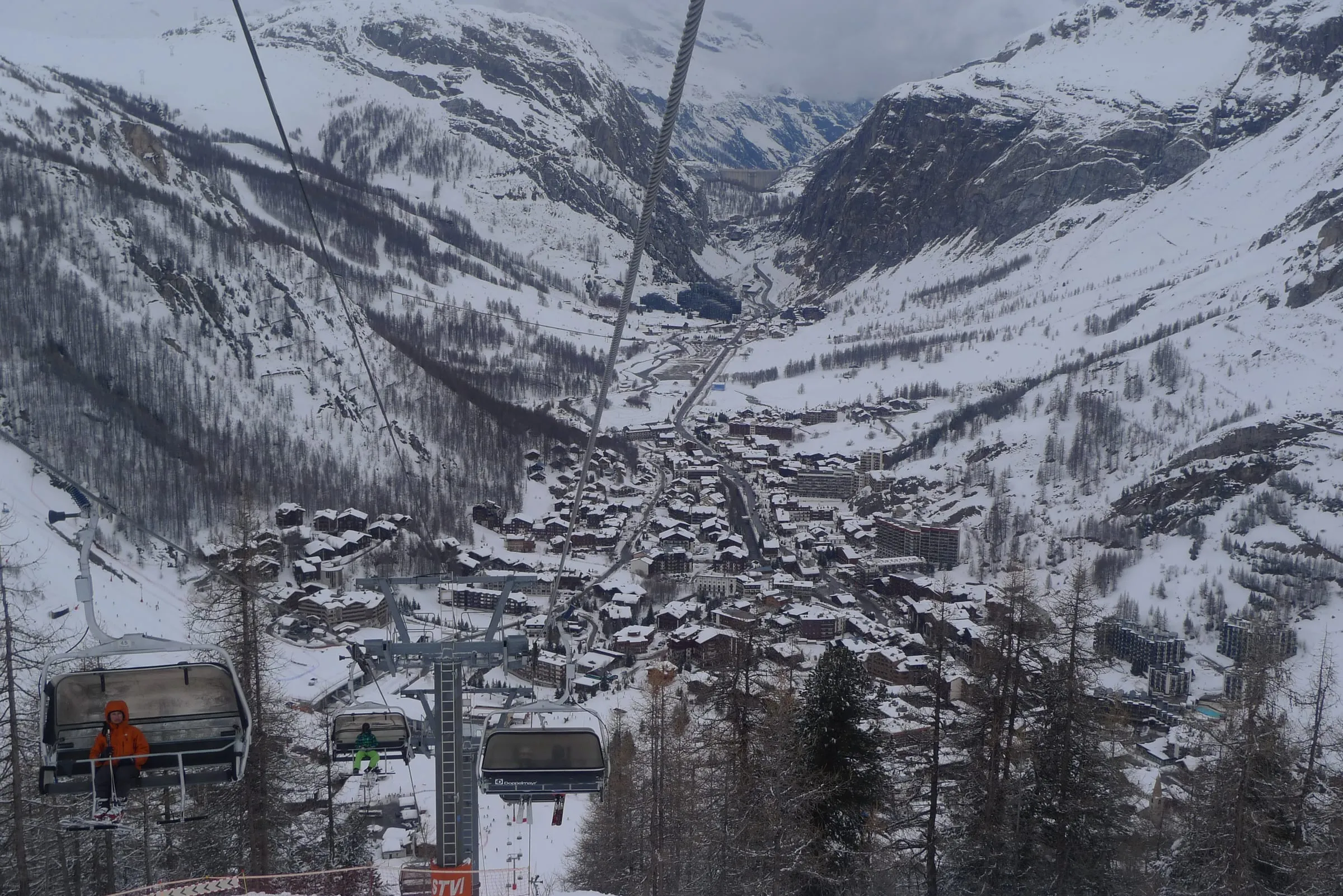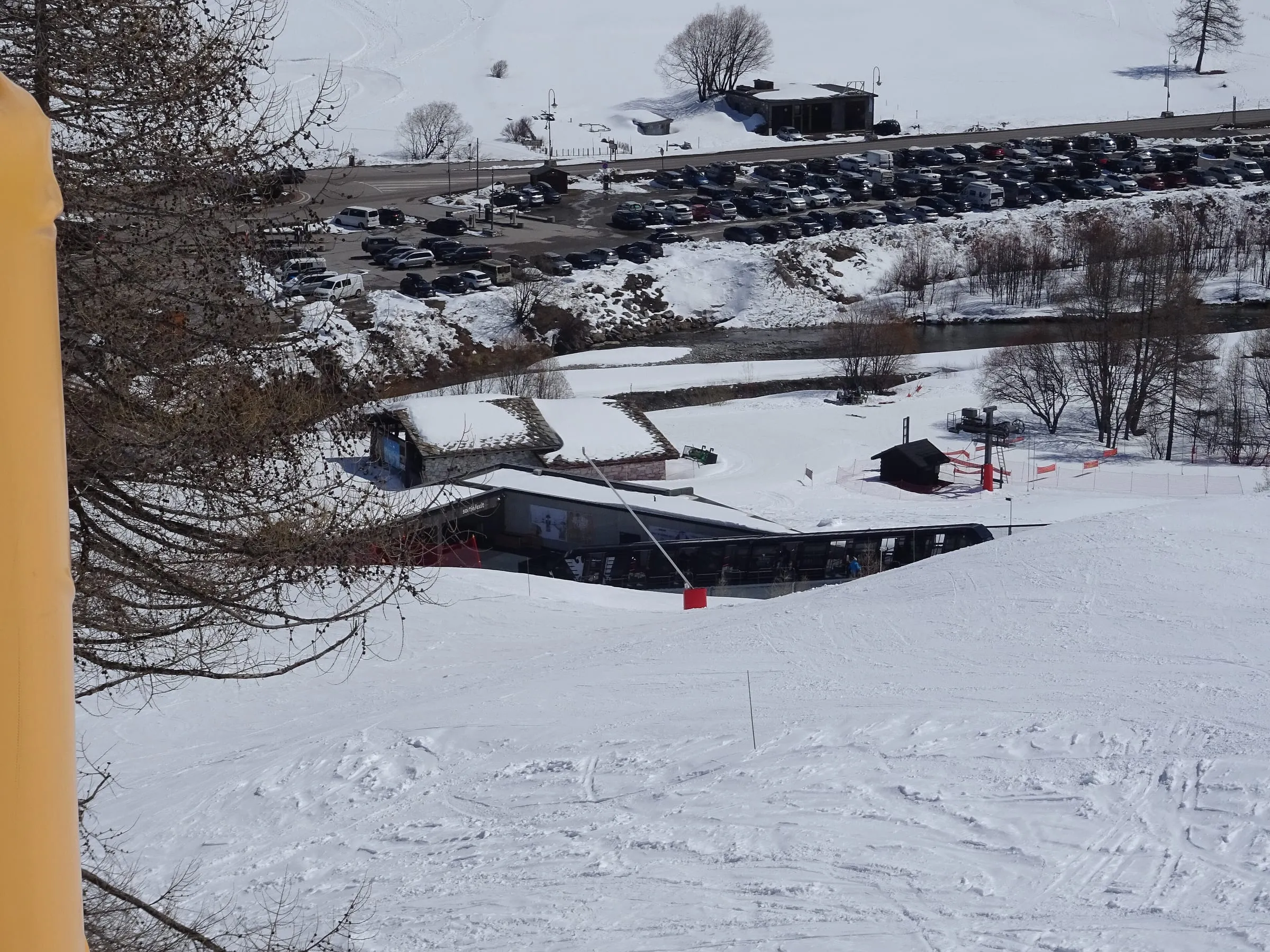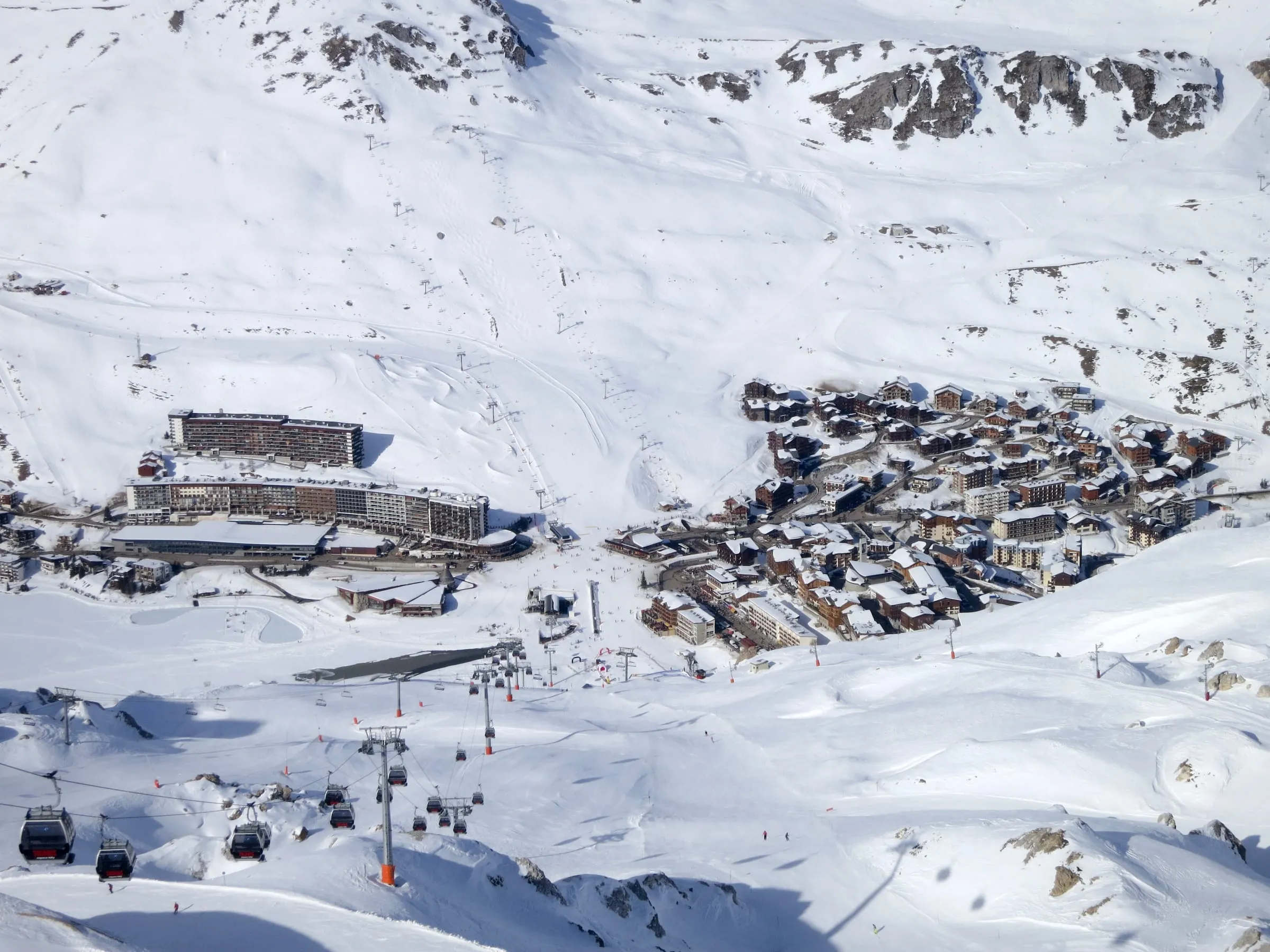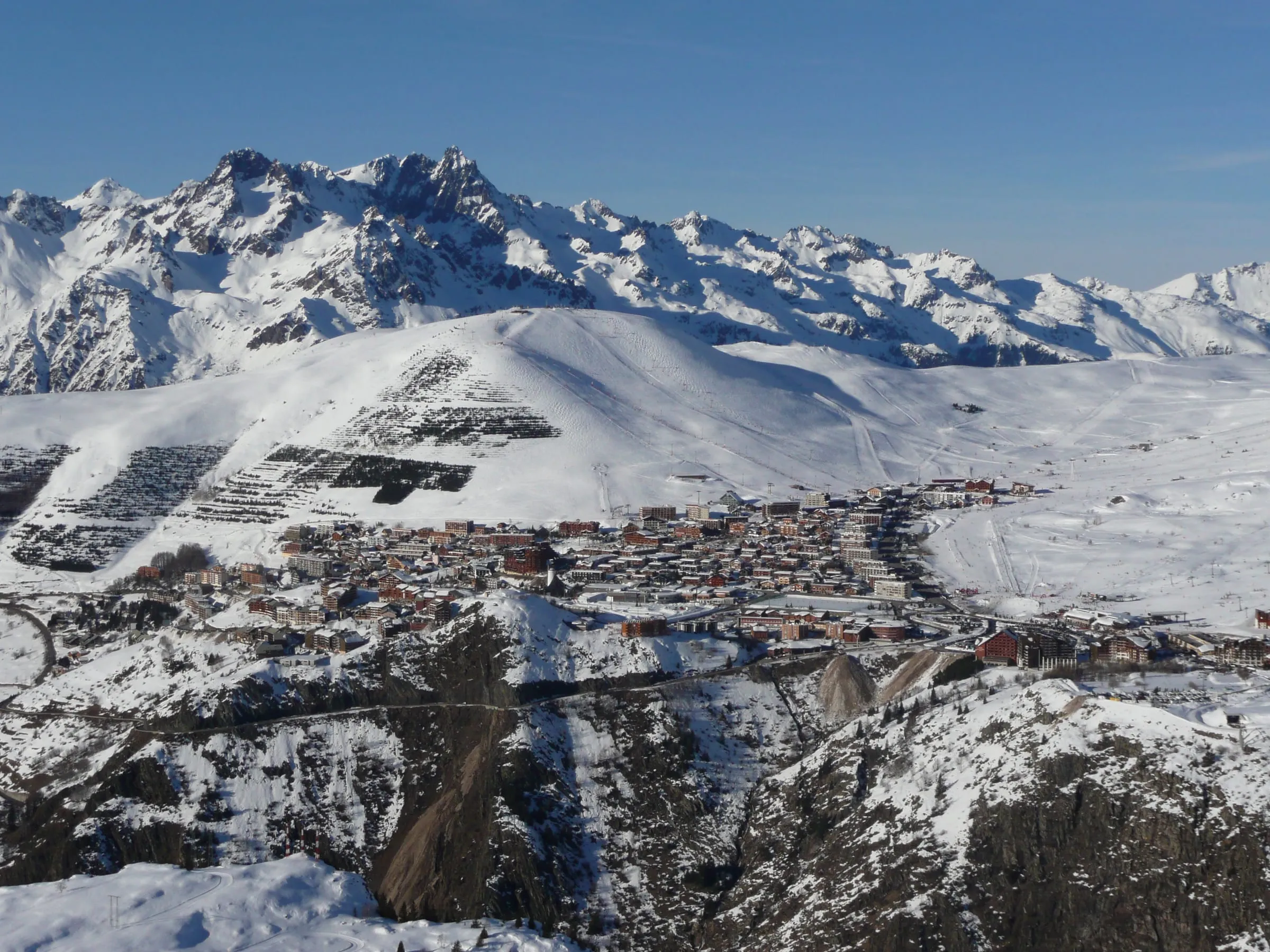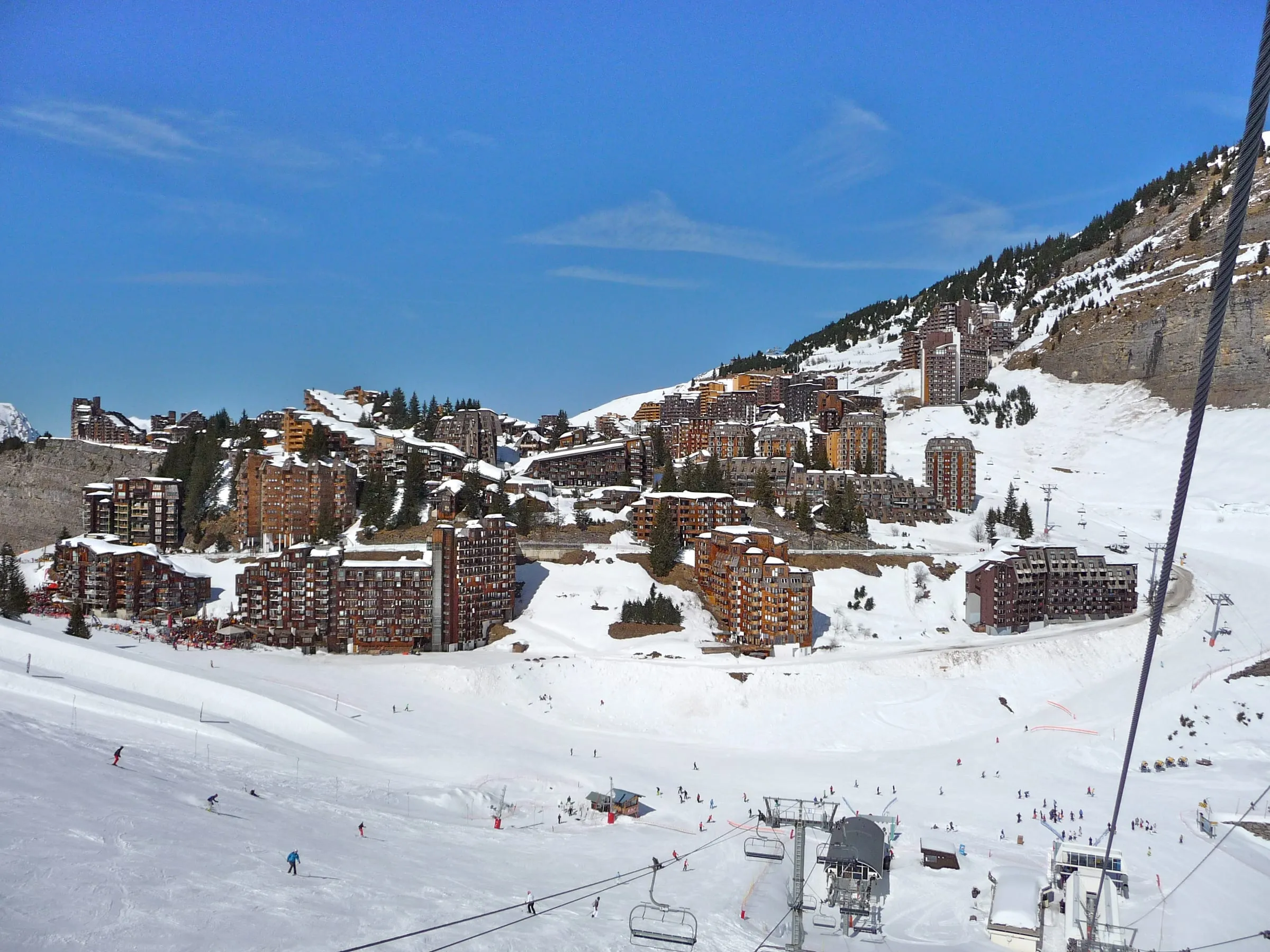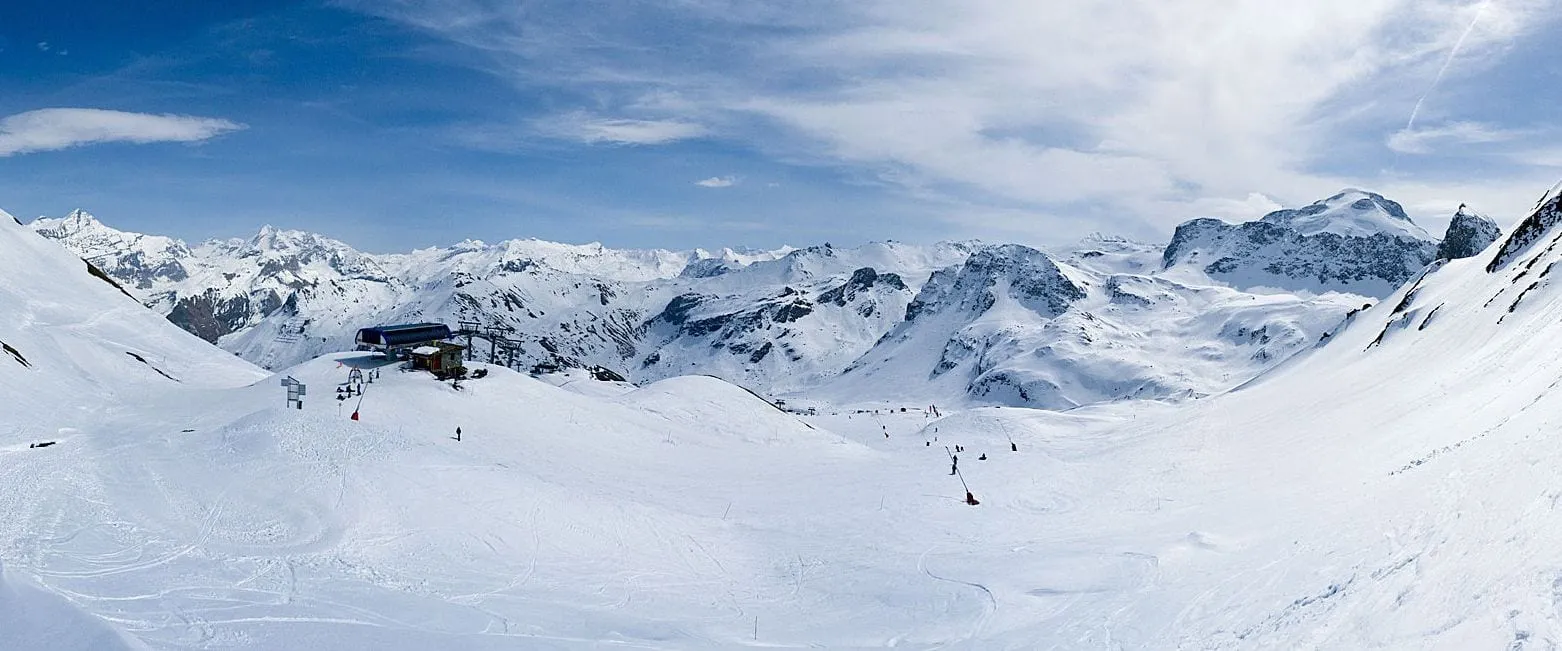
Val d’Isère sits at about 1,850 m near the head of the Tarentaise valley in Savoie, and it’s one of the best-known names in skiing. It’s a real village stretched along the valley floor, rather than a purpose-built block. It shares the Tignes – Val d’Isère ski area (once called the Espace Killy) with its neighbour: about 300 km of marked runs, 160 pistes and 71 lifts, rising to 3,456 m on the Grande Motte glacier on the Tignes side.
What draws most people here is the combination of height, snow and steep terrain. The resort says most of its slopes face north, which helps the snow last, and the season runs from late November to early May. The trade-off is distance: it’s about three hours from Geneva or Lyon, and the road up from Bourg-Saint-Maurice gets very busy on holiday Saturdays.
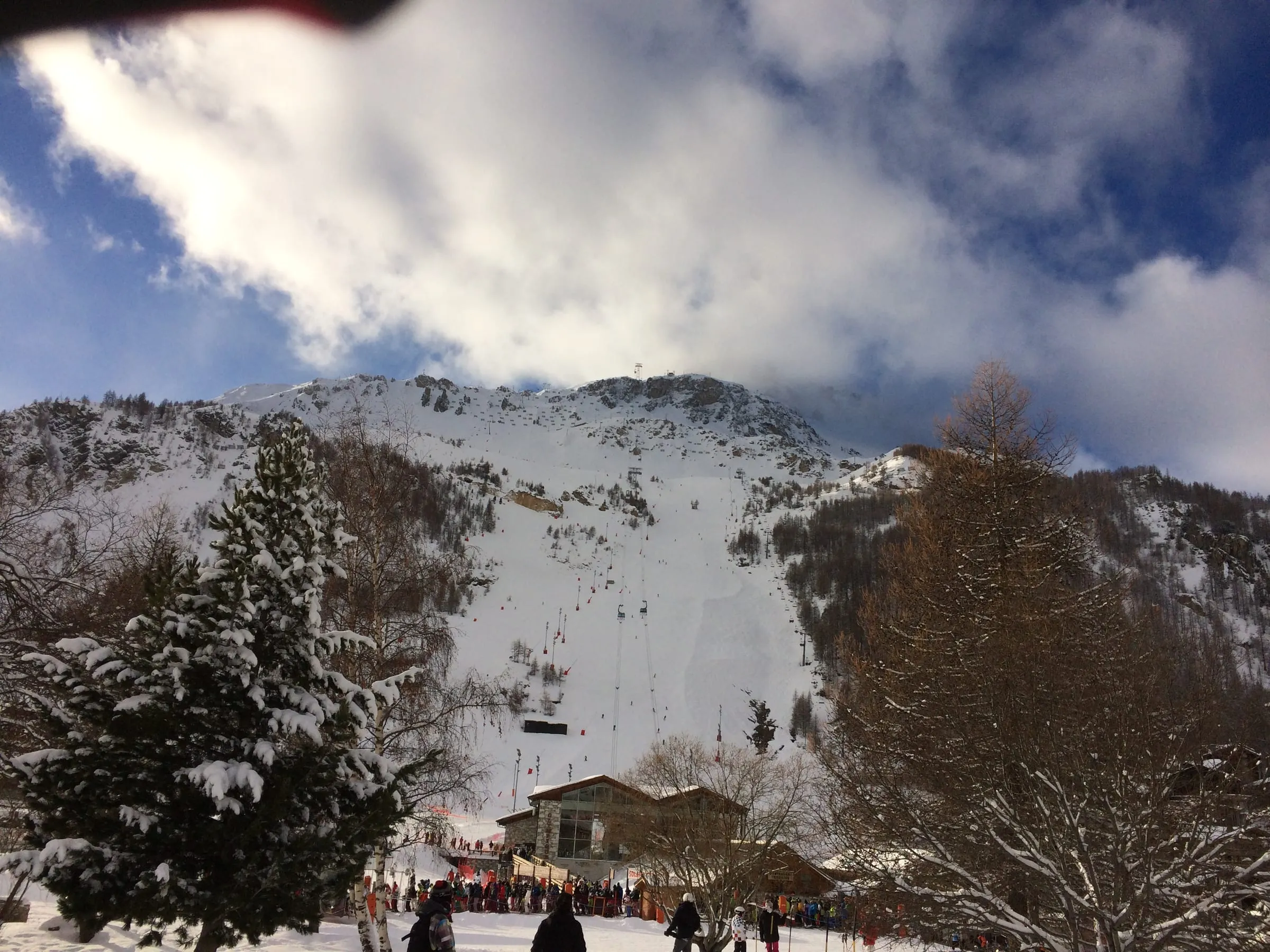
Val d’Isère ski area: 300 km shared with Tignes
Val d’Isère’s own slopes, around 150 km, divide into a few sectors, all reached from the village:
- Bellevarde, above the centre and La Daille. You reach the top by the Olympique cable car from the village or the Funival funicular from La Daille. It’s home to the Face de Bellevarde, the Easy skiing zone and, on its far side, the Val Park snowpark at 2,500 m.
- Solaise, also above the centre, reached by the Solaise gondola. It’s the more family-oriented side, with gentle Easy skiing runs at the top and the ValKids fun area.
- Le Fornet, a hamlet further up the valley towards the Col de l’Iseran. Its cable car and the new Vallon gondola lead up to the Pissaillas glacier, the highest part of Val d’Isère’s own skiing.
- La Daille, at the downhill end of the resort, with the Funival and the La Daille gondola up into the Bellevarde sector.
From the top of Bellevarde, you can ski across to Tignes and back. Across the whole shared area there are 23 green, 67 blue, 41 red and 29 black runs. That’s a lot of red and black, and it tells you who the resort is really built for.
Skiing in Val d’Isère for beginners
Three lifts are free to use without a pass: the Savonnette ski tow and the Village chairlift in the centre, and the Lanches ski tow at La Daille. The Savonnette green run sits on the snow front, so non-skiing parents can watch from the village. The next step is the marked Easy skiing zones at the top of Solaise and Bellevarde, which the Val d’Isère Ski app tracks by GPS. Beyond those zones, there aren’t many greens, so a first-week skier will want lessons.
Skiing in Val d’Isère for intermediates
Confident intermediates have a huge playground. There’s plenty of blue and red mileage on both Bellevarde and Solaise, and crossing to Tignes for the day doubles the options. Le Fornet and the Pissaillas side are good when you want long, high, open runs.
Skiing in Val d’Isère for experts
This is where Val d’Isère made its name. Beyond the steep black pistes, there’s a vast amount of off-piste, and the resort has two marked and secured ski touring zones. The off-piste terrain here is high, serious and avalanche-prone, so go with a qualified guide. Freestylers have the Val Park, which faces due south and is open to all levels.
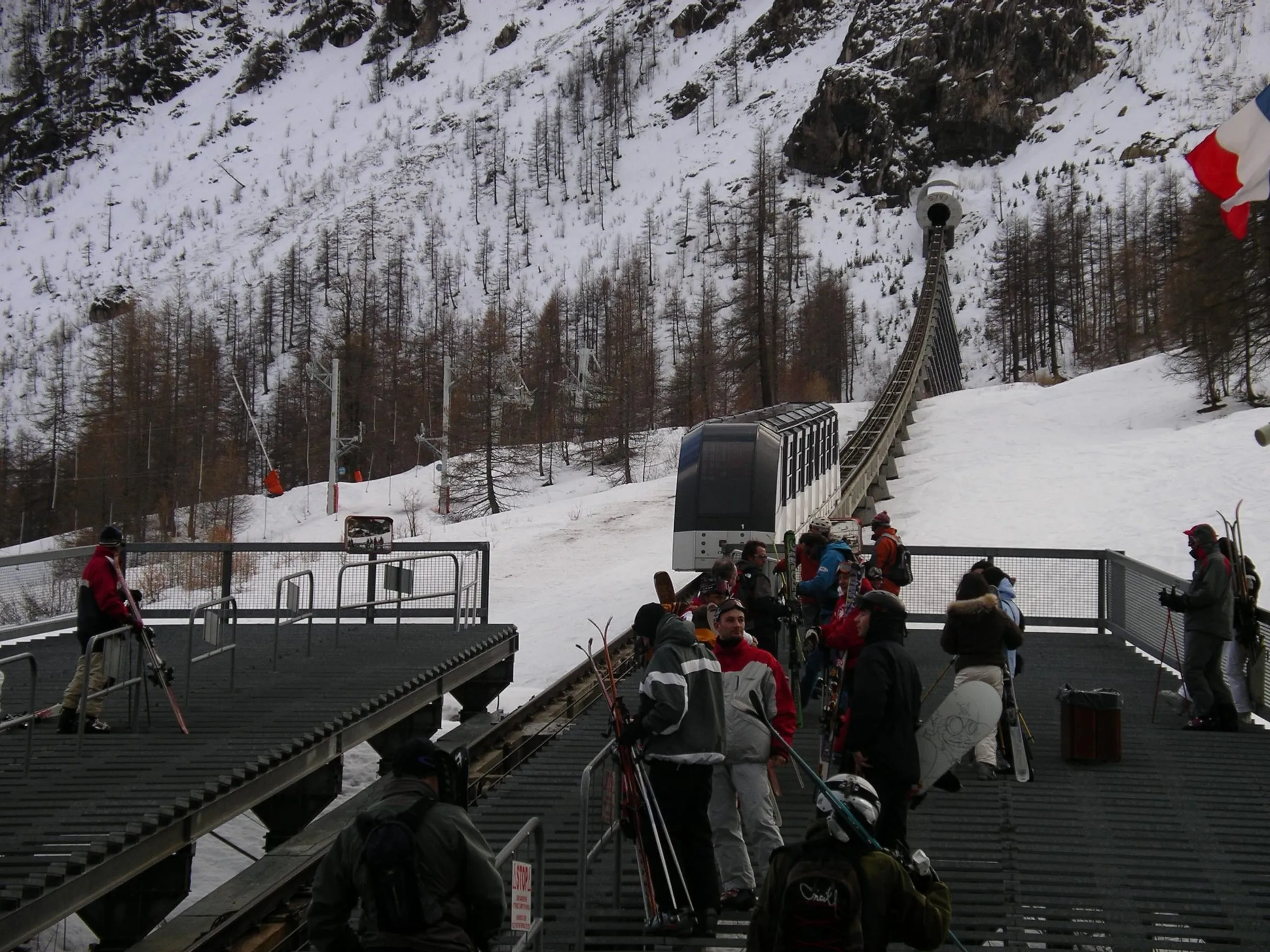
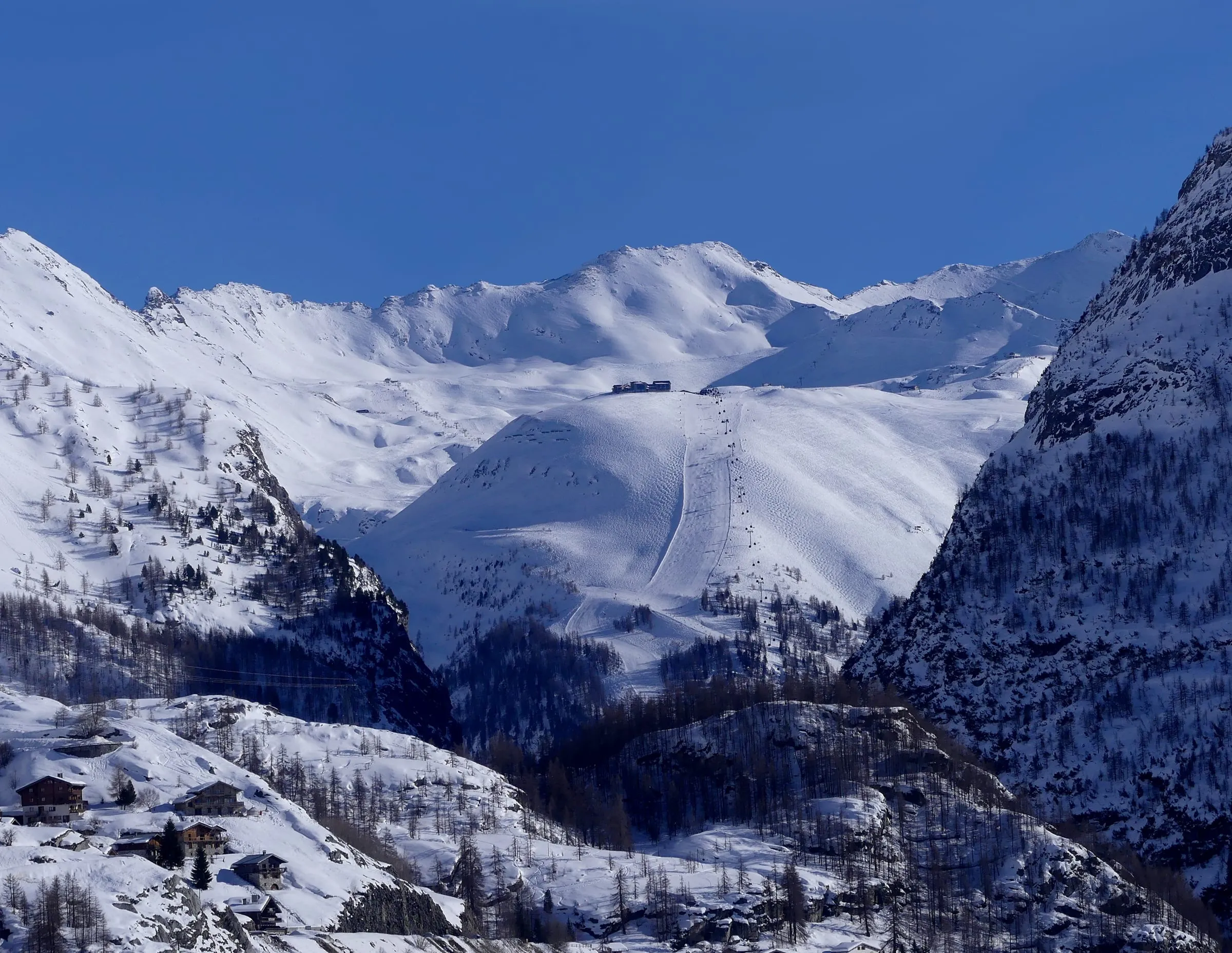
The Face de Bellevarde, Val d’Isère’s Olympic run
The Face de Bellevarde is the run everyone talks about. It drops steeply from Bellevarde straight down to the village, and it hosted the men’s downhill at the 1992 Albertville Olympics and races at the 2009 World Championships. The resort describes it as a run for advanced skiers only. It’s long, steep and often icy or mogulled, so save it for good snow and fresh legs.
Every December, the World Cup comes back to Val d’Isère for the Critérium de la Première Neige. In 2026, the men’s races are on 12 and 13 December. During the French Christmas and February holidays, instructors also ski a torchlight descent down the Face around 6 pm on Tuesdays, which is worth watching from the village.
Snow in Val d’Isère and the 2026/27 season
For 2026/27, Val d’Isère’s lifts are scheduled to run from 28 November 2026 to 2 May 2027. That’s one of the longest seasons in the Alps, and the opening “First Tracks” weekend is on 28 and 29 November.
Several things work in its favour. The village is at about 1,850 m, the skiing goes above 3,400 m, most slopes face north, and more than 65 km of pistes have snowmaking. The weakness is the weather itself. Above the tree line there’s little shelter, and in a storm or flat light the high, open terrain is hard work. On those days, stay lower on the runs around La Daille and the village.
Is Val d’Isère good for a last-minute ski trip?
For snow, yes. When a warm spell hits lower resorts, Val d’Isère is usually one of the places still skiing well, and its long season makes it a safe pick for late November, early December and late April, when many resorts are shut or patchy. Early and late-season lift passes are also cheaper.
For travel, it’s less convenient. It’s at the end of the valley, about 40 minutes from Bourg-Saint-Maurice and roughly three hours from Geneva or Lyon, so a spontaneous weekend from the airport is a long drive. The best last-minute trips here are full weeks, ideally Sunday to Sunday to dodge the Saturday traffic. Then find a place to stay in Val d’Isère.
Val d’Isère lift passes
There are two main options for 2026/27:
- The Tignes – Val d’Isère pass covers the full 300 km.
- The Val d’Isère pass covers only Val d’Isère’s own 150 km and costs less. It’s a good choice if you’re not planning to cross to Tignes.
A few things worth knowing:
- Children under 8 and adults 75 and over ski free, with proof of age. Ages 8 to 18 and 65 to 74 pay a reduced rate.
- Early and late-season prices apply from 28 November to 11 December 2026 and from 24 April to 2 May 2027.
- The family offer takes a fixed amount off an order of 4 or more passes of the same length (6 days or more), with at least two adults aged 19 to 64 and two children aged 8 to 18.
- Tignes – Val d’Isère passes of 2 days or more include free entries to the pool at the Centre Aquasportif.
- Buy online through the official lift pass website or the Val d’Isère Ski app, or at the sales outlets and the tourist office.
Après-ski and things to do in Val d’Isère
Val d’Isère has some of the best-known après in the Alps. La Folie Douce, at about 2,400 m above La Daille, is the big one, with DJs and a cabaret-style show; you can ski down afterwards on the green Verte, the blue Diebold or the red OK. In the village, Cocorico is an open-air bar at the foot of the slopes with dancing in ski boots, DJ sets and live music. La Daille has its own slope-side bars, and the village has bars and nightclubs open late.
Off the slopes, the Centre Aquasportif has a 25 m pool, a leisure pool with a river current and water cannons, and a climbing hall. There’s also sledging, snowshoeing and the Val Histoire museum.
Who Val d’Isère suits, and who it doesn’t
- Great for: strong intermediates and experts, off-piste skiers with a guide, après-ski fans, and anyone who wants snow-sure skiing at the very start or end of the season.
- Think twice if: you’re a nervous beginner (only 23 green runs across the whole area), you’re on a tight budget, or you want to arrive from the airport in under two hours. It can also be bitterly cold in December and January.
Skiing with children? Read our guide to Val d’Isère with kids.
How to get to Val d’Isère
By car
From the A430 near Albertville, follow the N90 through Moûtiers to Bourg-Saint-Maurice, then the D902 up the valley past the Tignes turn to Val d’Isère. Bourg-Saint-Maurice is 30 km away, about 40 minutes in good conditions. Albertville is 86 km away, Chambéry 135 km and Grenoble 165 km.
The Col de l’Iseran beyond the resort is closed in winter, usually from early November until June, so ignore any sat nav route over it. Savoie’s mountain rules apply from 1 November to 31 March: carry chains or snow socks, or fit four winter tyres marked 3PMSF. Car parks can be booked online in winter, and a free shuttle, the Train Rouge, runs between La Daille and the centre.
By train and bus
The nearest station is Bourg-Saint-Maurice, served by TGV INOUI and Eurostar trains. From there, Altibus buses run through the day and take about 40 minutes. Tickets are sold online and from machines at the bus station and tourist office. Some routes need booking 48 hours ahead.
Nearest airports
Chambéry is the closest, about 2 hours away by road, then Grenoble at 2 hours 30. Geneva and Lyon are both about 3 hours. In season, Alpine Fleet, Altibus and Ben’s Bus run direct buses from Geneva and Lyon airports.