France
 Austria
 Italy
 Switzerland
 English
 Deutsch
 Nederlands
 Español
 Čeština
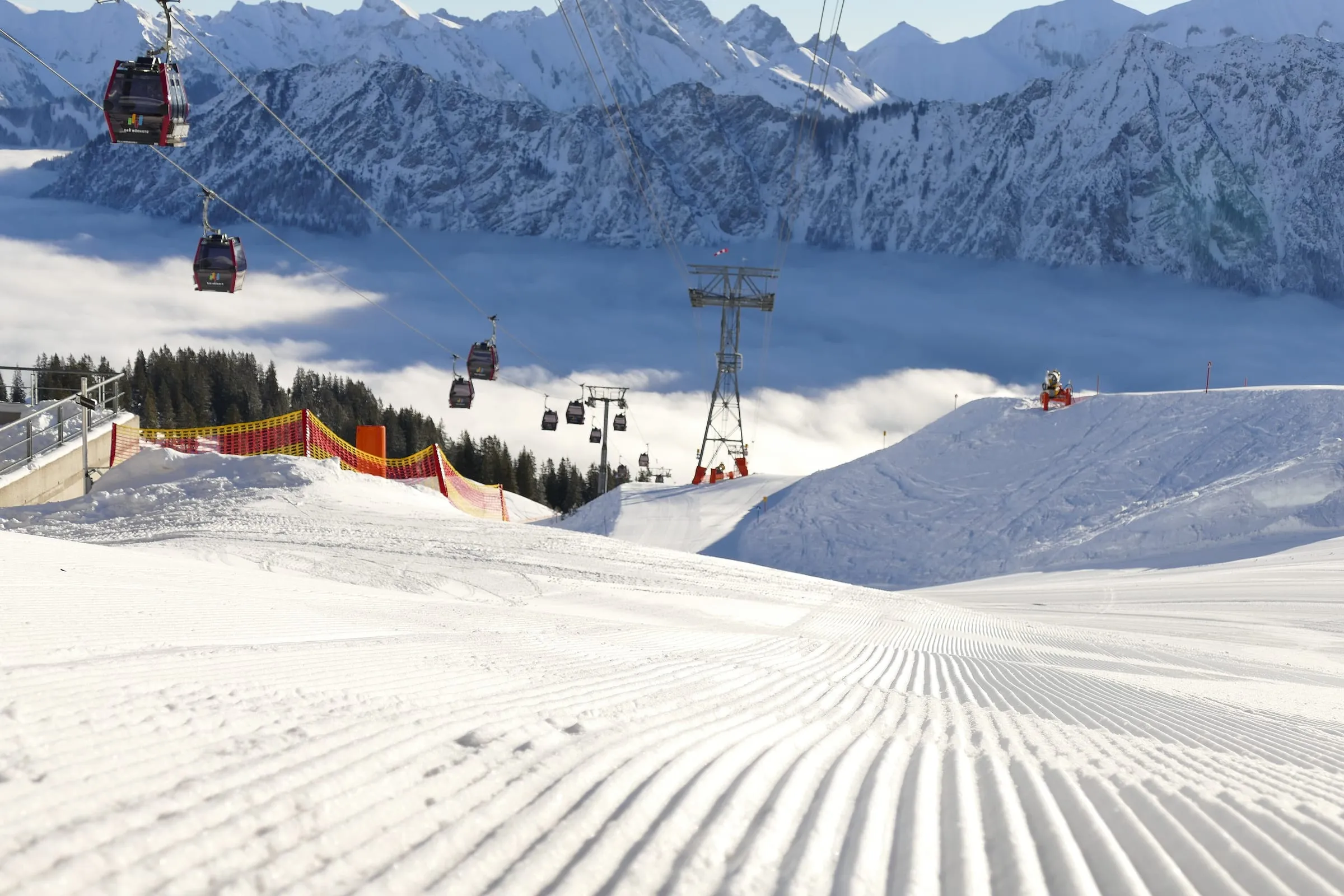
Germany is a ski country with one big catch: not much of it is high. It has a long skiing tradition, easy motorways with no car tolls and resorts close to millions of people, but of the six resorts we cover, only two have lifts above 2,000 m. That makes the choice simple. Match the resort to your trip, then let the altitude tell you how far ahead you can safely book.
This guide is for anyone in or near Germany deciding whether to stay home or head for the Alps proper, and for visitors flying into Munich, Basel or Salzburg. We’ve grouped the resorts by who they suit, using the figures on our own resort guides, which come from the lift companies and tourist offices. Each section says plainly how reliable the snow is. If the forecast is poor, Germany isn’t short of neighbours: our best ski resorts in Austria guide is the obvious next step.
Best ski resorts in Germany at a glance
| Who it suits | Resort | Town / top | Pistes | Snow reliability |
|---|---|---|---|---|
| Short break, snow first | Garmisch-Partenkirchen | 708 m / about 2,700 m | 60 km in two separate areas | Zugspitze good, Garmisch-Classic weather-dependent |
| A full week | Oberstdorf | 815 m / 2,224 m | About 130 km, 48 lifts | Good high up, lower slopes struggle in mild spells |
| Young families | Reit im Winkl | 695 m / 1,869 m | 42 km, 13 lifts | Snowy reputation, but low by Alpine standards |
| Beginners and sightseers | Berchtesgaden | 570 m / 1,550 m | About 44 km in five areas | Not snow-sure |
| Weekends from Freiburg and Basel | Feldberg | 1,277 m / 1,449 m | 33 km, 14 lifts | Variable, thaws happen |
| Weekends from the Ruhr, Netherlands, Belgium | Winterberg | 668 m / 813 m | 45 km, 46 lifts | Depends on snowmaking |
The first lifts are planned for 27 November 2026, on the Zugspitze and the Feldberg. Winterberg hopes to start in late November or early December, and most of the rest follow in December. All of these dates depend on snow. Every hotel below can be checked for live availability on Booking.com once you’ve seen the forecast.
How snow-reliable is skiing in Germany?
Be honest with yourself about this before anything else. The Bavarian Alps are the northern edge of the range, and the towns sit low: Berchtesgaden at 570 m, Reit im Winkl at 695 m, Garmisch at 708 m and Oberstdorf at 815 m. The Mittelgebirge hills further north are lower still at the top: 1,449 m on the Feldberg and 813 m at Winterberg.
So think of Germany in three tiers. The Zugspitze is the only area we’d call genuinely high. Oberstdorf’s Nebelhorn and the upper Fellhorn, Garmisch-Classic and the Steinplatte above Reit im Winkl are good in a normal midwinter and exposed at either end of the season. Berchtesgaden, the Feldberg and Winterberg are for booking once the snow has actually arrived. If you need certainty on fixed dates, read our snow-sure ski resorts in Europe guide or look at glacier skiing in Europe instead.
Germany’s highest skiing and best short break: Garmisch-Partenkirchen and the Zugspitze
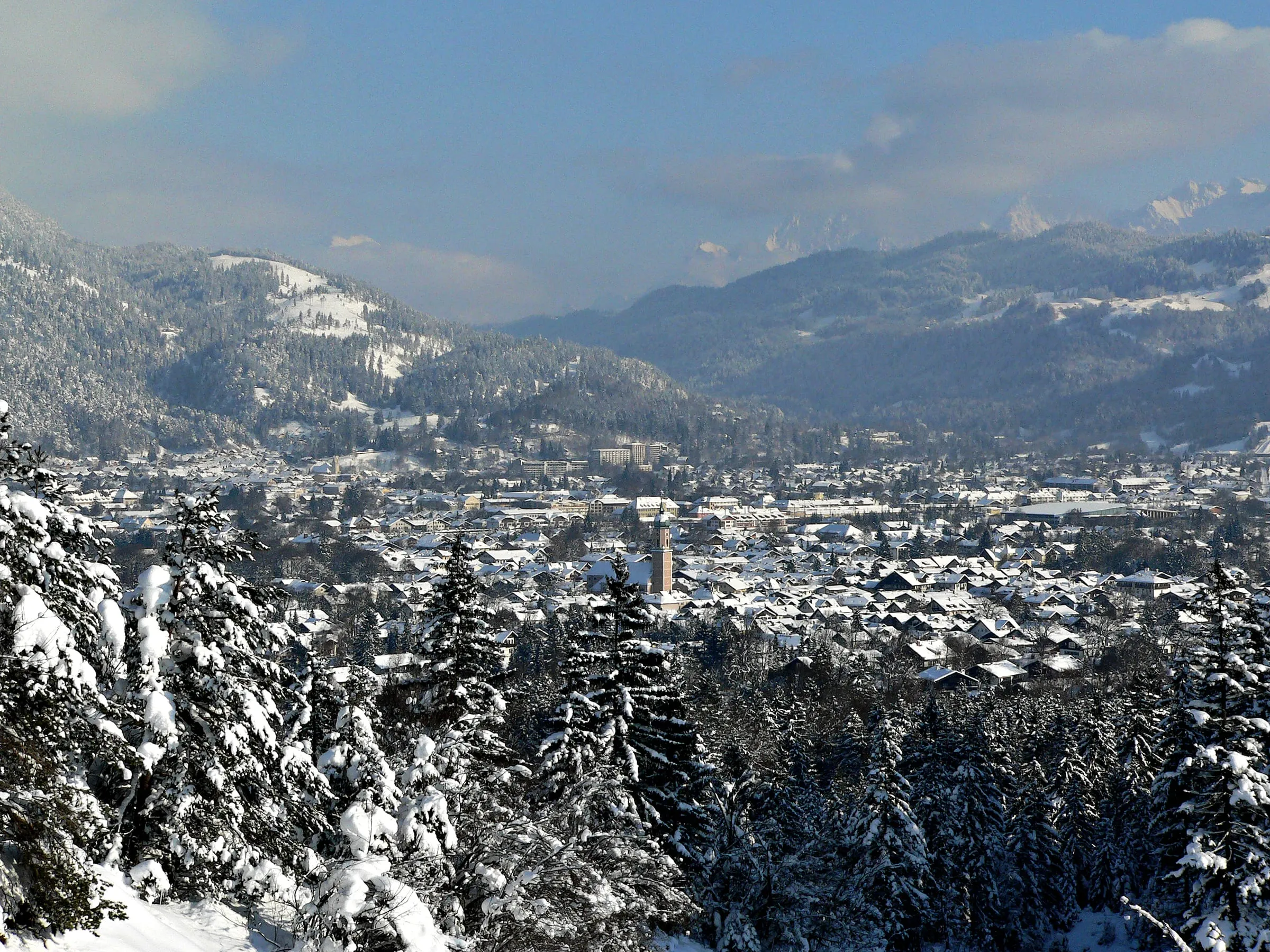
Garmisch-Partenkirchen has two ski areas that aren’t linked, and it helps to treat them as two different holidays. The Zugspitze is Germany’s highest ski area: 20 km of blue and red runs on a plateau, running from around 2,000 m to about 2,700 m. It’s expected to open on 27 November 2026 and run until 2 May 2027, and it’s skied on natural snow.
“Glacier” isn’t a guarantee, though. The Schneefernerkopf drag lifts, reported as Germany’s last glacier lift, closed after the 2023/24 season and were dismantled in March 2026. The area is small, exposed in bad weather and takes time to reach: about 75 minutes by cogwheel train from Garmisch, or 10 minutes by cable car from the Eibsee plus 4 more on the Gletscherbahn. Plan it as a day out, and check what’s open first.
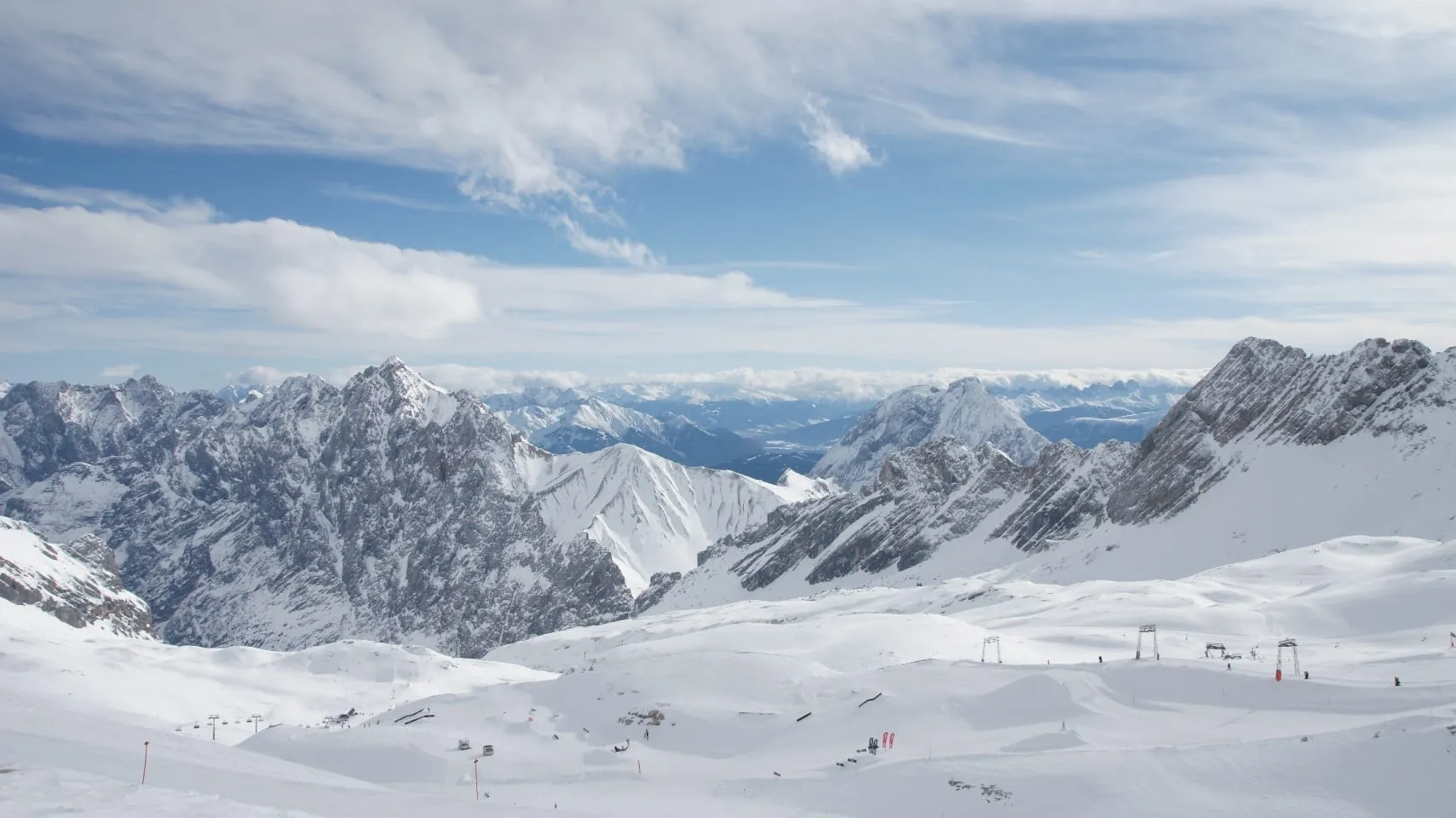
If the Zugspitze is your reason for going, stay at the Eibsee rather than in town.
Garmisch-Classic is the town’s own mountain, with 40 km of pistes including 10 km of black and the Kandahar World Cup course, whose steepest pitch has a gradient of 92 per cent. It’s the best terrain for strong skiers in the country, but the lifts top out at about 2,050 m and the lowest runs go down to around 740 m, so early and late trips are a gamble. It’s expected to run from mid-December to 29 March 2027.
The town is the easiest Alpine ski trip in Germany without a car: hourly regional trains from Munich take around 80 minutes, and the cogwheel train leaves about 200 m from the station. Avoid weekends if you can, as the tourist office warns of jams and long delays in peak season. Our ski resorts near Munich guide compares it with the Tyrolean resorts within reach.
For a design-led weekend, the Werdenfelserei has a rooftop pool, and the Staudacherhof is the family-run spa choice. There’s more in where to stay in Garmisch-Partenkirchen.
Best German ski resort for a full week: Oberstdorf
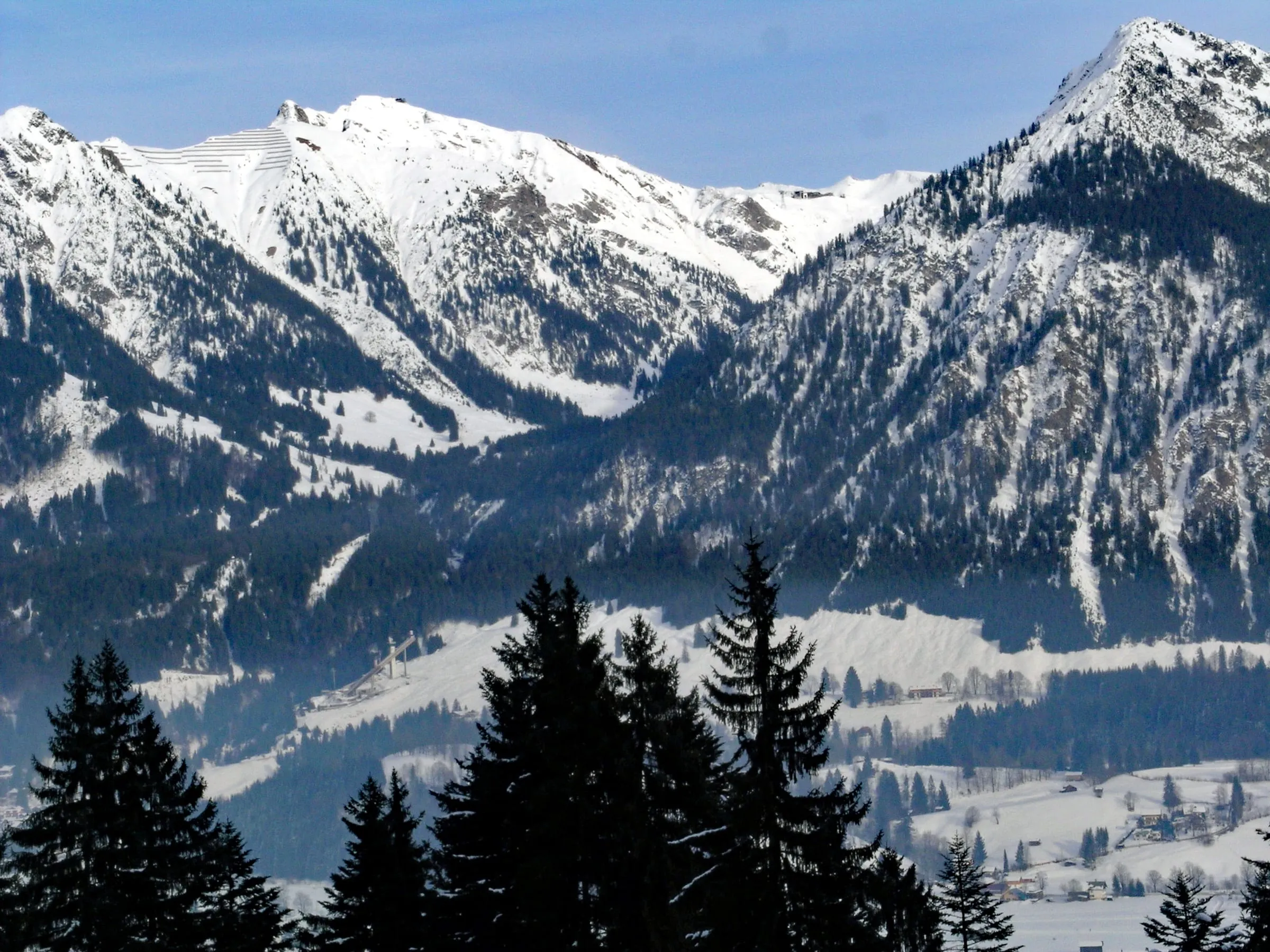
Oberstdorf is the one German resort with enough skiing to fill a week. The Oberstdorf Kleinwalsertal region has about 130 km of pistes and 48 lifts on seven mountains, on one 2-Country Ski Pass. Three mountains are in Germany and four in Austria’s Kleinwalsertal, and not all of them are linked, so you’ll catch a bus or drive between some.
The highlight is the Fellhorn–Kanzelwand, 36 km across the German–Austrian border, where you can ski over to Austria for lunch and come home down a 5.7 km valley run. The Nebelhorn, straight above town, is the high, serious mountain, with a 7.5 km valley run and the top of the region at 2,224 m. Strong intermediates and good skiers will be happiest here, though it’s not a freeride destination on the Arlberg’s scale.
Snow is the honest caveat. The town is at 815 m and most of the skiing tops out at around 2,000 m. The lower areas lean on snowmaking, and the valley runs and the Söllereck are the first to struggle in a mild winter. Fellhorn–Kanzelwand runs from 4 December 2026 to 4 April 2027. The Nebelhorn opens on 12 December and is the only Oberstdorf area scheduled beyond early April, until 2 May 2027, so it’s the one to look at for a spring trip.
If you want a serious spa after skiing, Hotel Franks is about 500 m in a straight line from the Nebelhornbahn. Compare it with the quieter Hotel Exquisit and the rest of where to stay in Oberstdorf.
Best German ski resorts for families: Reit im Winkl, Oberstdorf and Garmisch
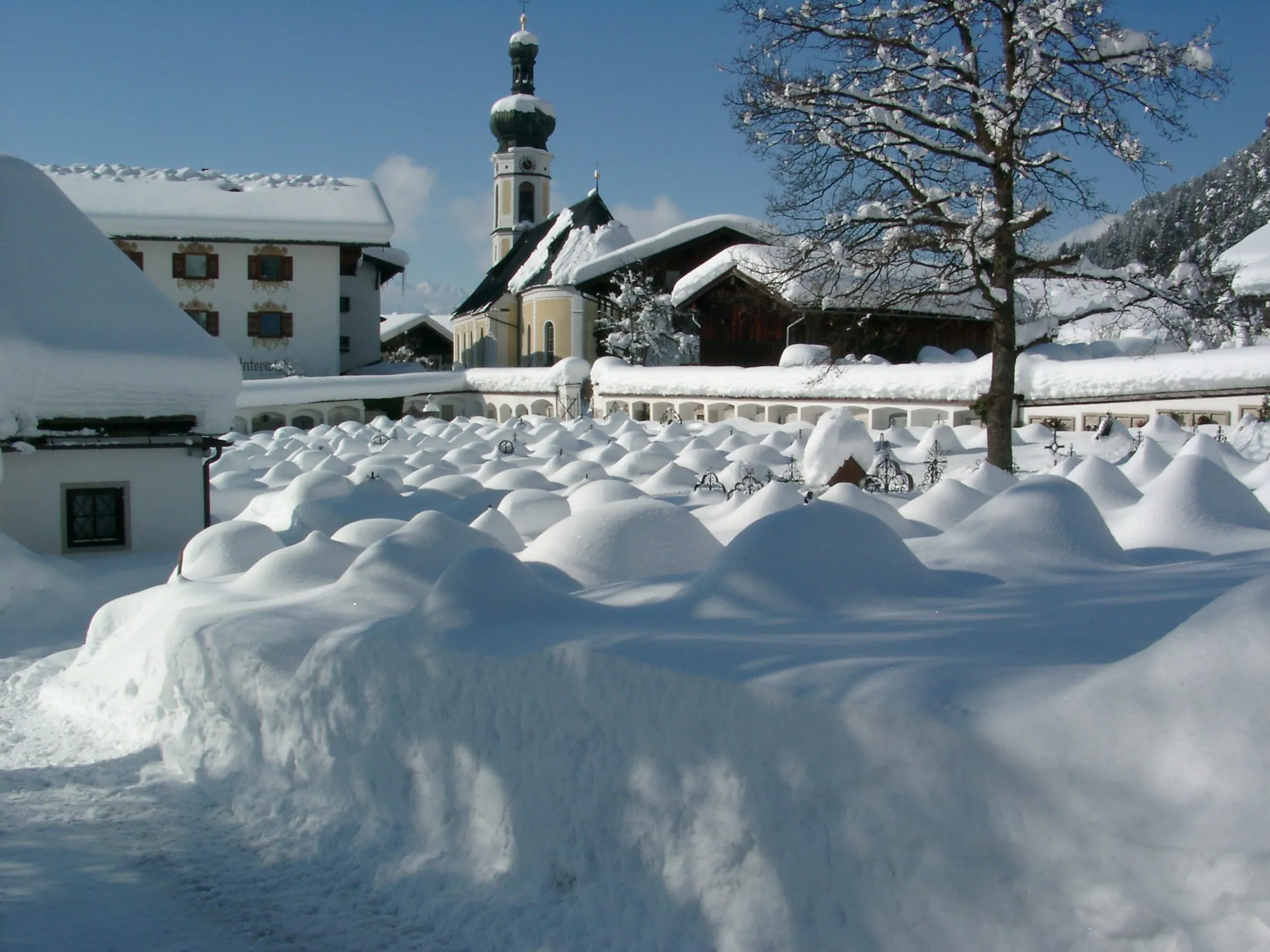
Reit im Winkl is the one we’d pick for young children. The village, in the Chiemgau Alps right on the Austrian border, has its own practice area at Benzeck, with three lifts and a magic carpet. The real skiing is the Winklmoos-Alm, a high pasture of wide blue runs that links to the Steinplatte above Waidring in Tyrol: 42 km and 13 lifts in all, up to 1,869 m. A free ski bus runs to the Seegatterl gondola for gondola passengers, and for 2026/27 children born in 2021 or later ski free with a parent who holds a pass. Children also get a 1 km dinosaur-themed fun line, and there’s a 9 km run back down to Seegatterl for the end of the day.
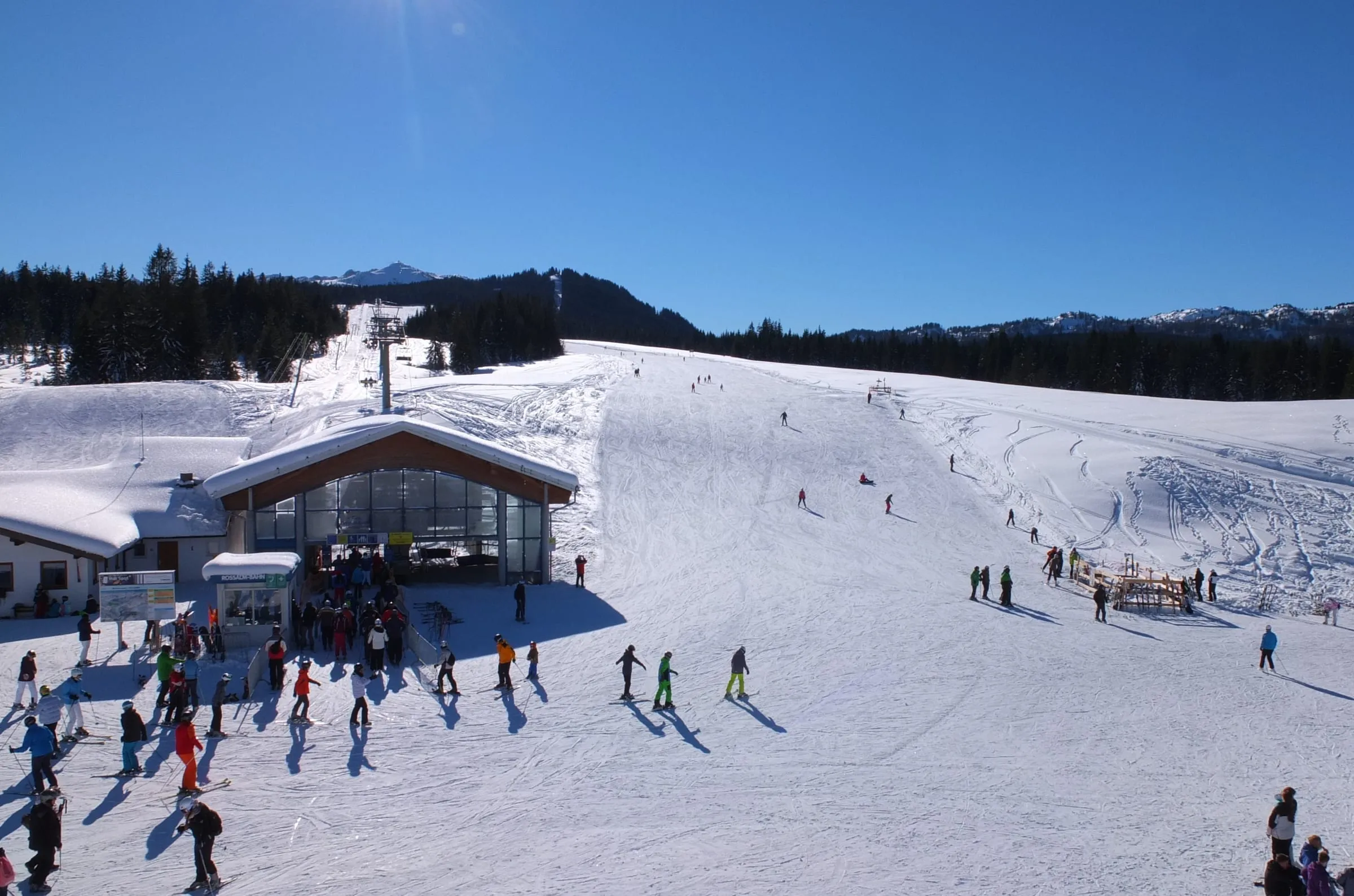
The village has a long reputation for snow, and the lifts run from 5 December 2026 to 29 March 2027. It’s still low by Alpine standards, though, so the valley run and lower lifts go first in a mild spell. There’s no railway station: it’s about 112 km from Munich by road, or a 55-minute bus ride from Prien am Chiemsee station. Read Reit im Winkl with kids and where to stay in Reit im Winkl.
In a bigger town, Oberstdorf’s Söllereck is a dedicated family mountain with 14 km of pistes and Sölli’s Winter World, which has three magic carpets. It’s one of the first places to lose its snow in a warm winter, so check before you set off; Oberstdorf with kids covers the ski schools and childcare.
In Garmisch, the Ixis children’s area on the Hausberg has a magic carpet and three beginner lifts, and under-6s ride free with a parent, though they need a ticket if they’re in a ski course. See Garmisch-Partenkirchen with kids. And for how these compare with the Alps’ big family resorts, try our best family ski resorts in Europe guide.
Best German ski resort for beginners and non-skiers: Berchtesgaden
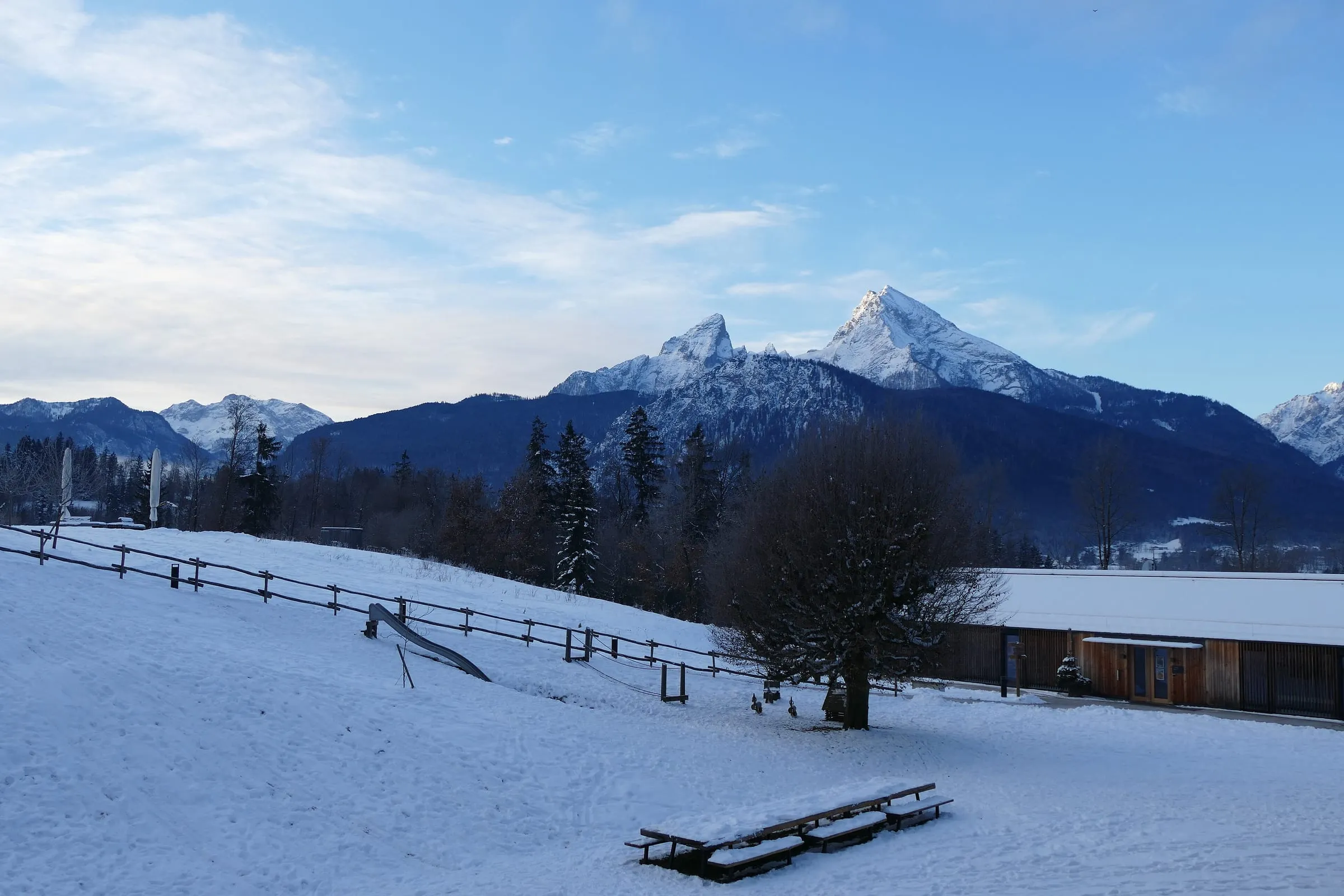
Berchtesgaden is a good answer when not everyone in the group wants to ski all day. It’s a base for five small ski areas and about 44 km of pistes, none linked by lift: Rossfeld, Götschen, Gutshof on the Obersalzberg, Hochschwarzeck and the Zinken across the Austrian border. Beginners have Götschen’s KidsArena, the 350 m beginner lift at Gutshof and gentle slopes at Hochschwarzeck, and our beginners’ ski resorts in Europe guide has more options at this level.
It’s not a snow-sure choice. The highest lift reaches about 1,550 m, the Rossfeld is skied on natural snow only, and the well-known Jenner has had no groomed pistes since 2024/25. Rossfeld and Götschen are listed as planning to run from 19 December 2026 to 21 March 2027, subject to snow. What rescues a thin week is everything else: the Königssee boats, the Watzmann Therme, the salt mine and Salzburg about 30 km away. Skiing with children? Read Berchtesgaden with kids.
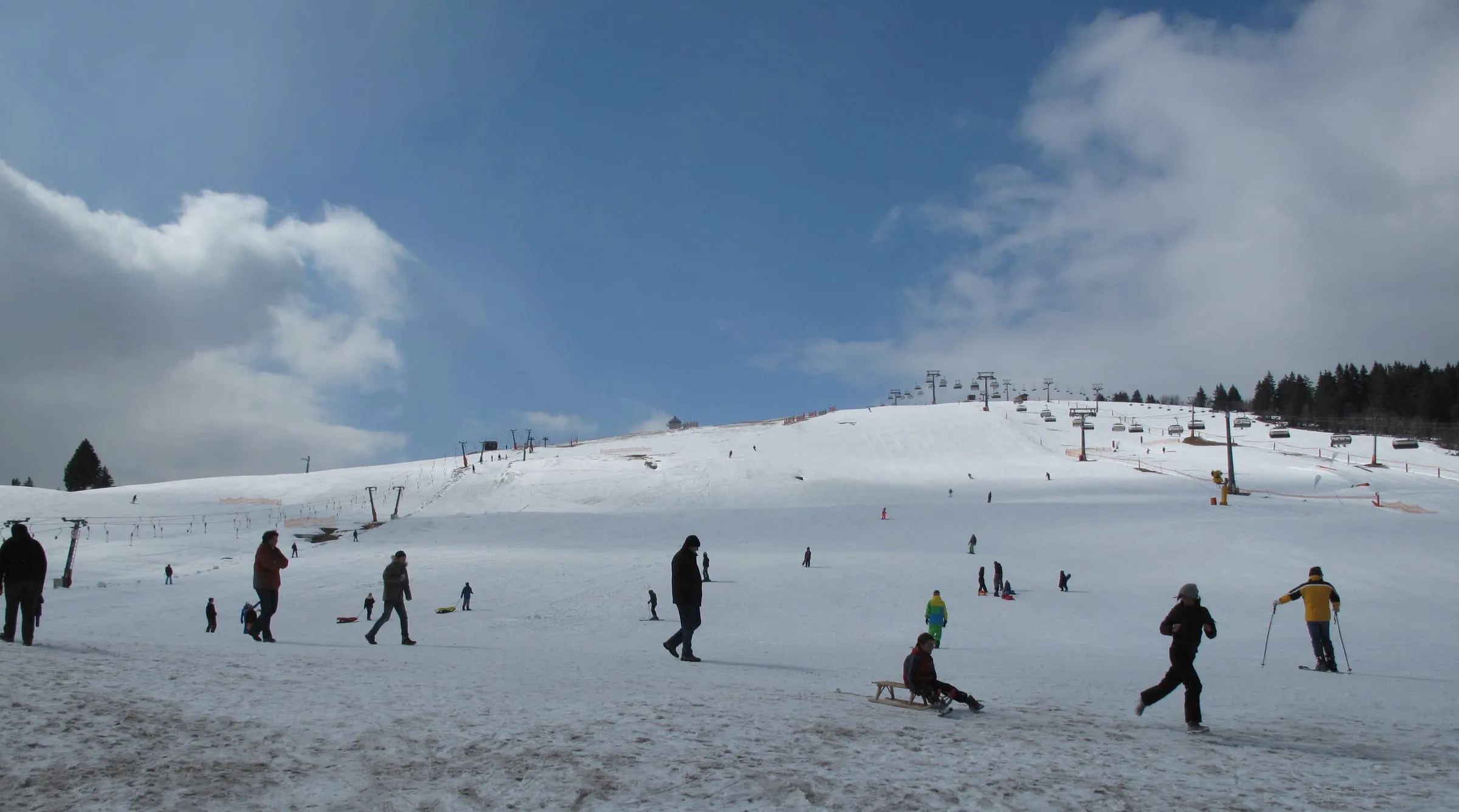
Skiing in the Black Forest: Feldberg
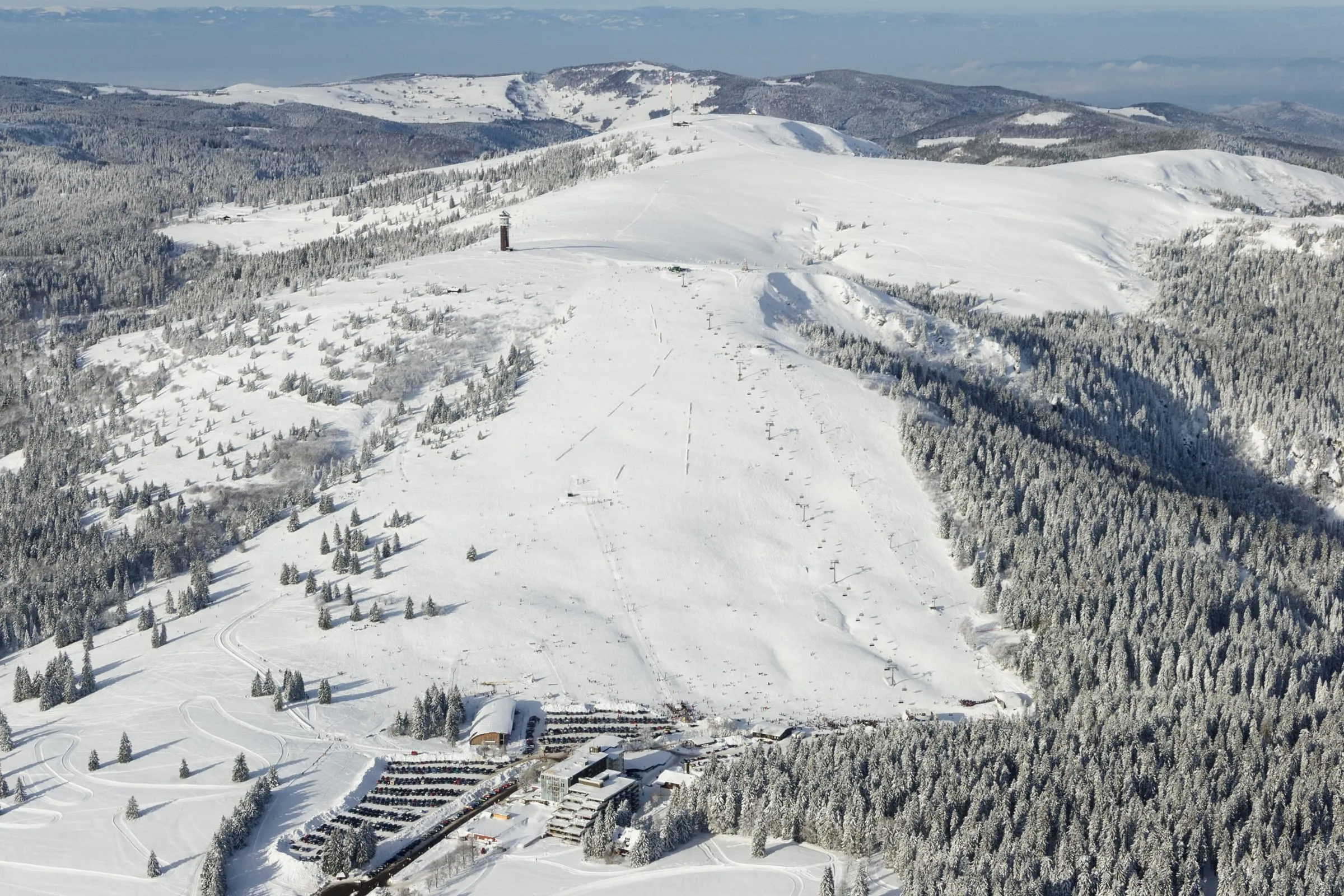
Feldberg, the highest mountain in the Black Forest, is the place for weekenders from Freiburg, Basel and Alsace: 33 km and 14 lifts, mostly gentle, with the top lift at 1,449 m. It’s about 50 minutes’ drive from Freiburg, or around an hour by train and bus, so you can look at the webcams in the morning and go. The Seebuck is the family slope, and two of the ski schools teach children from age 4.
The operator plans to run from 27 November 2026 to 29 March 2027, snow permitting, and last winter shows how that can go. The 2025/26 season opened on 27 November with about 70 cm of fresh snow, then a December thaw badly hit the Christmas holidays. January to early March were good, and the winter added up to 114 days of skiing. As a week’s holiday from far away, it’s a hard sell; as a last-minute weekend, it’s excellent. There’s more in where to stay on the Feldberg and Feldberg with kids.
Skiing near the Ruhr, the Netherlands and Belgium: Winterberg
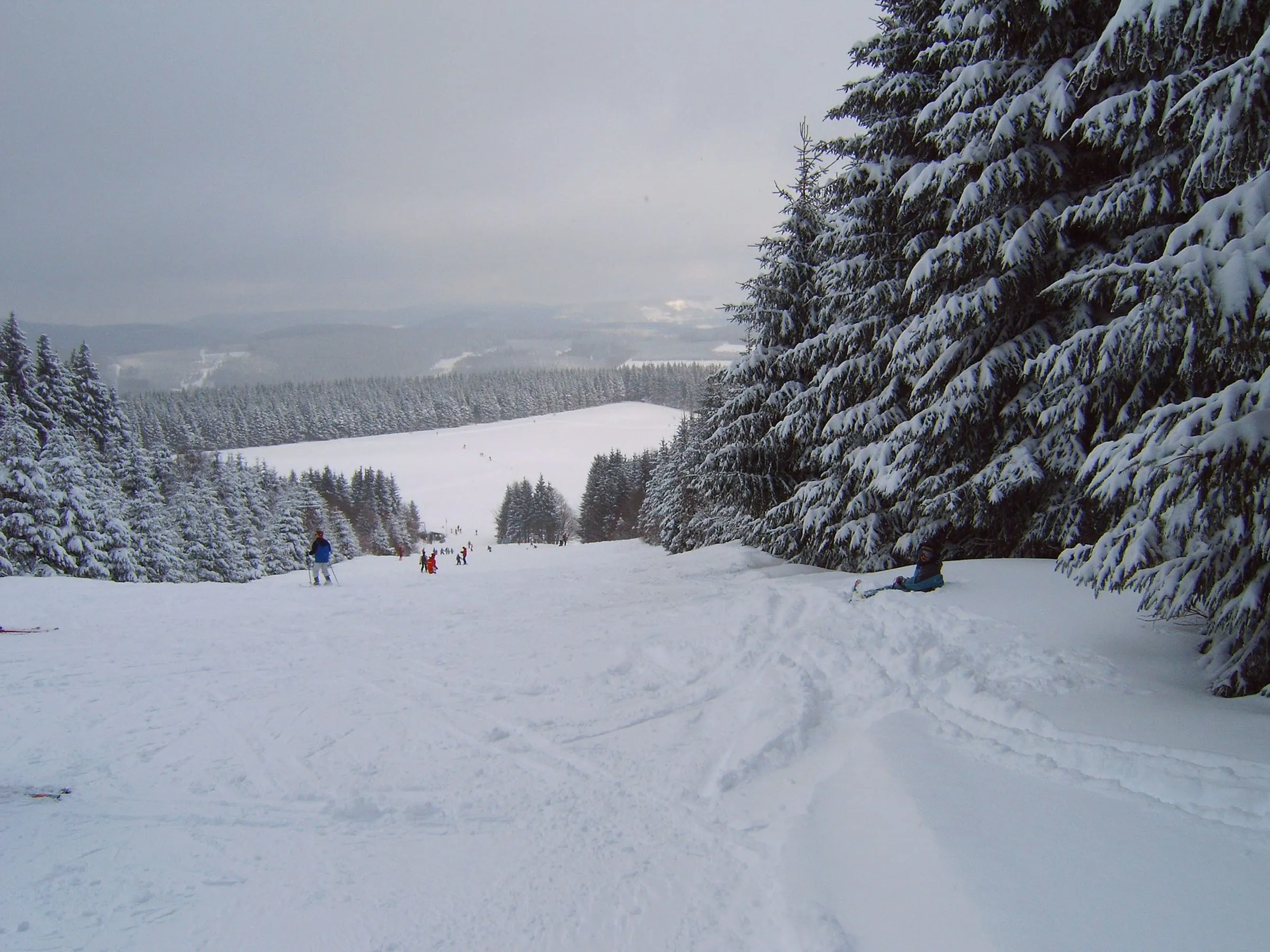
Winterberg, in the Sauerland, is the closest skiing for a great many people in north-west Europe, and it knows exactly what it is: 45 km and 46 lifts on short, tree-lined slopes, floodlit evenings and a lively town. The areas are linked by a free ski bus rather than by lifts. Children up to and including 5 ski free with a paying parent, and the Kinderskiland at the Herrloh covers 10,000 m². The RE57 runs direct from Dortmund in 104 minutes, although engineering works between Fröndenberg and Meschede cause some cancellations until 12 December 2026.
At 813 m, this is the lowest resort on our list, and the skiing is built on snowmaking. The lift company says all-weather machines cover up to 6 km of piste on the main axis from the Schneewittchenhang to the Quick Jet, the most reliable part of the area. Its other machine-made runs usually open from mid-December to mid-March. Prices stay the same when not all lifts are open, so check the live lift report the morning you travel. In a mild spell, expect strips of white on green fields.
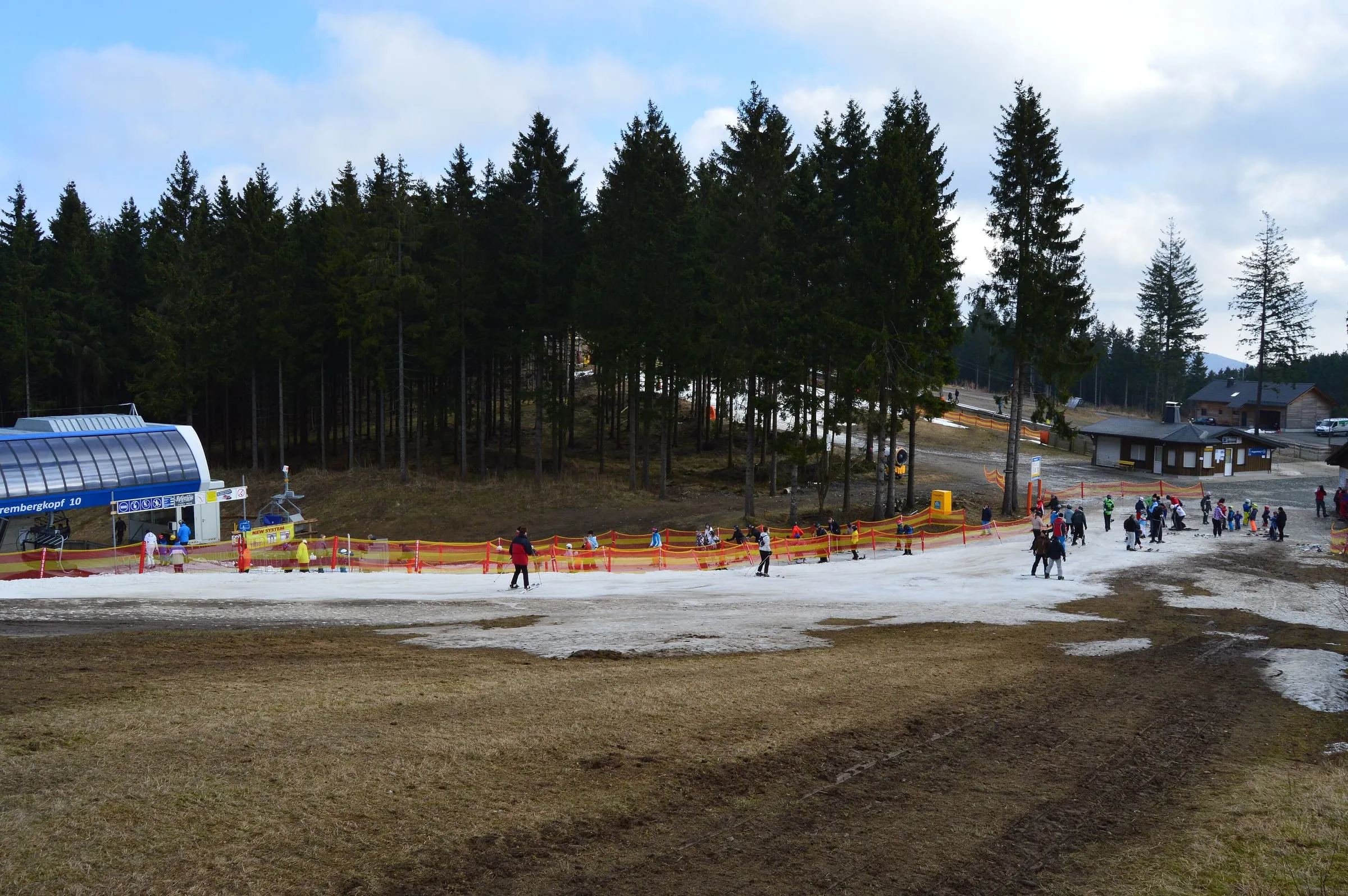
Winterberg works best as a one or two-night trip after a cold spell. For a couple or friends, the Oversum has a 25 m pool and is 400 m from the station. See where to stay in Winterberg and Winterberg with kids.
German ski resorts we don’t cover yet
We only write about places we have researched in full, so a few well-known names don’t have guides here yet. Sudelfeld above Bayrischzell has 31 km of pistes between about 800 and 1,563 m, and the Brauneck above Lenggries has its summit at 1,555 m. Willingen, the Sauerland’s World Cup venue, is included with Winterberg tickets of three days or more. All are within the lower-altitude tier, so the same rule applies: go when it’s cold.
How to choose a German ski resort at short notice
- Late November and early December: the Zugspitze is your main option, with the Feldberg and Winterberg if there’s been real cold. Don’t count on the valley runs yet.
- Christmas to early March: Oberstdorf, Garmisch-Classic and Reit im Winkl come into their own, as long as it’s been cold.
- After a mild spell: stay high, on the Zugspitze or the Nebelhorn, or cross the border to a higher Austrian resort.
- After 4 April: only the Nebelhorn and the Zugspitze are scheduled to keep running.
German motorways don’t charge cars a toll, but in snow, slush, ice or frost your tyres must carry the Alpine symbol; M+S alone no longer counts. If you’re flying into Innsbruck instead, our ski resorts near Innsbruck guide shows what’s closest. Then check how many lifts are open, look at live availability on Booking.com and go: our last-minute ski trips guide has more on booking late, and the best ski resorts in Europe guide sets Germany against the rest of the Alps.