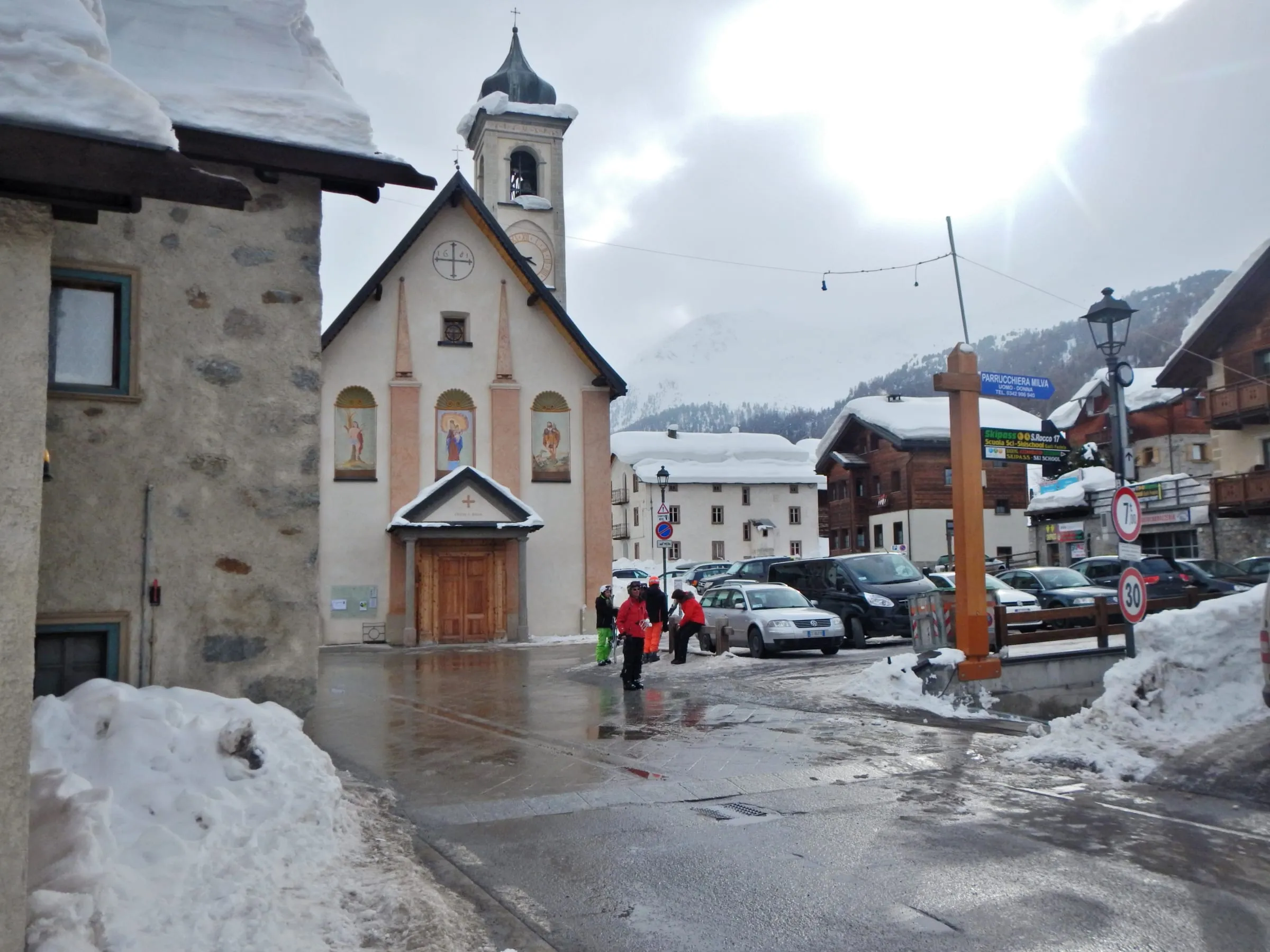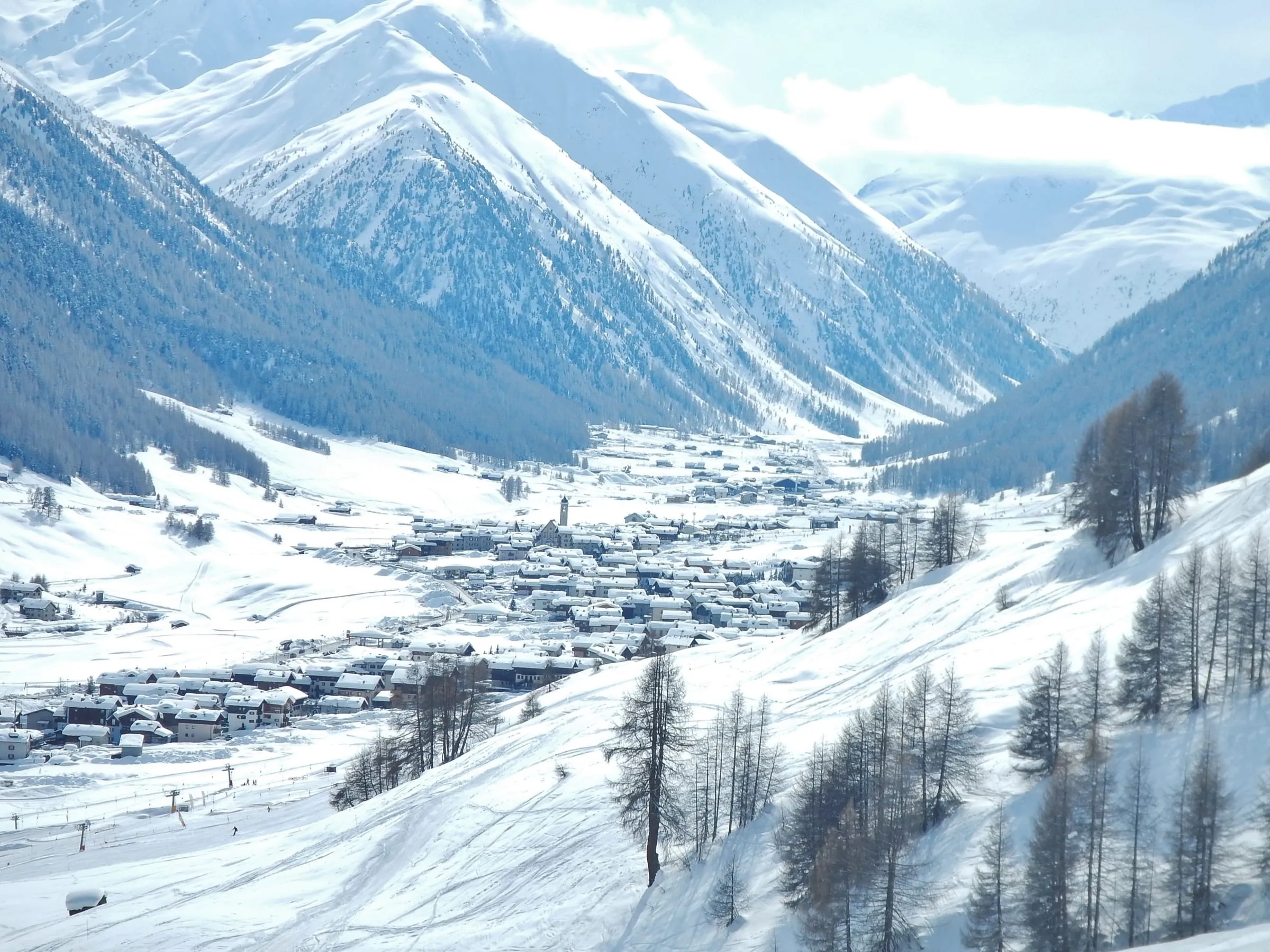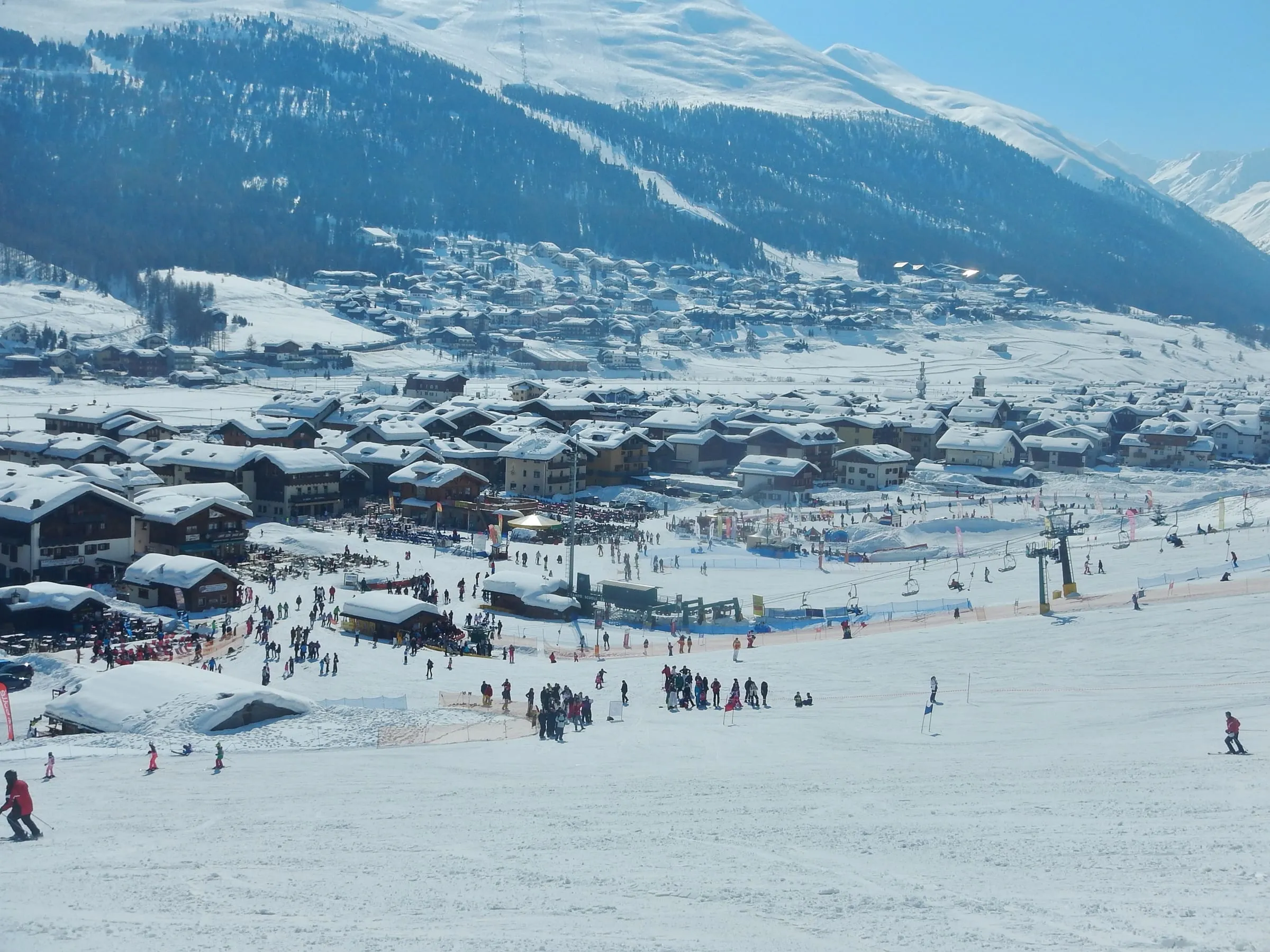
Livigno sits at 1,816 m in a long, high valley in Lombardy, right on the Swiss border. Three things set it apart. It’s high, with nothing lower than the village, so the season runs from late November to early May. It’s a duty-free zone, so fuel, drinks and many other goods are cheaper than in the rest of Italy. And it hosted the snowboard and freestyle events of the 2026 Winter Olympics.
The catch is getting there. There’s no railway, and in winter every road in crosses a high pass or goes through a single-lane toll tunnel from Switzerland. Plan the journey, and Livigno rewards you with big, open slopes, cheap fuel and one of the most snow-sure set-ups in Italy.
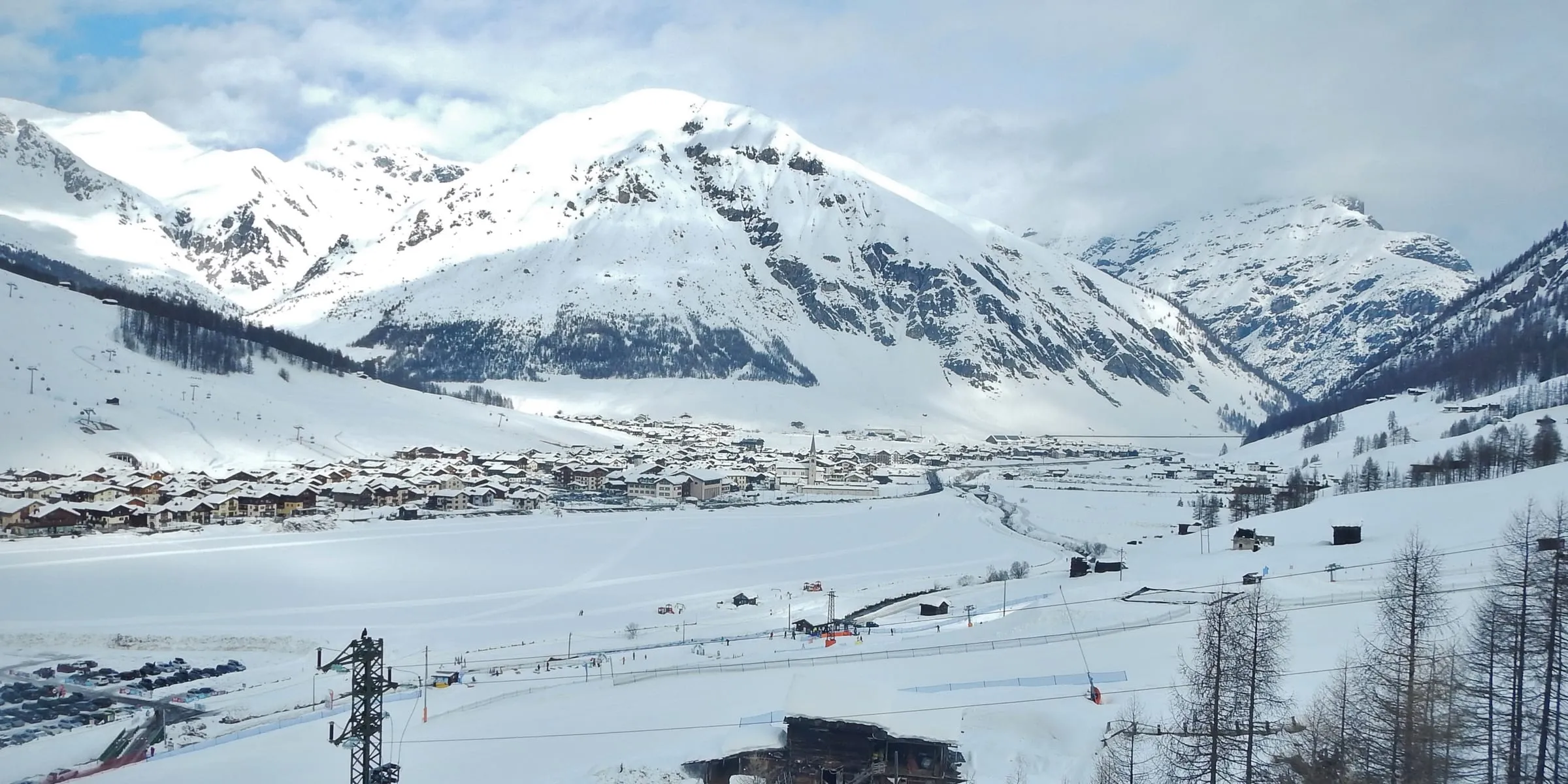
Livigno ski area: 115 km on both sides of the valley
Livigno has 115 km of pistes: 29 blue, 37 red and 12 black runs, across more than 100 km² of skiable terrain. They’re served by 6 gondolas, 14 chairlifts and 12 drag lifts, and one lift pass covers the lot.
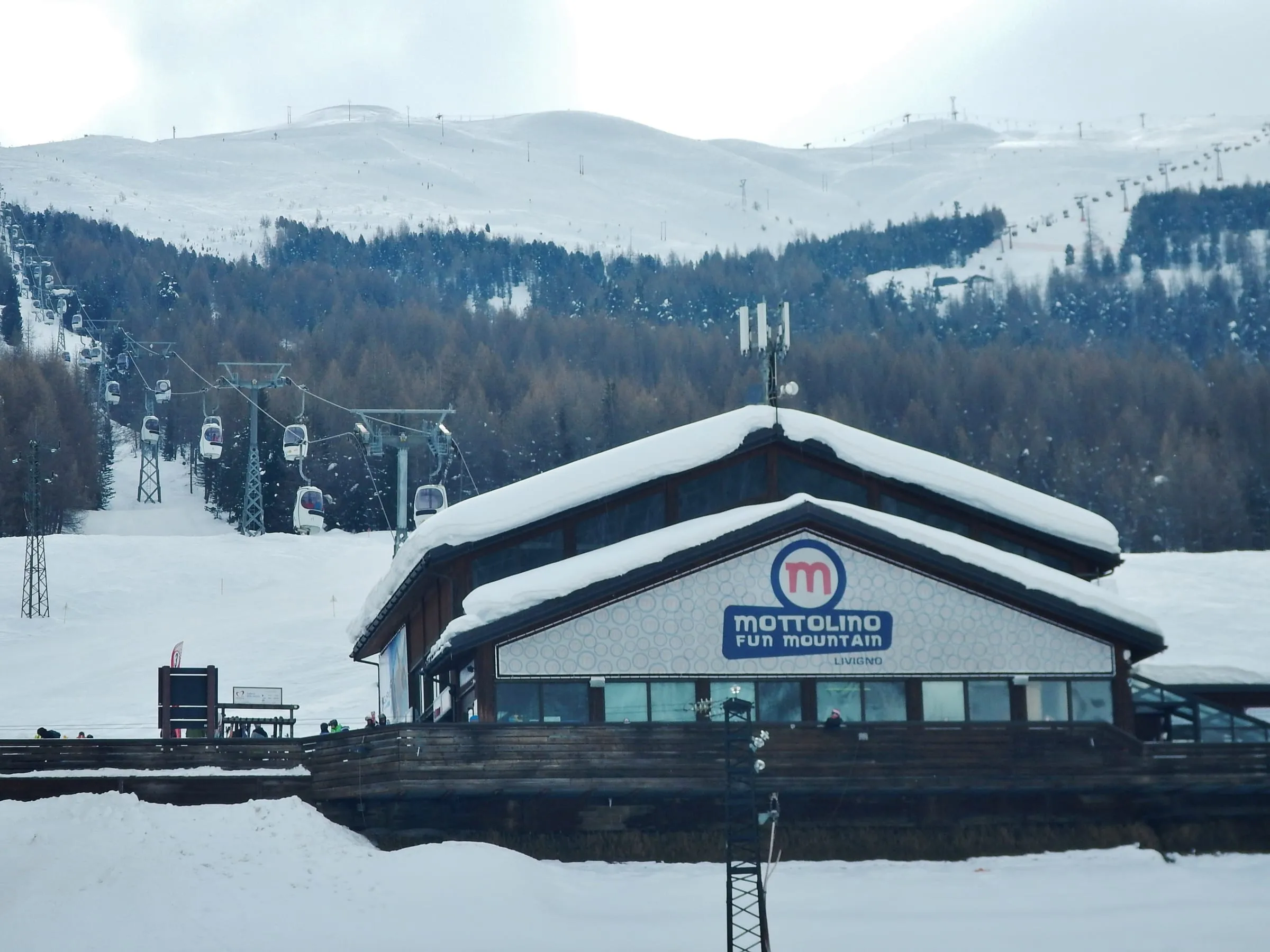
The skiing is split between the two sides of the valley. Mottolino is on one side, home to the famous snowpark. Carosello 3000 is on the other and has the highest lifts, and the Tagliede–Costaccia gondola adds a third sector. They aren’t linked by piste, so you cross the valley floor on the free Skilink bus, which serves lifts on both sides. Nursery slopes and short lifts are dotted along the village in between, at San Rocco, Valandrea and Cassana among others.
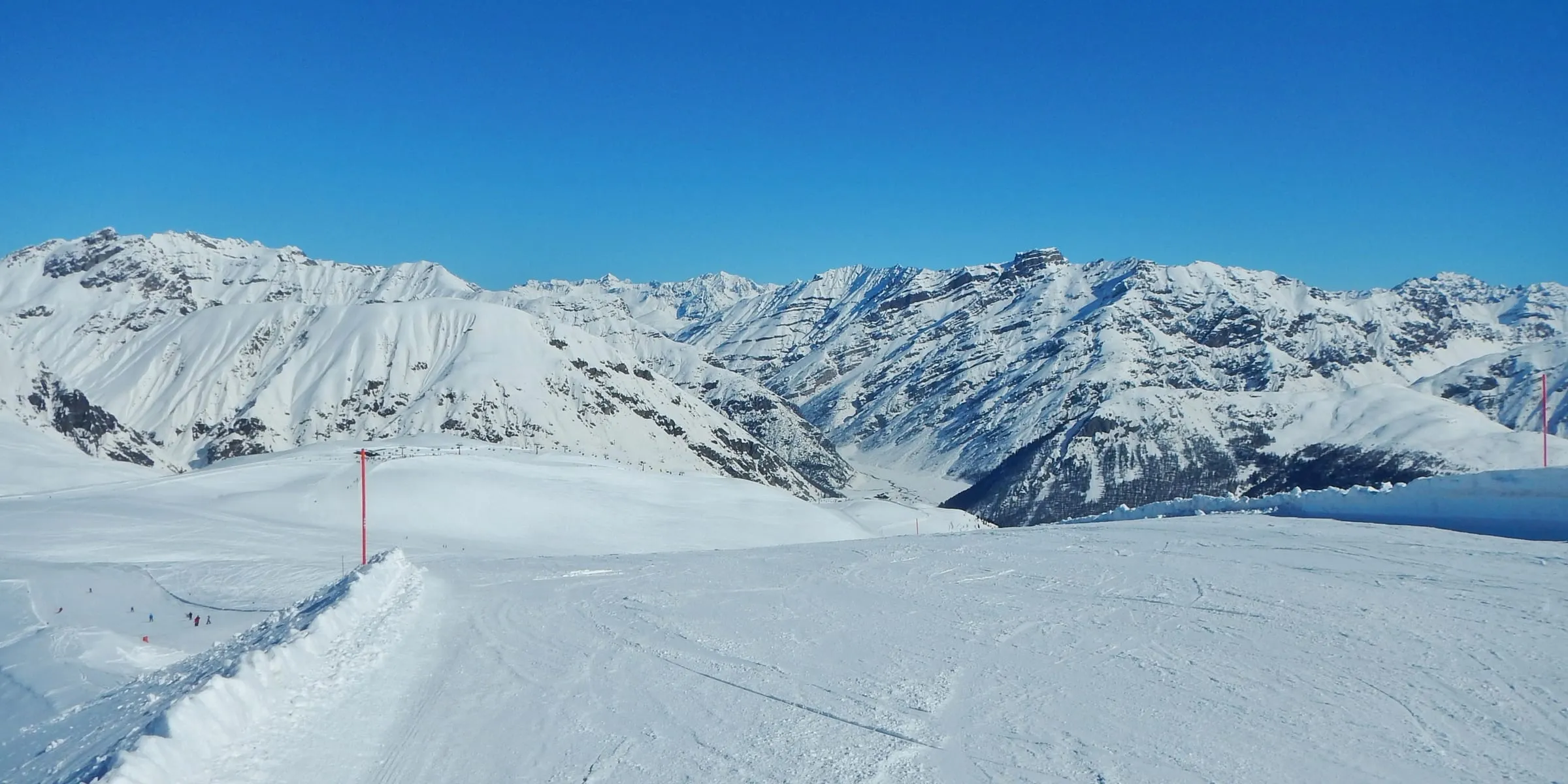
Most of the terrain is above the tree line: wide, open and treeless, with great views in the sun and very little shelter in a storm.
Skiing in Livigno for beginners
Beginners are well looked after. There are gentle nursery slopes with magic carpets all along the village, many reachable on foot or on the free bus, and the San Rocco, Valandrea and Cassana areas have easy blue runs on chairlifts and drags. Nine ski schools work in the resort, each based at the start of the slopes.
Skiing in Livigno for intermediates
This is Livigno’s sweet spot. With 37 reds and 29 blues, there’s plenty of cruising on both sides of the valley, and the wide, open slopes are made for fast, confident turns. Spend a day on each side: Mottolino in the morning, then the bus across to Carosello 3000 for the afternoon.
Skiing in Livigno for experts
Advanced skiers have a dozen black runs, including Delle Streghe, Canalino, Paramountains and the Larice FIS run from the Costaccia gondola. The Altavista chairlift serves blacks such as the Zuelli. There’s lots of off-piste, and Carosello 3000 lists freeride tours and heliskiing. Off-piste is unpatrolled avalanche terrain, so always go with a qualified mountain guide.
Livigno’s snowparks and the new Altavista chairlift
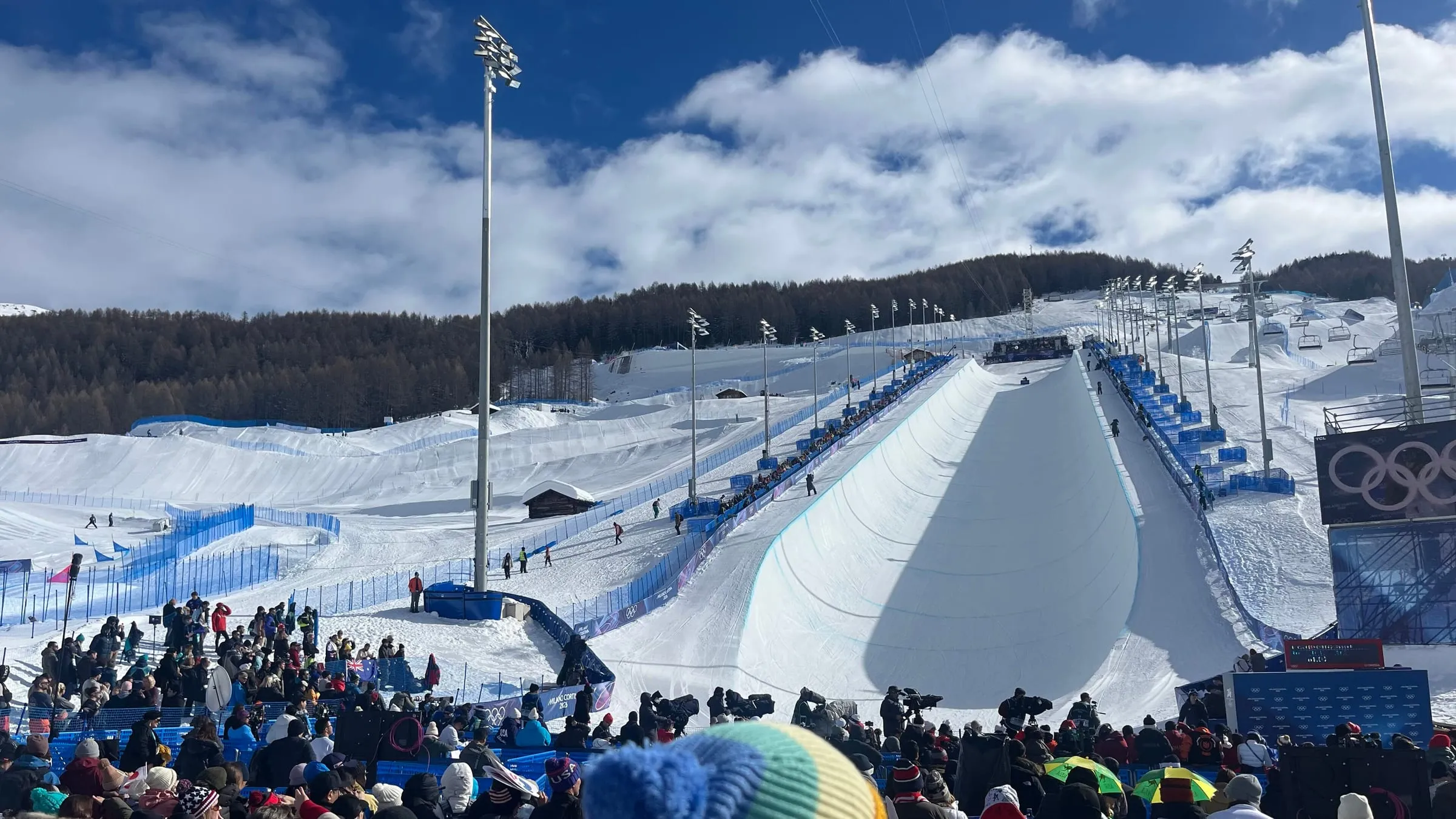
Livigno has built its name on freestyle. The Mottolino snowpark is the centrepiece, and in February 2026 the resort hosted the Olympic snowboard and freestyle skiing events, including halfpipe and big air. On the Carosello 3000 side, The Beach is a tropical-themed snowpark and kids’ cross just below the summit.
The other headline for 2026/27 is the Altavista chairlift on Carosello 3000. It opened on 14 December 2025 at the Blesaccia peak, replacing the old Blesaccia II lift. It’s a six-seater with heated seats and bubbles, carries up to 2,800 people an hour, and takes you to the highest point of the ski area, at almost 2,800 m. This will be its first full season.
Snow in Livigno and the 2026/27 season
For 2026/27, the lifts open on Saturday 28 November 2026, and the lift pass season runs until 2 May 2027, subject to snow.
Altitude is Livigno’s big strength. The village is at 1,816 m and the top lift at almost 2,800 m, so the whole ski area sits high, and there’s no low-lying link that closes first in a warm spell. The flip side is the cold. Livigno is a wide, high valley, and mid-winter mornings can be bitter. On stormy days the open upper slopes are exposed, and there are few trees to ski among in flat light.
Is Livigno good for a last-minute ski trip?
For snow, yes. When lower resorts are struggling, especially early and late in the season, Livigno is one of the safest bets in the Alps. Early December and April are also when the Skipass Free offer runs (see below), which makes a short-notice trip much cheaper.
For travel, it’s harder. It’s a long way from any airport, the Livigno Express shuttle from the Milan airports takes around 4 hours 40 minutes, and the roads in can be slowed by snow or by queues at the tunnel. Last-minute works best if you can drive or you’re happy with a long transfer. Check the road and tunnel status before you set off, then find a place to stay in Livigno.
Livigno lift passes
You can buy passes online at skipasslivigno.com, at the ticket offices and machines around the village, and through many hotels. Buying online at least two days before your first ski day gives a 5% discount. A few things worth knowing for 2026/27:
- Skipass Free: from 28 November to 19 December 2026 and from 10 April to 2 May 2027, participating hotels include a free ski pass for stays of at least 5 nights (4 ski days), and apartments for at least 7 nights (6 ski days). Book directly with the accommodation or through livigno.eu.
- Children born in 2019 or later get a free Baby pass when an adult buys a pass of the same length (one per adult, bring ID).
- Juniors born in 2011 or later pay half the adult price.
- The Alta Valtellina pass adds Bormio, Santa Caterina and Cima Piazzi-San Colombano.
- Prices are lowest in the “special season” (the Skipass Free weeks) and highest over Christmas and New Year and from 30 January to 29 March 2027.
Après-ski and things to do in Livigno
Livigno is lively, with a young crowd, plenty of bars and long evenings. On the mountain, the Stalet on Carosello 3000 runs its own après-ski. Mottolino has the M’eating Point hut and the Camanel refuge, and both sides have restaurants for long lunches in the sun.
Down in the village, the pedestrian centre around Via Plan is lined with bars, restaurants and duty-free shops. Don’t overdo it: there are customs allowances on what you can take out, for example €300 of goods per adult going into the EU, with lower limits for children and set amounts for alcohol and tobacco.
Off the slopes, Aquagranda has a family water park with slides, a spa and a 25 m pool. There are more than 30 km of cross-country trails on the valley floor, plus sledging, snow tubing and winter walks.
Who Livigno suits, and who it doesn’t
- Great for: snow-sure trips early and late in the season, freestylers and park riders, intermediates who like wide open slopes, groups on a budget, and anyone who likes a lively village.
- Think twice if: you hate long or wintry drives, you feel the cold, you want tree-lined runs for bad weather, or you want ski-in/ski-out convenience. The village is long and spread out, and you’ll use the bus a lot.
Skiing with children? Read our guide to Livigno with kids.
How to get to Livigno
Driving to Livigno
From Milan, take the SS36 to Lecco and Colico, then the SS38 through Sondrio and Tirano to Bormio. From there, the SS301 over the Foscagno pass (2,291 m) climbs via Trepalle to Livigno. The Foscagno is open 24 hours a day, and there’s a customs post on the pass.
From Switzerland, Austria and Germany, drive to Zernez in the Engadin (via Landeck, or from Zurich via Klosters and the Vereina car-train tunnel), cross the Ofen pass and take the Munt la Schera tunnel. It’s 3.5 km long and single-lane, with traffic lights controlling the direction, and there’s a toll you can pay online. It’s normally open 24 hours a day, but it has special Saturday hours in winter, so check the timetable before you travel. Vehicles over 3.6 m high can’t use it.
The Forcola pass from Switzerland is closed in winter. Chains on board or winter tyres are compulsory on the passes from 15 October to 30 April. Carry a passport or ID card, since you may cross the Swiss border.
By train and bus
There is no railway to Livigno, and public transport takes planning. You have two realistic options:
- From Italy: take a Trenord train from Milano Centrale to Tirano, then a Perego bus via Bormio to Livigno.
- From Switzerland: take the Rhaetian Railway to Zernez, then the direct bus to Livigno through the Munt la Schera tunnel, which the tourist office says runs all year.
Timetables change by season and connections are limited, so check busperego.com and the Livigno tourist office site before you travel. Once you’re there, the town buses are free.
Nearest airports
The tourist office lists Milan Bergamo, Milan Malpensa, Milan Linate, Verona, Zurich, Innsbruck, Munich and Friedrichshafen. None is close. The Livigno Express shuttle has run daily in winter from Bergamo and Malpensa (and on Saturdays from Linate), taking about 4 hours 40 minutes, with booking required online in advance. Check the 2026/27 timetable at livignoexpress.com.