France
 Austria
 Italy
 Switzerland
 English
 Deutsch
 Nederlands
 Español
 Čeština
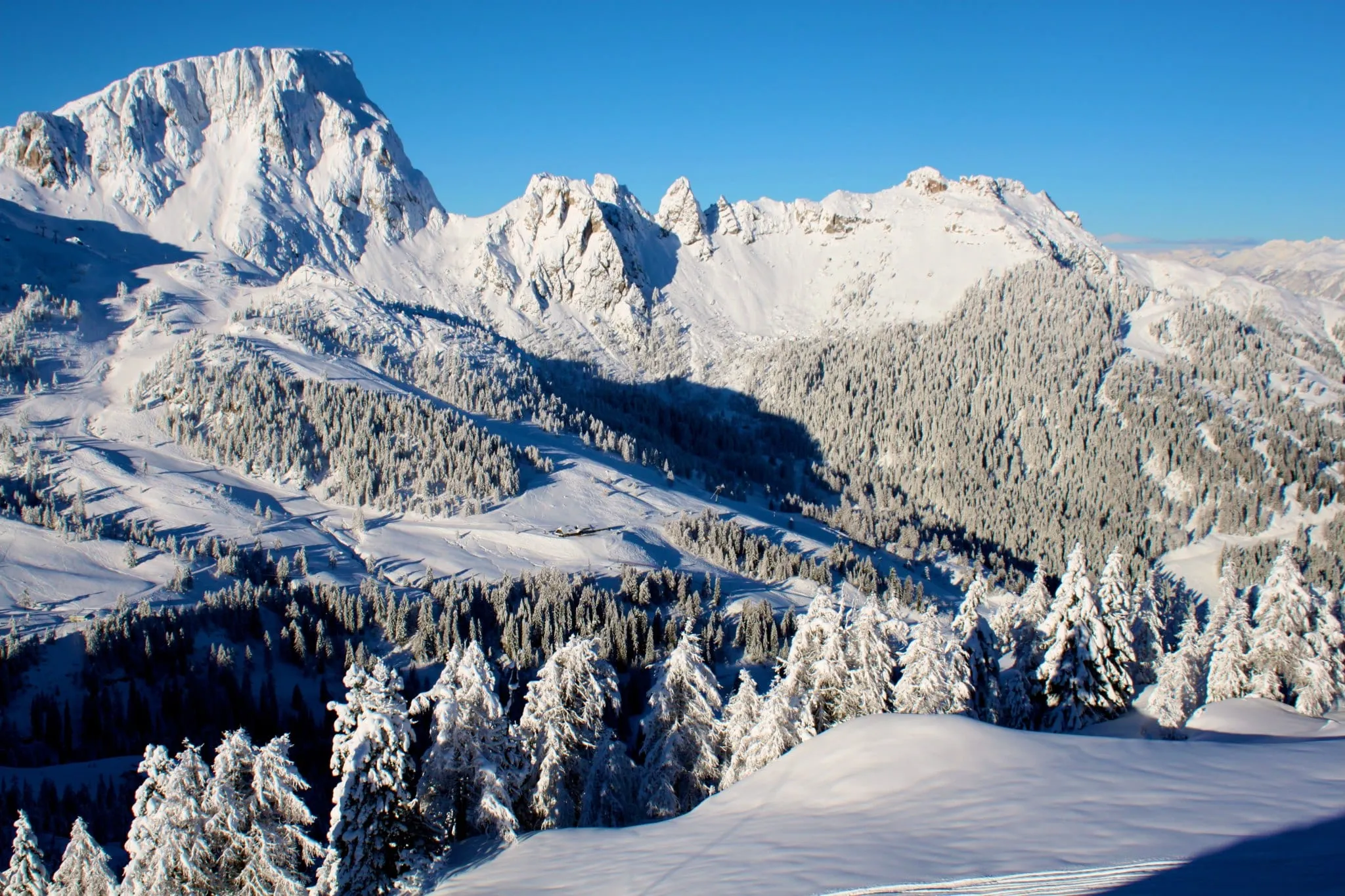
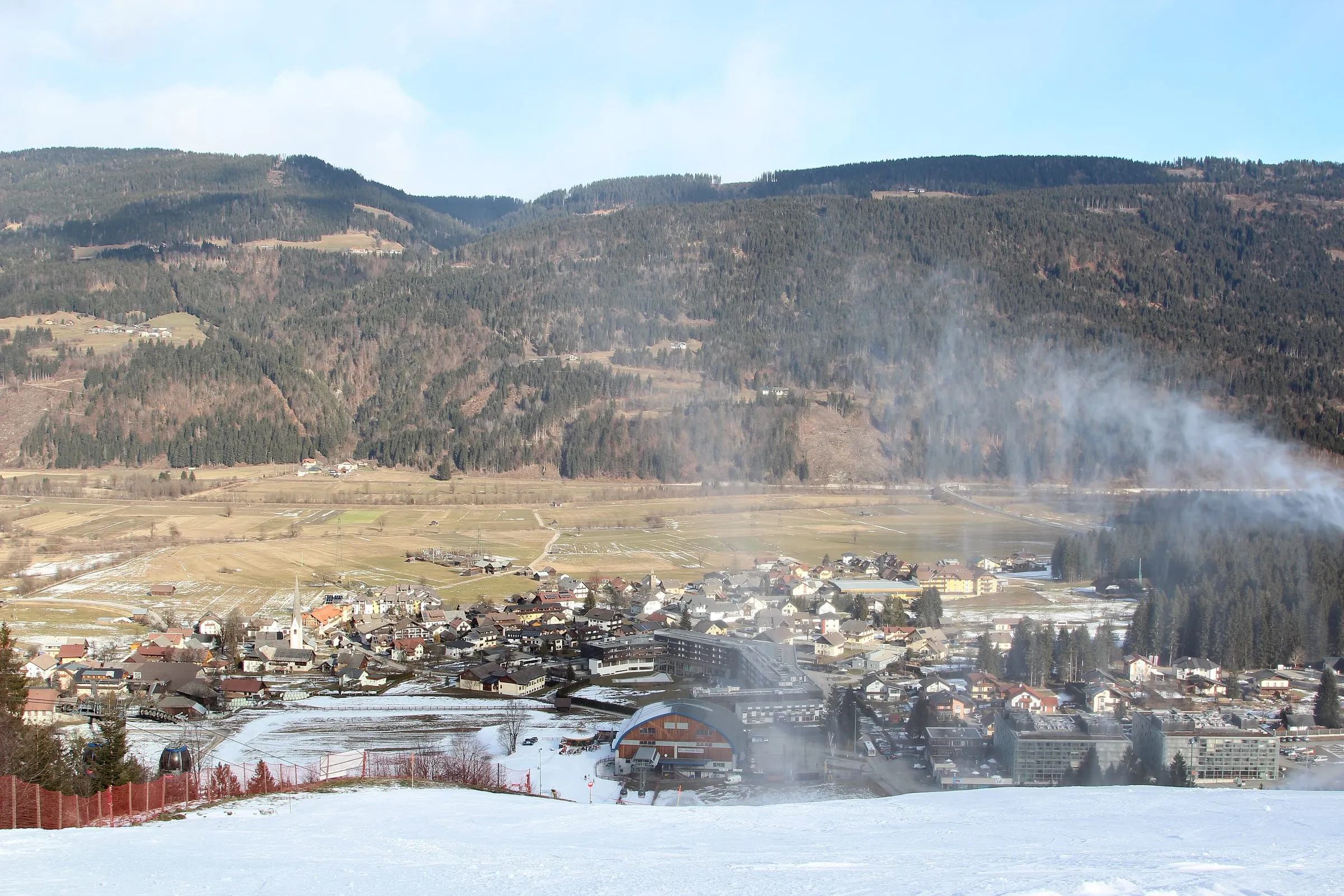
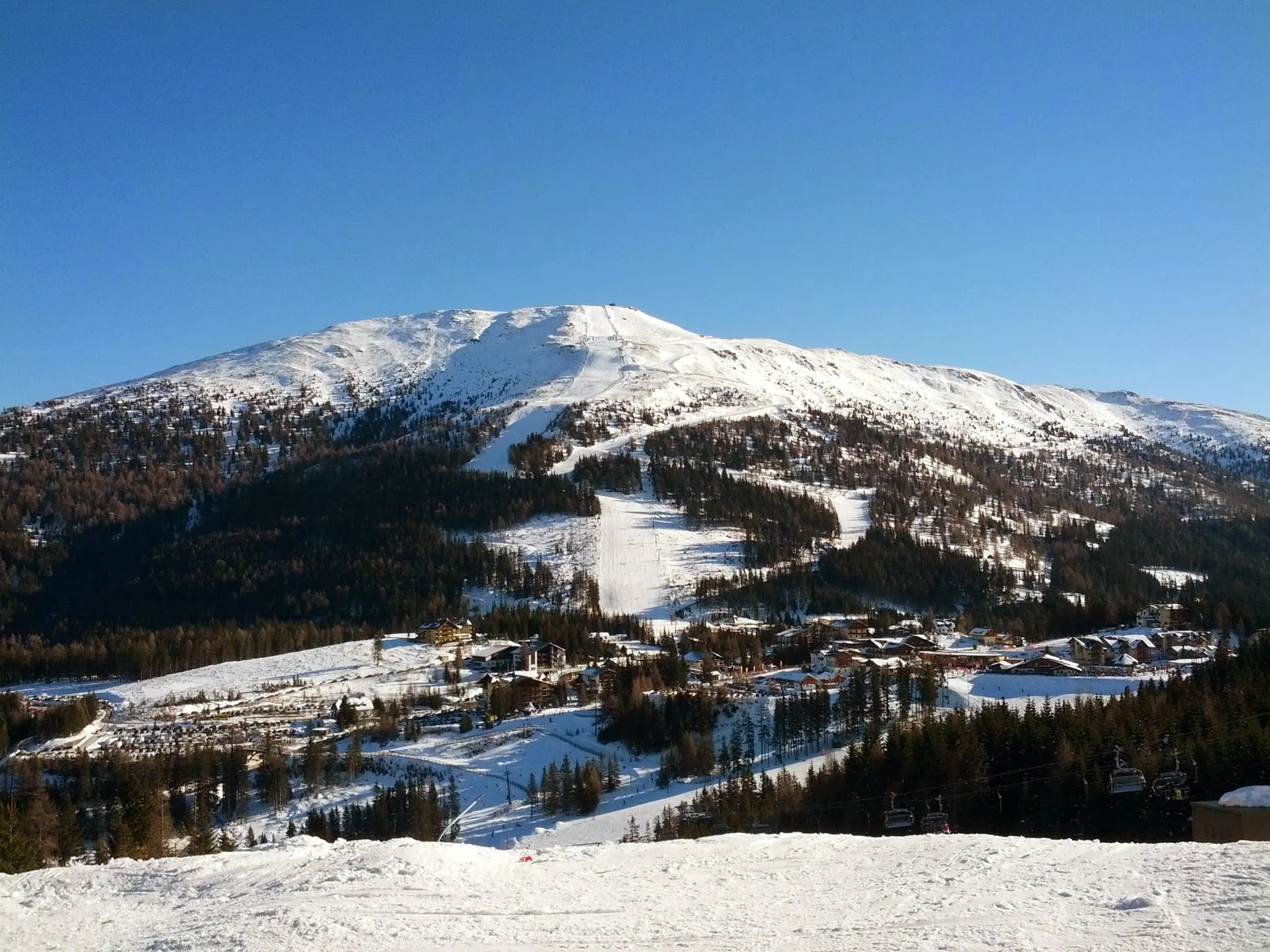
Nassfeld sits on the Nassfeld Pass, right on the border between Austria and Italy, above the Gail valley in Carinthia. It’s Carinthia’s largest ski area, with 110 km of pistes and 29 lifts, and you can reach it from the valley village of Tröpolach on one of the longest gondolas in the Alps.
It’s a resort built around sun and snow. The resort says it gets an average of 7 to 8 metres of snow a winter and about 850 hours of sunshine, around 100 more than the northern Alps. It’s known as a “Schneeloch”, a snow hole, because frequent storms from the Adriatic bring it plenty of snow.
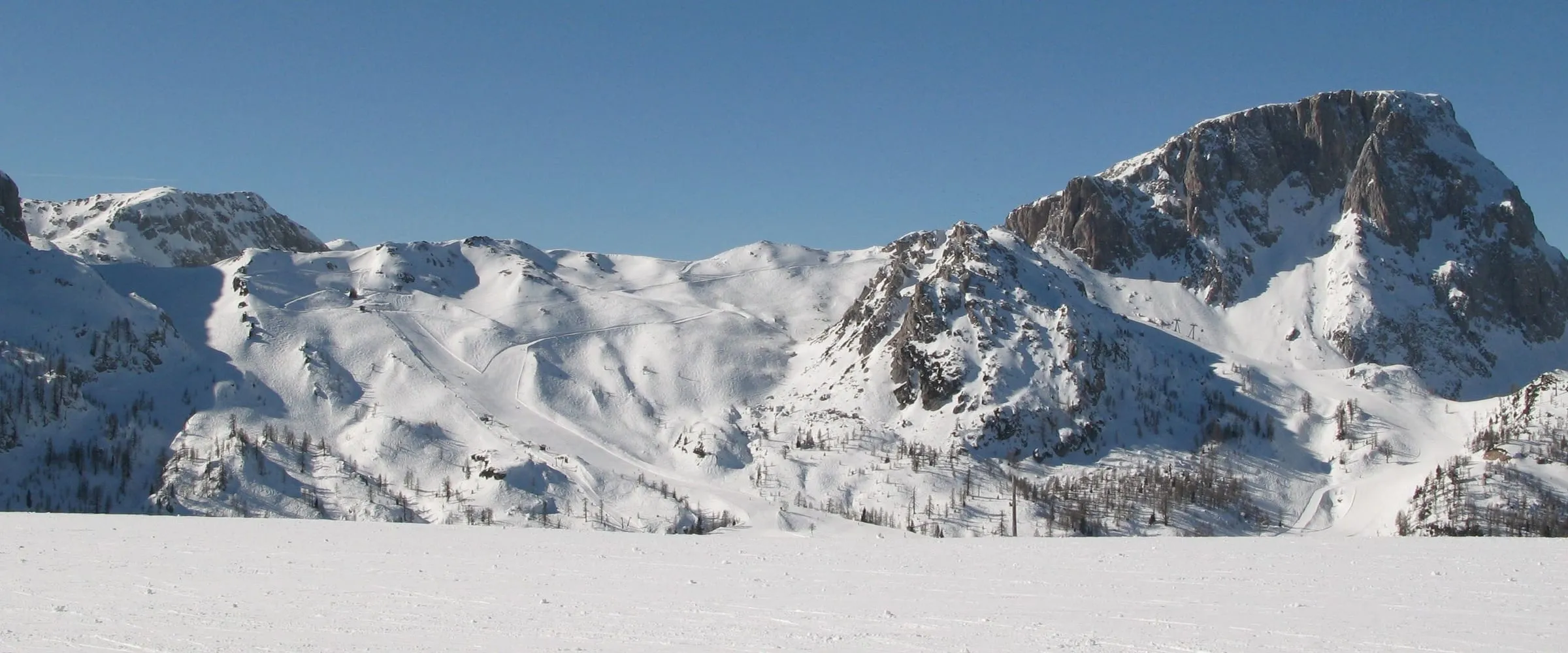
Nassfeld ski area: 110 km on the Austrian–Italian border
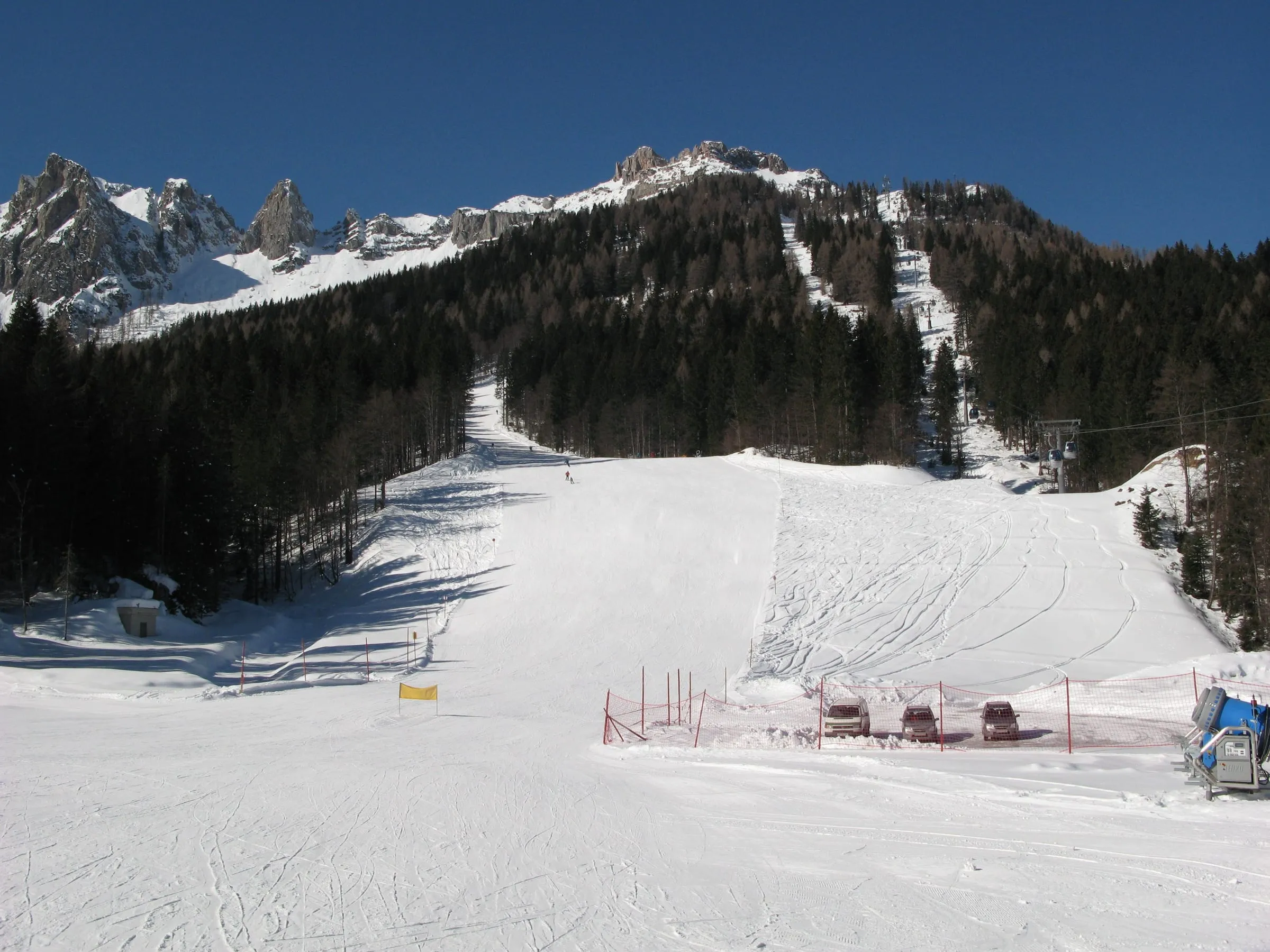
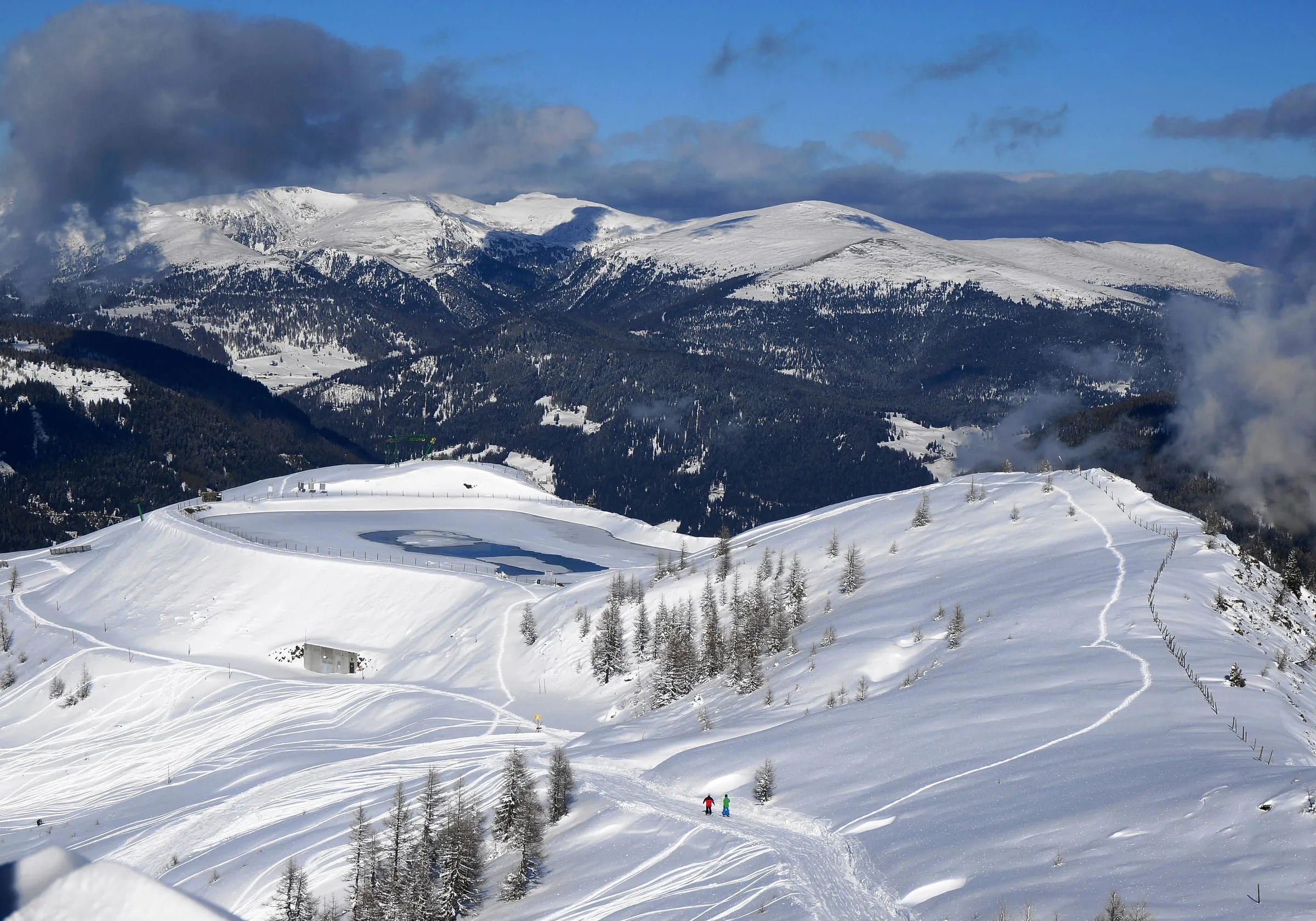
The ski area runs from about 610 m in Tröpolach to about 2,020 m. Of the 110 km of pistes, about 30 km are blue, 69 km red and 11 km black, so this is above all a resort for confident intermediates. The resort says the pistes run in Austria and Italy, and from the viewing platform at the Trogkofelbahn you look across into Italy’s high valleys.
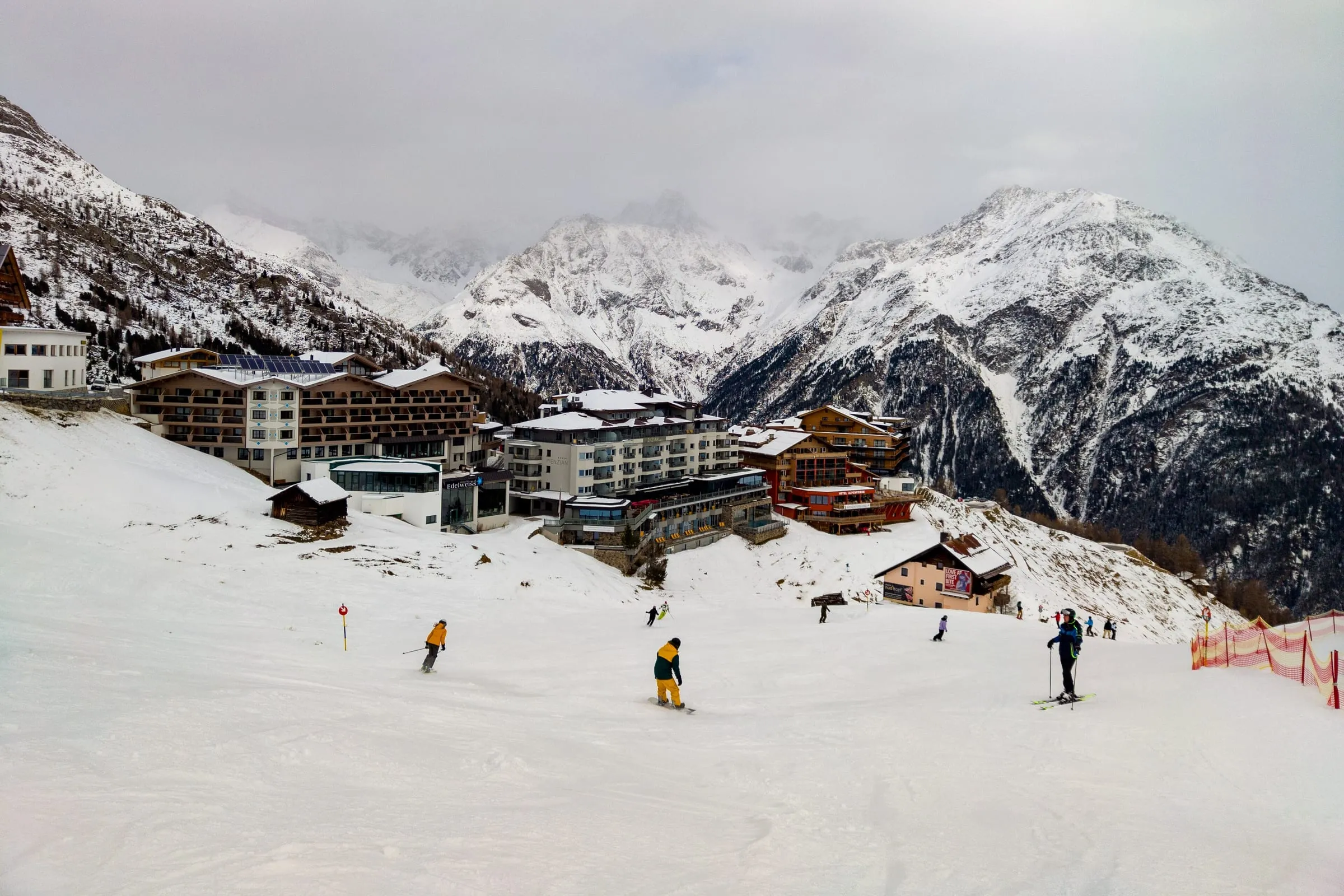
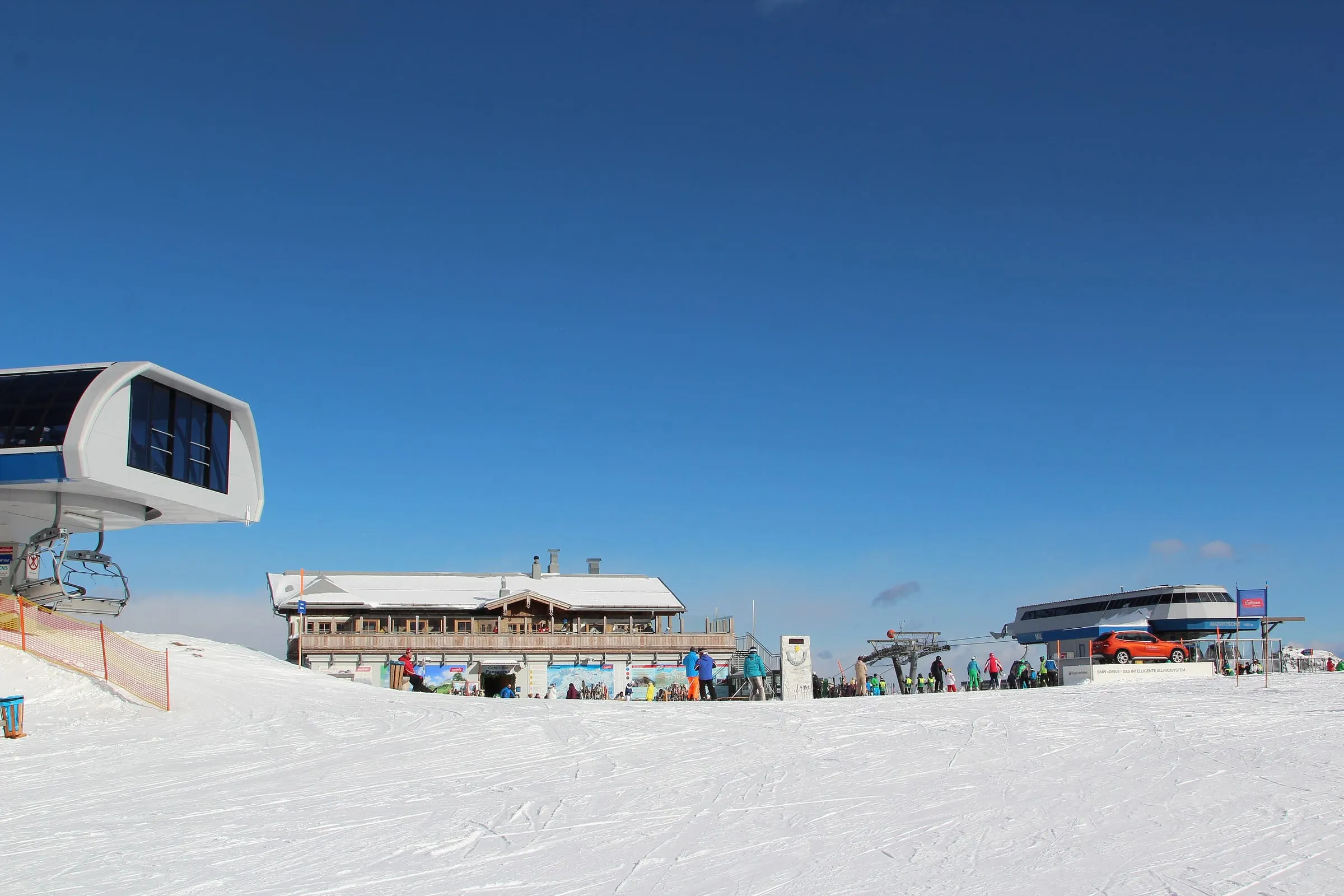
There are several ways in. The Millennium-Express gondola starts in Tröpolach, the Sonnleitn four-seat chair starts from the village of Sonnleitn, and the Gartnerkofelbahn and the Madritschen six-seat chair start up on the pass, where the hotel zone of Sonnenalpe Nassfeld sits at about 1,500 m. All four have ticket offices.
Skiing in Nassfeld for beginners
The best place to start is the Tressdorfer Alm, the middle station of the Millennium-Express. The Young Stars Area there has 29 fun features, two magic carpets and a deliberately flat layout, and the new chairlift (below) opens up more beginner pistes around it. There are also practice slopes on the pass itself, such as the Übungswiese Nassfeld.
Skiing in Nassfeld for intermediates
With 69 km of red runs, intermediates have the most choice. The resort suggests easy cruising on the Wulfenia run or a bit more action on the red FIS run, and there are runs off all three of Nassfeld’s mountain ridges. Every piste is covered by snowmaking.
Skiing in Nassfeld for experts
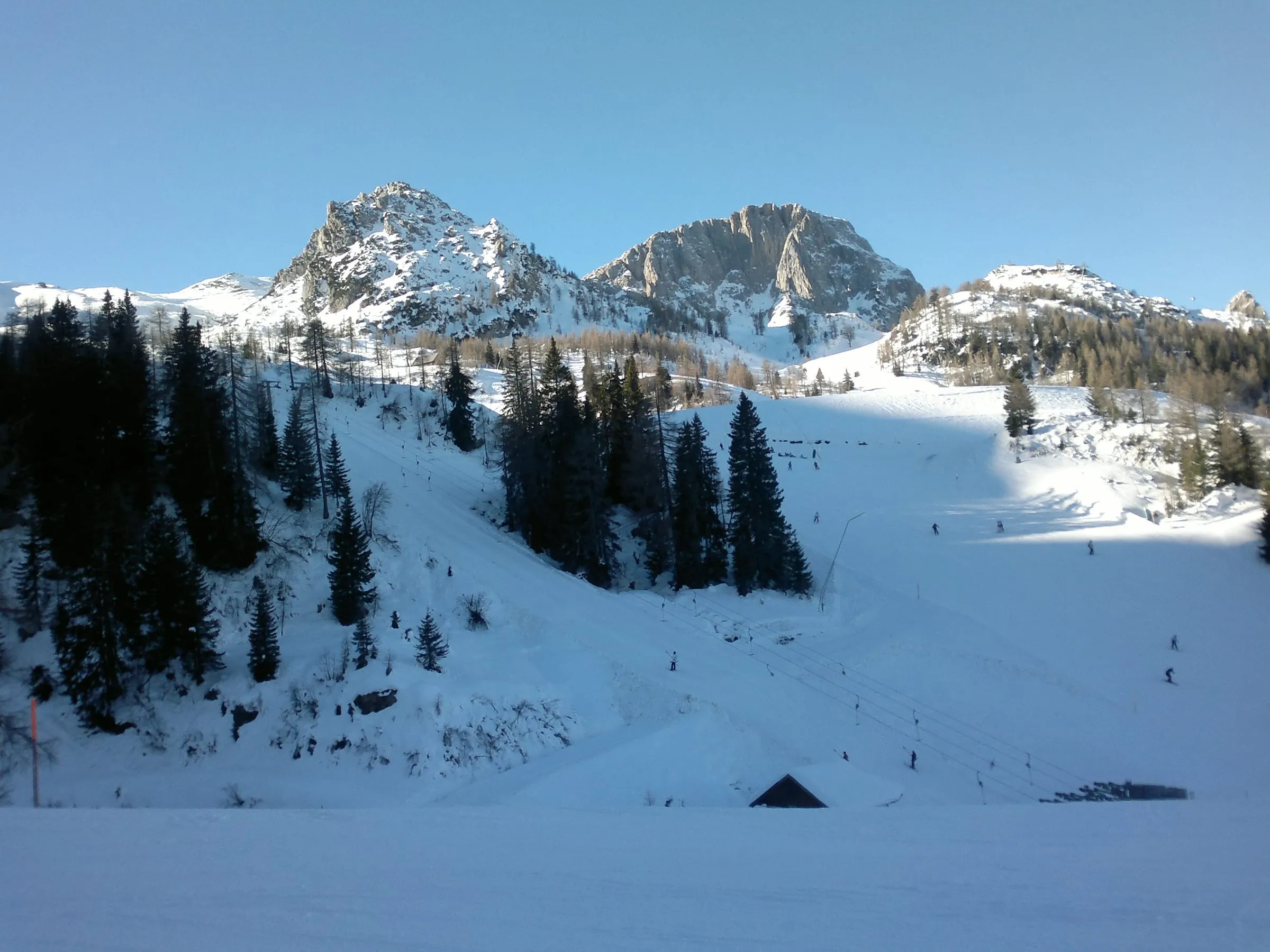
Experts have a smaller share of the mountain. The resort picks out the black Trogkofel run, and there’s a mogul piste on the Hohe Höhe. The resort also has marked deep-snow areas. If you head into the backcountry, check the avalanche bulletin first, and go with a guide if you don’t know the terrain.
The Millennium-Express: Nassfeld’s 6 km gondola
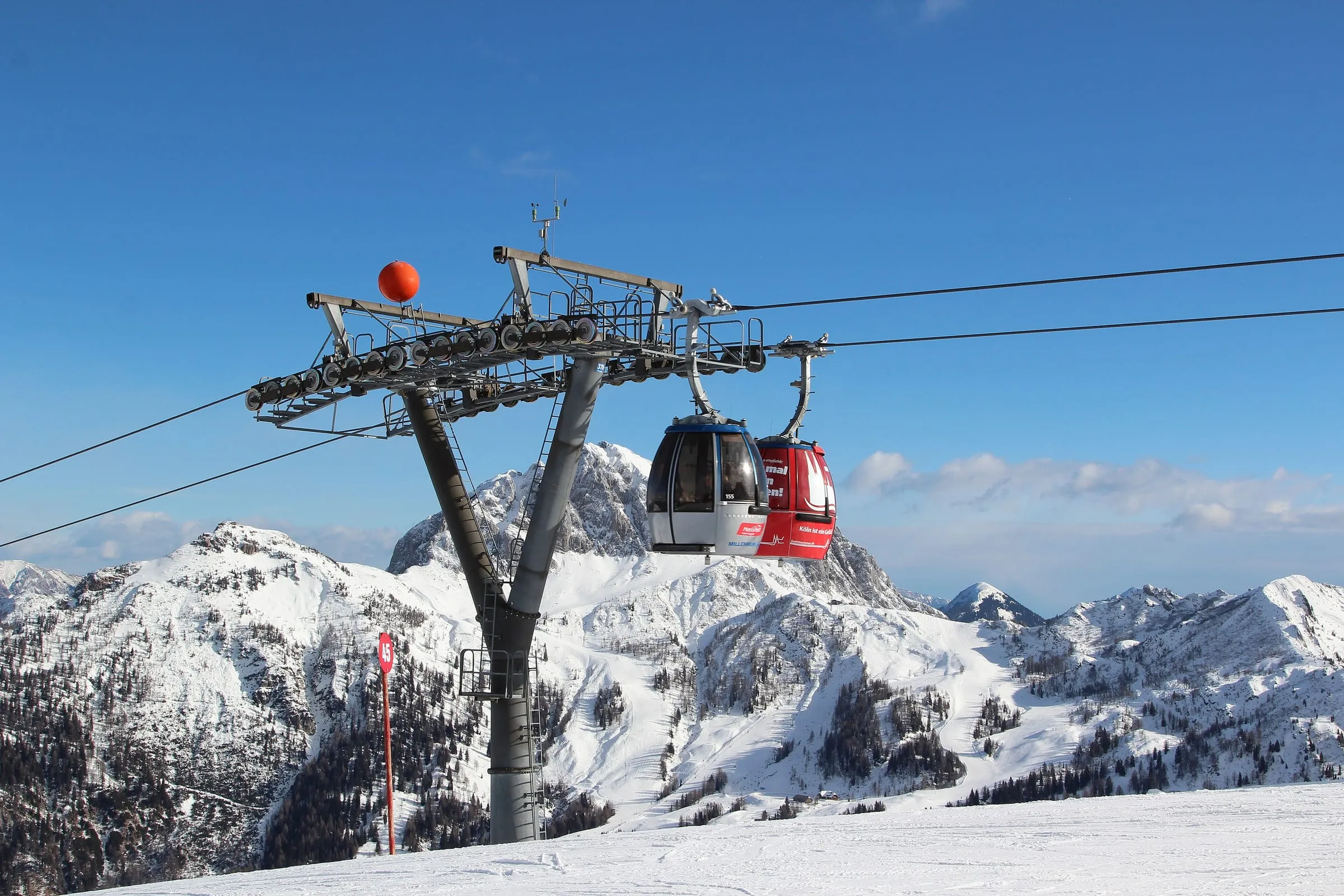
The Millennium-Express is the resort’s signature lift. It has carried skiers from Tröpolach up to the Madritsche since the winter of 1999/2000, in three sections with a total length of 6,001 m. The cabins switch cables automatically at the two middle stations, Gmanberg and the Tressdorfer Alm, so you stay seated all the way to the top in about 17 minutes. It is described as the longest cable car in Austria.
The top station is Kofelplatz on the Madritsche, a hub with several other lifts. In the evening, most skiers ride the middle section back down, because it can’t be skied.
New for 2026/27: the Tressdorfer Almbahn
Nassfeld’s lift company is investing €13 million in the Tressdorfer Almbahn, a detachable six-seat chairlift built by Doppelmayr, with heated seats, weather bubbles and a conveyor-belt boarding area. Construction ran from May to November 2026, and the tourist board’s press release says it is due to open in December 2026. It replaces three drag lifts, opens up several pistes for beginners, and links the Tressdorfer Alm directly with Sonnleitn.
It follows the new Tröglbahn six-seat chair (2024) and the Gartnerkofelbahn, a ten-seat gondola, (2025), so much of the lift system is now new.
Snow in Nassfeld and the 2026/27 season
For 2026/27, the lifts are scheduled to run from 4 December 2026 to 4 April 2027. Until 28 February, most lifts run from 9 am to 4 pm, and the Millennium-Express from 8.30 am to 4.30 pm. From 1 March, the lifts start earlier. On 24 December they run from 9 am to 3 pm.
The resort runs 540 snow guns and says every piste is covered by snowmaking. Nassfeld’s big weakness is height: the top is only about 2,020 m, and the valley run ends at about 610 m in Tröpolach, so that part needs cold weather to stay in shape. The skiing on the pass, at 1,500 m to 2,000 m, holds snow much better than the valley run.
Is Nassfeld good for a last-minute ski trip?
Often, yes. When a storm comes up from the Adriatic, Nassfeld can be one of the snowiest places in the Eastern Alps, while resorts further north may get much less. It’s worth watching the forecast for these southern storms and booking when one is due.
The downsides: from the UK it means a flight to a smaller airport such as Klagenfurt or Ljubljana, or a longer transfer from Venice or Salzburg, and in a warm spell the low valley run suffers first. Check which lifts are open, especially the lower sections of the Millennium-Express, then find a place to stay in Nassfeld.
Nassfeld lift passes
- Passes are sold online, at ticket machines (credit card) and at ticket offices at the Millennium-Express in Tröpolach, the Sonnleitn chair, the Gartnerkofelbahn, the Madritschen chair and the Info & Service Centre in Hermagor. You can buy passes for the next day from 2 pm.
- Buy online and you can go straight to the lift with your key card.
- The WinterCard PREMIUM is a pass sold to guests of the region’s partner accommodation.
- The “Kids Surprise” day ticket lets children under 10 ski for €15 on Saturdays, and in some weeks children under 10 get a free pass and free accommodation in their parents’ room. Bring ID.
Après-ski and things to do in Nassfeld
The resort has 25 mountain huts and restaurants, with Carinthian dishes, such as Kasnudeln (filled pasta pockets), alongside pizza and pasta from over the border. There are events most weekends, including Italian Days and the “Music meets Sun” concerts. Several hotels on the pass have their own après-ski bars by the slopes.
Night skiing runs on a 2.2 km floodlit piste in Tröpolach on the Carnia run from Gmanberg. It’s open on Saturday evenings from 2 January to 6 March 2027, from 6.30 pm to 9 pm.
Off the slopes, there’s sledging, cross-country skiing, snowshoeing and ski touring, and you can skate on the Pressegger See and the Weissensee lakes when they freeze.
Who Nassfeld suits, and who it doesn’t
- Great for: intermediates who like long red runs, families (see below), sun seekers, and anyone in Austria, Slovenia or north-east Italy who can drive here when a southern storm hits.
- Think twice if: you need high-altitude snow security late in the season, you want lots of steep black runs, or you want a lively, traditional village at the foot of the slopes. The pass is a hotel zone, and the villages are down in the valley.
Skiing with children? Read our guide to Nassfeld with kids.
How to get to Nassfeld
Driving to Nassfeld
From eastern Austria, take the A2 towards Italy, leave at the Hermagor/Gailtal exit and follow the B111 to Nassfeld. From western Austria and from Munich, take the A10 through the Tauern and Katschberg tunnels (tolled) to the Feistritz/Drau exit, then follow the signs over the Windische Höhe to Hermagor. From Italy, you can drive up from Pontebba over the Passo Pramollo, or stay on the motorway and come in via Hermagor. You need a vignette for Austrian motorways, and winter tyres are compulsory whenever there’s snow, slush or ice on the road from 1 November to 15 April.
By train and bus
Take the train to Villach. From there, the ÖBB S4 runs to Hermagor every hour. In winter, a free ski bus runs from Hermagor station and the region’s villages to the Millennium-Express in Tröpolach. The Bahnhofshuttle Kärnten will also take you from Hermagor station to your accommodation, but you have to book it by 8 pm the day before.
Note for 2027: the ÖBB Tauern tunnel between Böckstein and Mallnitz is closed from 8 February to 9 July 2027. Trains from Salzburg and Munich won’t run through to Villach during that time, and replacement buses run every hour between Bischofshofen and Spittal/Millstättersee.
Nearest airports
The tourist board lists Klagenfurt, Ljubljana, Salzburg and Venice as the nearest airports. A shared taxi run by the tourist board goes to your accommodation from Klagenfurt, Salzburg and Ljubljana.