France
 Austria
 Italy
 Switzerland
 English
 Deutsch
 Nederlands
 Español
 Čeština
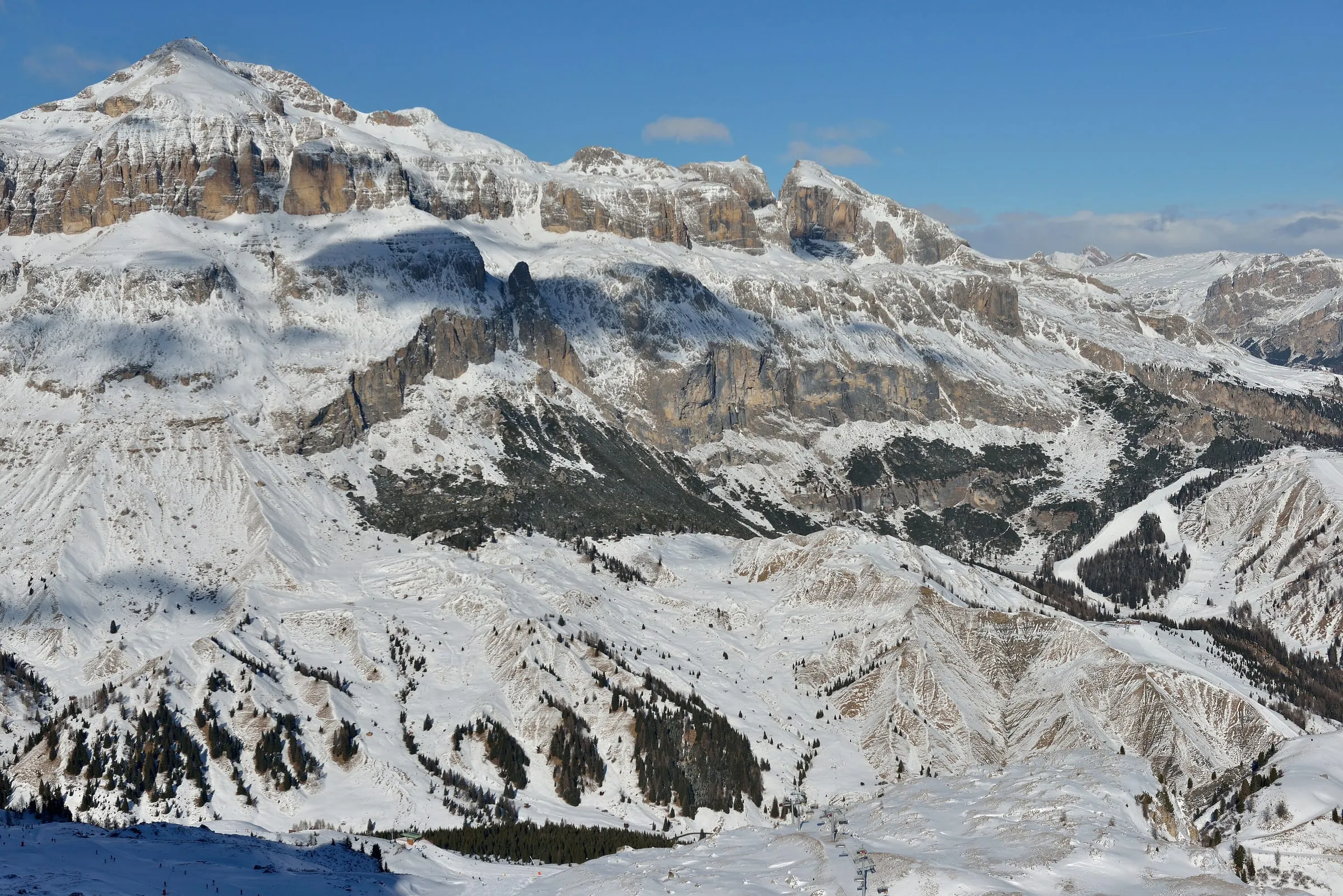
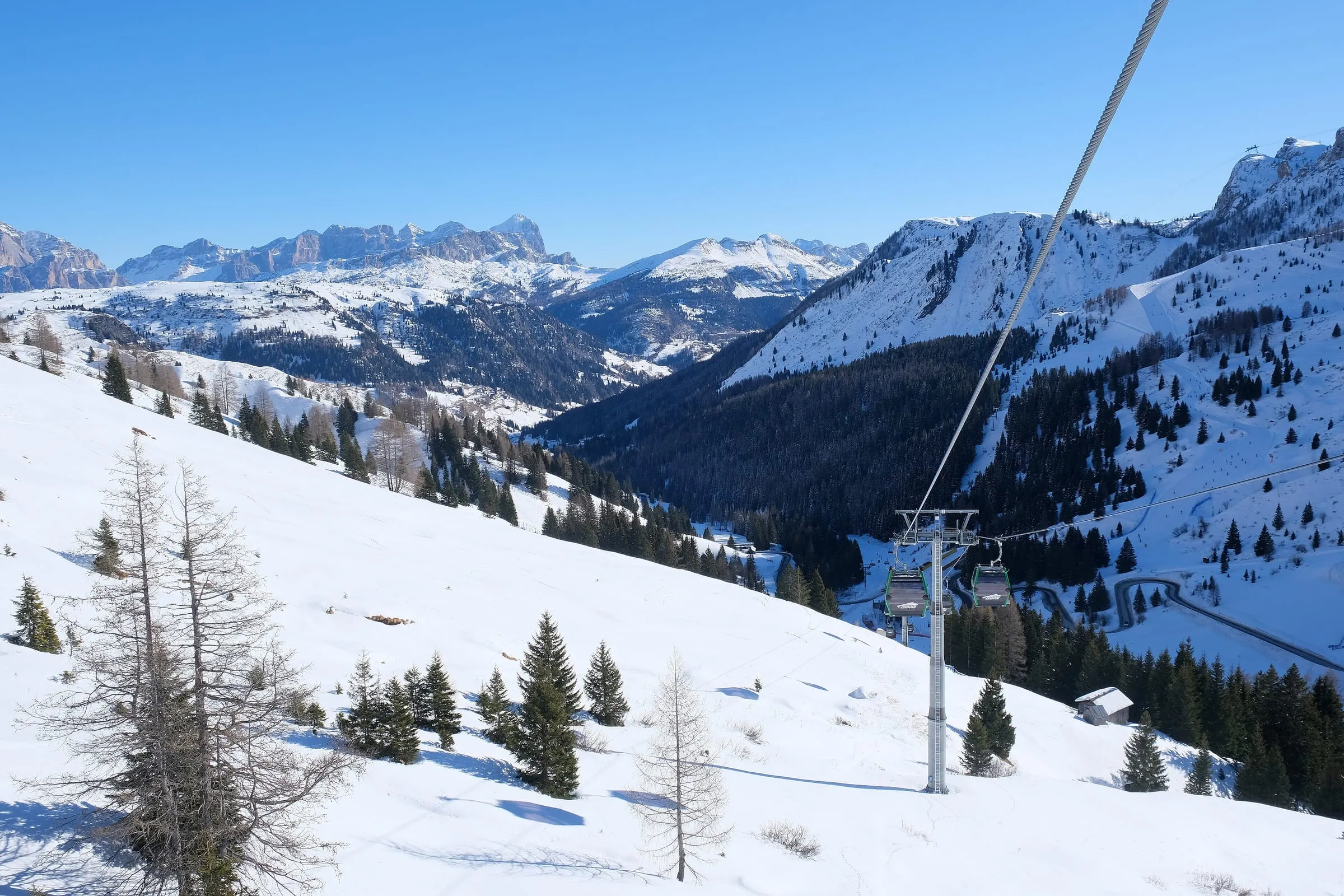
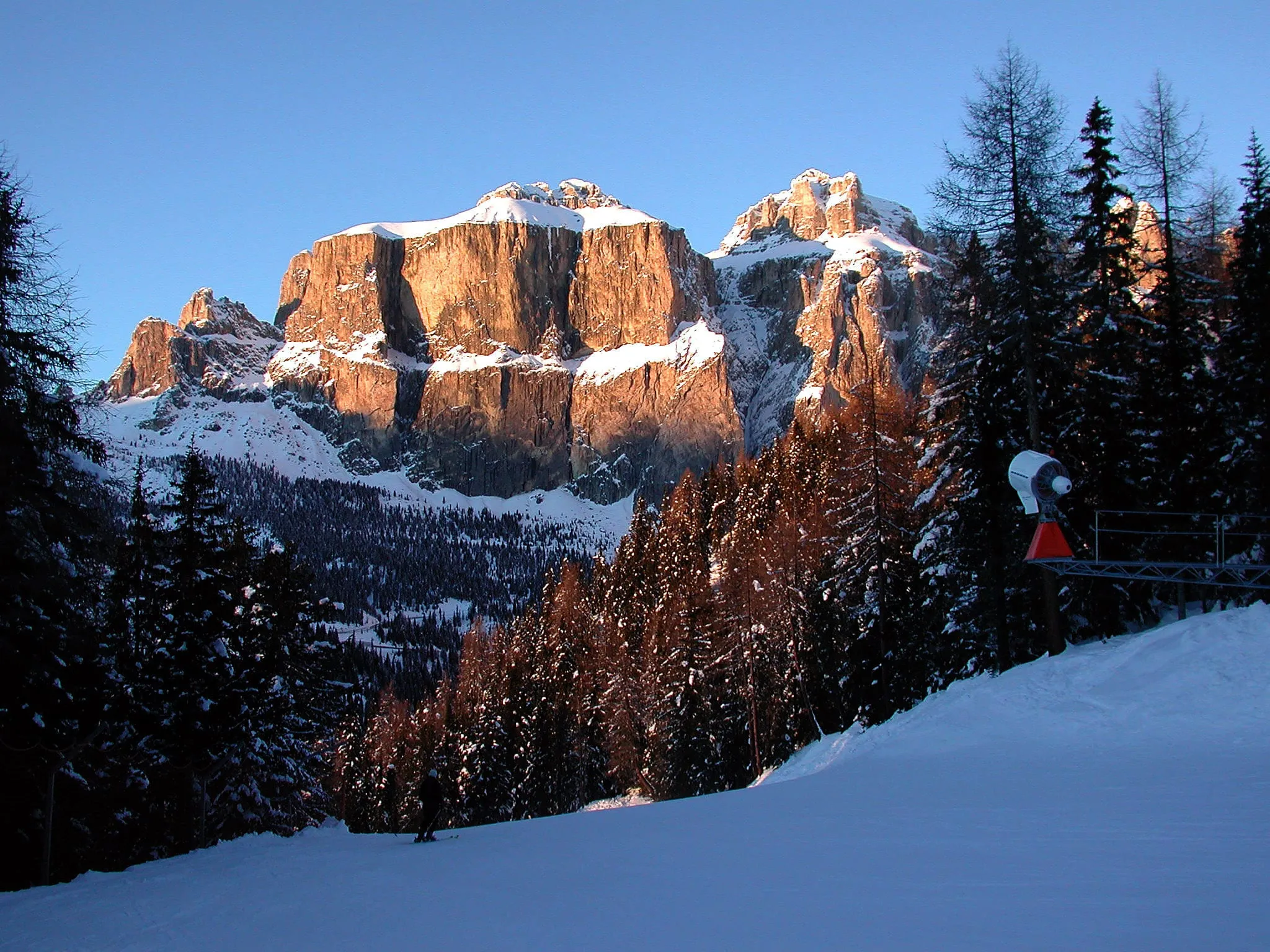
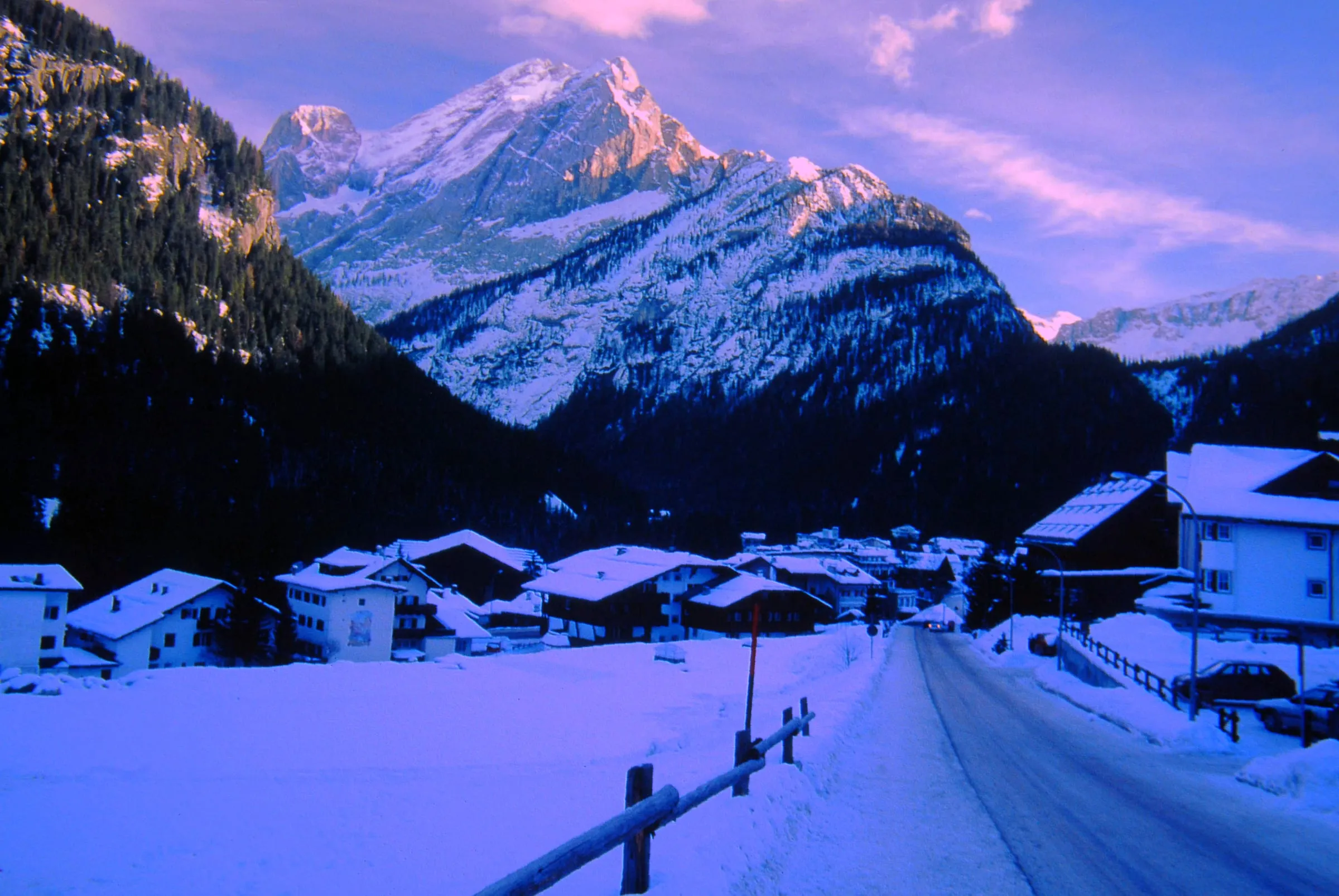
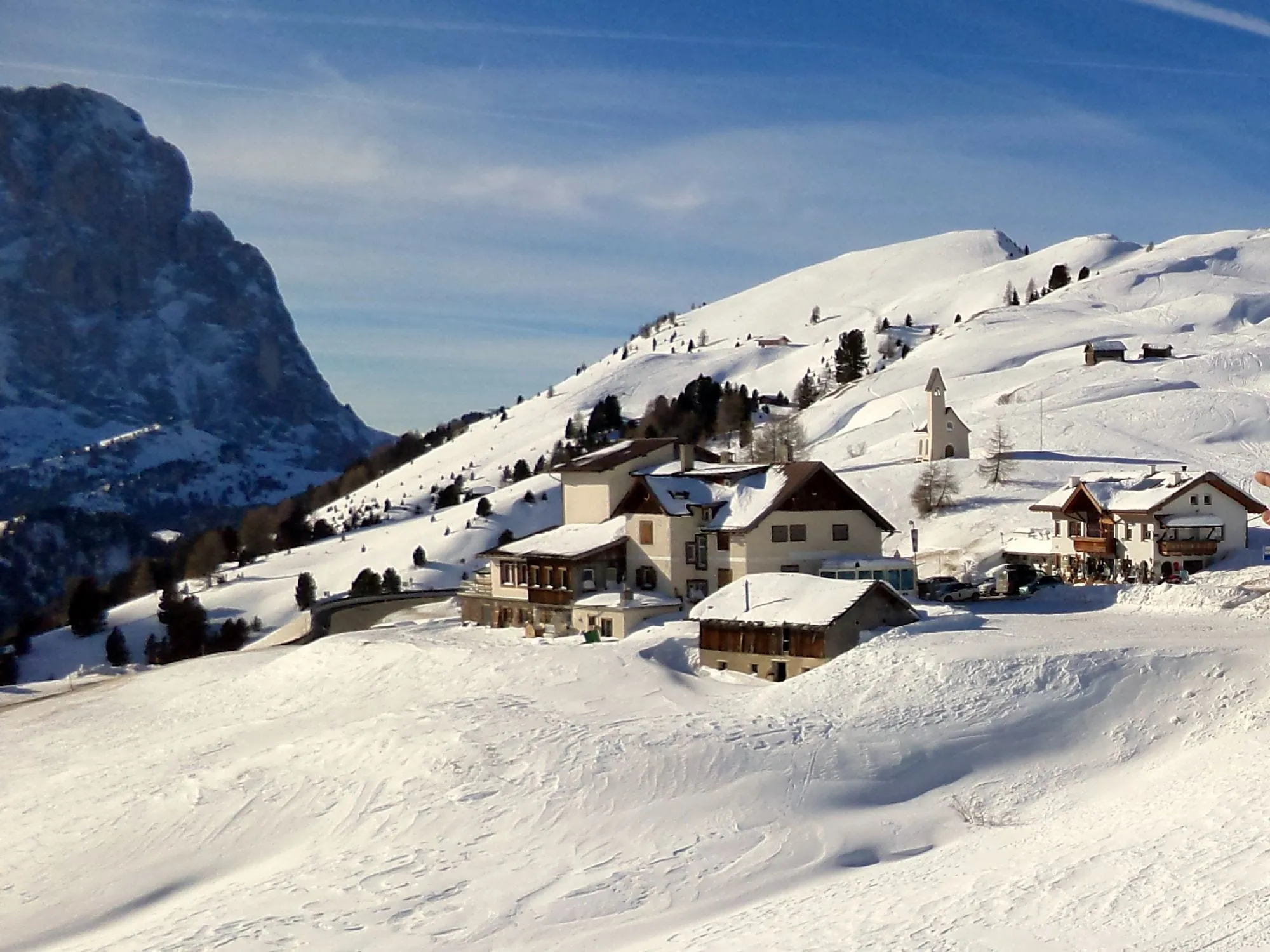
Arabba (“Reba” in Ladin) is a small village at 1,602 m in the Fodom valley, in the Belluno Dolomites. It sits at the foot of the Sella massif, between the Pordoi and Campolongo passes, and faces the Marmolada, whose Punta Penia is the highest peak in the Dolomites.
Skiers know it as the toughest corner of the Sellaronda. Lifts leave from the village in two directions, so you can be on the circuit, on the steep runs below Porta Vescovo or on your way to the Marmolada glacier within minutes of leaving your hotel. It isn’t a big resort, and there’s little in the way of nightlife. People come for the skiing.
Arabba ski area: Porta Vescovo, the Sellaronda and the Marmolada
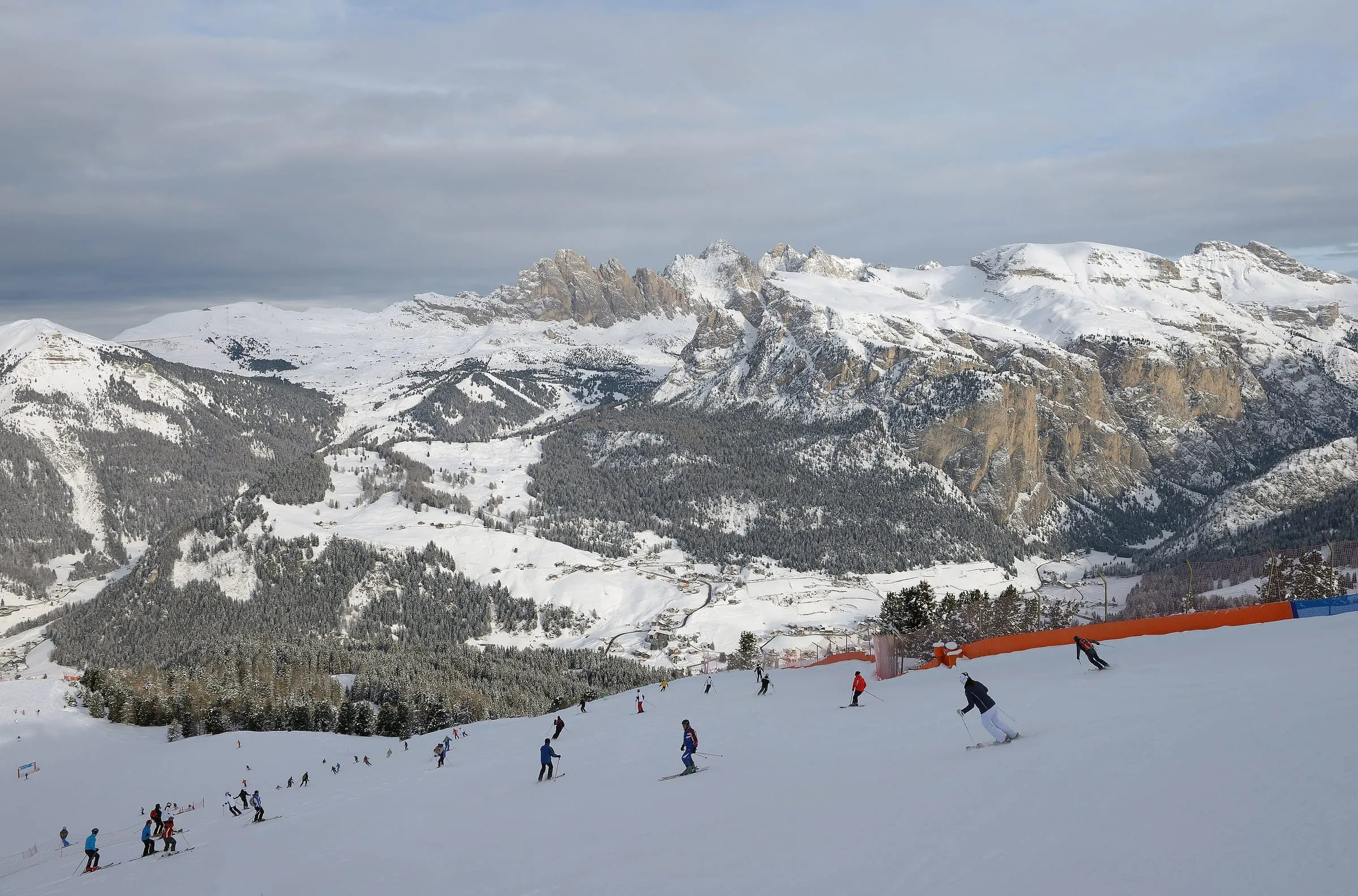
Arabba’s home slopes form the Arabba-Marmolada ski area, number 06 in Dolomiti Superski, with about 62 km of pistes and close to 30 lifts. The tourist office says all of them are within walking distance of the village. The area has three parts:
- Porta Vescovo (2,478 m), reached by the cable car from the village. Its runs face Arabba and the Sella, with the Marmolada behind.
- The Burz side towards the Campolongo Pass, which is part of the Sellaronda and leads on to Alta Badia.
- The Pordoi side, reached by the Fodom gondola. Since 2025/26, the new 10-seater Lezuo–Belvedere gondola has replaced the old Lezuo chairlift, climbing from 2,078 m to 2,418 m.
From Porta Vescovo, runs lead over towards Malga Ciapela and the Marmolada. Beyond that, the Dolomiti Superski pass covers 12 areas and around 1,200 km of pistes, so a week here never runs short.
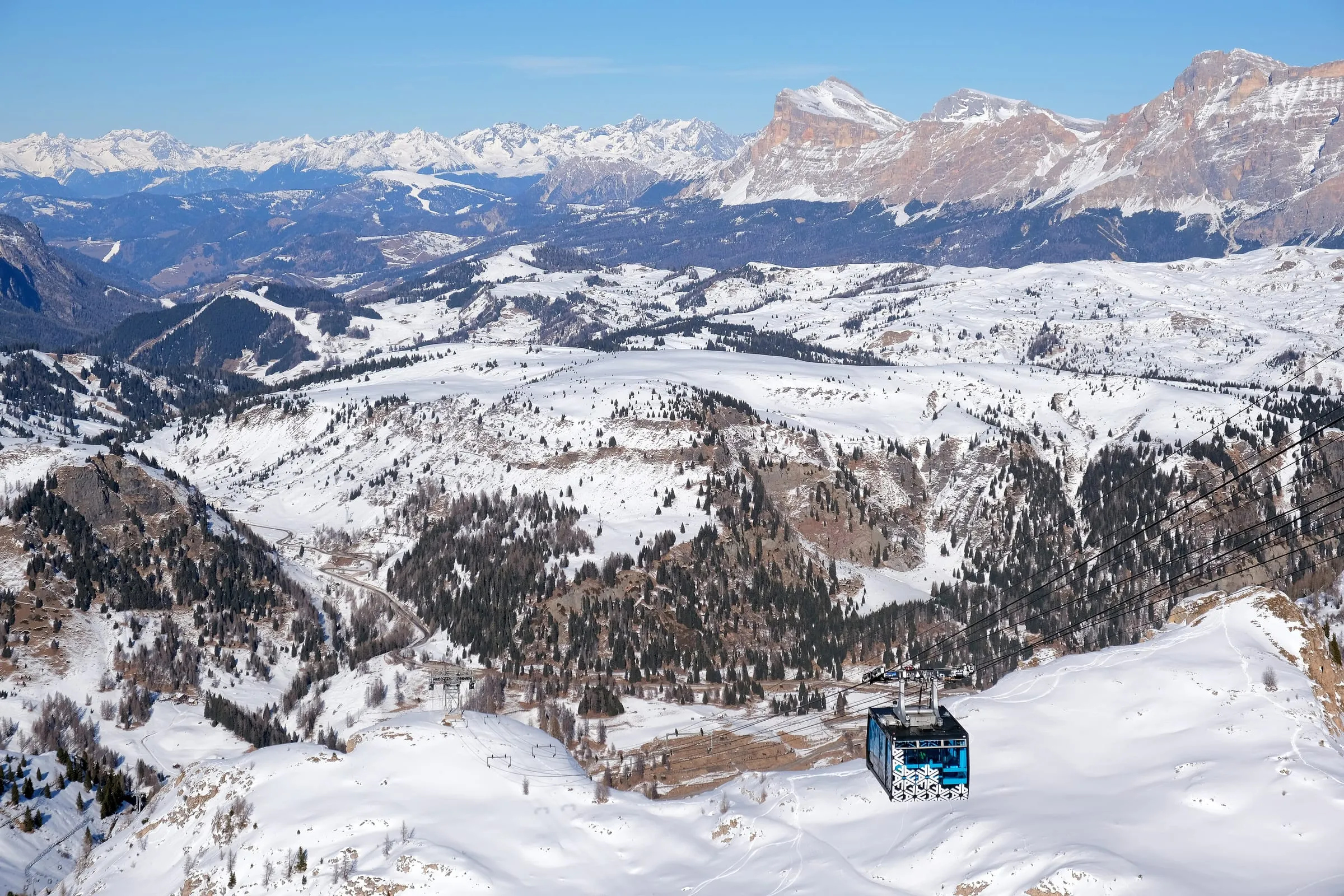
Skiing in Arabba for beginners
Be honest with yourself: Arabba is not a good place to learn. The Ski Club of Great Britain notes that the only nursery area, near the bottom of the Burz chair, is a bit steep. Complete beginners are better off elsewhere on the Sellaronda. Arabba works for families and groups where most people already ski and one or two are improving with lessons.
Skiing in Arabba for intermediates
Confident intermediates will love it. The pistes are usually very well groomed and almost all have snowmaking. From the village you can start the Sellaronda in either direction, and the Ski Club singles out the gentle blues of Pralongia above Alta Badia as a worthwhile detour.
Skiing in Arabba for experts
This is where Arabba stands out. Its local slopes are among the steepest in the Sellaronda area. From Porta Vescovo, an opening mogul wall splits into two long reds, Ornella and Salere, with the black Fodoma alongside. There’s also freeride terrain served by the lifts, but never go off-piste alone. Carry a transceiver, probe and shovel, check the avalanche bulletin, and hire a local mountain guide.
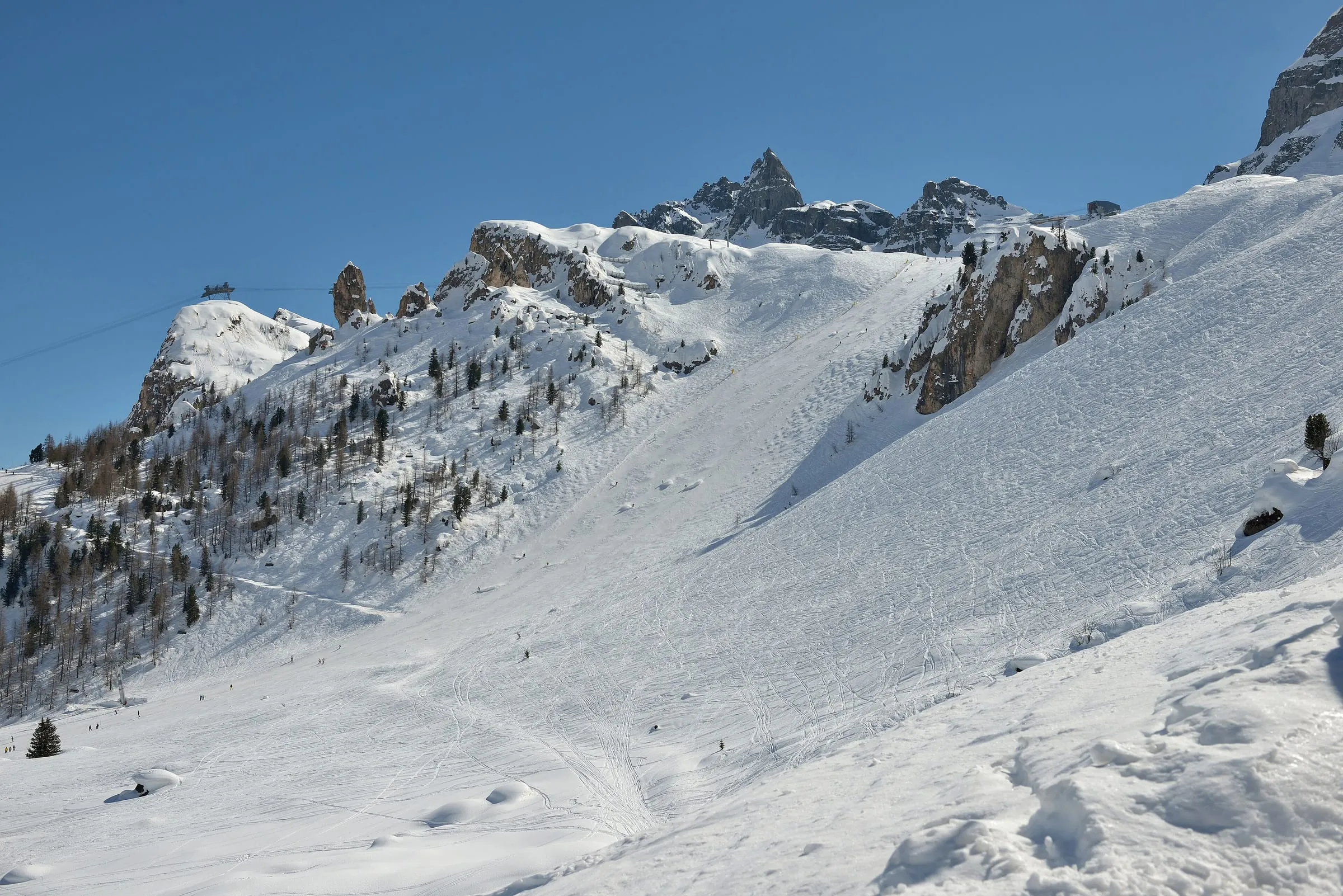
The Marmolada and La Bellunese from Arabba
The Marmolada is the highest glacier in the Dolomites, and skiing it is the highlight of a stay in Arabba. From Porta Vescovo you ski over to Malga Ciapela (1,450 m), where the three-section Marmolada – Move to the Top cable car climbs to Punta Rocca at 3,265 m. On clear days, the tourist board says you can see Venice from the viewing terrace.
From the top, La Bellunese runs for 12 km with more than 1,800 m of descent back to Malga Ciapela. The top is wide and calm, and the lower half is more varied. It isn’t technically hard, but it’s long and high, so save it for a clear day with good legs. Halfway up, the Serauta station houses the Marmolada Great War Museum.
Arabba is also on the Great War ski tour, a roughly 80 km circuit around the Col di Lana that passes First World War trenches and forts.
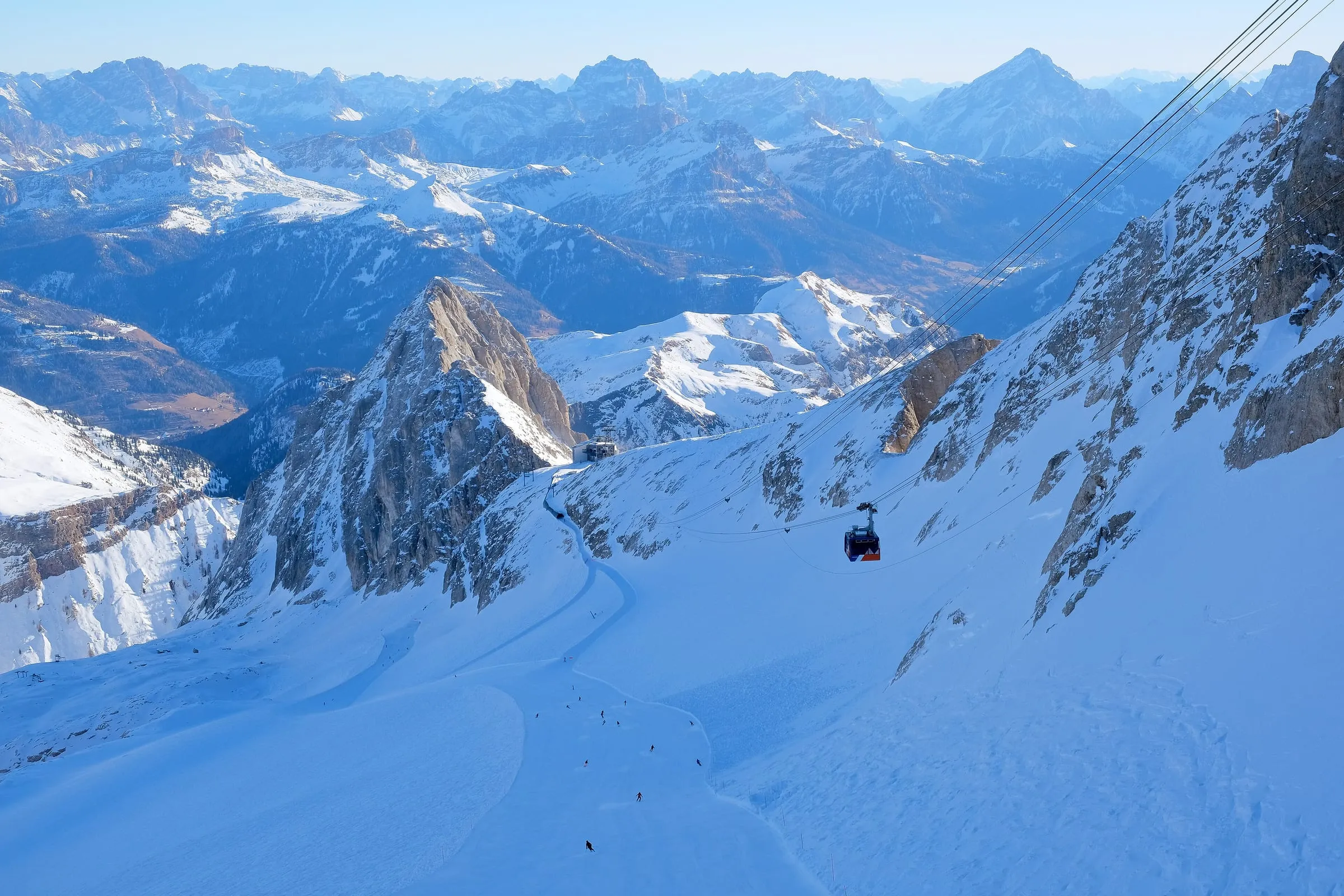
The Sellaronda from Arabba
The Sellaronda circles the Sella massif over the Sella, Pordoi, Campolongo and Gardena passes, linking Arabba with Val di Fassa, Val Gardena and Alta Badia. It’s around 40 km, and you can ski it clockwise or anticlockwise. The tourist office calls Arabba one of the sportiest starting points, with some of the harder sections close to the village.
Start early and check last lift times, especially in the short days of December. For 2026/27, the Sellaronda’s last day is 4 April 2027.
Snow in Arabba and the 2026/27 season
For 2026/27, the Arabba/Marmolada ski area is scheduled to open from 4 December 2026 to 18 April 2027. That’s two weeks longer than the Sellaronda and most of its neighbours, which close on 4 April. Dolomiti Superski passes are valid from 28 November, but Arabba’s own lifts are due to open on 4 December, weather permitting.
The resort’s height helps. The village is at 1,602 m, Porta Vescovo reaches 2,478 m, and the Marmolada tops out at 3,265 m. Snowmaking covers almost all the pistes. Recent investments include a €650,000 upgrade of the snowmaking on the Salere slope and a planned modernisation of the Marmolada’s system from the Fedaia Pass (2,057 m) up to 2,800 m. The Marmolada cable car depends on conditions high up, so check it’s running before you plan your week around it.
Is Arabba good for a last-minute ski trip?
Yes, for good skiers. It’s high, it has extensive snowmaking, and the Marmolada gives it a glacier for late-season skiing. The long season also makes it one of the best Sellaronda bases for April.
The downsides: getting here means driving over mountain passes, which can close without warning in bad weather. It’s a small village with a limited choice of beds, so the best-located hotels go early in peak weeks. And it’s the wrong choice if anyone in your group is a true beginner. If the forecast looks good, find a place to stay in Arabba.
Arabba lift passes
The Dolomiti Superski pass covers Arabba, the Marmolada, the Sellaronda and the other 11 areas. For 2026/27, an adult day pass costs €89 in high season and a 6-day pass €453. A local Arabba-Marmolada valley pass is also sold.
- The Skipass Arabba office is at Via Boè 13. From 1 December 2026 to 4 April 2027 it opens Monday to Friday from 8 am to 12 pm and 3 pm to 6 pm, and from 8 am to 6 pm at weekends.
- You can buy online and collect your pass from pick-up boxes in the area.
- New for 2026/27, the Dolomiti Superski Family pass can be bought online.
- Helmets are compulsory for everyone, adults included, and you need third-party liability insurance.
Après-ski and things to do in Arabba
Arabba is quiet in the evenings. The après is mostly a drink in the sun: Bar Peter’s terrace doubles as the village’s après-ski spot at the end of the day. Many hotels have saunas and wellness areas.
Off the slopes, the tourist office lists snowshoe walks, ski touring, ice climbing and panoramic helicopter flights over the Dolomites. Non-skiers can ride the Marmolada cable car for the view from Punta Rocca and the war museum at Serauta.
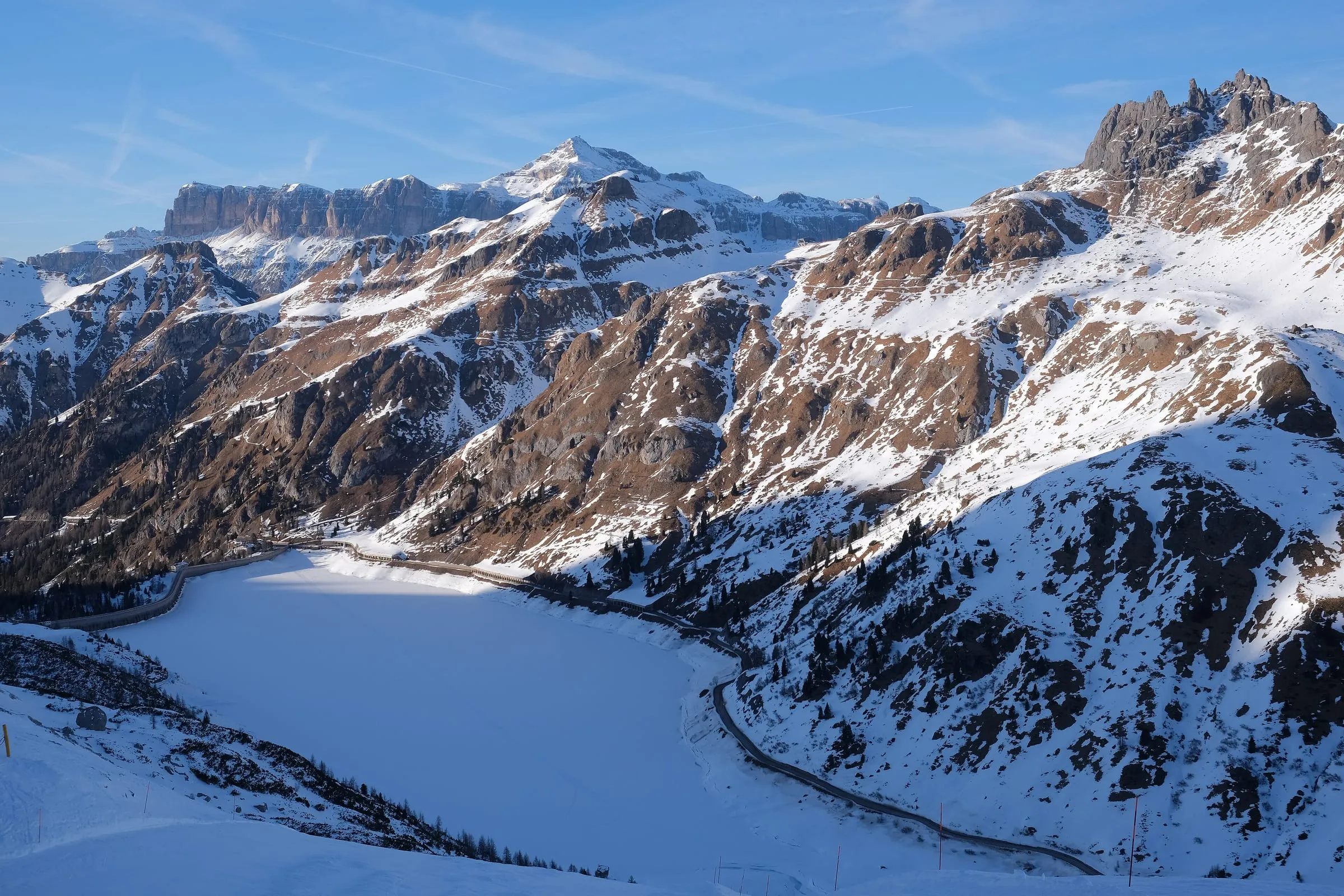
Who Arabba suits, and who it doesn’t
- Great for: strong intermediates and experts, Sellaronda fans, anyone who wants the Marmolada on the doorstep, and late-season skiers.
- Think twice if: you’re a beginner, you want lively nightlife, or you’d rather not drive mountain passes in winter.
Skiing with children? Read our guide to Arabba with kids.
How to get to Arabba
Driving to Arabba
From Venice or Belluno, take the A27 motorway to its end at Belluno, then follow signs for Agordo, Alleghe, Caprile and Arabba. From Bolzano, drive through Val Gardena and join the SS48 to Arabba. From Dobbiaco, go via Cortina and the SS48. From 15 November to 15 April, cars on the Dolomite pass roads must have winter tyres or carry snow chains, and passes can close temporarily in bad weather. The tourist office links to live road information for Veneto, Trentino and South Tyrol.
By train and bus
The nearest stations are Brunico (about 50 km), Belluno (about 70 km) and Bolzano (about 75 km). From there you’ll need a bus connection or a taxi to Arabba.
Nearest airports
Bolzano is about 77 km away, Innsbruck 145 km, Treviso 150 km and Venice 160 km. In winter, the Arabba Transfer shuttle runs from Venice and Treviso airports every Saturday and Sunday from 5 December 2026 to 4 April 2027, and from Bolzano airport on Sundays from 6 December. Book it online in advance.