France
 Austria
 Italy
 Switzerland
 English
 Deutsch
 Nederlands
 Español
 Čeština
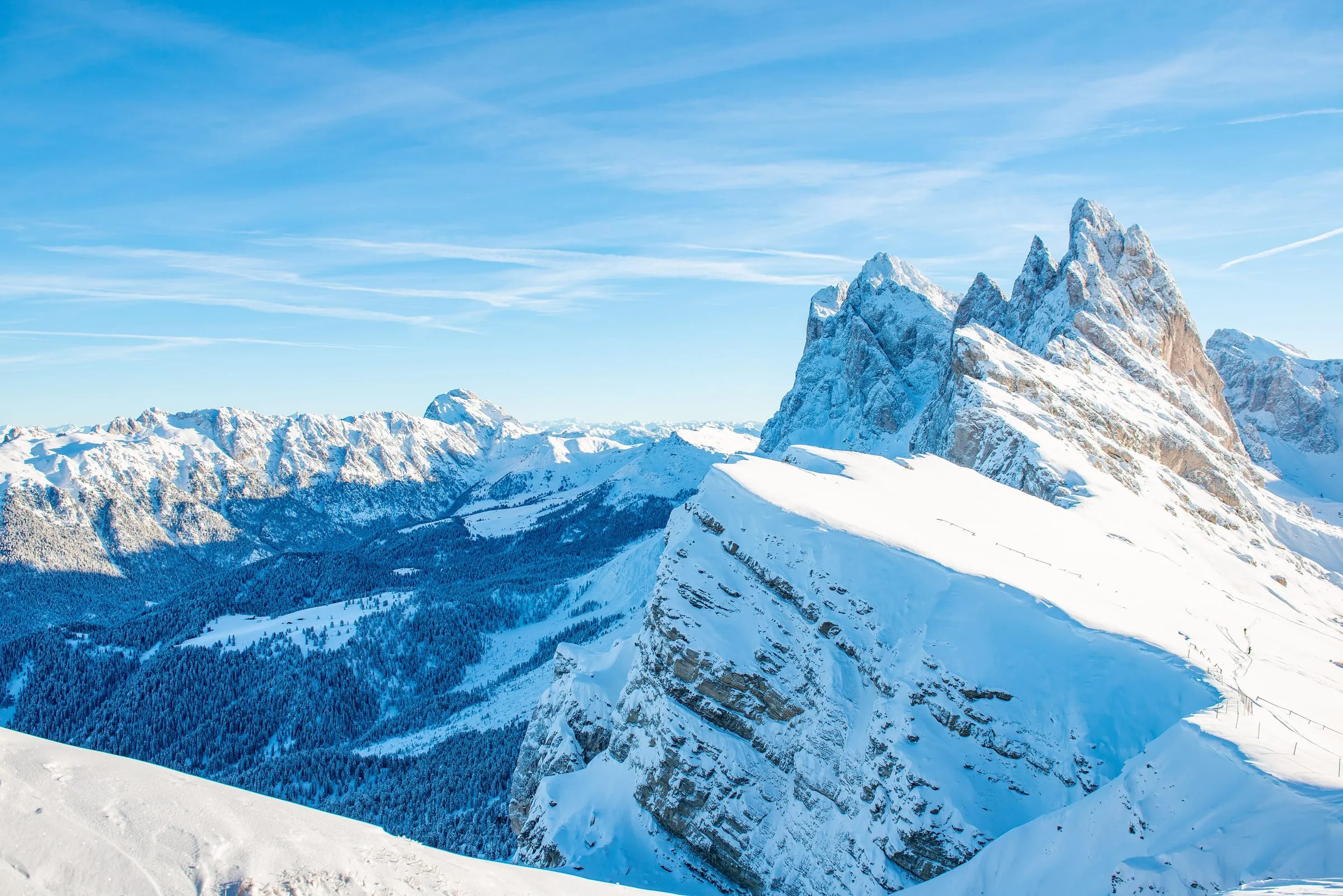
Most people who search for skiing in the Dolomites end up looking at the same map: one pass, a dozen valleys and a famous circuit in the middle. This guide is for anyone trying to work out which of those valleys to actually sleep in. We’ve compared nine resorts on the Dolomiti Superski pass, plus one big neighbour that isn’t on it, by the things that decide a good week: how much you can ski from the door, how steep it is, how high it goes and how quickly you can get there.
Each section names a hotel we’ve reviewed that fits that choice. For the rest of the country, including Cervinia, Livigno and the Vialattea, see the best ski resorts in Italy, and if you’ve already picked a resort, the best ski hotels in Italy.
The best ski resorts in the Dolomites at a glance
| Best for | Resort | Altitude | On the Sellaronda? | Why |
|---|---|---|---|---|
| Keen intermediates | Val Gardena | Villages 1,240 to 1,560 m | Yes | More than 500 km of connected pistes, La Longia and the Saslong |
| Easy skiing and food | Alta Badia | Villages 1,300 to 1,600 m, lifts to 2,800 m | Yes | 74 of its 130 km are blue |
| Experts | Arabba | Village 1,602 m, lifts to 3,265 m | Yes | The steepest local slopes, and the Marmolada |
| Village life on the circuit | Canazei | Village 1,465 m, passes above 2,200 m | Yes | A real village with lifts up to the Belvedere |
| Town and scenery | Cortina d’Ampezzo | Lagazuoi cable car to 2,732 m | No | 2026 Olympic host, 120 km on its local pass |
| Arriving by train | Kronplatz | Valley about 1,000 m, top 2,275 m | No | Step off the train into the gondola at Percha |
| Night skiing | Obereggen | Village 1,550 m, lifts to 2,400 m | No | Floodlit piste twice a week, close to Bolzano |
| A quiet family week | San Martino di Castrozza | Village 1,450 m, lifts to 2,380 m | No | 60 km below the Pale di San Martino |
| A cheaper local pass | Alleghe | Village 1,000 m, lifts to 2,100 m | No | Lakeside gateway to Ski Civetta |
Dolomiti Superski explained: one pass, 12 separate ski areas
The headline figures are about 1,200 km of pistes and 450 lifts, and they’re easy to misread. Dolomiti Superski is a pass, not a ski area. It covers 12 areas: Cortina d’Ampezzo, Kronplatz, Alta Badia, Val Gardena and the Alpe di Siusi, Val di Fassa and Carezza, Arabba and the Marmolada, 3 Zinnen, Val di Fiemme and Obereggen, San Martino di Castrozza and Passo Rolle, Rio Pusteria and Bressanone, Alpe Lusia and San Pellegrino, and Civetta.
Many of those are a drive or a ski bus apart. What you can reach on skis from the Sellaronda valleys is about 500 km, which is still more than most people cover in a week. Kronplatz isn’t linked to the Sellaronda by piste, and Cortina’s own areas aren’t all linked to each other, although the run down from the Lagazuoi lands you at Armentarola in Alta Badia.
So the useful question is how much of the network you’ll actually ski:
- Buy Dolomiti Superski if you want to ski the whole Sellaronda or spend a day or two in another valley. Val Gardena’s own pass, for example, covers around 175 km and 79 lifts, but only as far as the Sella and Gardena passes.
- A local pass can be enough if you’re staying put. Arabba, Val Gardena, Val di Fassa, Val di Fiemme and Obereggen, and Cortina with its Valle pass all sell their own. Alleghe’s Ski Civetta pass and Kronplatz’s local day pass cost less than the full one, which suits beginners and families who won’t leave the home slopes.
- Buy online at least two days ahead for 5% off. Children born from 2019 to 2023 ski free with each adult or senior buying a full-price pass at the same time, one child per adult, and you’ll need ID for them.
The pass season starts on 28 November 2026, but each area opens on its own date. Kronplatz, Val di Fiemme and Obereggen, and San Martino open first, on or around 28 November. Alta Badia, Val Gardena, Val di Fassa and Arabba follow on 4 December. Most areas close on 4 April 2027, Kronplatz on 11 April and Arabba on 18 April. Cortina’s and Civetta’s dates hadn’t been confirmed when we wrote this, so check before booking an early trip.
One big name isn’t included. Madonna di Campiglio sits in the Brenta Dolomites with 155 km linked to Pinzolo and Folgarida-Marilleva, on its own pass and in the Skirama network. It’s a good resort, but it’s a different trip, with hotels of its own.
Best base for the Sellaronda: Val Gardena, Alta Badia, Arabba or Canazei
The Sellaronda circles the Sella massif over four passes, linking those four valleys. It measures 40 to 44 km depending on how it’s counted, and about half of that is on lifts. Orange signs lead clockwise and green signs anticlockwise. Skiing and lifts take about four to four and a half hours, so leave by 10 am to allow for lunch and be home before the lifts close.
It’s rated for skiers of average ability, so any of these four bases will work. They differ in what you’ll do on the other days.
Selva, Val Gardena: the best all-round Sellaronda base
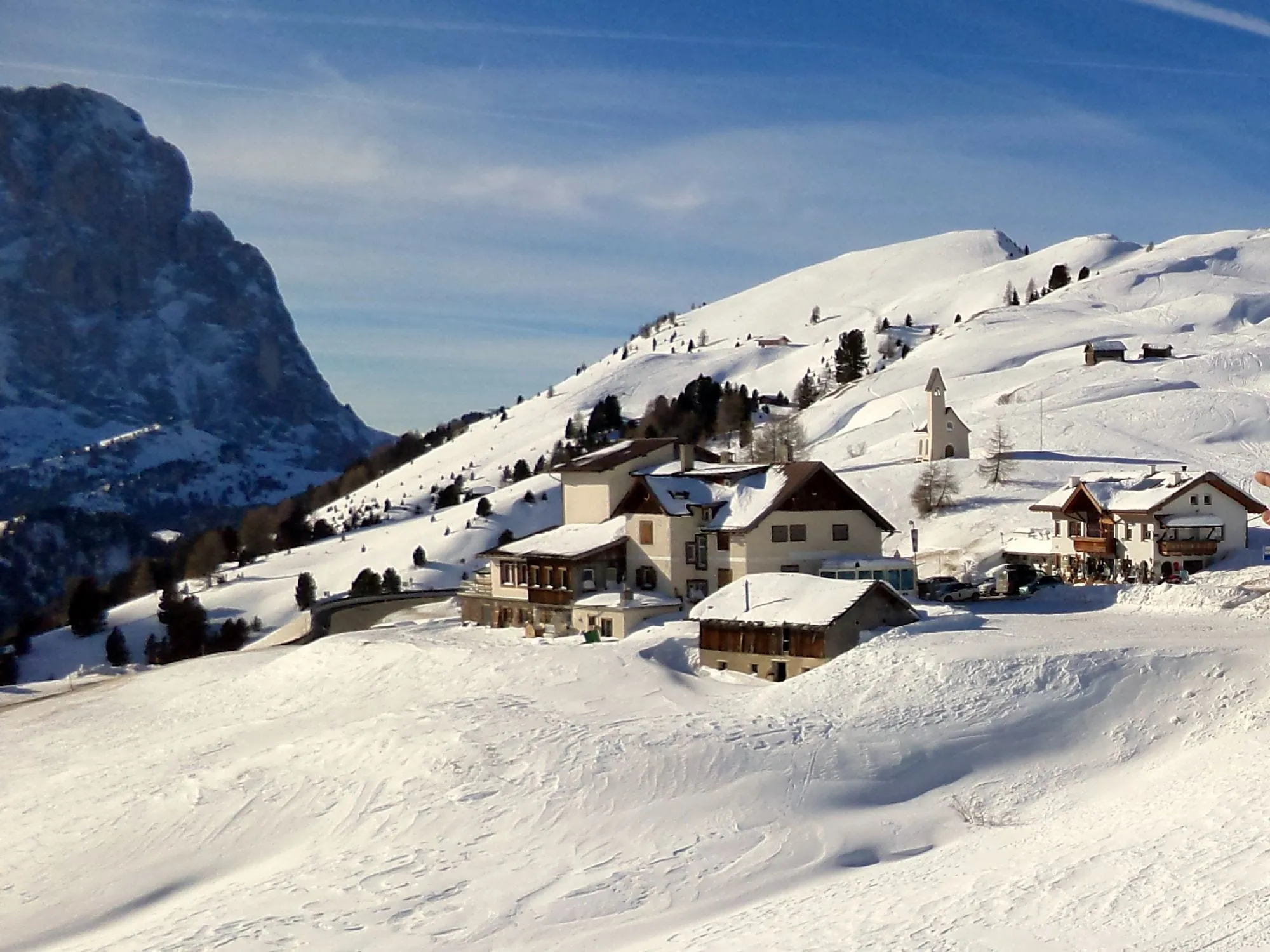
Val Gardena is the choice for keen intermediates who want variety. Selva is the classic start for the circuit, and off it you’ve got La Longia, 10 km from Seceda down to Ortisei, and the Saslong World Cup piste. More than 60 huts serve food on and around the slopes. Ortisei is the bigger village and the better one for evenings, while Selva is better for skiing.
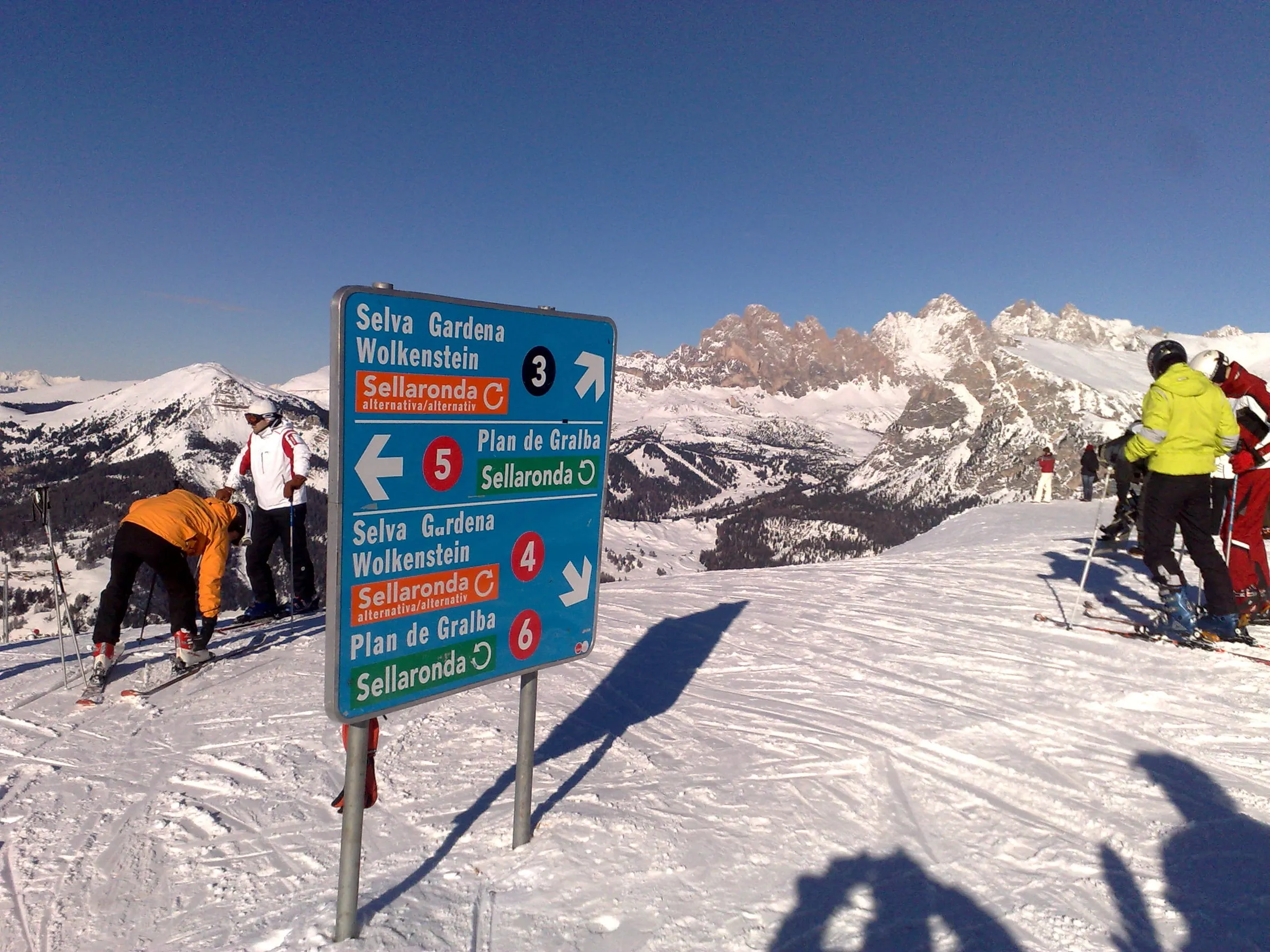
Our Selva pick is right on the Sellaronda slopes, and works especially well if some of the group are still learning. For a more grown-up stay, Granvara is a ski-in/ski-out five-star spa hotel, and there are more options under where to stay in Val Gardena.
Corvara, Alta Badia: the best Dolomites resort for easy skiing and food
Alta Badia is the gentlest of the four. Of its 130 km, 74 km are blue, 47 km red and only 9 km black, and the plateau at Pralongia is ideal for relaxed cruising. It’s also the serious food option, with Michelin-starred restaurants and huts serving Ladin dishes. Experts will run out of challenges quickly, though the Gran Risa World Cup slope at La Villa is worth a morning.
Hotel La Perla in Corvara is ski-in/ski-out by the gondola, with a Michelin-starred restaurant. Hotel Armentarola is the characterful alternative near the end of the Lagazuoi run. See where to stay in Alta Badia.
Arabba: the best Dolomites resort for experts and the Marmolada
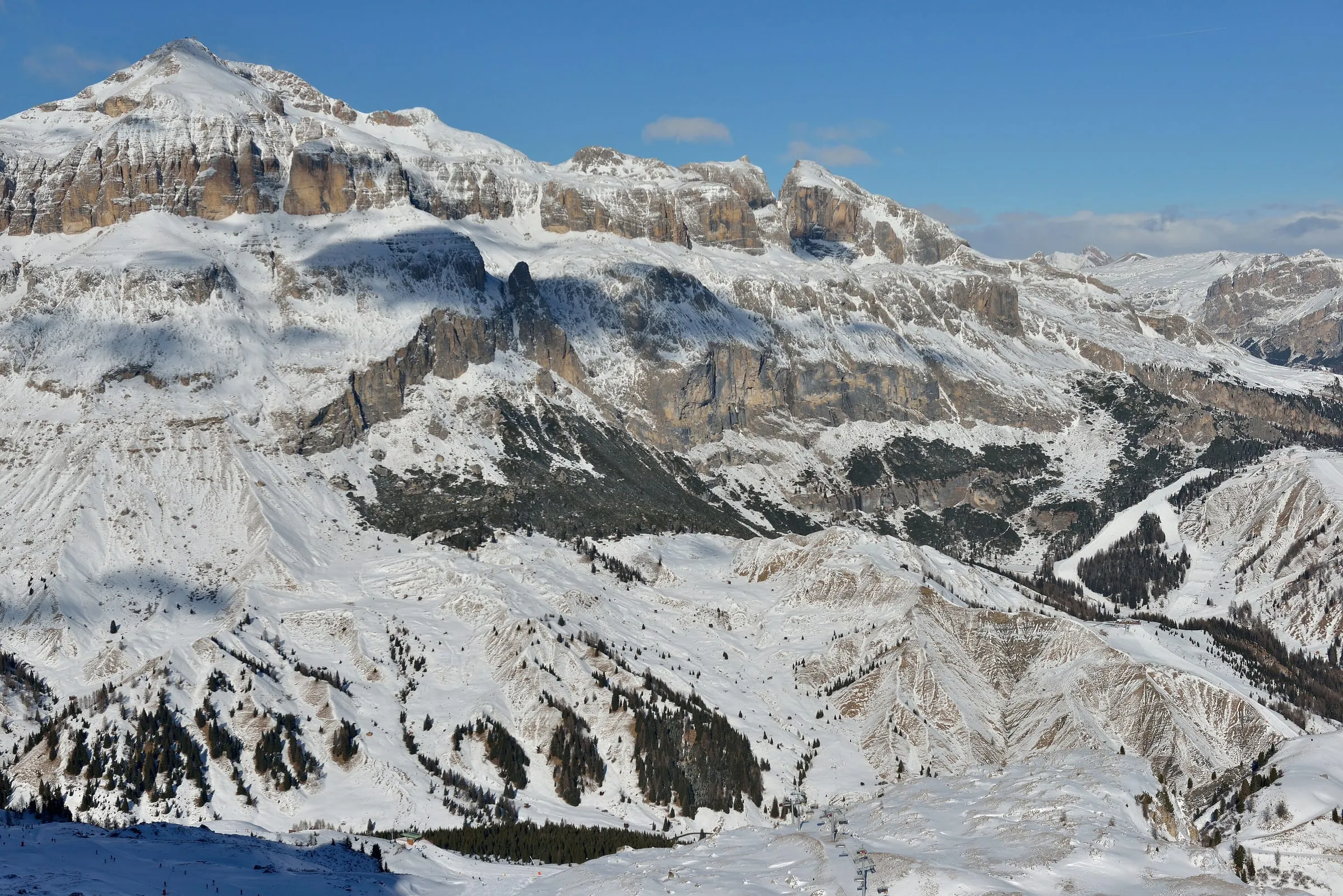
Arabba is small and has little nightlife, and that doesn’t matter to the people who choose it. Its local slopes are among the steepest on the Sellaronda, with the reds Ornella and Salere and the black Fodoma below Porta Vescovo. From there you can ski across to Malga Ciapela and ride the cable car up the Marmolada to Punta Rocca at 3,265 m, the start of La Bellunese, a 12 km run with about 1,800 m of descent.
It’s also the one Sellaronda village that stays open to 18 April. It isn’t a place to learn, as the only nursery slope is on the steep side.
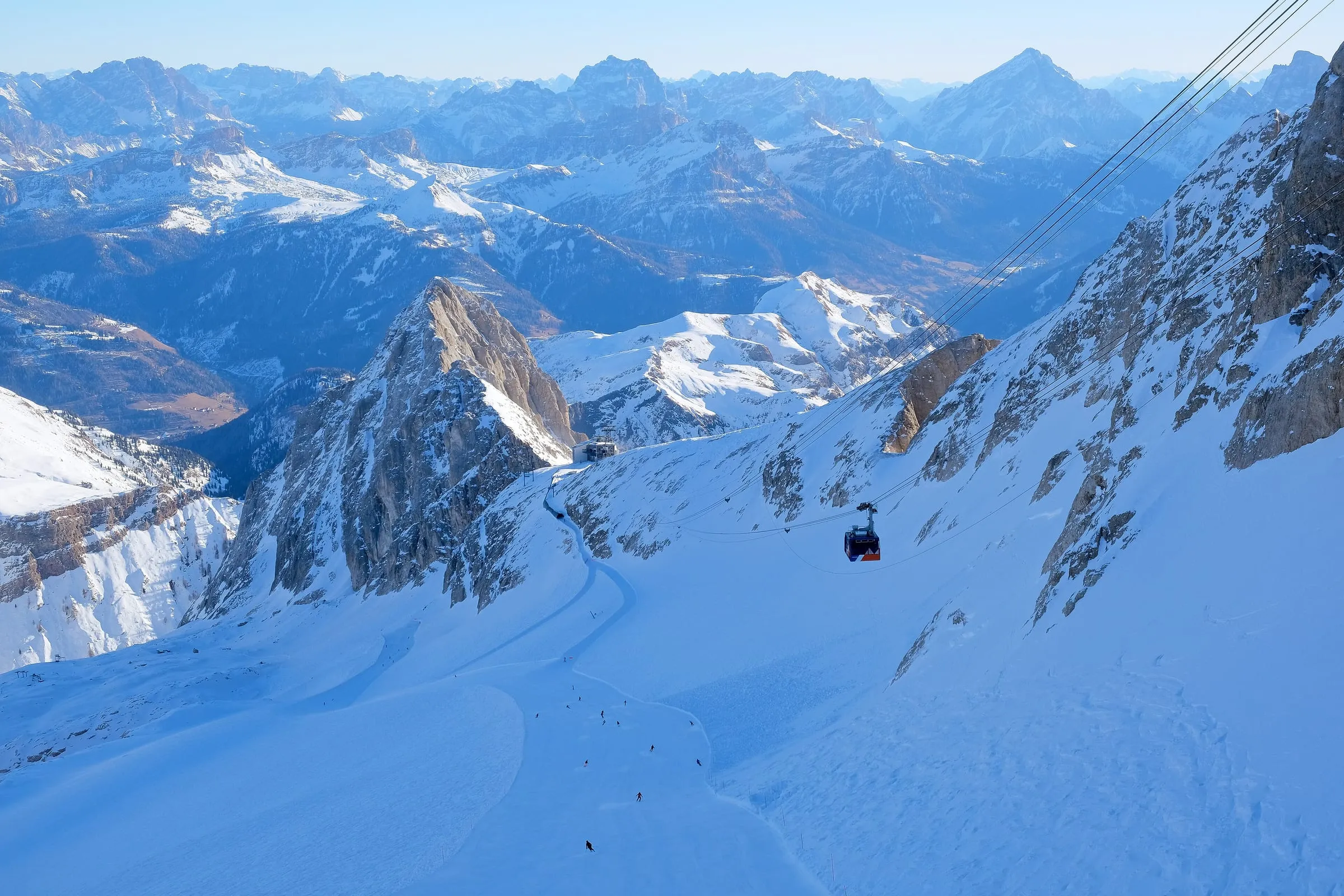
Sporthotel Arabba has direct access to the Burz piste and a cellar of more than 700 wines. If you’d rather be on the piste with children, Hotel Alpenrose has a kids’ club, Hotel Mesdì is opposite the Burz chairlift, and Hotel Boè is up on the Campolongo Pass at 1,875 m. All five of our picks are under where to stay in Arabba.
Canazei and Campitello: the best Sellaronda base for village life
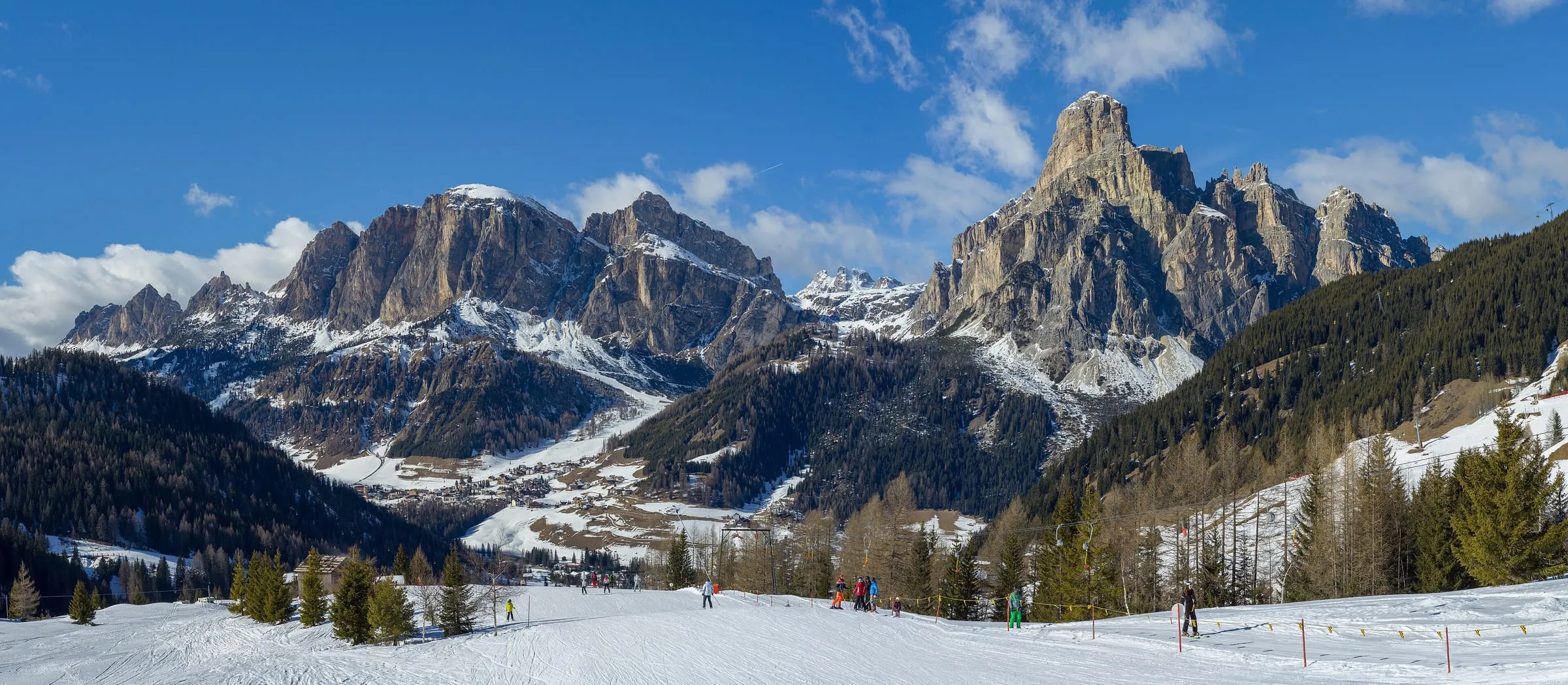
Canazei is a proper village at 1,465 m with a busy main street, and lifts from Canazei and neighbouring Campitello climb to the Belvedere and Col Rodella. The runs here are mostly red. Its passes sit above 2,200 m and the views take in the Sassolungo and the Marmolada. Beginners have a village training area and gentler slopes up on the Belvedere.
Hotel Medil is about 200 m from the Col Rodella cable car in Campitello. For more, see where to stay in Canazei.
Best Dolomites ski resorts for families and beginners
For children and first-timers, the choice comes down to finding gentle slopes away from the Sellaronda traffic. In Val Gardena that means Monte Pana and the Alpe di Siusi, both known for easy slopes. Alta Badia with kids has dedicated beginners’ areas and kids’ parks in several villages, and Movi Family is a strong apartment option with a full kids’ programme.
Hotel Monte Pana is on the practice slopes above Santa Cristina, with the ski school desk inside the hotel. It’s a quiet place in the evening, which suits most young families.
Kronplatz with kids is the other strong option. Almost half its pistes are blue, and a new beginner run, Dolomiti, opens above Olang this season. Hotel Fameli in Olang has a Kids Area staffed from age 2, and a free morning shuttle to the lifts.
Our guides to the best family ski resorts in Europe and the best ski resorts for beginners compare these with resorts elsewhere in the Alps.
Cortina d’Ampezzo or the Sellaronda?
Cortina d’Ampezzo is the choice if the town matters as much as the skiing. It’s a real town with a pedestrian main street, Corso Italia, and it co-hosted the 2026 Winter Olympics, with the alpine races on the Olympia delle Tofane. Its 66 pistes and 26 lifts are split between the Tofana, Faloria and Cristallo, Cinque Torri and Col Gallina, and the Lagazuoi, and you’ll use the ski bus or a car to move between them. The Valle pass brings in San Vito di Cadore and Auronzo-Misurina for 120 km in all.
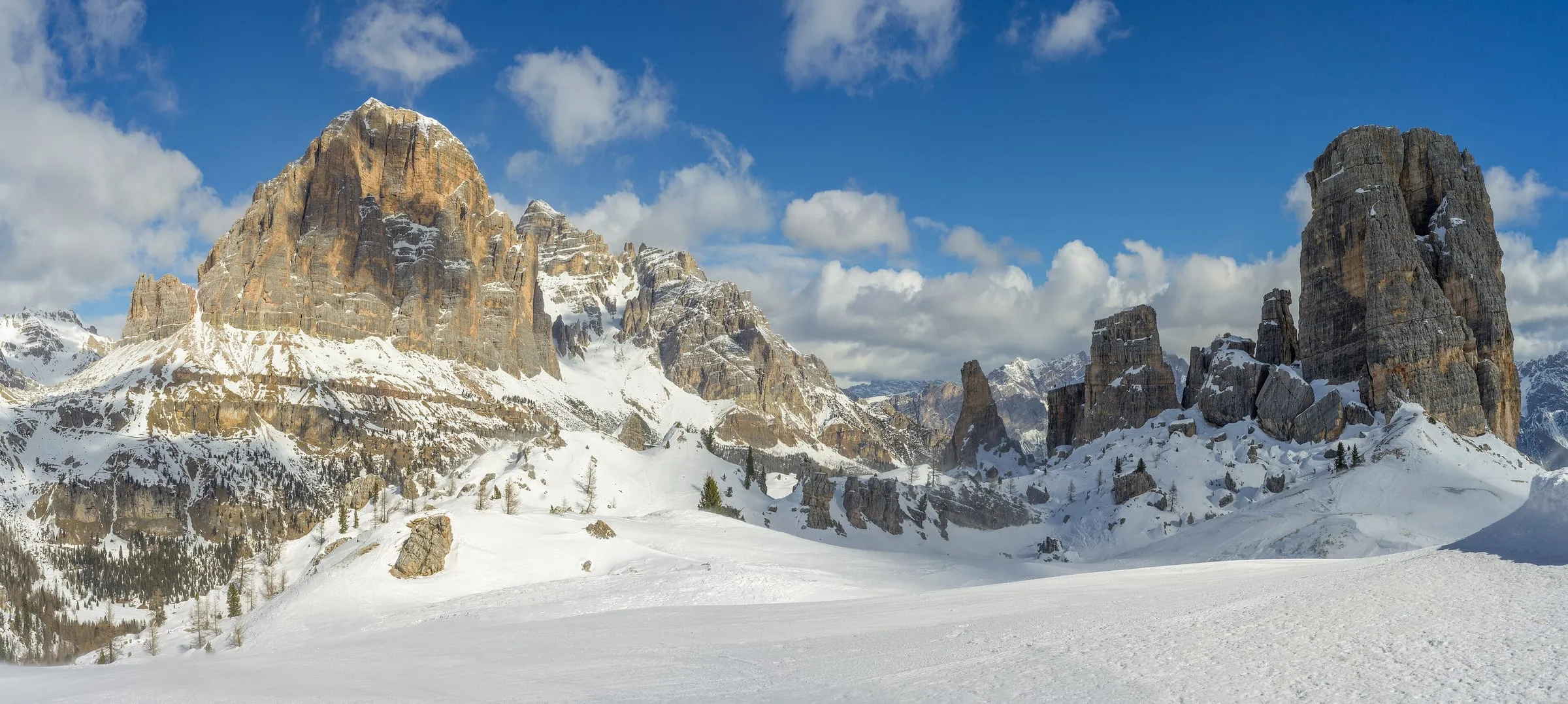
Choose the Sellaronda if you want to ski from the door every day. Choose Cortina for restaurants, shops and scenery, and for the easy route in from Venice. Hotel Villa Argentina at Pocol is the rare Cortina hotel where you can ski from the door, 5 km from the centre. More choices are under where to stay in Cortina.
Kronplatz: the best Dolomites resort without a car
Kronplatz is one rounded summit at 2,275 m with lifts coming up from four valley bases. At Percha you step off the train and into the gondola. It has about 125 km of pistes, and the Black Five runs are long and steep enough to keep good skiers busy, including Sylvester and Herrnegg at nearly 8 km each. Three new lifts open this season. The catch is altitude: the valley stations are around 1,000 m, so the long runs home are the first to suffer in a mild spell. See where to stay at Kronplatz.
Smaller Dolomites resorts: Obereggen, San Martino di Castrozza and Alleghe
These three are for people who’d rather ski a small area well and avoid the Sellaronda crowds.
- Obereggen is close to Bolzano and is part of Ski Center Latemar, with 48 km of mostly red pistes up to 2,400 m. It opens on 27 November and has floodlit skiing on Tuesdays and Fridays from 7 to 10 pm.
- San Martino di Castrozza sits below the Pale di San Martino with about 60 km of pistes, a beginner area at Prà delle Nasse and lifts within walking distance of the village. Passo Rolle, 9 km up the road, needs a ski bus for now.
- Alleghe is on a lake below the Civetta, with 72 km of pistes on Ski Civetta, three nursery slopes at Piani di Pezzè and about 98% snowmaking. It’s low, at about 1,000 m, so watch the forecast. Its 7 km Gran Zuita is best skied in the morning.
Where to ski in the Dolomites right now: snow, altitude and last-minute trips
About 97% of Dolomiti Superski’s pistes have snowmaking, so the groomed runs are usually in good shape even after a dry spell. Natural snow is less certain, and many villages here sit lower than the big Alpine resorts. If the forecast is warm, favour height: Arabba and the Marmolada first, then the passes above Canazei and the upper slopes at Obereggen and San Martino. If it’s cold with fresh snow, Kronplatz and Alleghe are easy short-notice choices. Early December and late March are when to check how much of the Sellaronda is actually running. Check the snow and open lifts on each resort’s page, and see the most snow-sure resorts in Europe if nothing here looks good.
The quickest routes in:
- Val Gardena and Canazei: Bolzano airport is about 40 km away.
- Cortina: daily buses from Venice airport and Venice-Mestre.
- Arabba: the Arabba Transfer shuttle runs from Venice and Treviso airports on Saturdays and Sundays from 5 December to 4 April.
- Kronplatz: the train to Percha or Bruneck.
- Obereggen: the train to Bolzano, then a regular bus up the Eggental.
Three rules apply on every trip. Helmets are compulsory for all skiers, everyone needs third-party liability insurance, and on roads under a winter ordinance you need winter tyres or chains on board, normally from 15 November to 15 April. The roads over the passes can close or need chains in a storm, so don’t rely on crossing one on arrival day.
Small family-run hotels fill first at Christmas, New Year, February and Easter, and the Saslong and Gran Risa World Cup races bring crowds to Val Gardena and Alta Badia from 18 to 21 December. Early December, January and late March are the easiest times to find a room at short notice. Use the button on each hotel to check live availability on Booking.com, and read how to book a last-minute ski trip for more. For a wider comparison, the biggest ski areas in Europe puts the Sellaronda against the rest of the Alps.