France
 Austria
 Italy
 Switzerland
 English
 Deutsch
 Nederlands
 Español
 Čeština
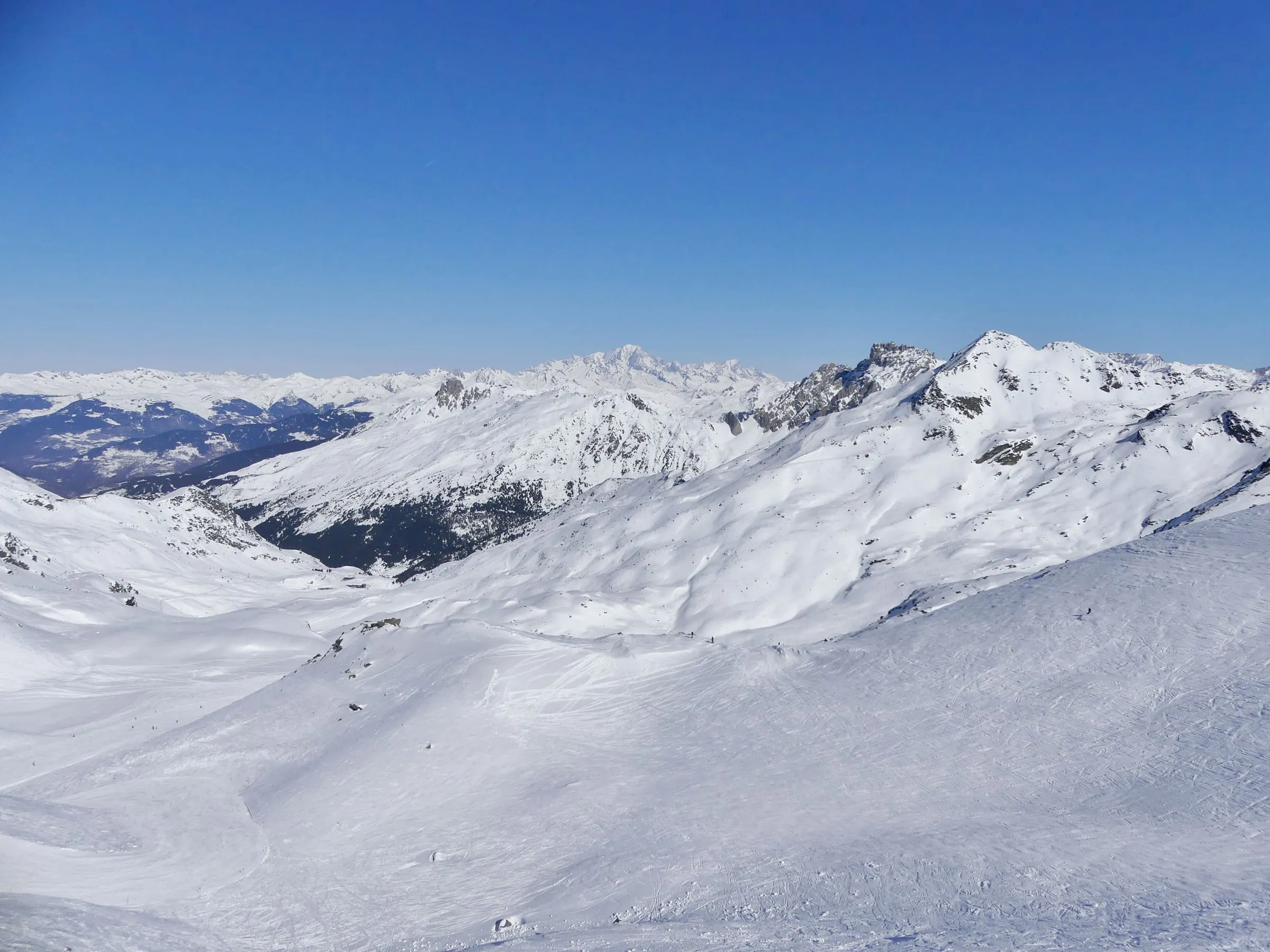
This guide is for skiers who want mileage: groups who’ll split up and meet for lunch two valleys away, intermediates who get bored of the same runs, and anyone who wants a big area as insurance, because a modest snowfall still leaves plenty to ski. We’ve compared Europe’s largest linked ski areas using the piste and lift figures on each resort’s own guide on this site, then picked the base villages and one hotel for each.
A word on the numbers. Ski areas measure their pistes differently, and some quote the whole pass while others quote what you can ski without a bus. Where our resort pages give different figures for the same area, we say so. Treat any km figure as a guide to scale, not a league table.
For a last-minute trip, size isn’t everything. Check the snow and the altitude first, then look at live availability on Booking.com close to the lift that links you into the wider area, because that’s what makes a big area feel big.
The biggest ski areas in Europe compared
All figures are for the whole linked area, as stated on our resort pages, not for one village’s own slopes.
| Ski area | Country | Pistes | Lifts | Top lift | Best bases |
|---|---|---|---|---|---|
| Dolomiti Superski (Sella Ronda) | Italy | About 1,200 km on the pass, 500+ km linked on skis | About 450 | 3,265 m (Marmolada) | Val Gardena, Alta Badia, Arabba, Canazei |
| Les 3 Vallées | France | About 600 km | 156 | 3,230 m | Méribel, Val Thorens, Courchevel, Les Menuires |
| Portes du Soleil | France, Switzerland | About 600 km | 209 (208 on the Champéry page) | Not stated | Avoriaz, Morzine, Les Gets, Châtel, Champéry |
| Paradiski | France | About 425 km | 129 | 3,226 m | La Plagne, Les Arcs |
| 4 Vallées | Switzerland | 410 km | Not stated | 3,330 m | Verbier, Nendaz |
| Via Lattea | Italy, France | 400 km | 69 to 74, by page | 2,800 m | Sestriere, Sauze d’Oulx, Montgenèvre |
| Evasion Mont-Blanc | France | Over 400 km | About 110 | 2,353 m | Megève, Saint-Gervais |
| Matterhorn Ski Paradise | Switzerland, Italy | Up to 360 km | Not stated | 3,883 m | Zermatt, Breuil-Cervinia |
| Ski Arlberg | Austria | 300+ km | 85 | 2,811 m | St. Anton, Lech Zürs, Warth-Schröcken |
| Tignes – Val d’Isère | France | About 300 km | 71 | 3,456 m | Tignes, Val d’Isère |
| SkiWelt Wilder Kaiser–Brixental | Austria | 275 km | 81 | 1,892 m | Ellmau, Söll, Westendorf |
| Skicircus Saalbach Hinterglemm Leogang Fieberbrunn | Austria | 270 km | 70 | 2,096 m | Saalbach Hinterglemm, Fieberbrunn |
| Grand Massif | France | 265 km | 62 (about 60 on the Flaine page) | 2,500 m | Flaine, Samoëns, Les Carroz |
| Silvretta Arena Ischgl/Samnaun | Austria, Switzerland | 239 km | 46 | 2,872 m | Ischgl, Samnaun |
| KitzSki | Austria | 233 km | 58 | Not stated | Kitzbühel, Kirchberg |
| Arosa Lenzerheide | Switzerland | 225 km | 43 | 2,865 m | Lenzerheide, Arosa |
| Grandvalira | Andorra | 215 km | 74 | About 2,500 to 2,600 m | Soldeu, El Tarter, Pas de la Casa |
| Ski- & Gletscherwelt Zillertal 3000 | Austria | 206 km | 65 | 3,250 m | Mayrhofen, Hintertux |
| Monterosa Ski | Italy | More than 100 km | Not stated | 3,275 m | Champoluc, Gressoney, Alagna |
Biggest ski pass in Europe: Dolomiti Superski and the Sella Ronda
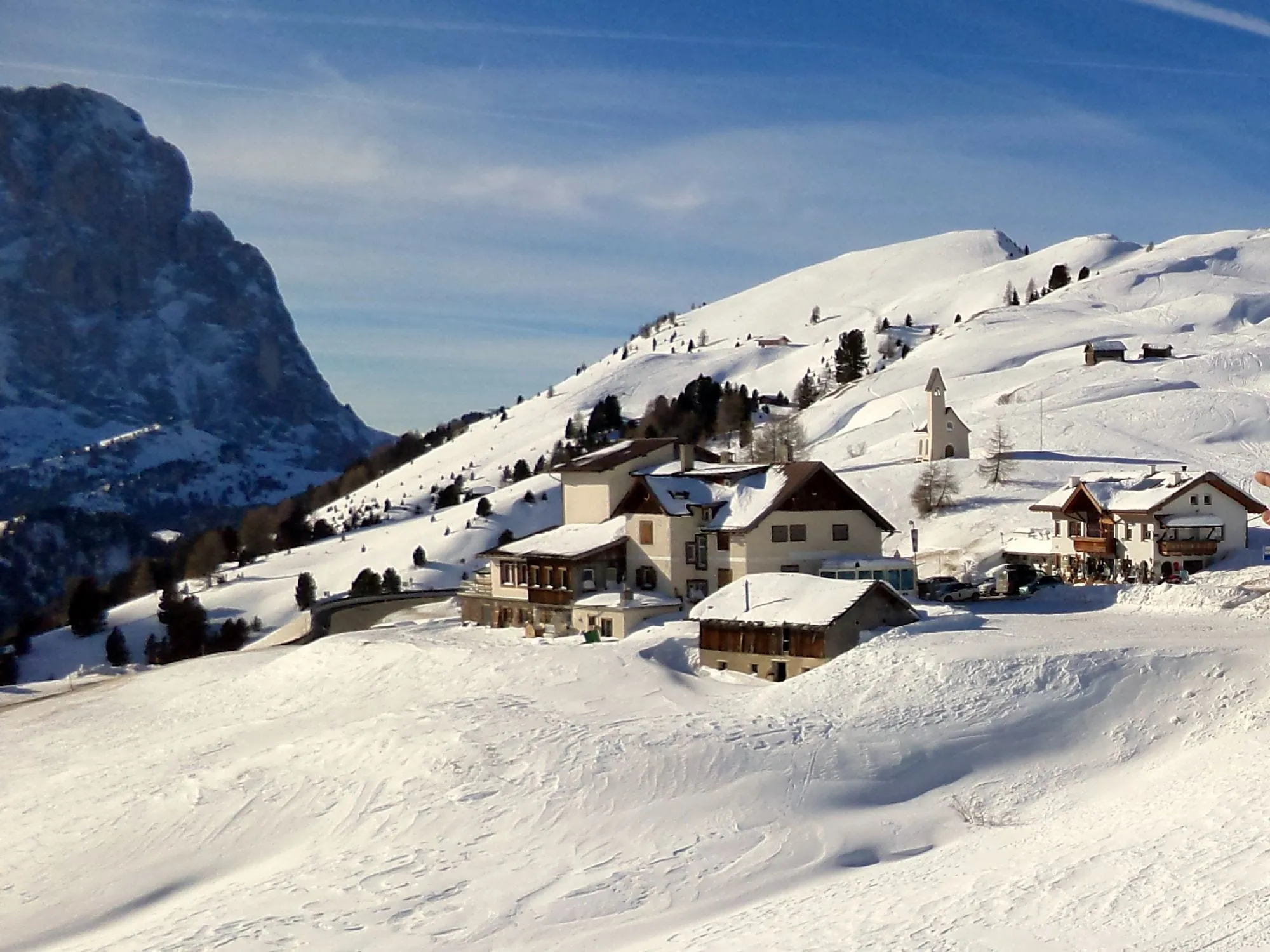
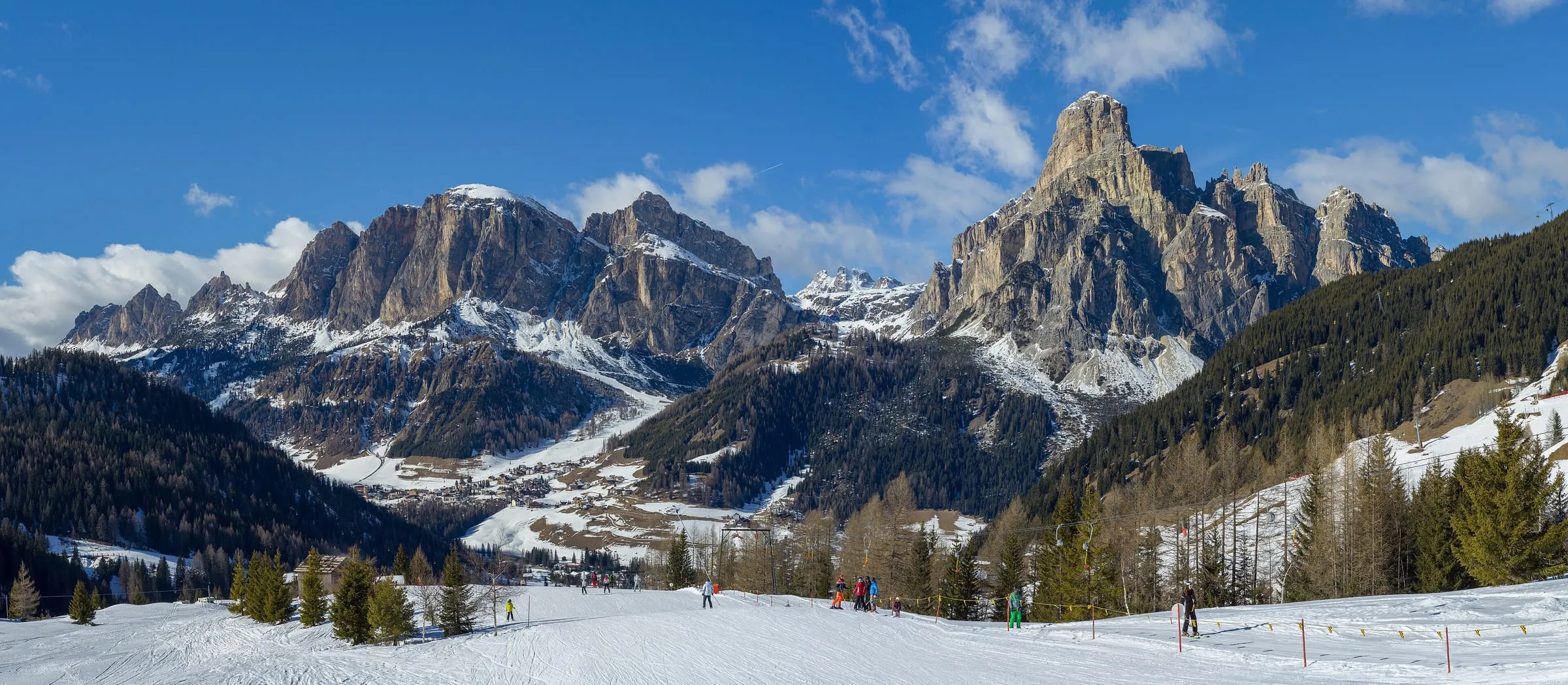
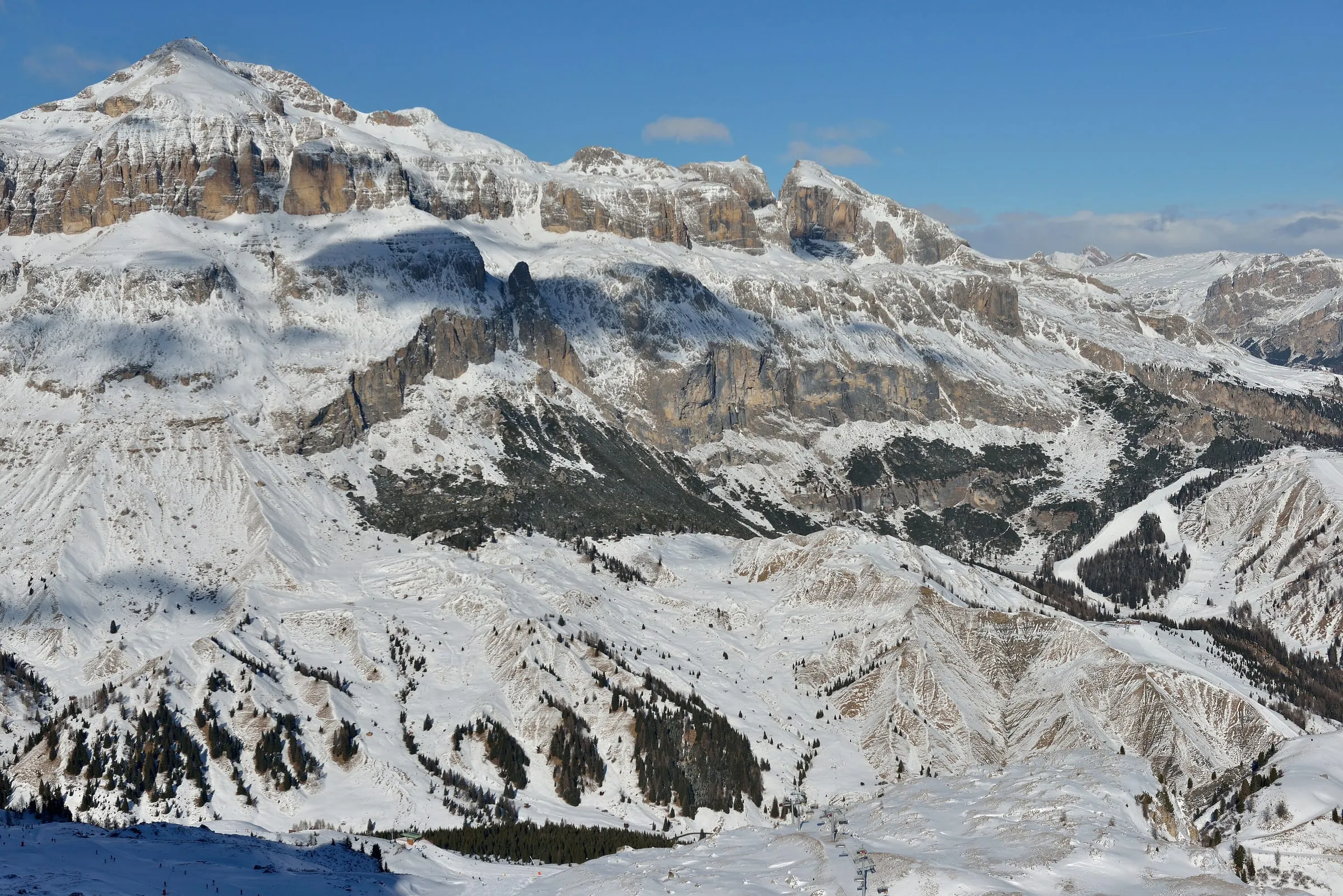
Dolomiti Superski is the biggest ski pass in Europe on our pages: one pass for 12 ski areas, about 450 lifts and 1,200 km of pistes. Be clear about what that means. The 1,200 km is the whole network, and much of it is a drive or bus ride away. What you can actually ski from village to village is the area around the Sellaronda, the circuit round the Sella massif, which the Val Gardena tourist office puts at more than 500 km of connected pistes. That alone puts it at the top of this list.
The circuit itself is about 40 km, roughly half of it on lifts, through Val di Fassa, Val Gardena, Alta Badia and Arabba. It’s rated for skiers of average ability: follow the orange signs clockwise or the green signs anticlockwise, and start by 10 am.
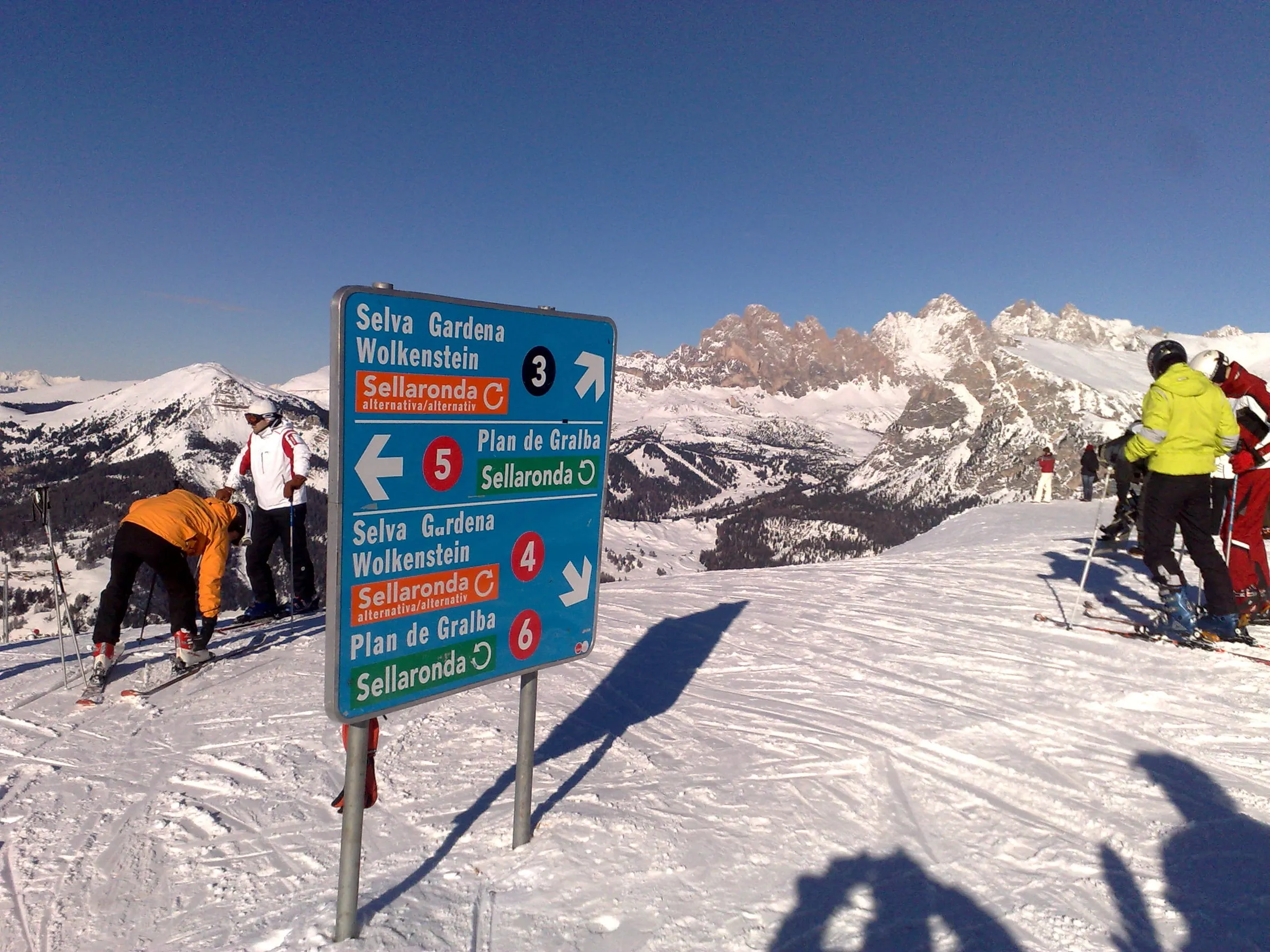
Which valley to pick depends on who’s going:
- Alta Badia for families, easy cruising and food. Of its 130 km, 74 km are blue and only 9 km black.
- Val Gardena for intermediates and mixed groups, with gentle Monte Pana and the Saslong World Cup run in one valley.
- Arabba for strong skiers. Its slopes are among the steepest on the Sellaronda, and the Marmolada glacier is close.
- Canazei for red-run intermediates on the Val di Fassa side.
The Val Gardena and Alta Badia lifts are scheduled to run from 4 December 2026 to 4 April 2027. Compare where to stay in Alta Badia and hotels in Val Gardena.
Biggest linked ski area in France: Les 3 Vallées
Les 3 Vallées links Courchevel, Méribel, Les Menuires and Val Thorens: about 600 km of slopes and 156 lifts. Unlike the Dolomites, it’s all one network on skis, and it’s high. That’s its edge over the Portes du Soleil, which is the same length.
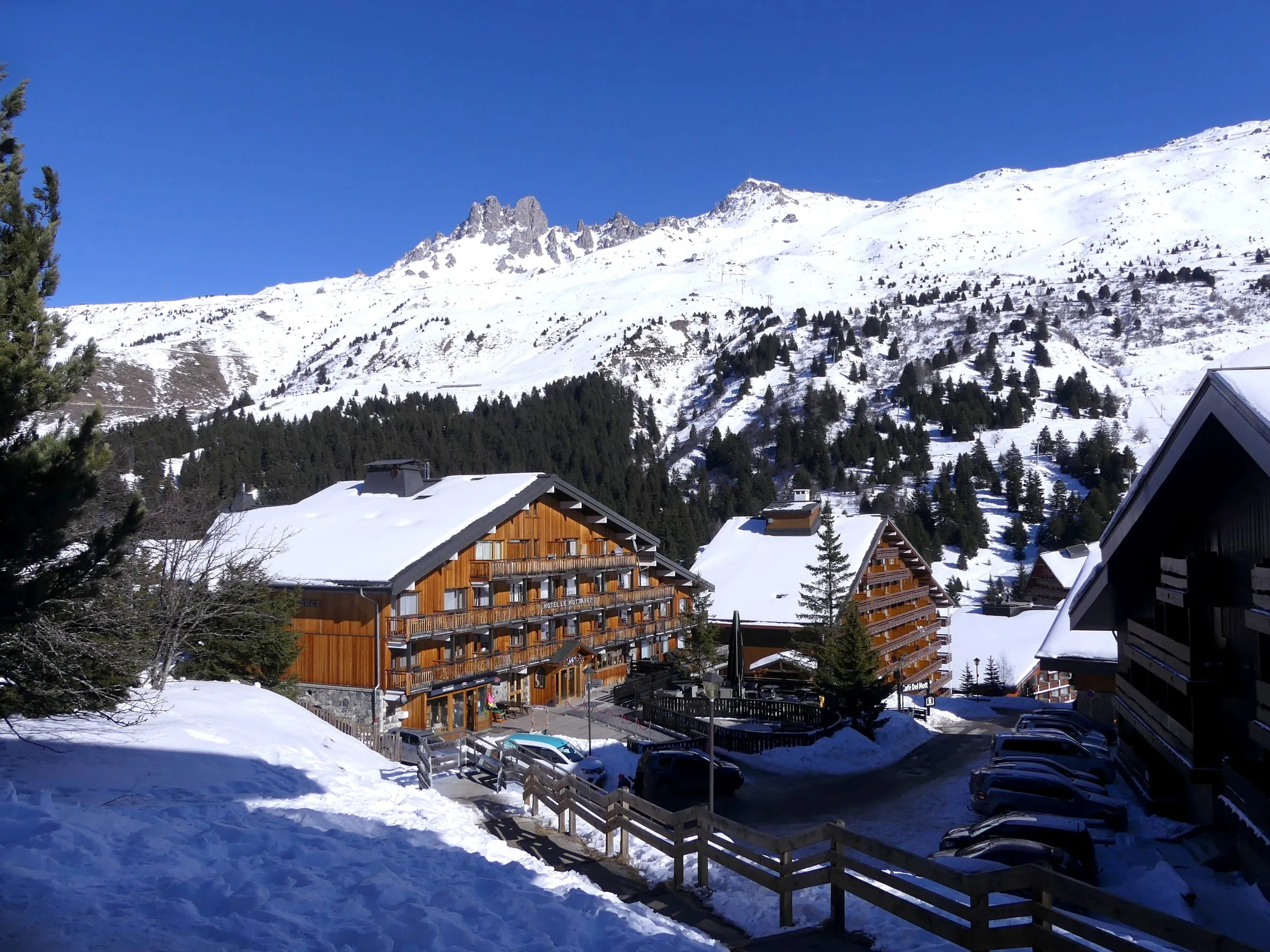
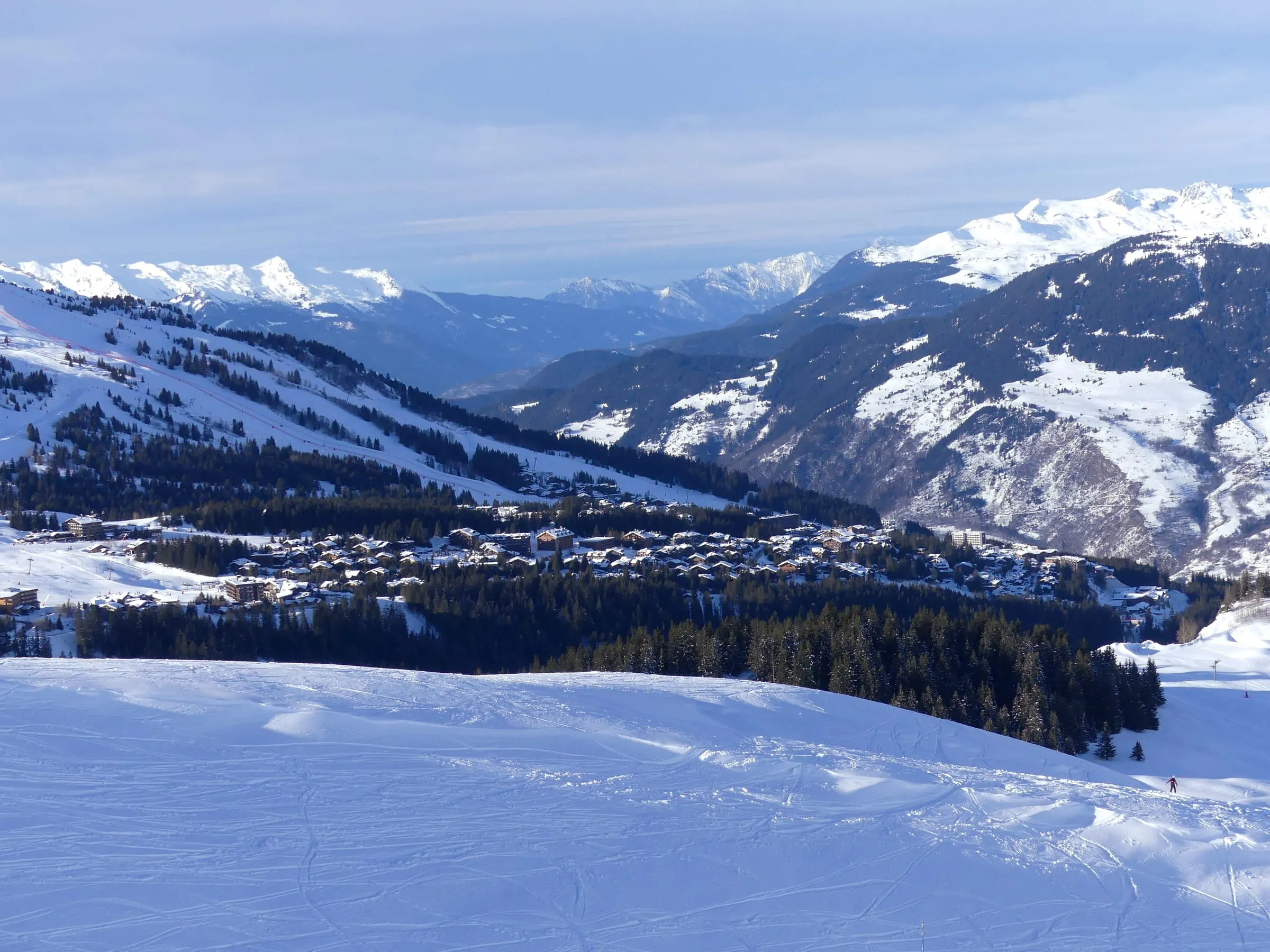
- Méribel is the central base. You can ski in either direction without a long trip home at the end of the day, and 85% of its valley is above 1,800 m.
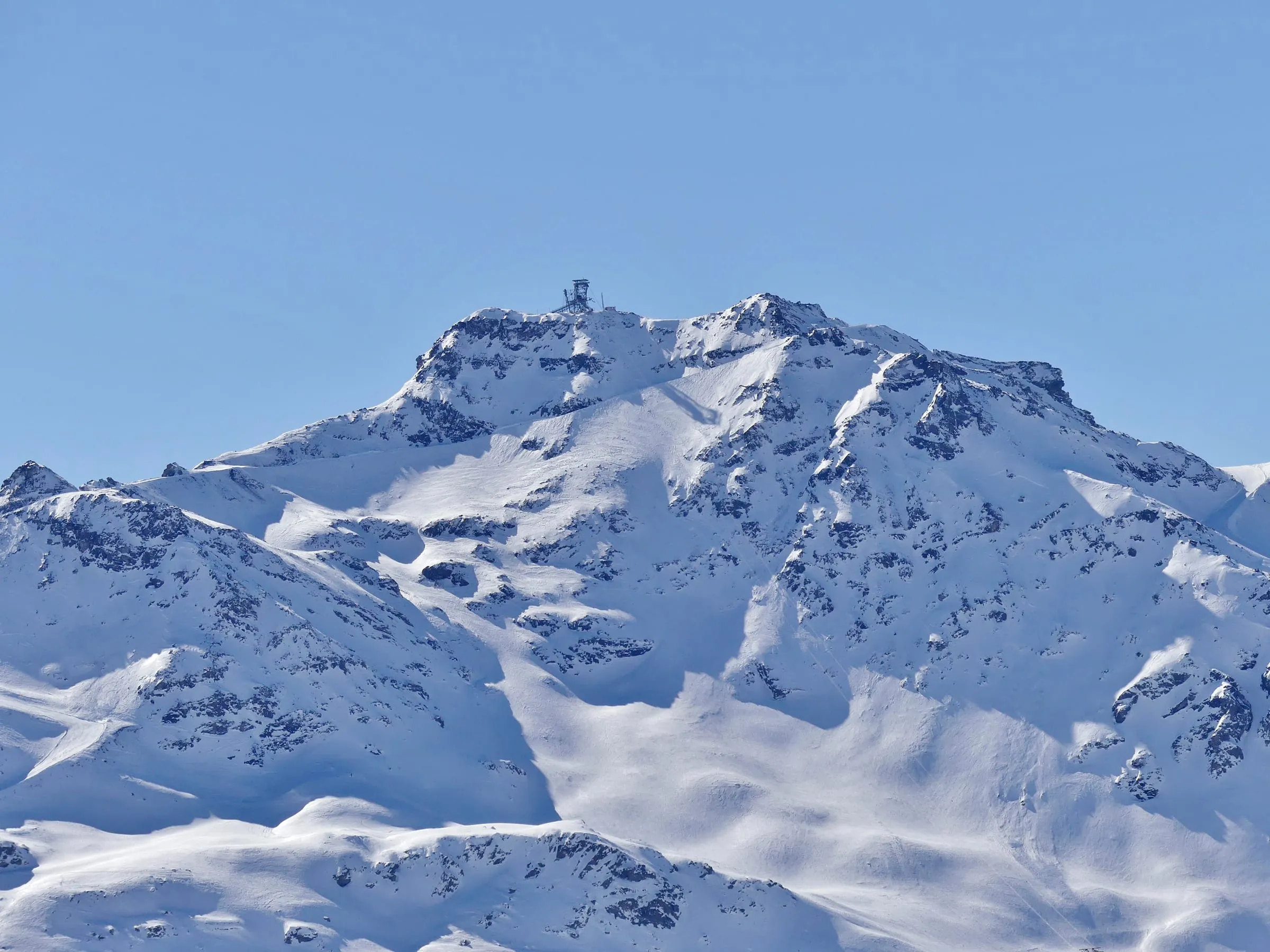
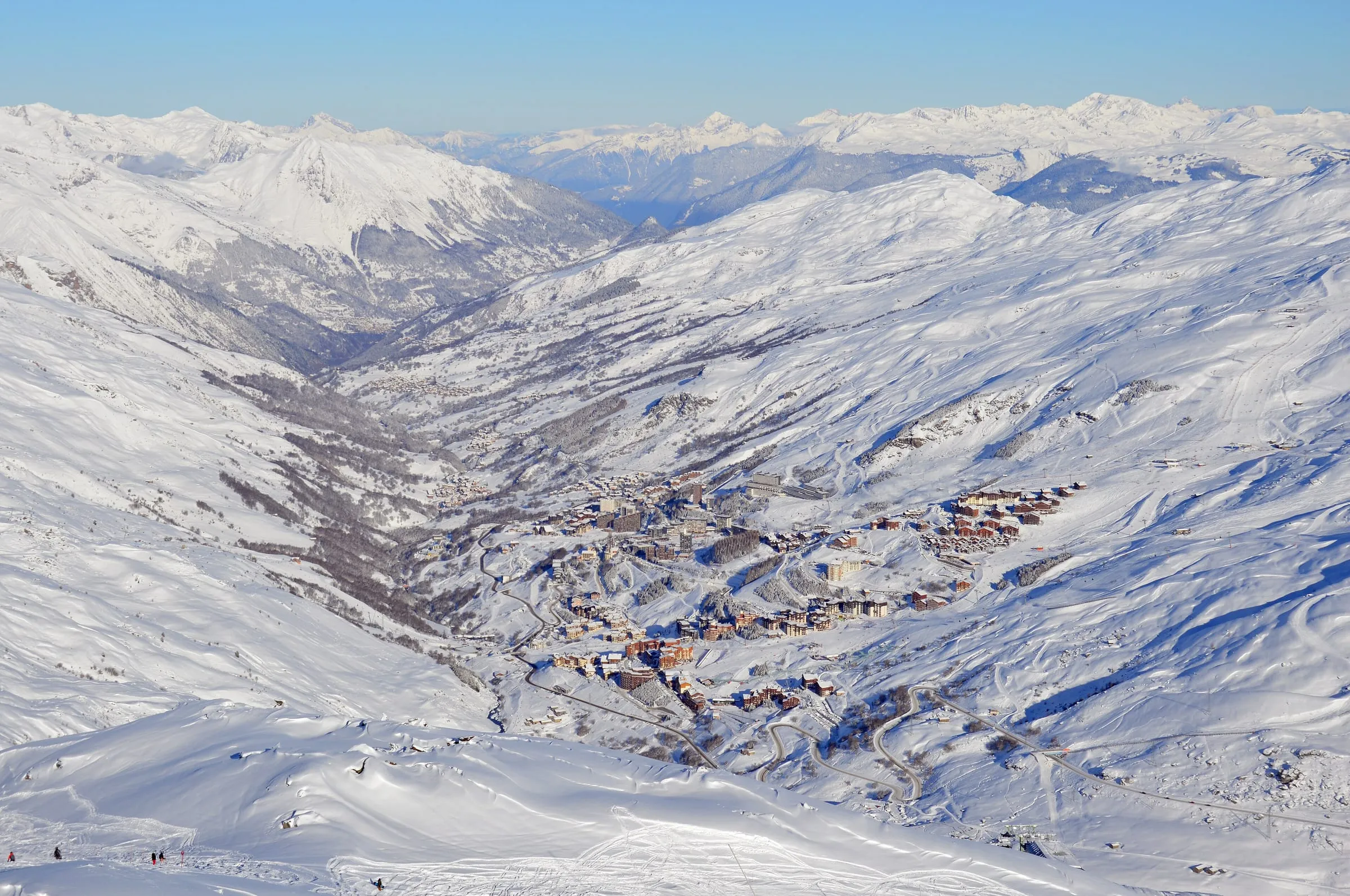
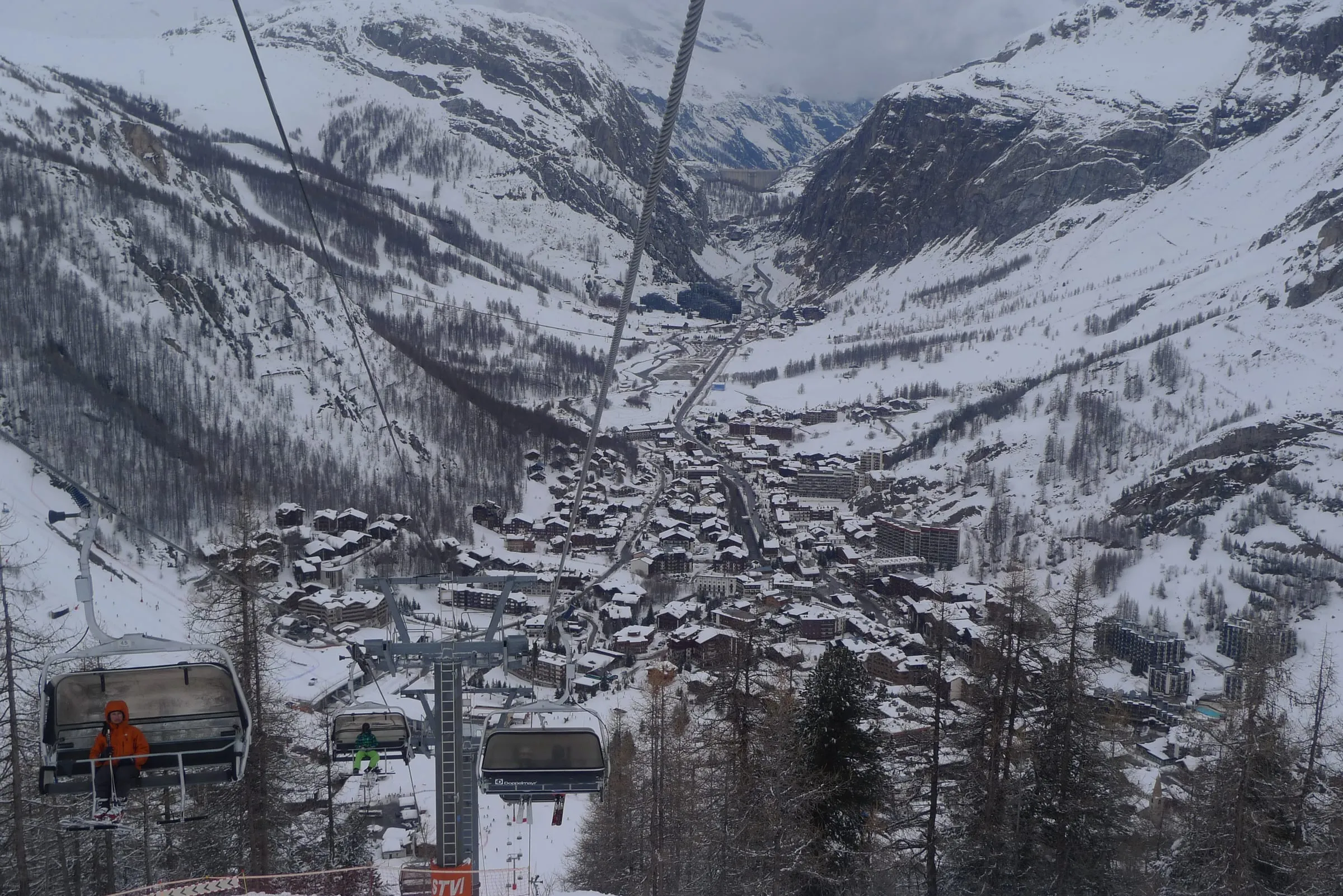
- Val Thorens, at about 2,300 m, is the highest ski resort in Europe and the first in the area to open, in November. It’s our pick when snow is thin elsewhere.
- Courchevel has five villages, from palace hotels in 1850 to quieter, cheaper Le Praz and La Tania.
- Les Menuires is the good-value base: mostly ski-in/ski-out, with blue runs to every summit.
You can ski from Courchevel to Val Thorens and back in a day, but it’s a long one, so start early. See where to stay in Méribel and hotels in Val Thorens.
Portes du Soleil: 600 km across France and Switzerland
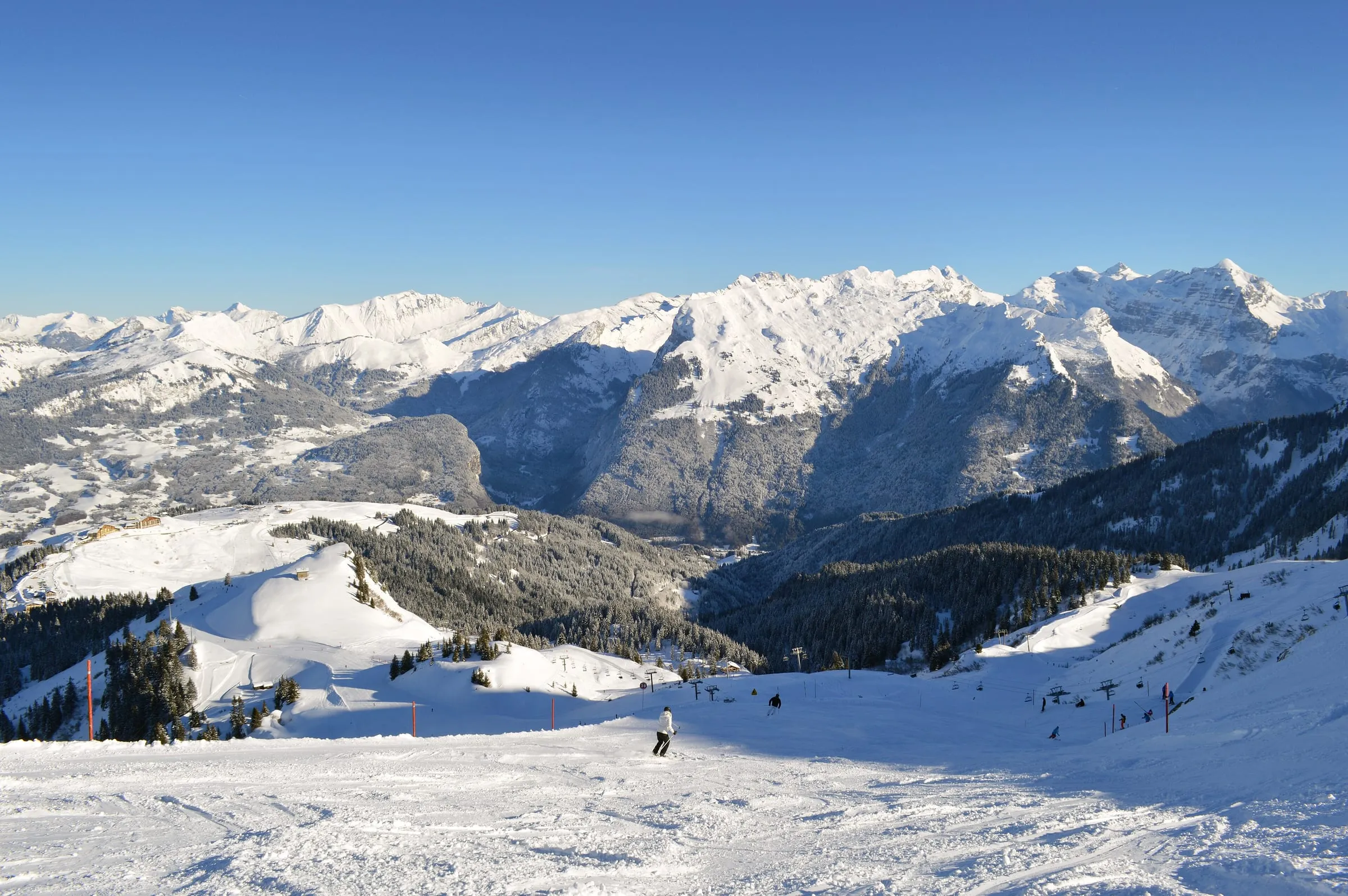
The Portes du Soleil matches Les 3 Vallées on length, with about 600 km of slopes, 209 lifts and 308 runs across 12 resorts in France and Switzerland. (Champéry’s page quotes 208 lifts and 307 runs.) It’s the big area closest to Geneva: Châtel is about 70 km away and Morzine about 75 km.
The catch is altitude. Morzine sits at about 1,000 m and the Morzine-Les Gets slopes top out around 2,000 m, so the lower runs suffer in mild spells. That makes the base matter:
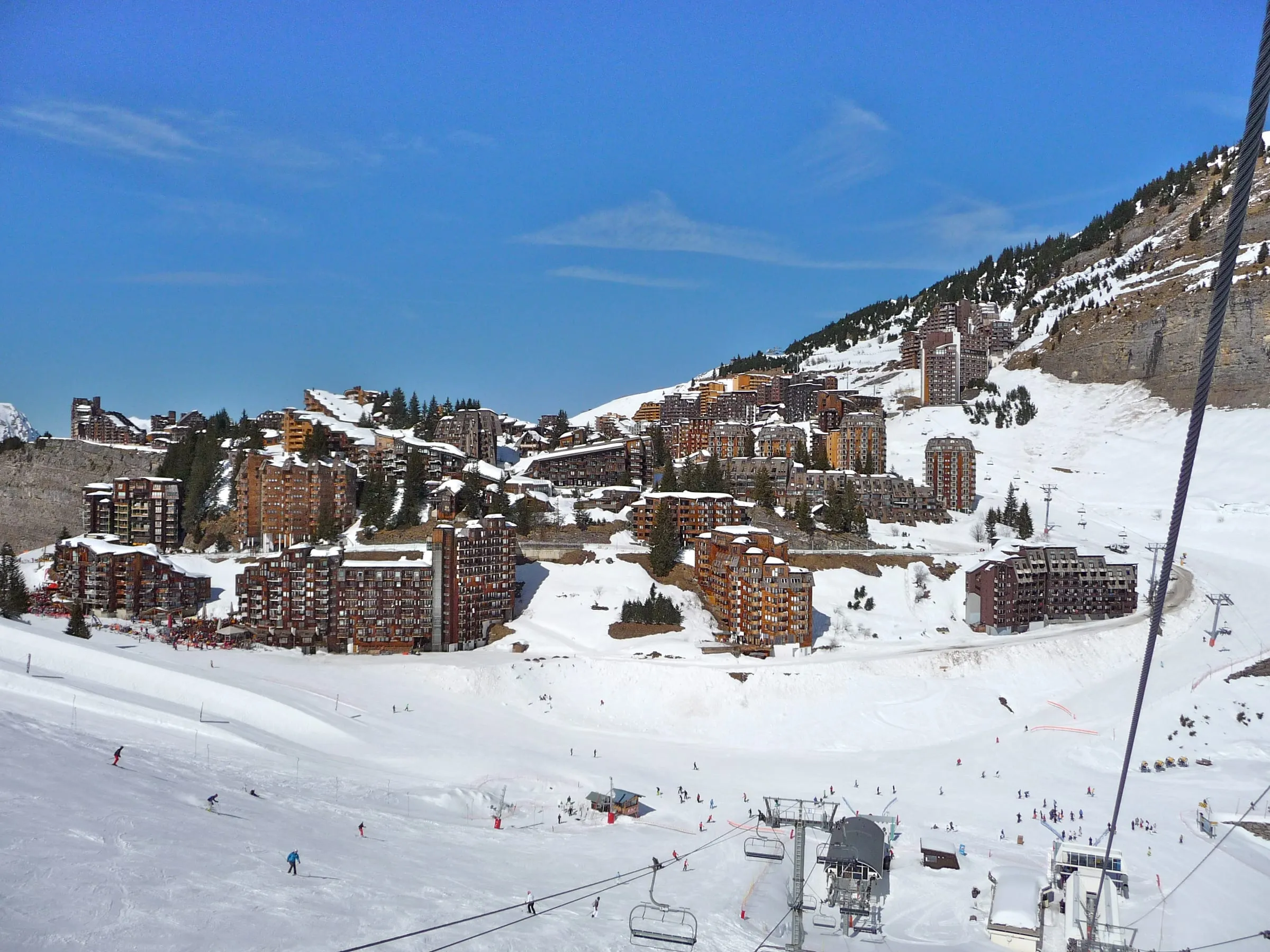
- Avoriaz, car-free at 1,800 m and ski-in/ski-out, is the highest village and the most reliable for snow.
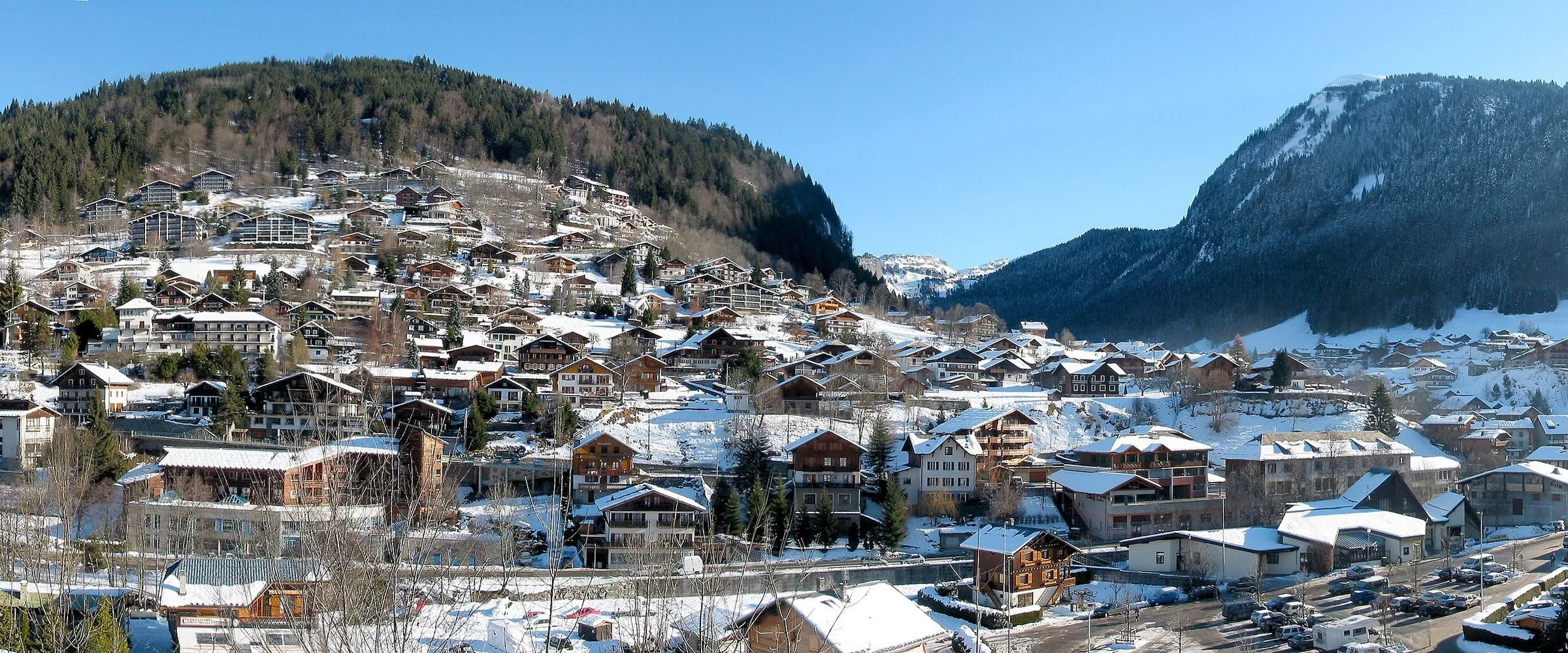
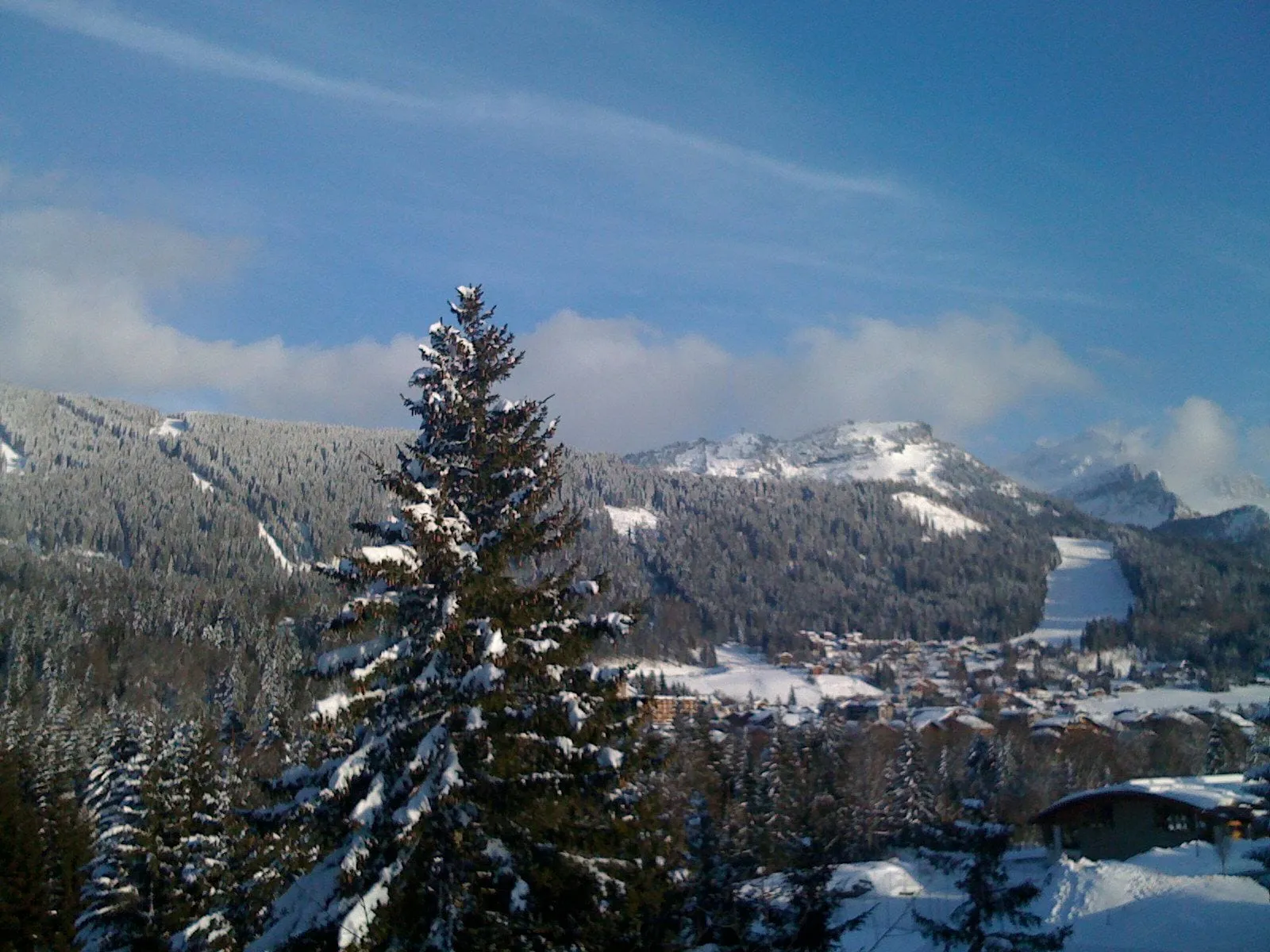
- Morzine is the lively town base, with lifts up to Avoriaz.
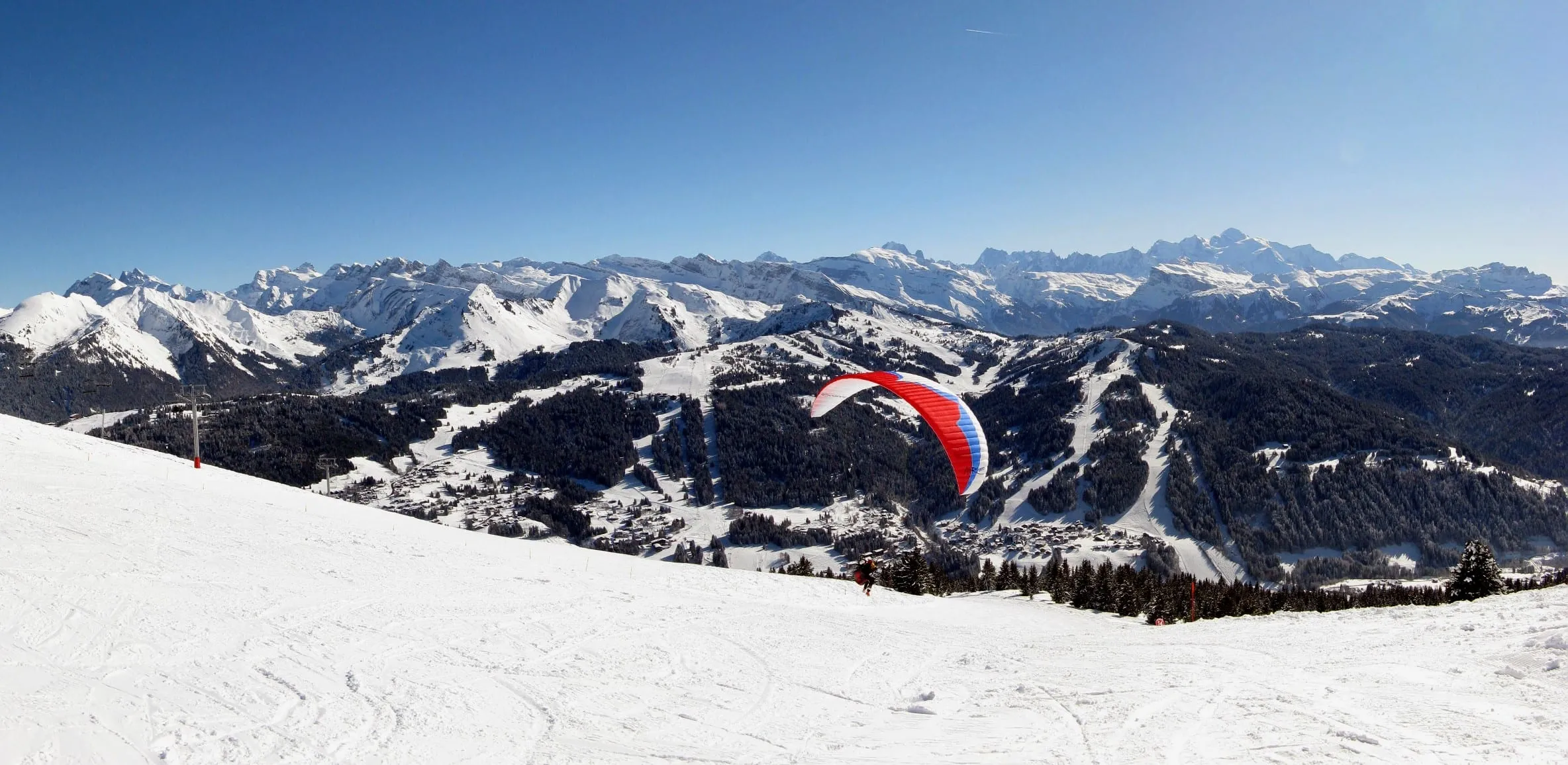
- Les Gets is gentle and good for beginners.
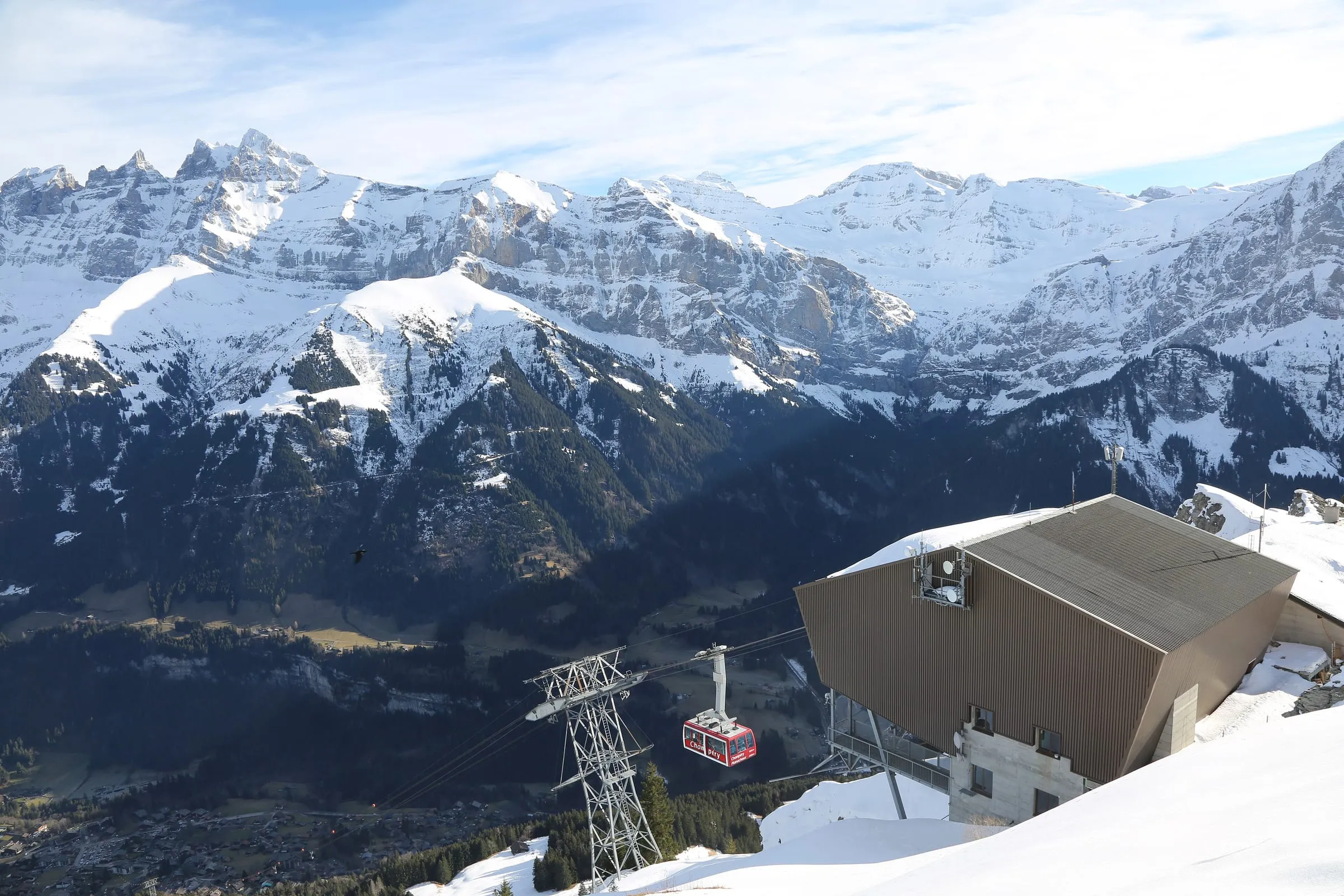
- Champéry is the Swiss chalet village, with a cable car into the area and the Swiss Wall nearby.
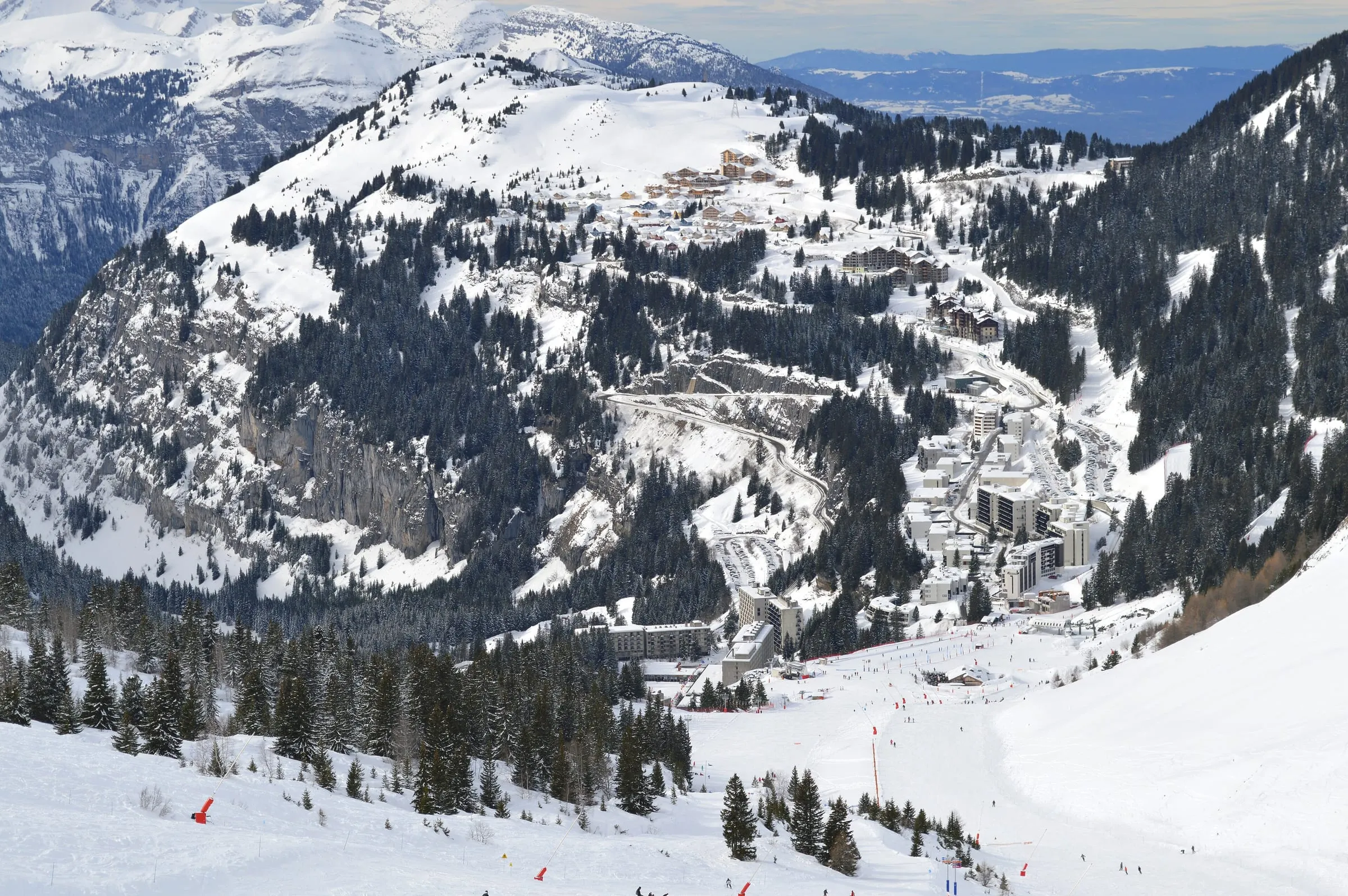
Compare where to stay in Avoriaz and hotels in Morzine. Next door, the Grand Massif links Flaine, Samoëns, Les Carroz, Morillon and Sixt-Fer-à-Cheval for 265 km and 62 lifts, up to 2,500 m, with most slopes facing north.
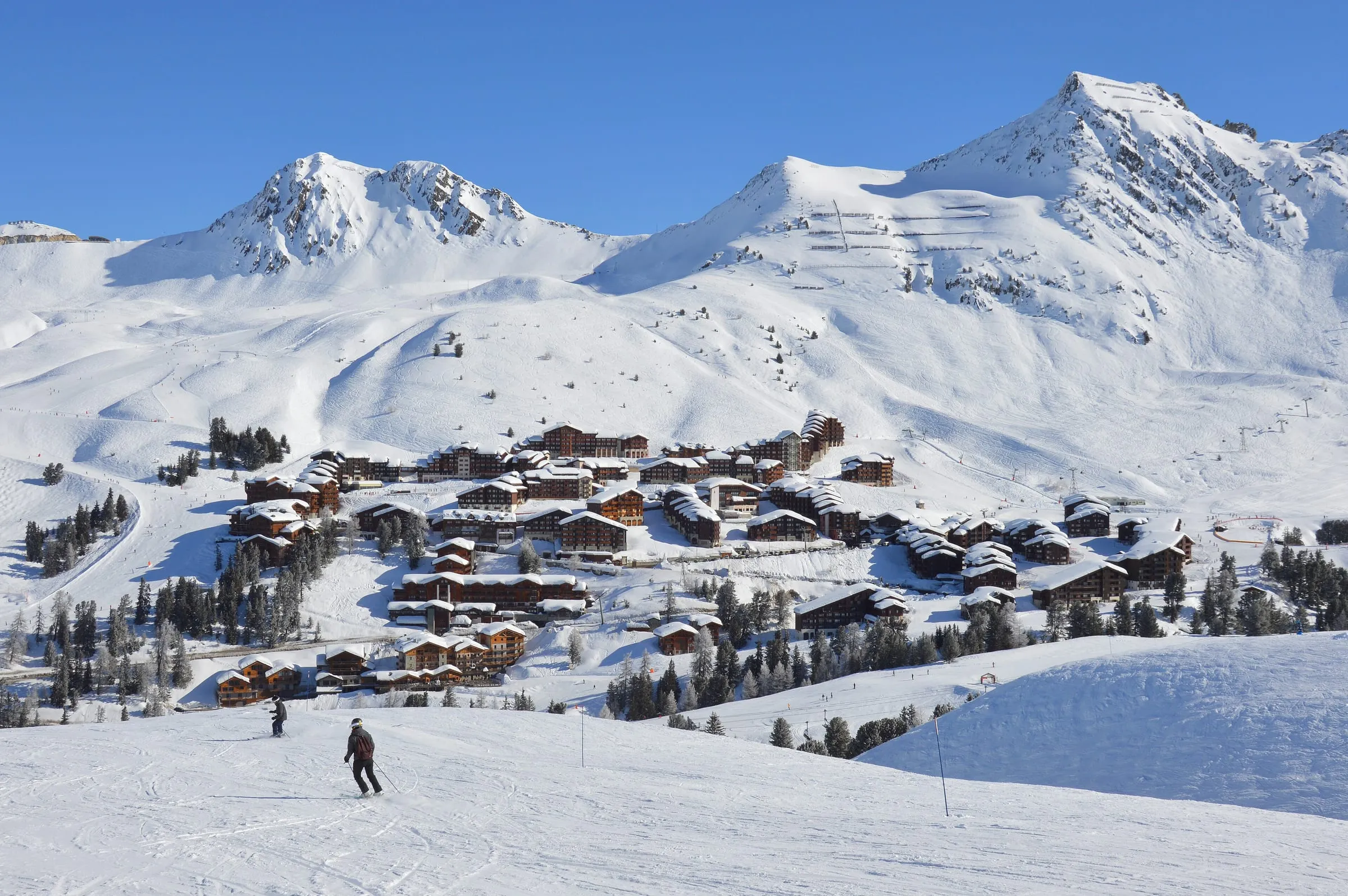
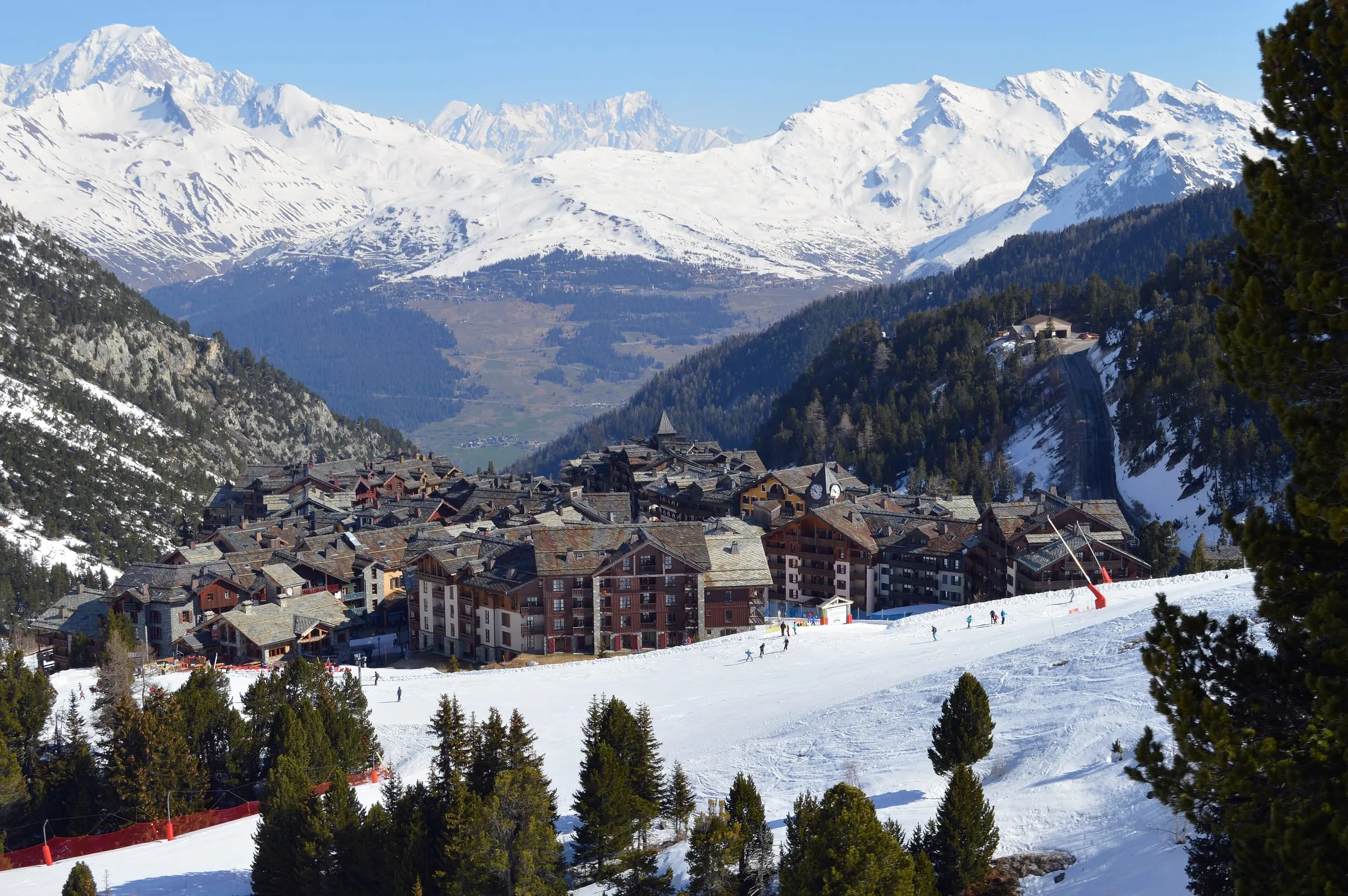
Paradiski: La Plagne and Les Arcs on the Vanoise Express
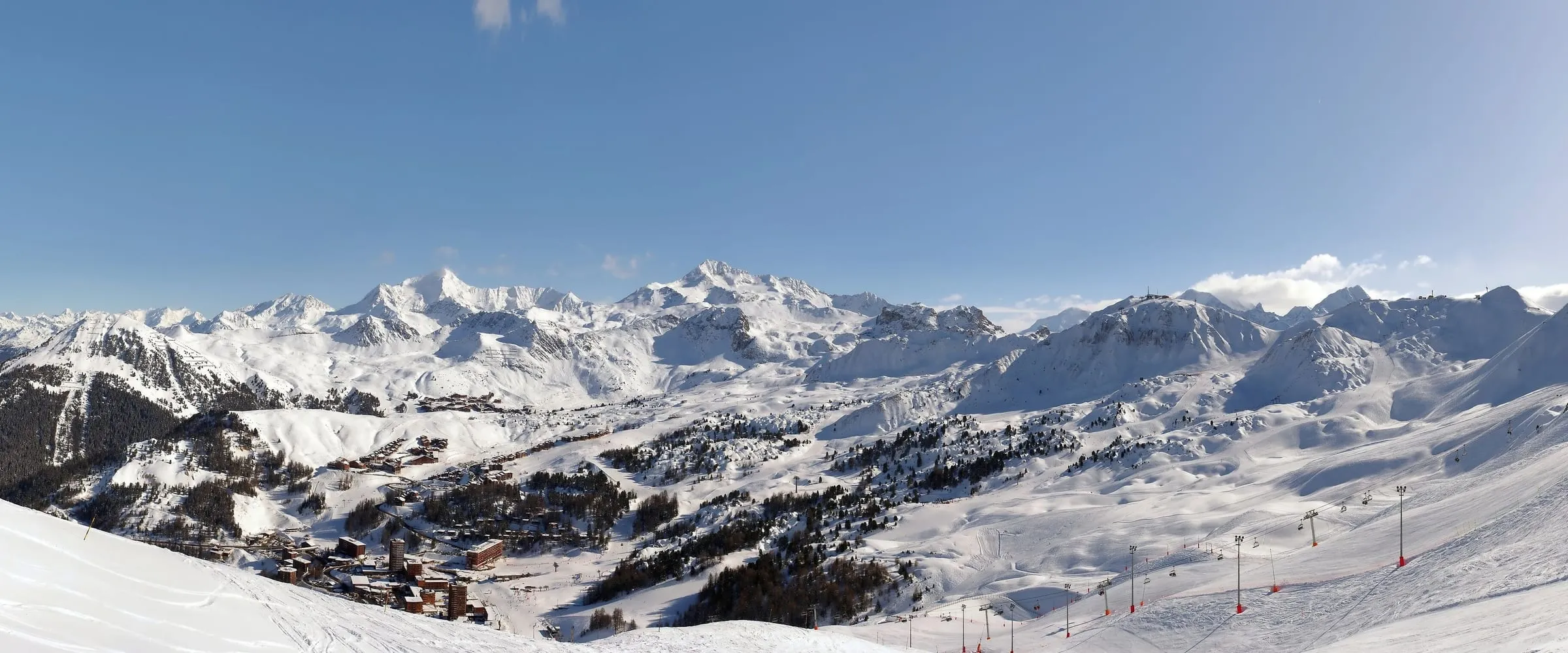
Paradiski joins La Plagne and Les Arcs with the Vanoise Express cable car: about 425 km, 258 runs and 129 lifts, with about 70% of the slopes above 2,000 m. La Plagne alone has about 225 km and 73 lifts up to 3,080 m, and Les Arcs about 200 km up to the Aiguille Rouge at 3,226 m.
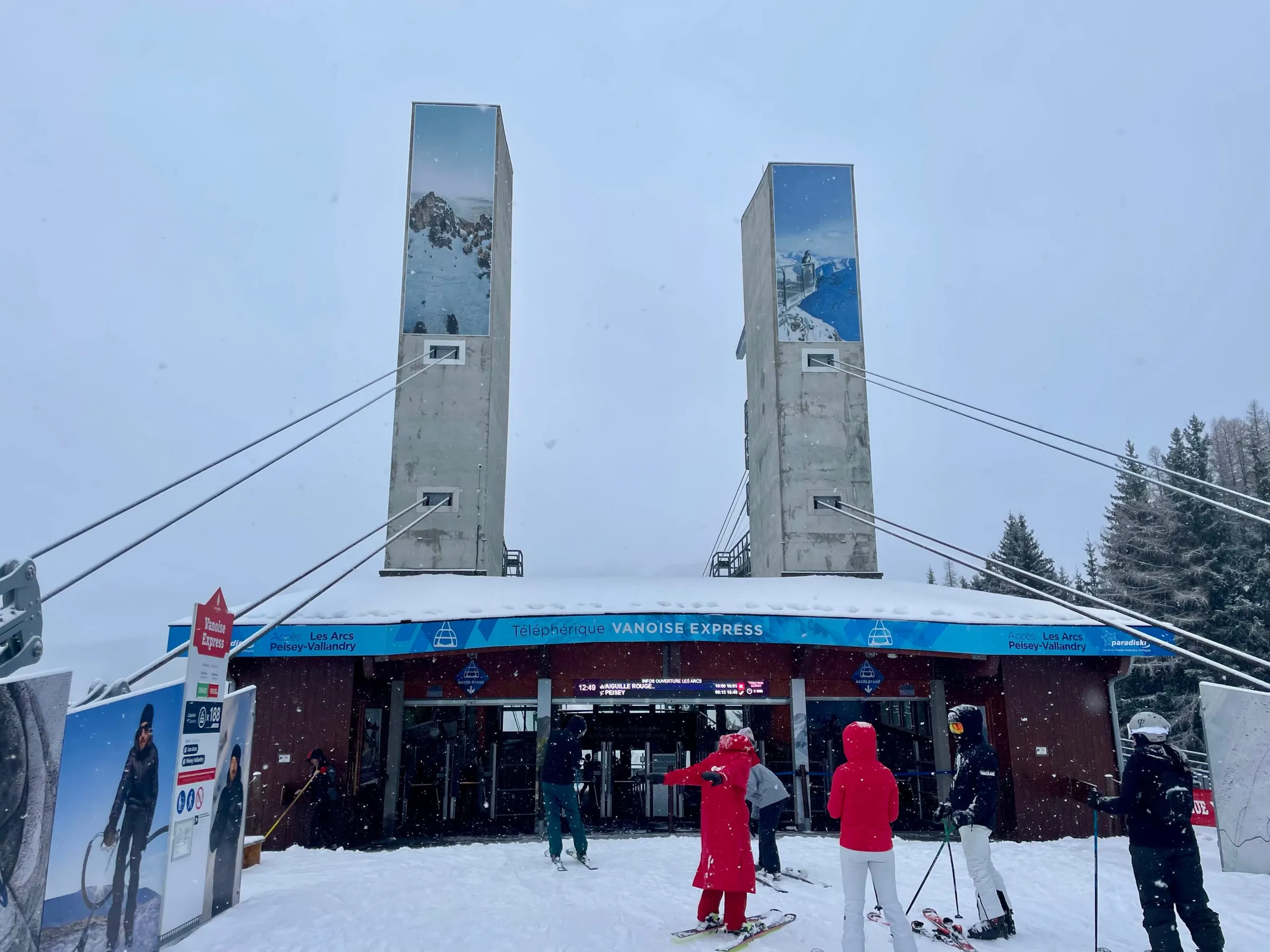
La Plagne suits families and beginners best, with 16 free beginner lifts. Les Arcs has more for experts and freeriders, and Arc 1600 is reached by funicular from Bourg-Saint-Maurice station. One date to note: the Vanoise Express runs from 12 December 2026 to 17 April 2027, a week less than Les Arcs itself. See where to stay in La Plagne and hotels in Les Arcs.
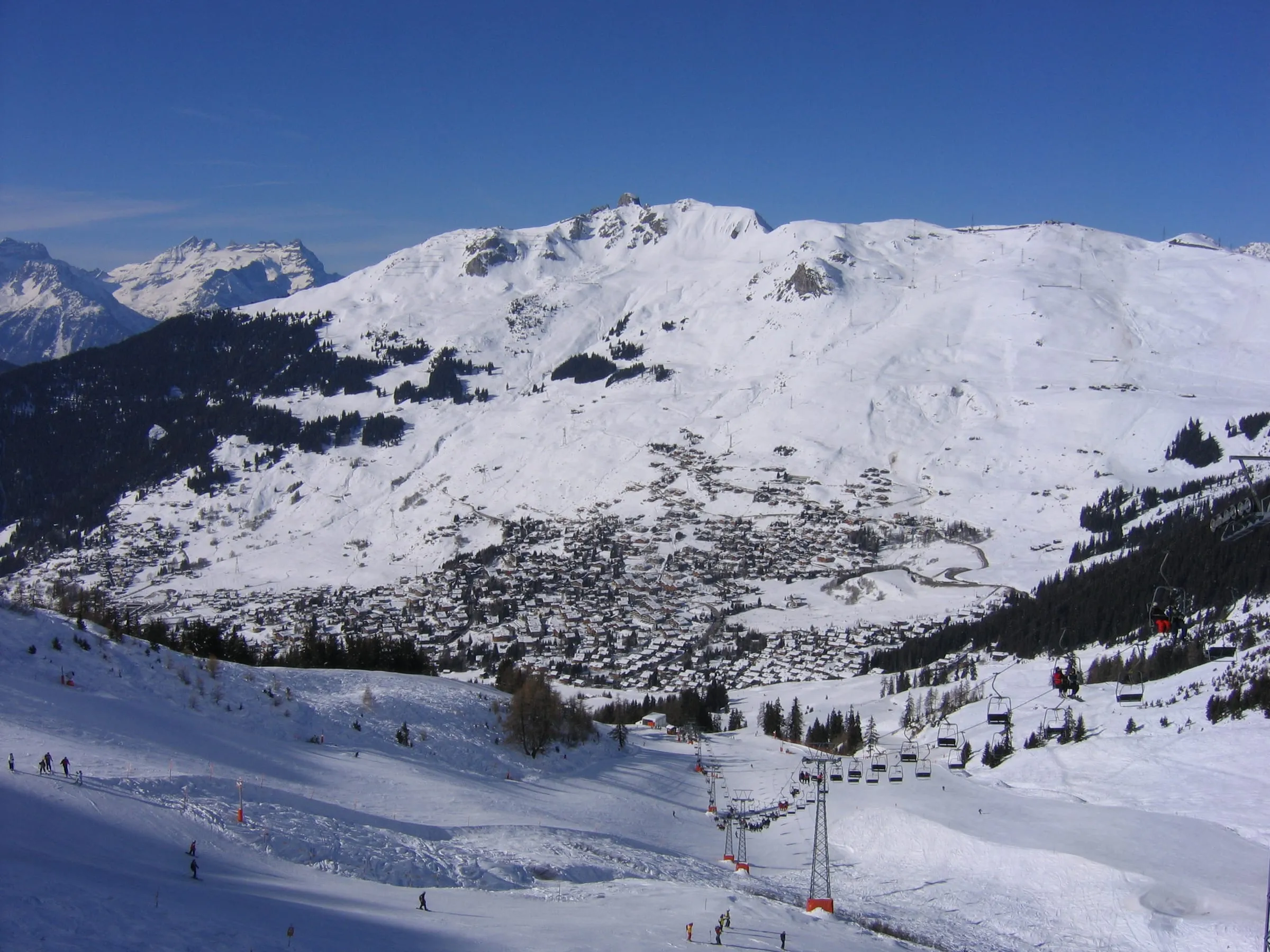
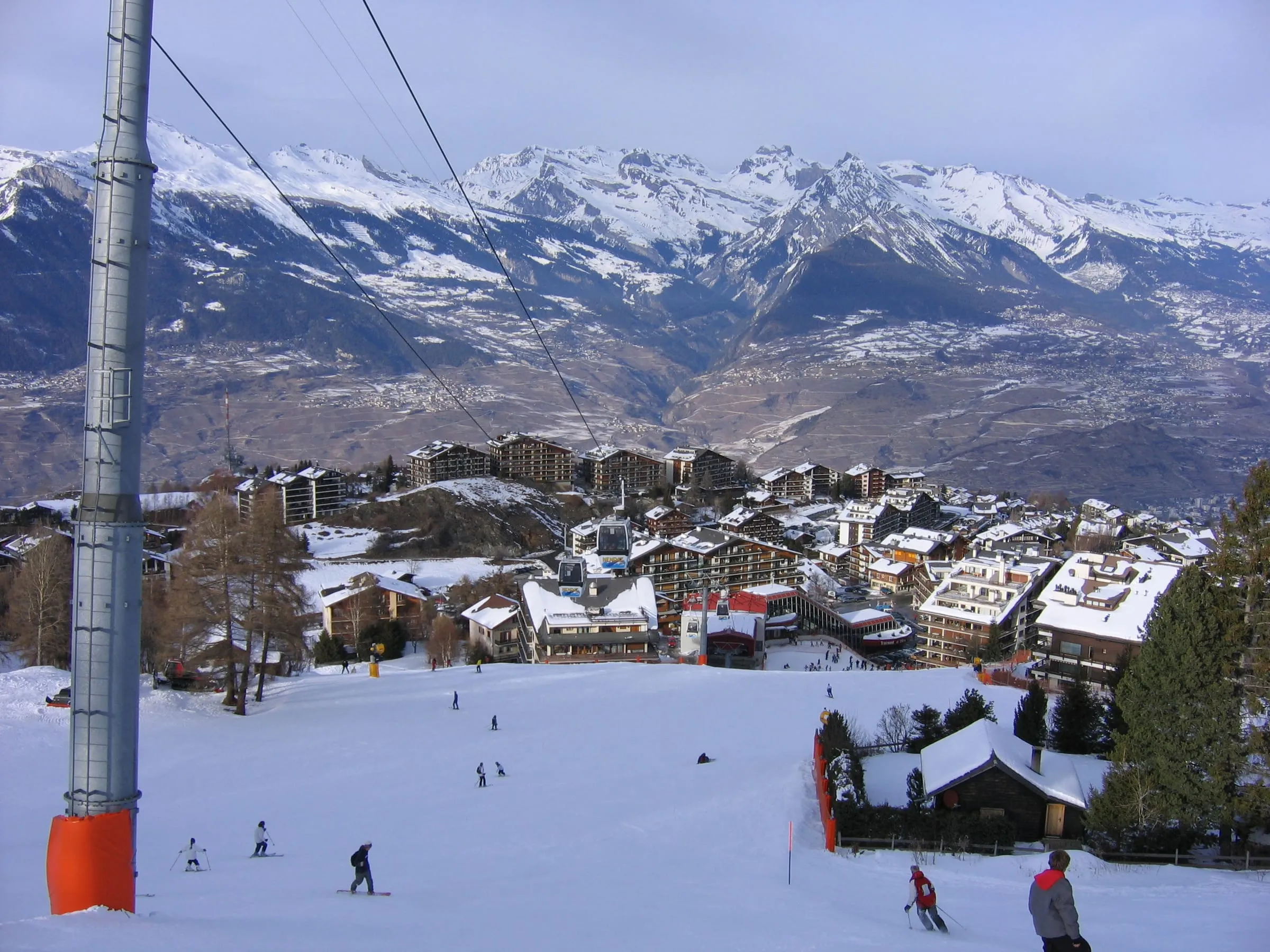
Largest ski area in Switzerland: the 4 Vallées
The 4 Vallées has 410 km of pistes linking Verbier, Nendaz, Veysonnaz and Thyon, and its lift company calls it the largest connected ski area in Switzerland. The high point is Mont-Fort at 3,330 m.
Verbier is the famous base, for freeride, steep itineraries and après. Nendaz is the family-friendly side, and its cheaper Printse pass still covers 220 km. If you’d rather have gentle, sunny skiing, Arosa Lenzerheide links two resorts by cable car for 225 km and 43 lifts; Lenzerheide is the easy, sociable base. Compare where to stay in Verbier.
Via Lattea and Evasion Mont-Blanc: 400 km each
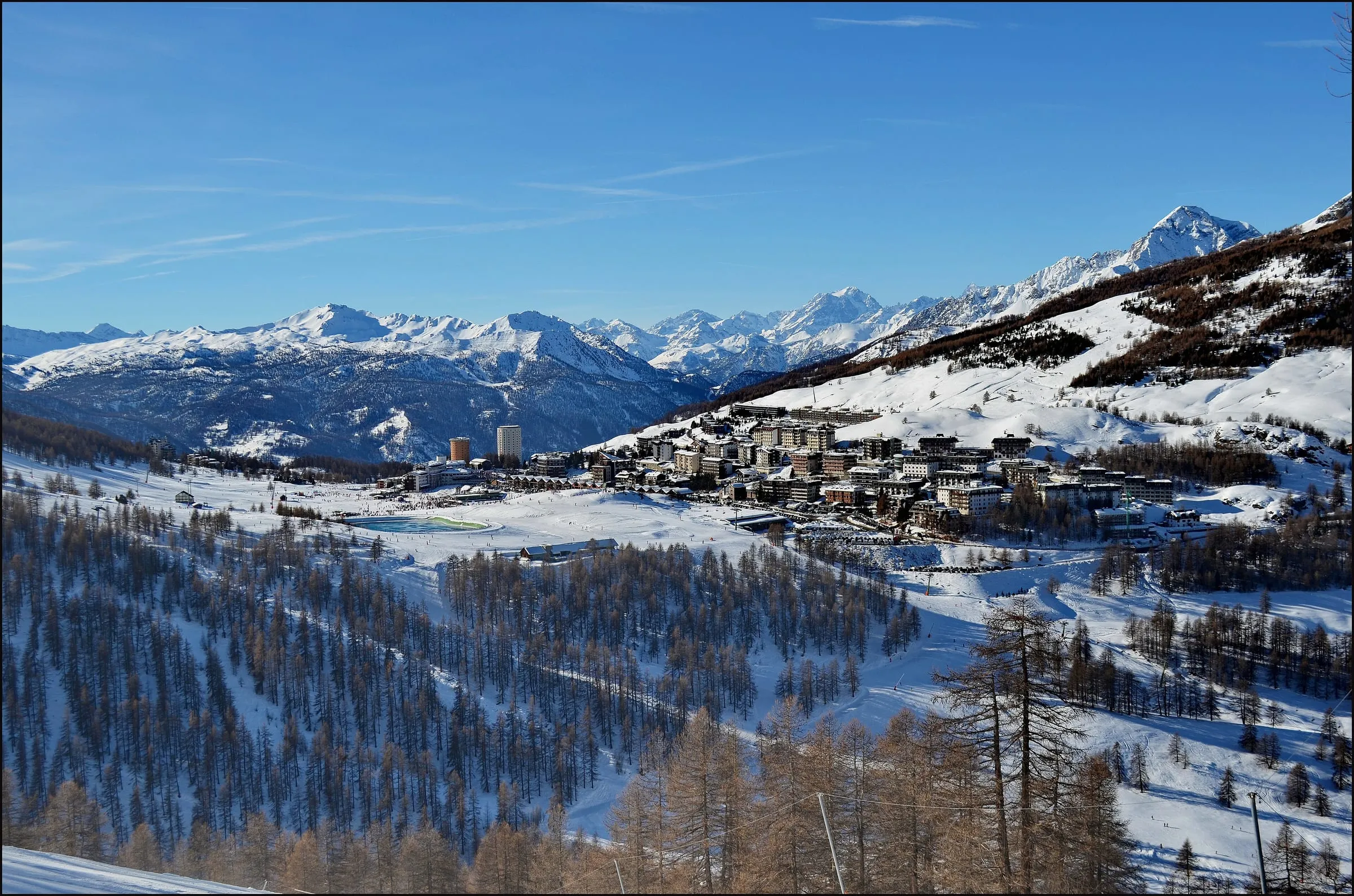
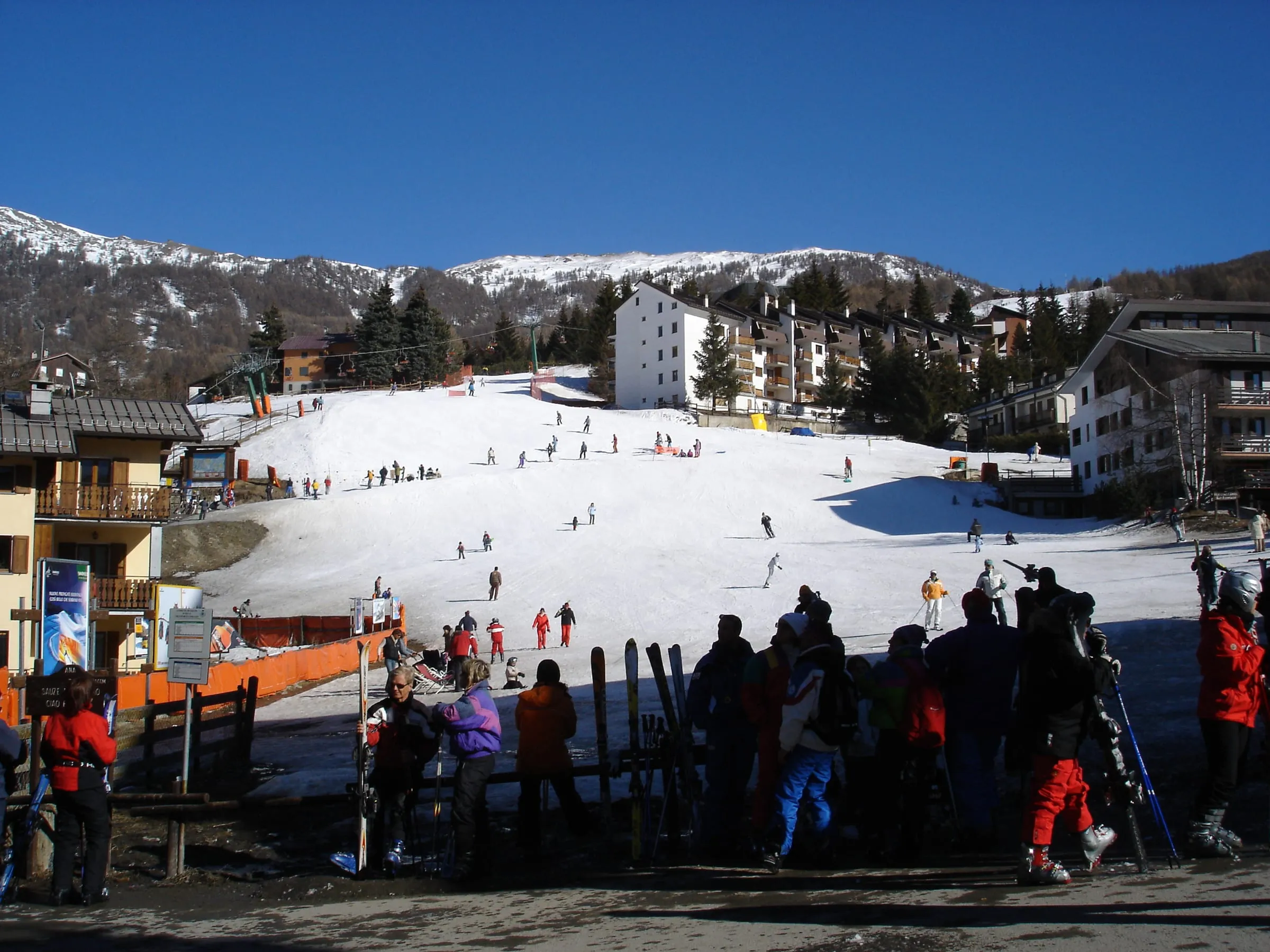
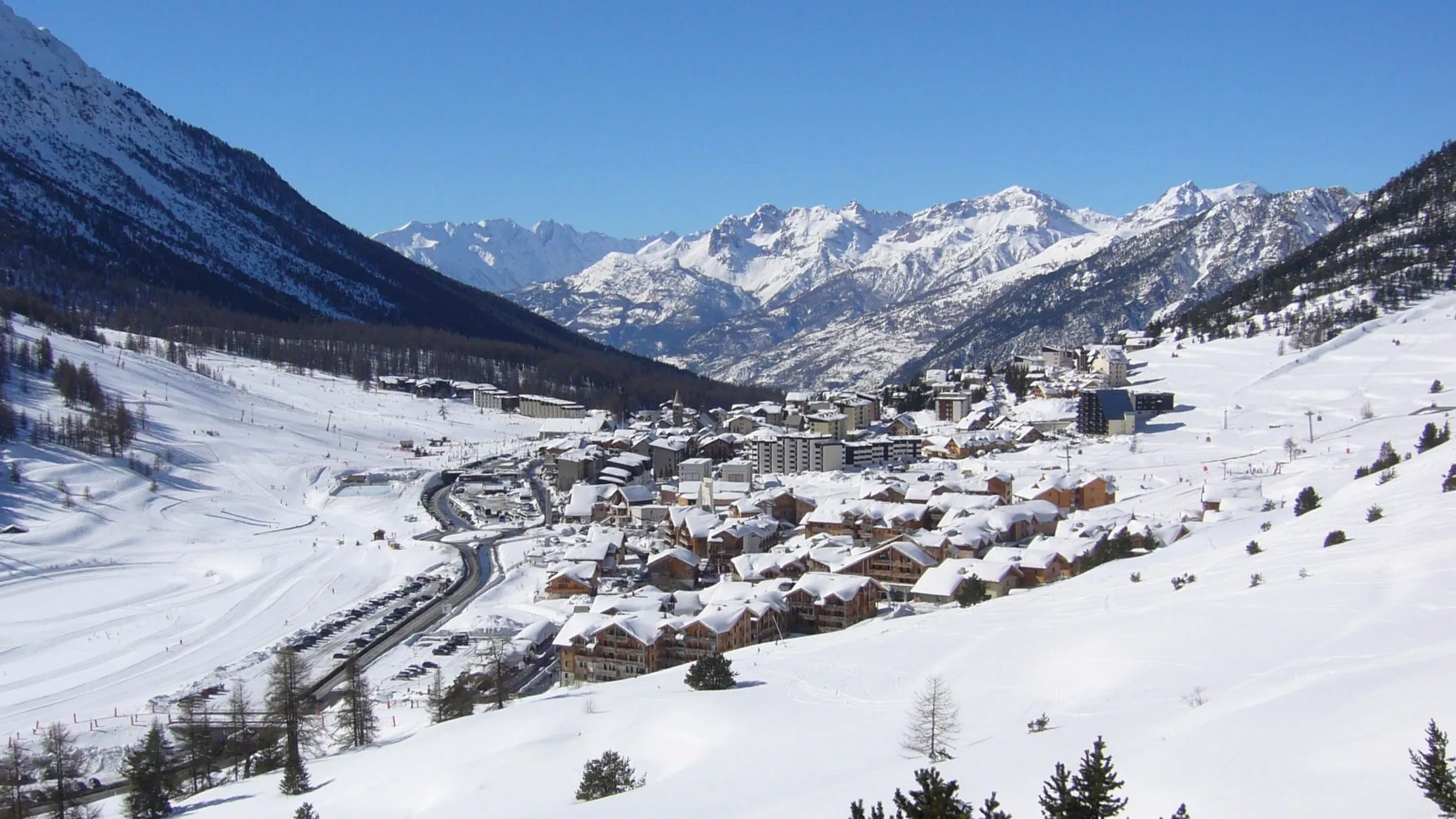
The Via Lattea (Vialattea) links Italian villages around Sestriere and Sauze d’Oulx with Montgenèvre in France: 400 km of pistes and more than 300 runs. Our pages quote 69, 73 and 74 lifts, depending on the source. Sestriere, at 2,035 m with 80% of the area above 1,900 m, is the snow-sure hub. Sauze has tree-lined runs for stormy days and the liveliest après, and Montgenèvre is the French entry at 1,860 m.
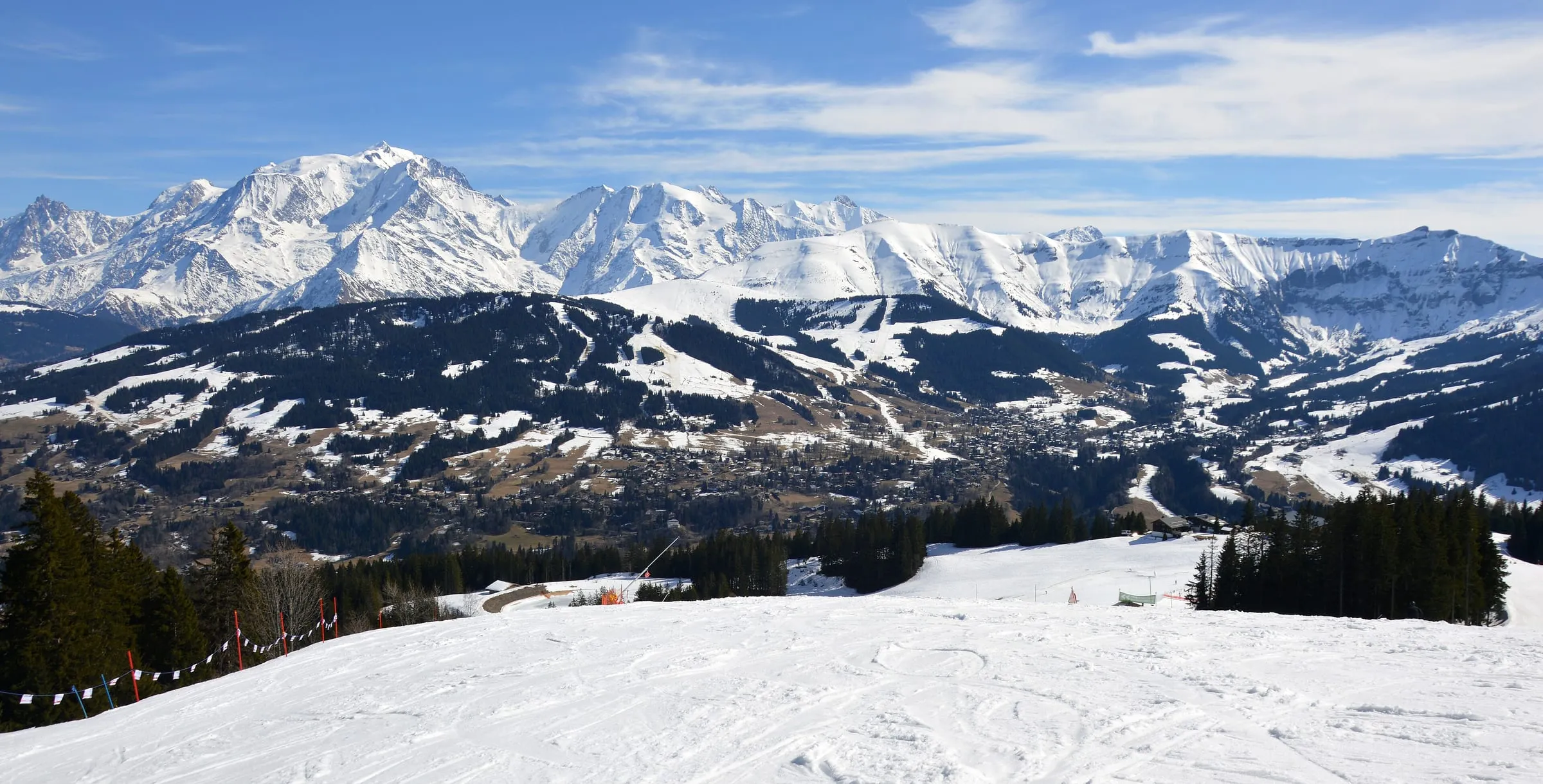
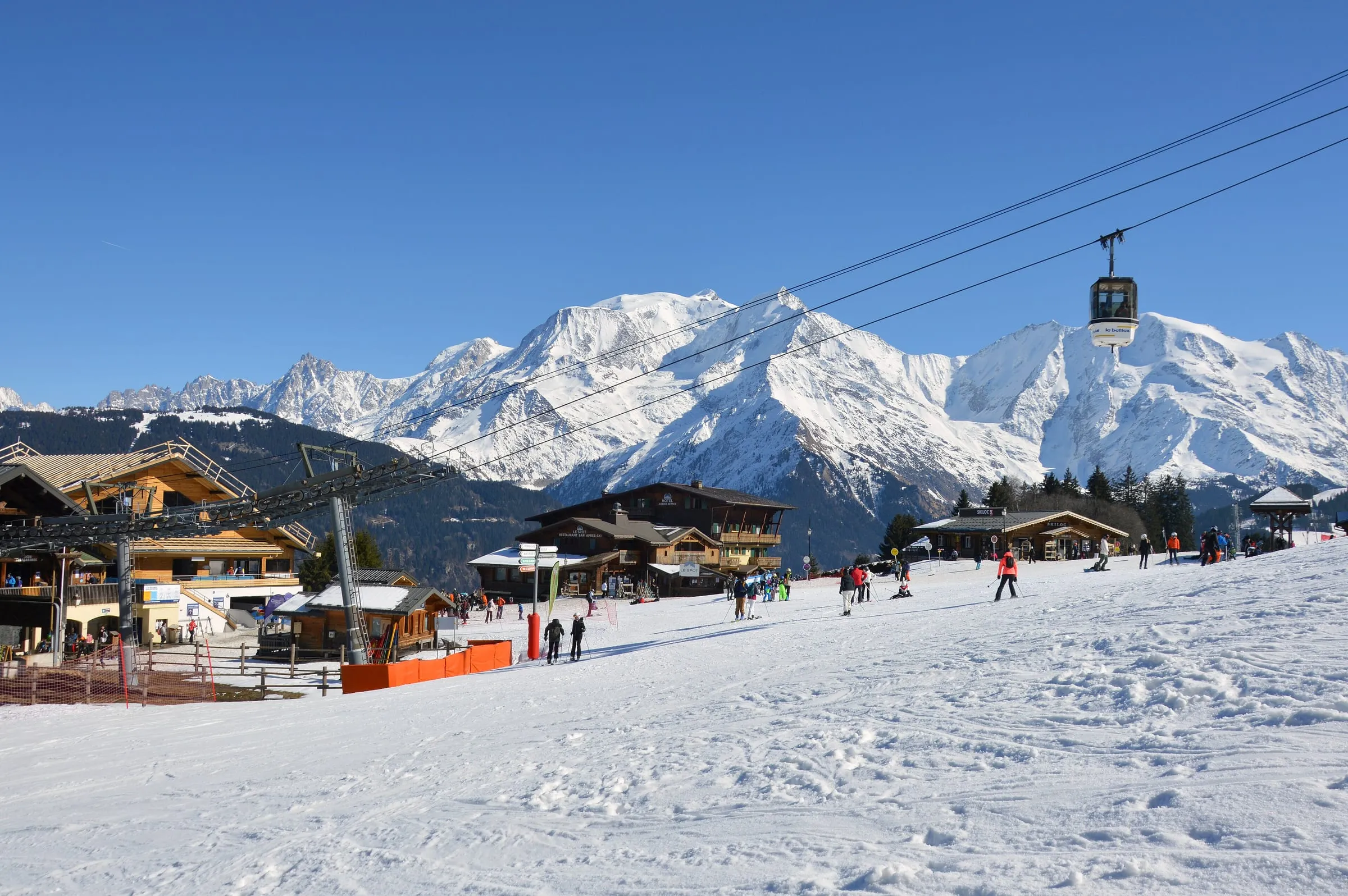
Evasion Mont-Blanc covers Megève, Saint-Gervais and four other villages, with over 400 km of pistes and about 110 lifts. It’s quick to reach, about 70 km from Geneva, but it’s low: the lifts top out at about 2,350 m. Book it on a good forecast.
Matterhorn Ski Paradise: Zermatt and Cervinia on one pass
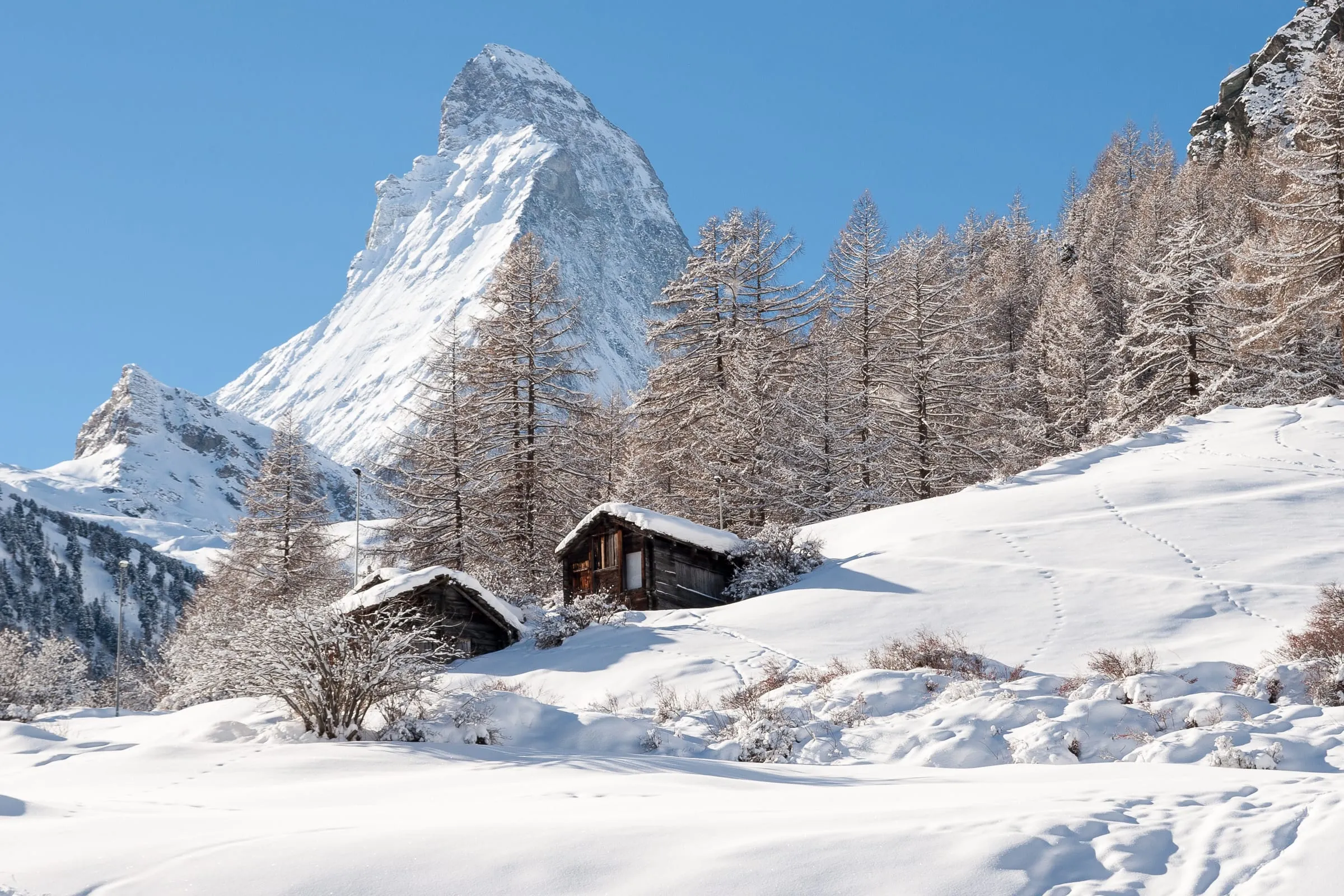
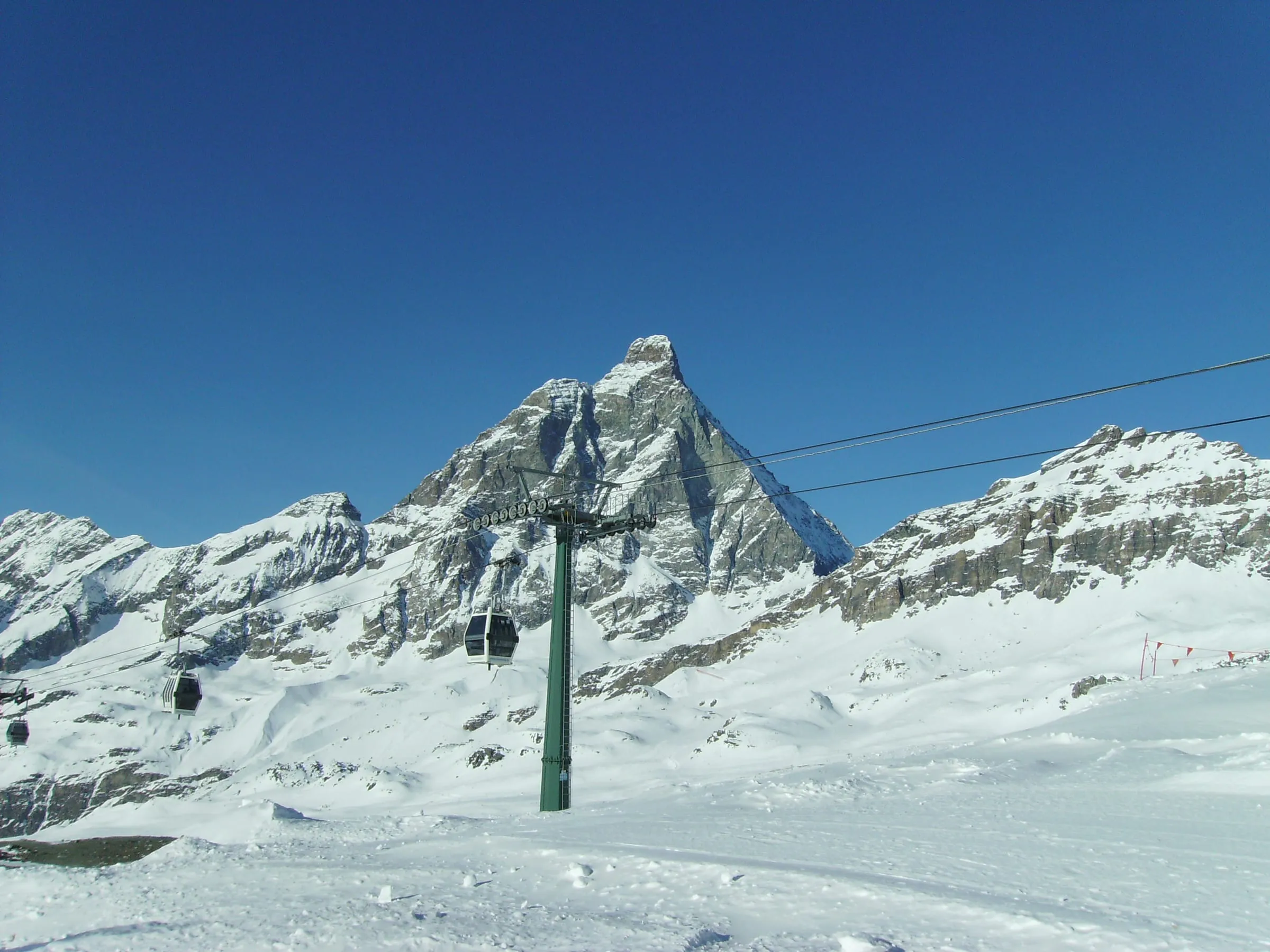
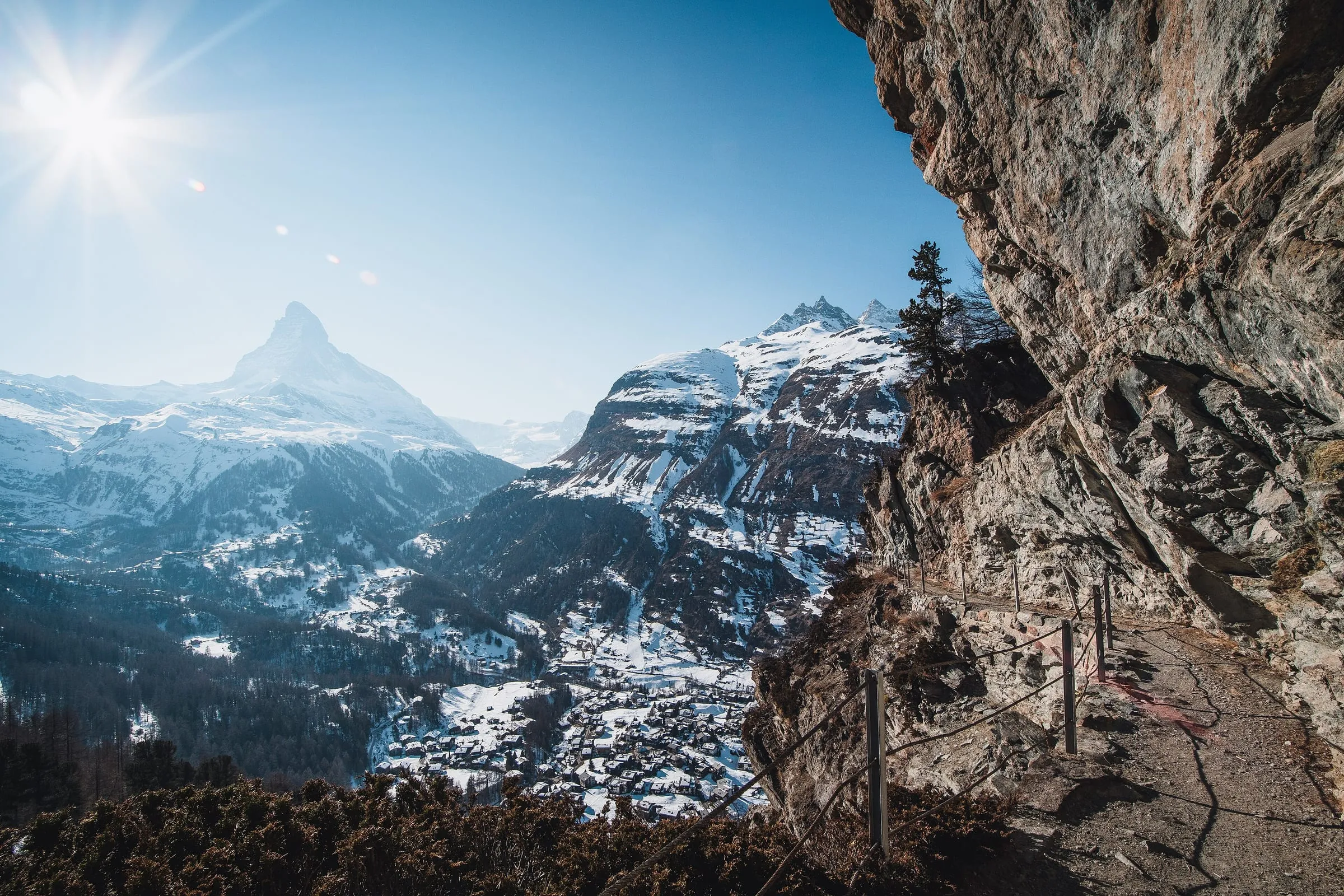
The Matterhorn Ski Paradise joins Zermatt in Switzerland with Breuil-Cervinia and Valtournenche in Italy for up to 360 km on the international pass: about 200 km on the Swiss side and 157 km on the Italian side. It’s the highest area in this guide, with lifts to 3,883 m, and the glacier gives Zermatt skiing from 1 November 2026 to 2 May 2027.
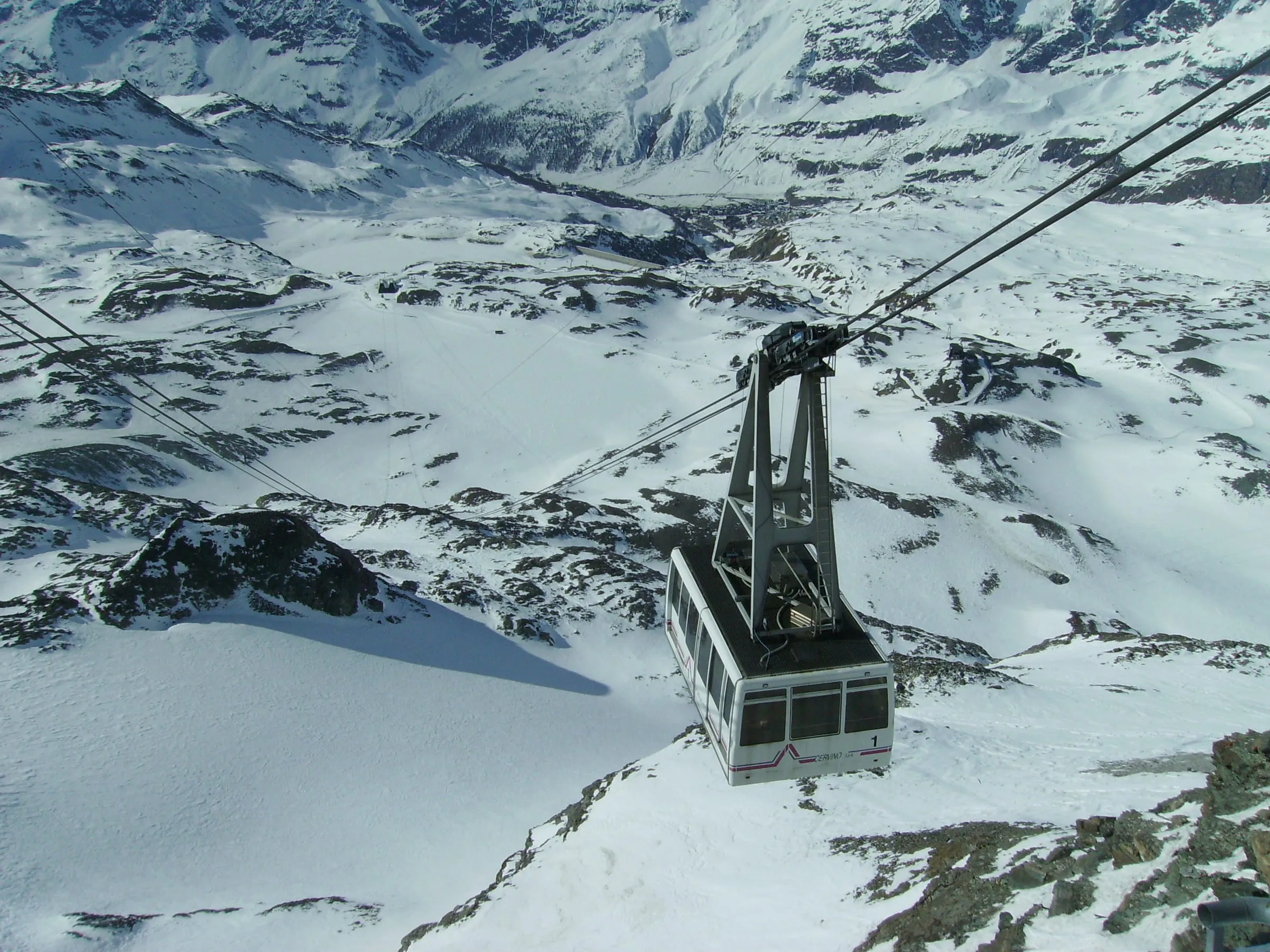
Zermatt suits experts, families and anyone who wants a car-free village, about three and a half hours by train from Zurich Airport. Cervinia, at 2,050 m, has long, easy runs and is better for intermediates and beginners. Whichever side you stay, you need the international pass to cross, and you need to watch the time: if the top lifts close while you’re on the wrong side, the drive back is very long. See where to stay in Breuil-Cervinia and hotels in Zermatt.
Largest ski area in Austria: Ski Arlberg
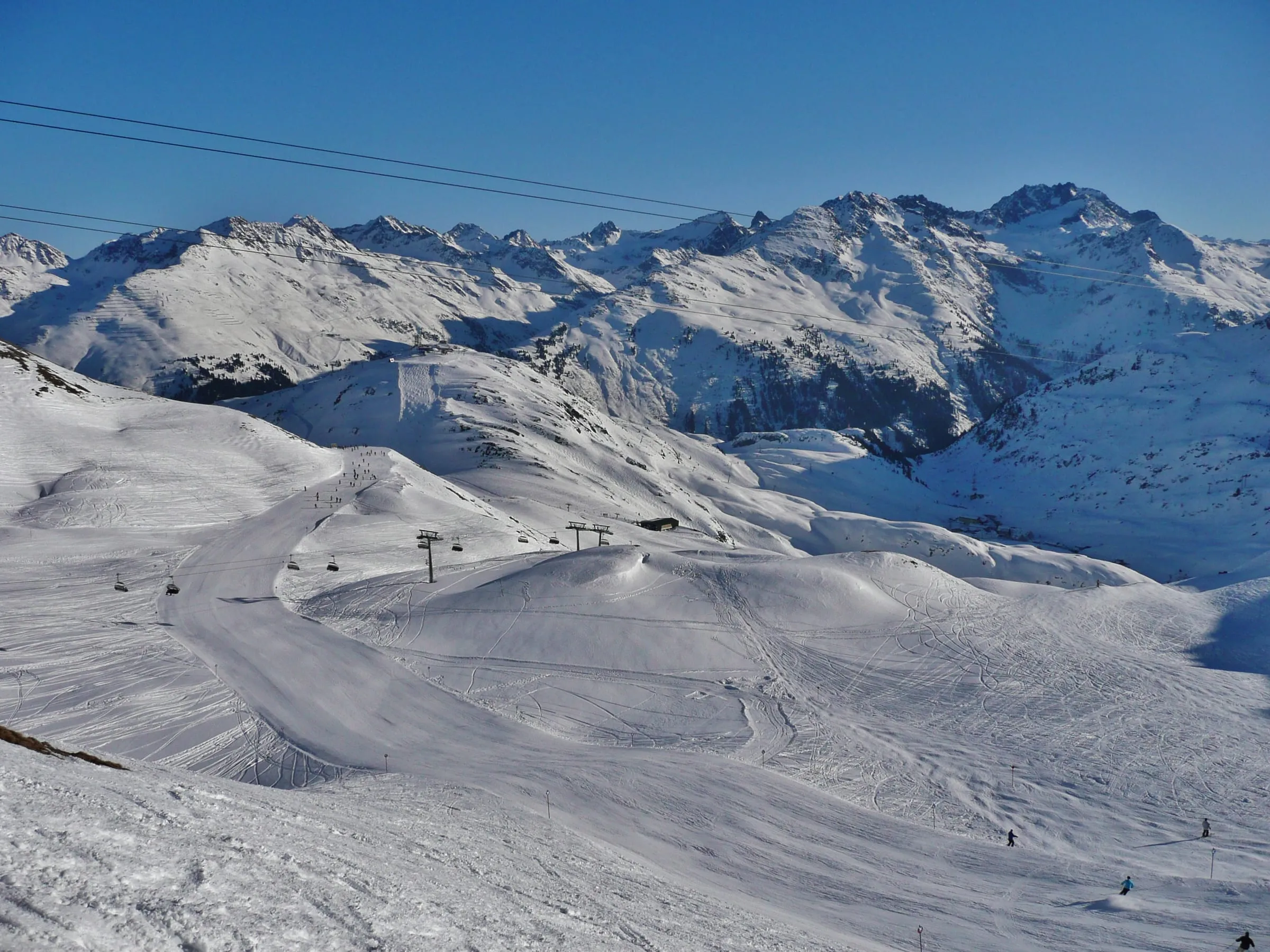
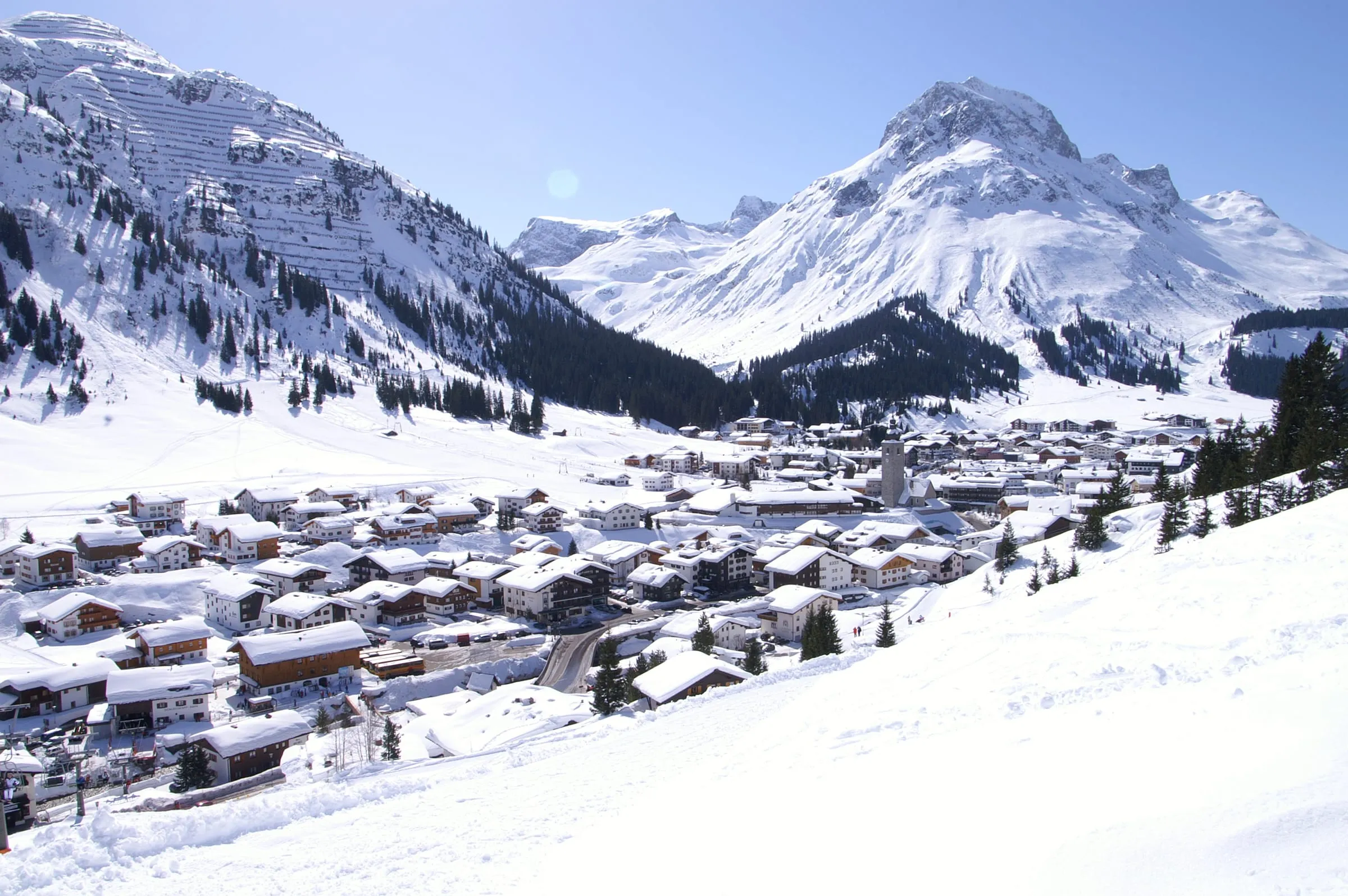
Ski Arlberg calls itself Austria’s largest connected ski area: more than 300 km of marked pistes and 85 lifts, plus about 200 km of off-piste variants, across St. Anton, St. Christoph, Stuben, Lech, Zürs and Warth-Schröcken. The Run of Fame circuit covers 85 km and 18,000 m of descent, and it’s rated advanced.
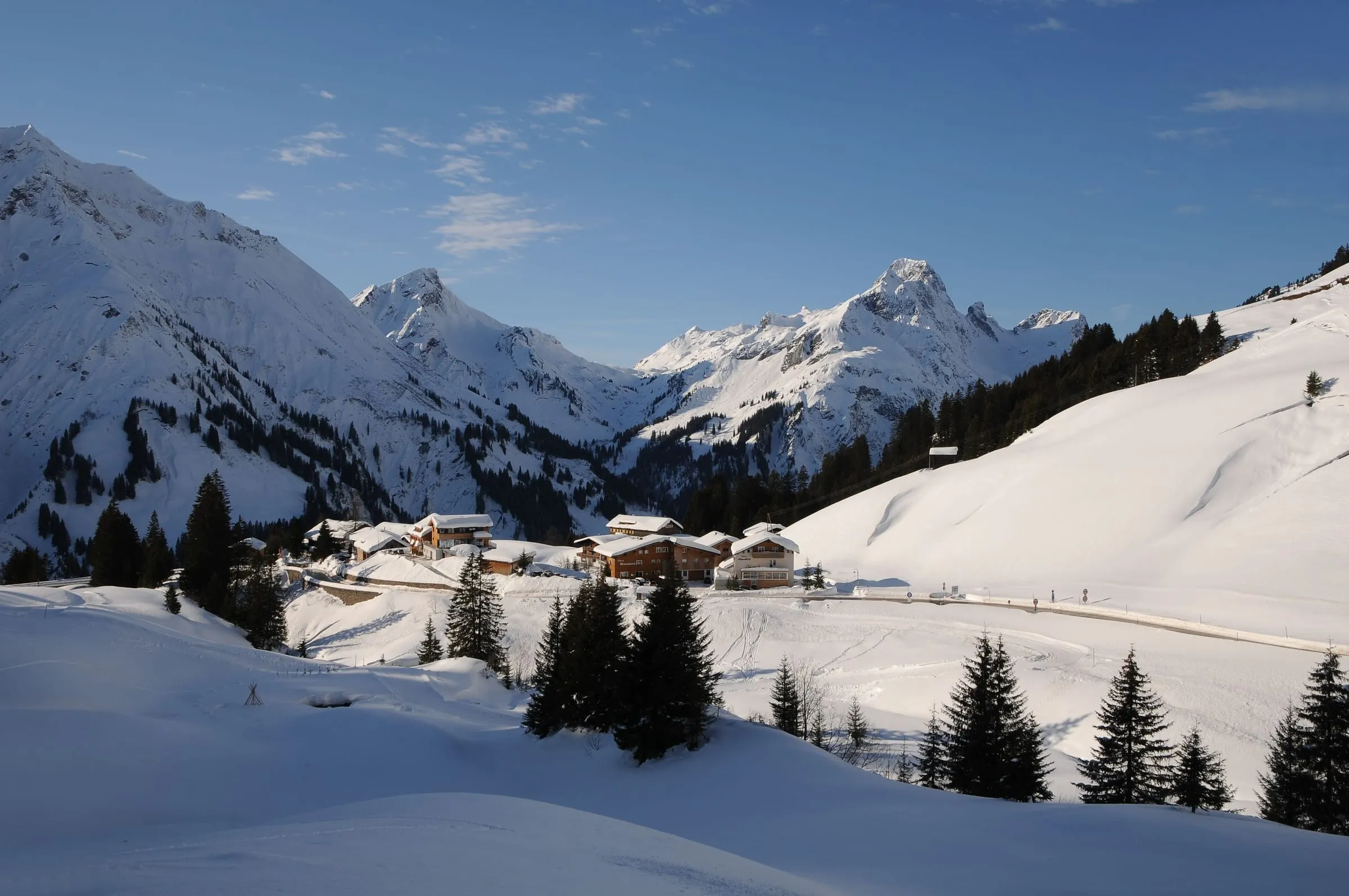
St. Anton is for experts and après, and it has a railway station in the village on the main line. Lech Zürs is gentler, upmarket and very snow-sure. Warth-Schröcken is the quiet, very snowy end, with about eleven metres of snow in an average winter. The St. Anton and Lech Zürs lifts are scheduled from 2 December 2026 to 18 April 2027. Compare where to stay in St. Anton.
Tignes – Val d’Isère: the high, snow-sure big area
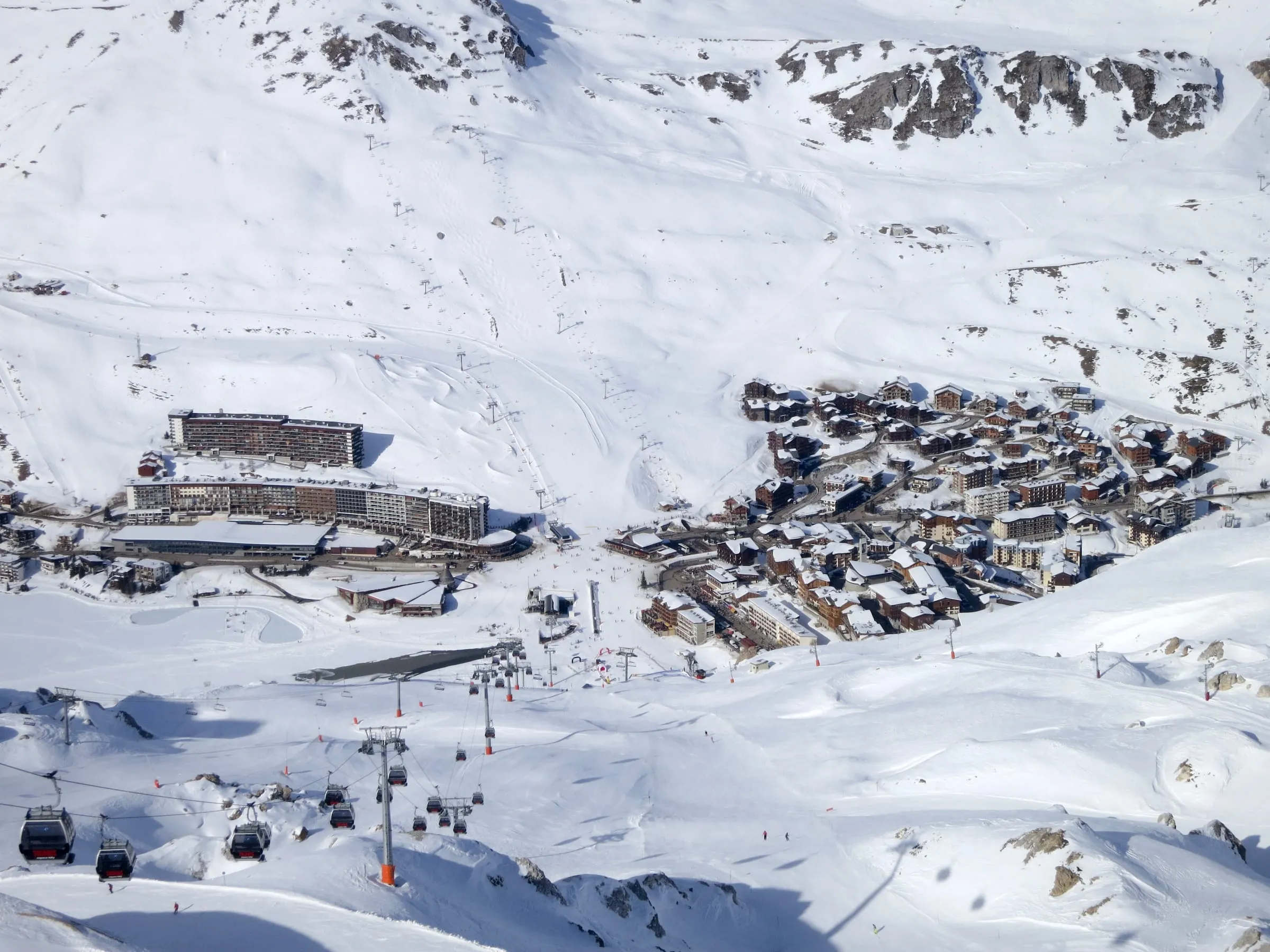
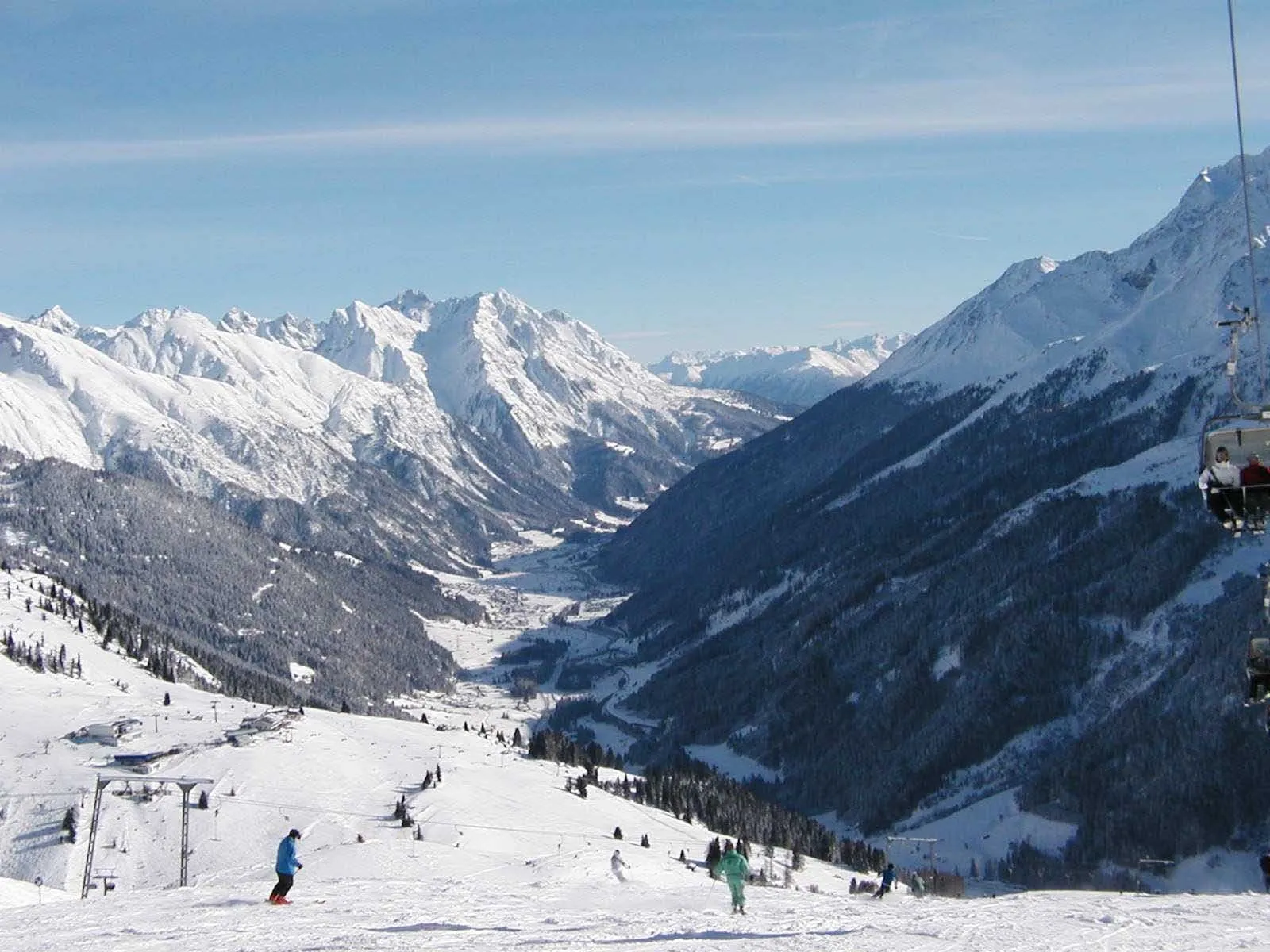
The area once called the Espace Killy has about 300 km of marked runs, 160 pistes and 71 lifts, up to 3,456 m on the Grande Motte glacier. Its mix tells you who it’s for: 23 green, 67 blue, 41 red and 29 black runs. Val d’Isère is the real village, with lifts scheduled from 28 November 2026 to 2 May 2027. Tignes has its main villages above 2,000 m and nine free beginner lifts. The trade-off is distance: Val d’Isère is roughly three hours from Geneva or Lyon. See hotels in Tignes.
Biggest ski areas in Tyrol and Salzburg: SkiWelt, Skicircus and the Zillertal
Austria’s next tier down is built for intermediates and families, with huts everywhere and easy links. It’s also lower, so check the snow first.
The SkiWelt Wilder Kaiser–Brixental has 275 km of pistes, 81 lifts and 80 family-run huts across eight resorts. Ellmau is the easy family base, Söll the lively one with Austria’s largest night-skiing area, and Westendorf has the SkiWelt’s steepest piste. Söll sits at about 703 m and the lifts top out below 1,900 m.
The Skicircus Saalbach Hinterglemm Leogang Fieberbrunn has 270 km and 70 lifts: 140 km of blue, 112 km of red and 18 km of black, up to 2,096 m. Saalbach Hinterglemm is the après and family centre, and Fieberbrunn is the freeride end. The Ski ALPIN CARD adds Zell am See and the Kitzsteinhorn glacier for up to 408 km.
In the Zillertal, the Ski- & Gletscherwelt Zillertal 3000 combines Mayrhofen and the Hintertux Glacier for 206 km and 65 lifts, from 630 m to 3,250 m, though the glacier is reached by ski bus, not on skis. Across the valley, the Zillertal Arena above Gerlos has 150 km and 52 lifts, with 77% of its pistes above 1,700 m. A pass of two days or more covers the whole valley, glacier included. Two more big Tyrolean areas sit just below the SkiWelt: the high Silvretta Arena from Ischgl (239 km, 46 lifts, up to 2,872 m) and KitzSki from Kitzbühel (233 km, 58 lifts), which is low, so check the valley runs.
Biggest ski area in the Pyrenees: Grandvalira
Grandvalira in Andorra has 215 km of pistes, around 140 runs and 74 lifts across seven sectors, from Pas de la Casa on the French border to Encamp. It’s the biggest ski area in the Pyrenees and suits beginners and families especially well, with seven snow gardens. The lifts are scheduled to run from 4 December 2026 to 4 April 2027. Compare where to stay in Grandvalira.
Monterosa Ski: three valleys and big freeride
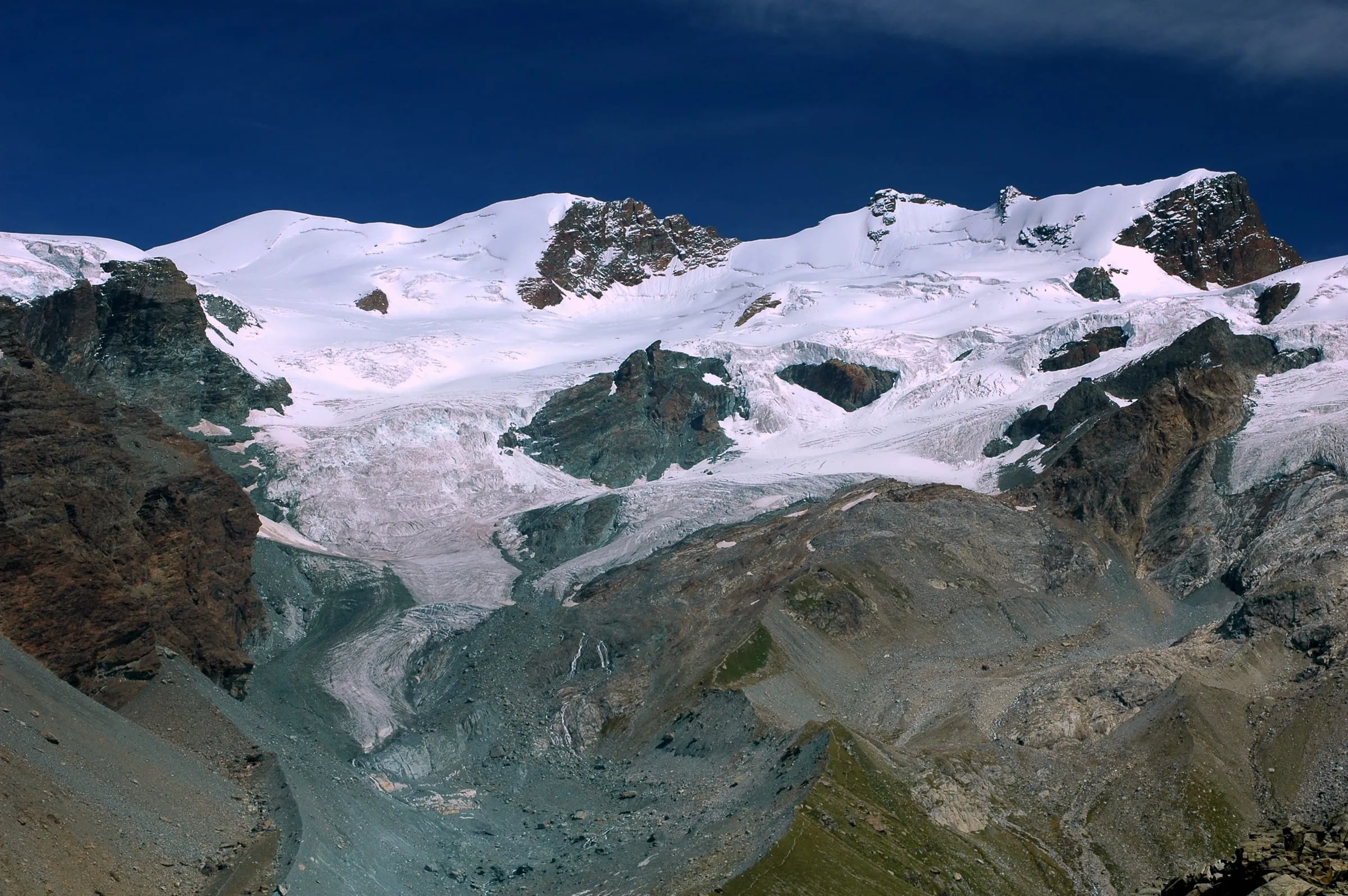
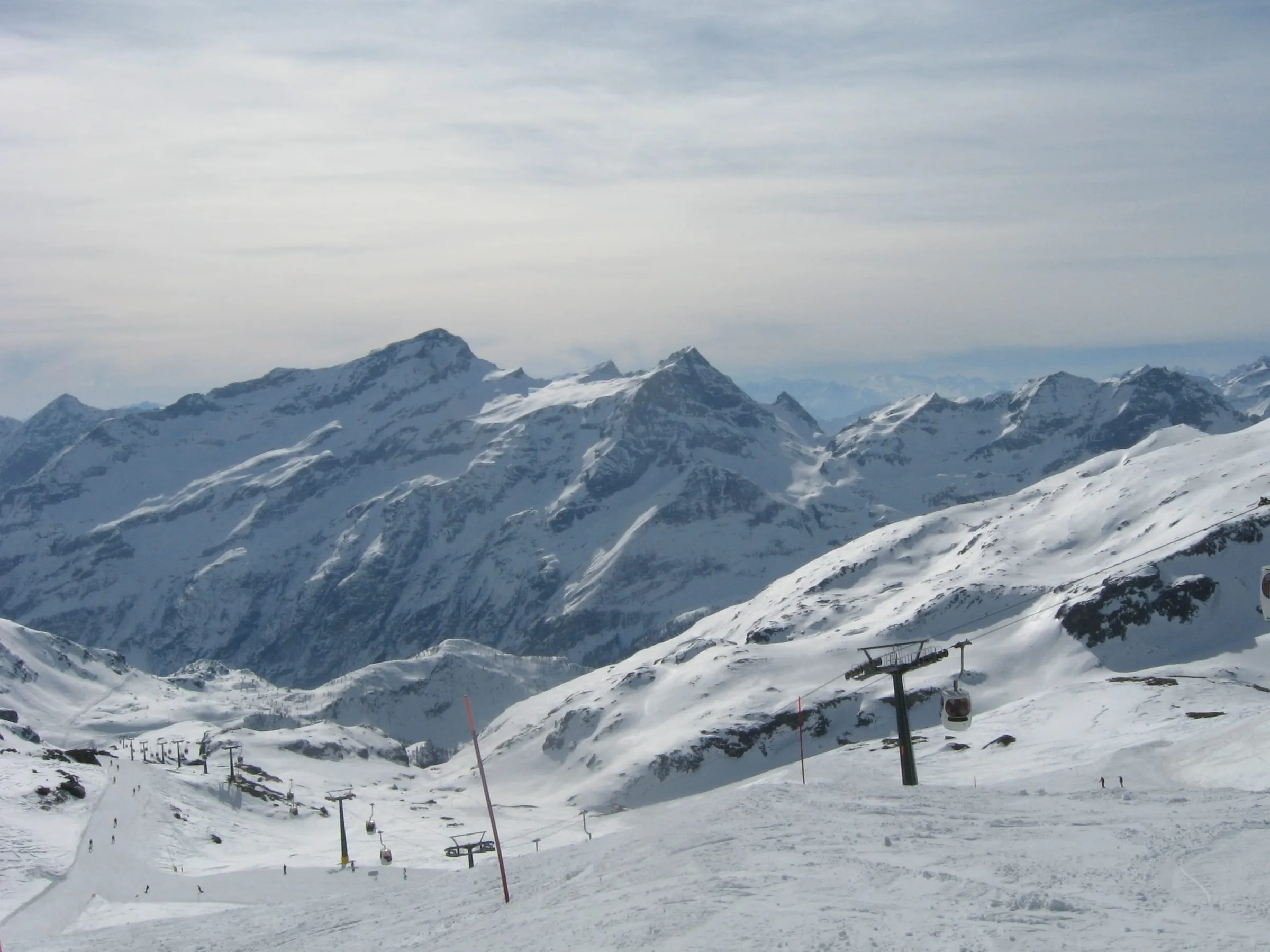
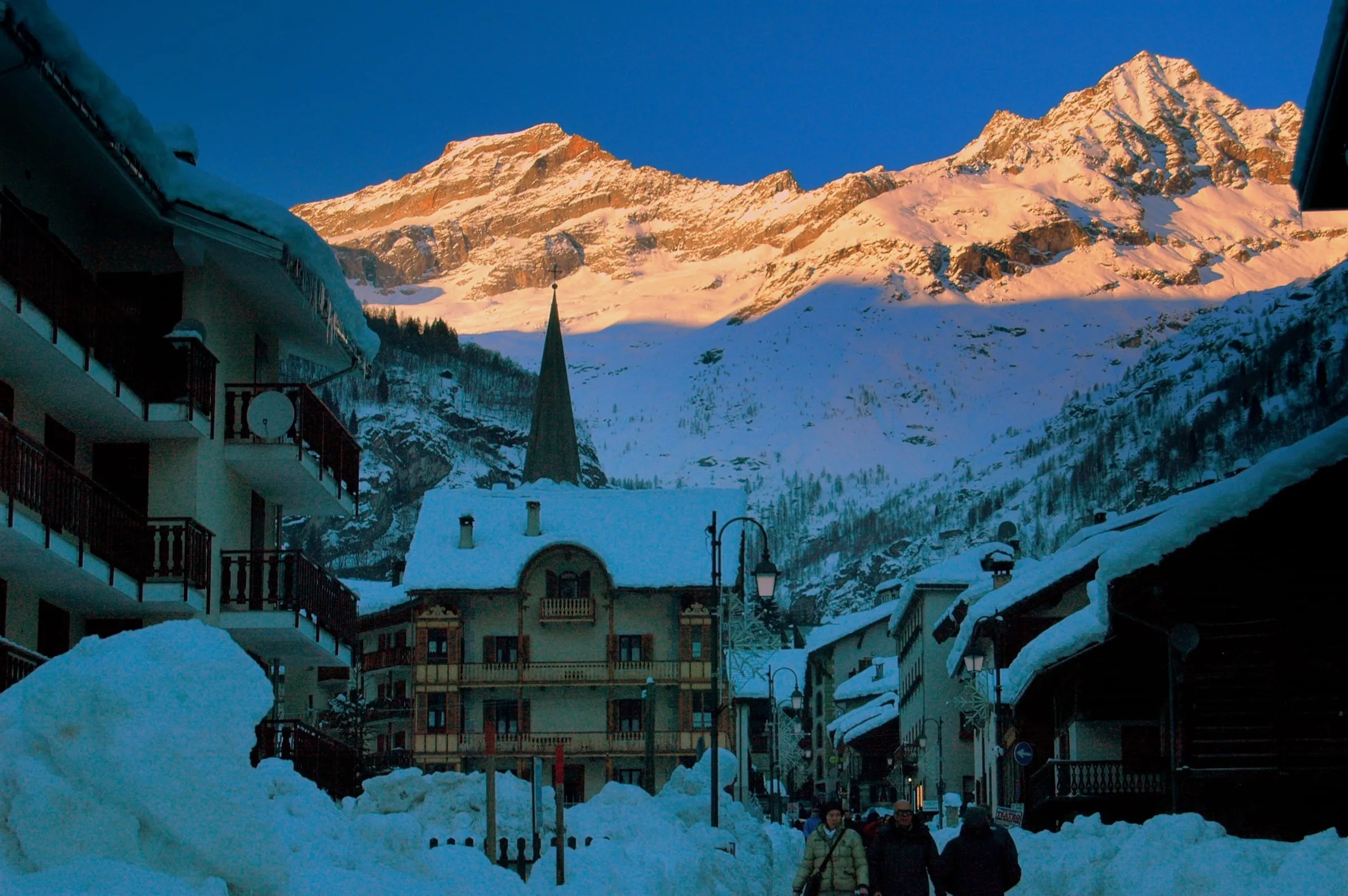
Monterosa Ski is smaller on paper, at more than 100 km of pistes, but it skis like a journey: from Champoluc over the Colle Bettaforca to Gressoney and over the Passo dei Salati to Alagna. With the Freeride Paradise pass the lifts reach Punta Indren at 3,275 m, and Alagna is one of the Alps’ great off-piste bases. The area opens on 28 November 2026. Strong wind can close the Salati link, so stay in Gressoney, in the middle, if you want both directions.
How to choose a big ski area at short notice
- Altitude first. In a thin or mild spell, pick Tignes – Val d’Isère, the Matterhorn Ski Paradise, Val Thorens or Paradiski over the low Austrian areas and Evasion Mont-Blanc. Our guide to snow-sure ski resorts has more.
- Stay at the link. A big area only works if your base connects into it. Méribel, Gressoney and Avoriaz are good examples.
- Be honest about ability. Intermediates get the most from big areas. For steeper terrain, see our best ski resorts for experts, and for families, our best family ski resorts in Europe.
- Check the lifts and the forecast, then check live availability on Booking.com. Our last-minute ski trips guide covers booking at short notice.