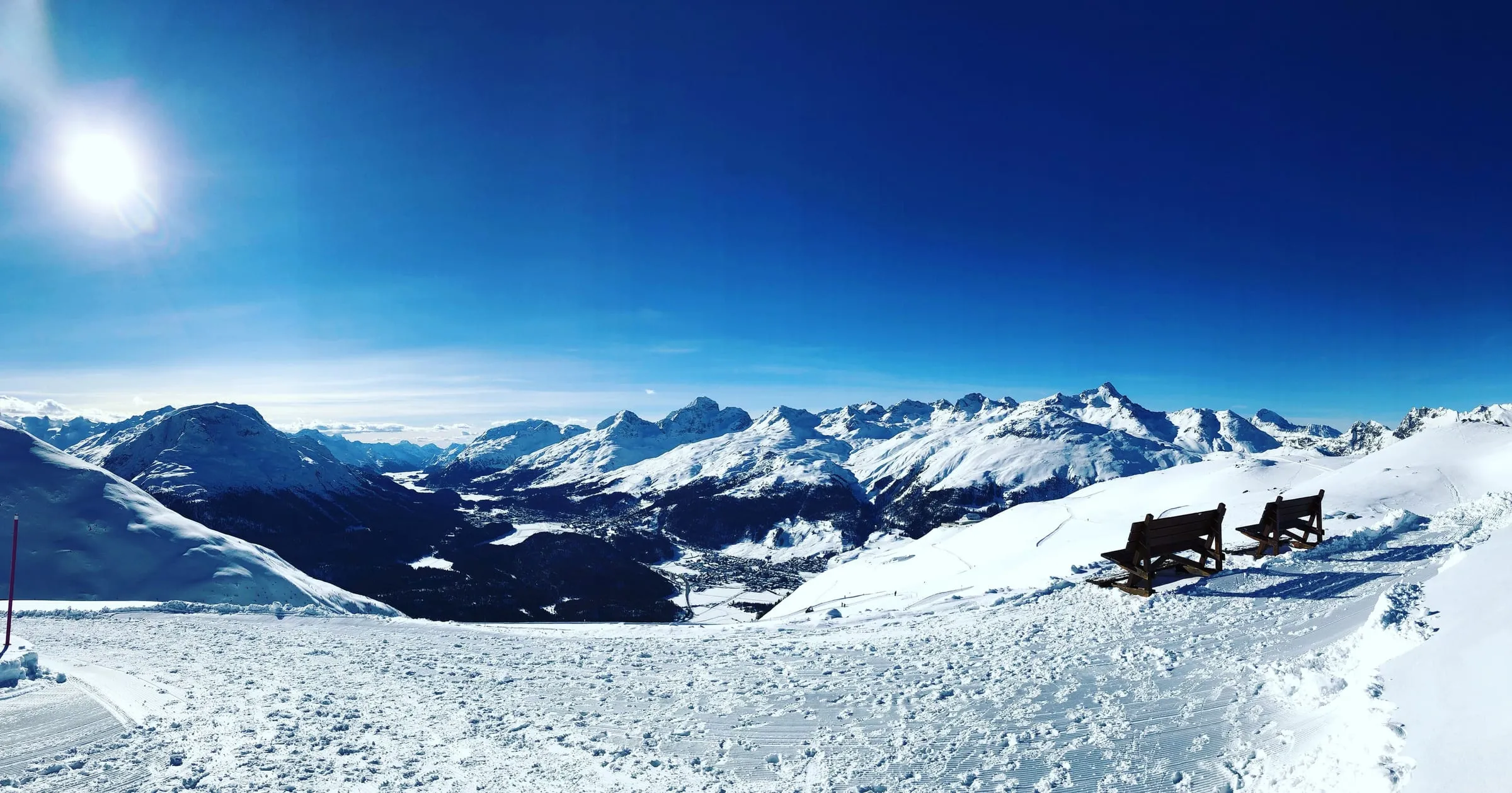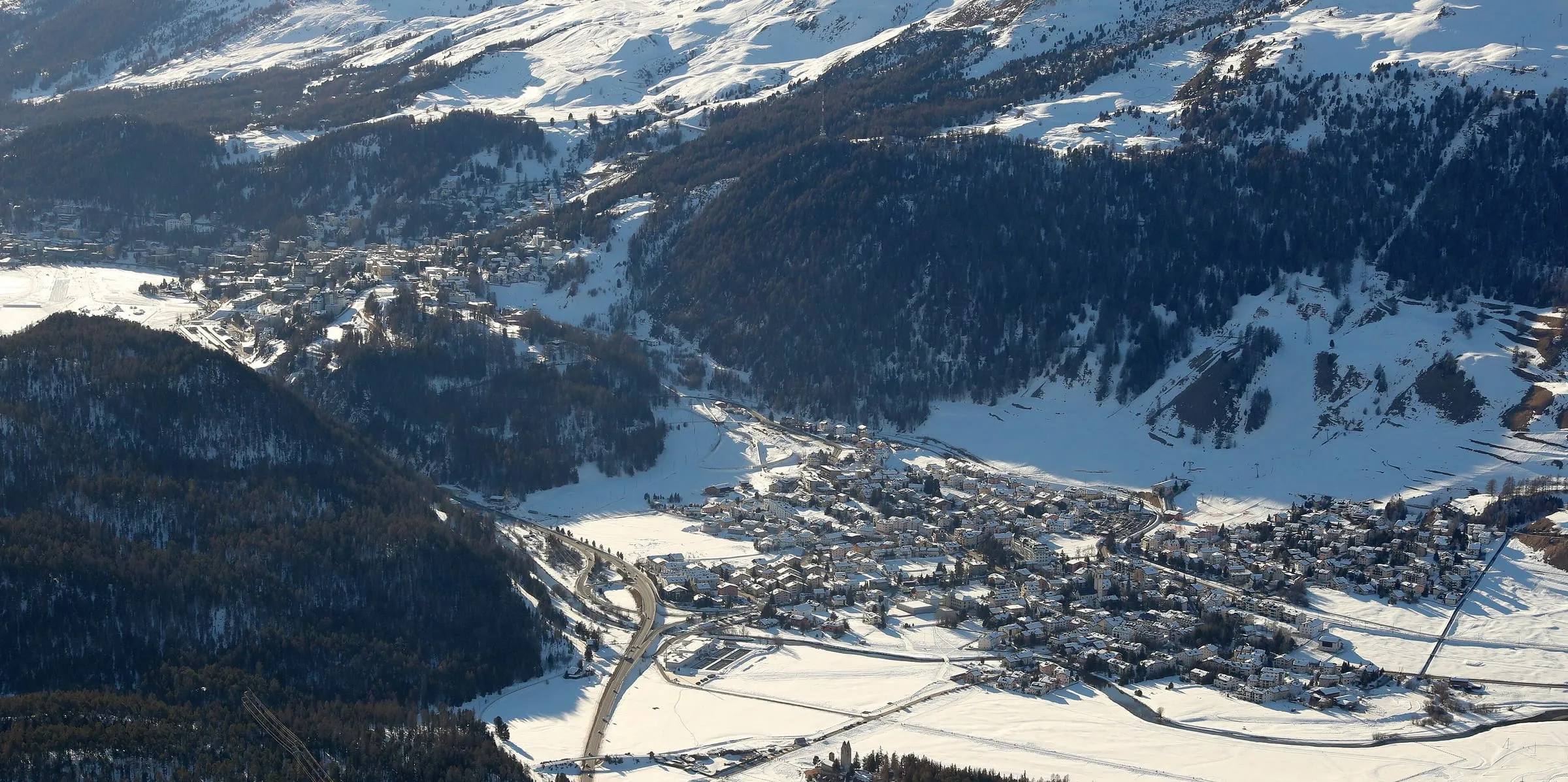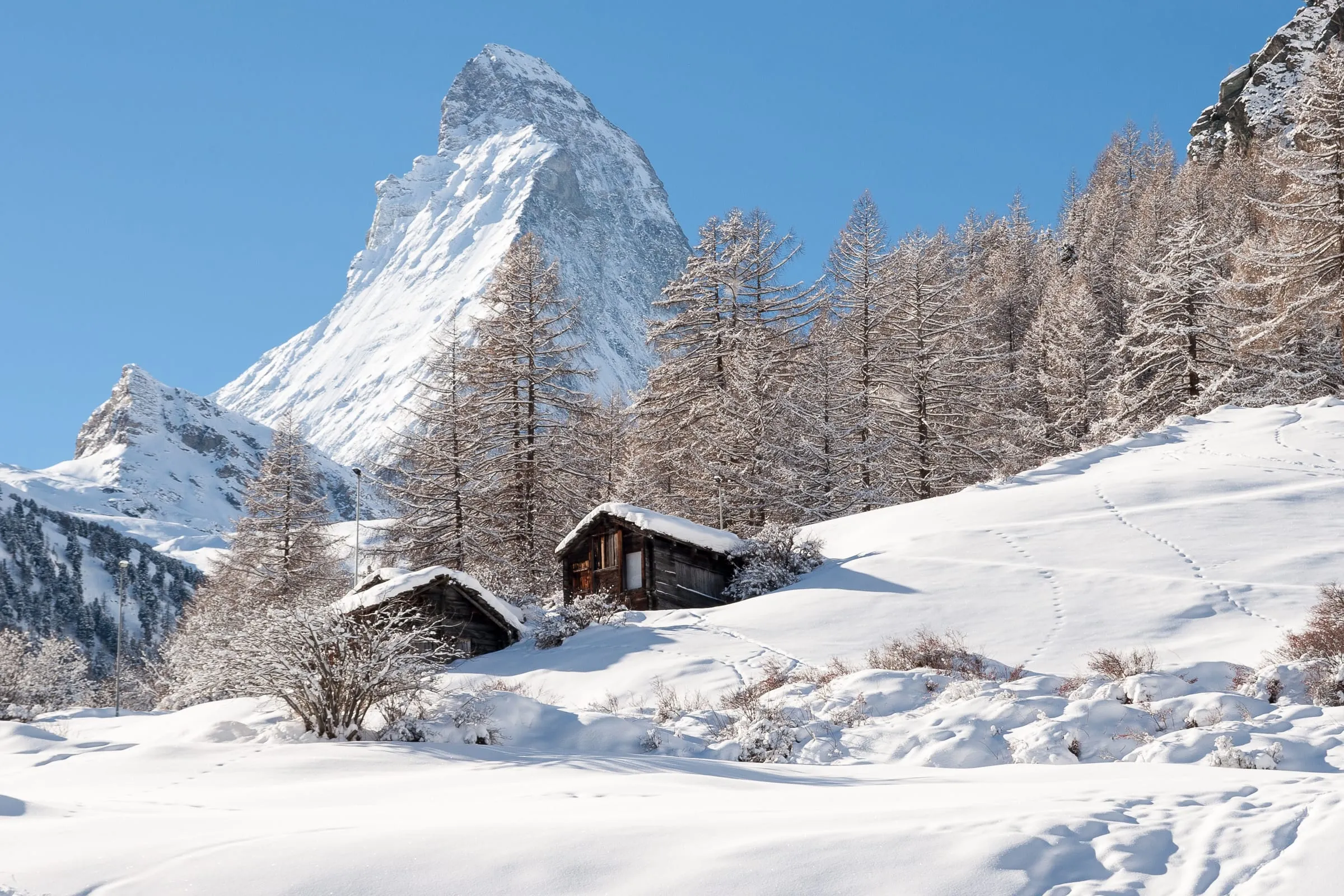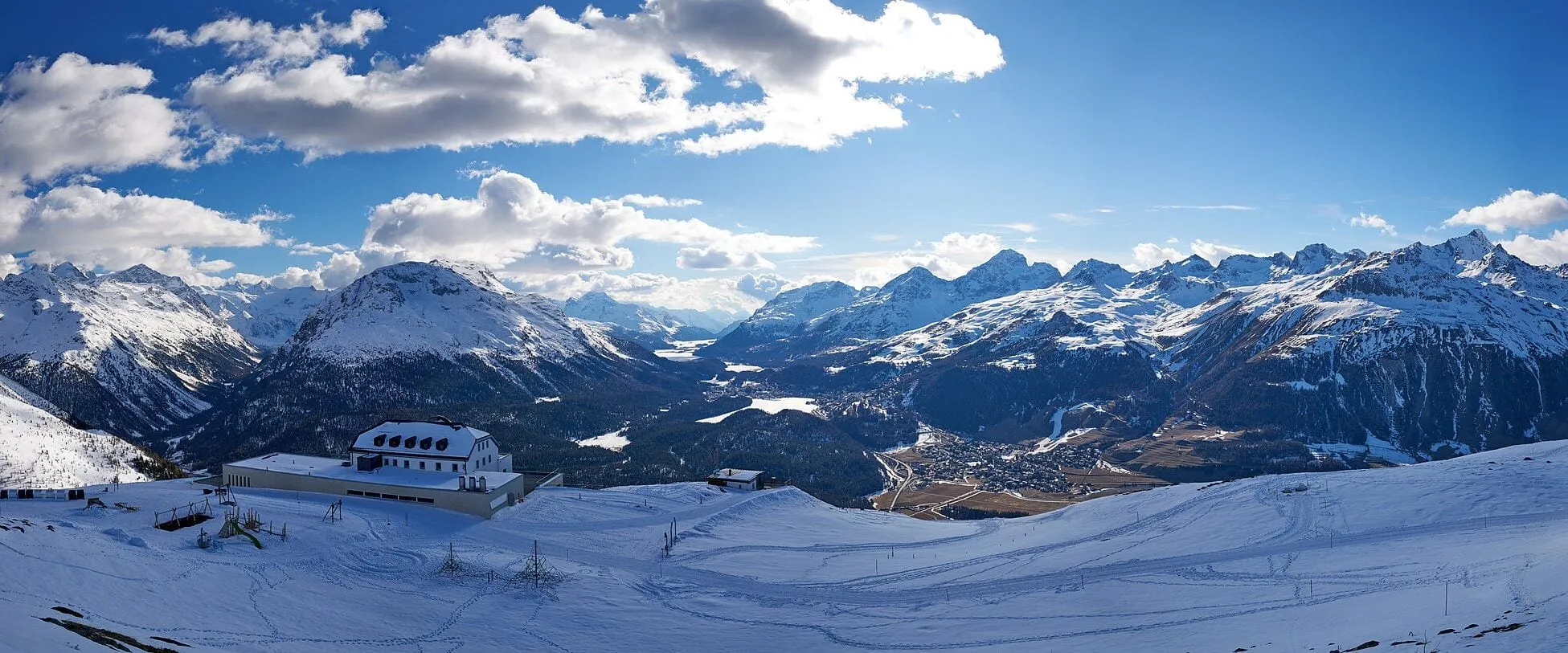
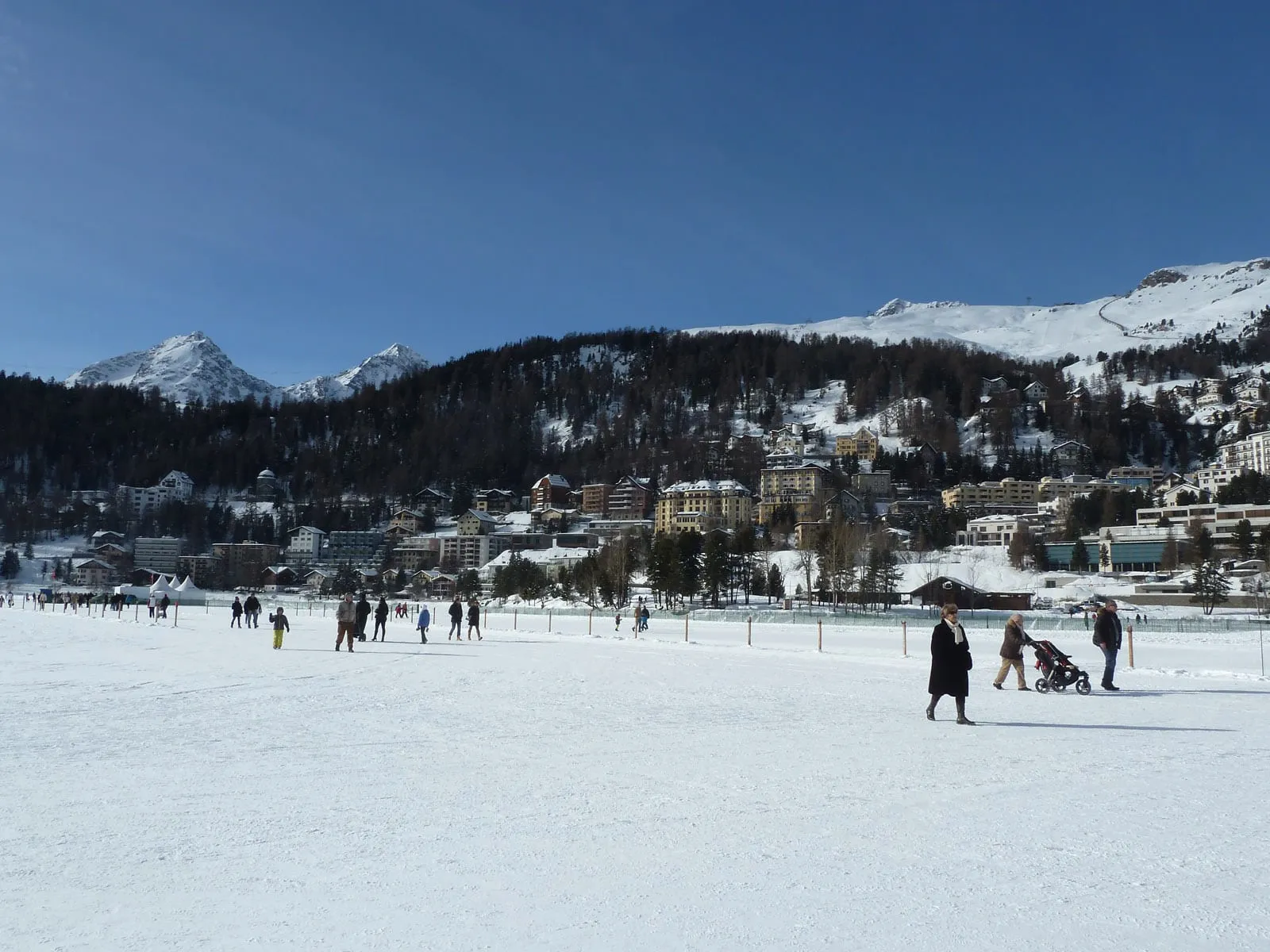
St. Moritz sits at 1,856 m in the Upper Engadin in Graubünden, beside a lake that freezes over in winter, and claims to be where winter tourism began. It’s famous for glamour: five-star hotels, designer shops and events on the frozen lake. But the skiing is serious too, with high, sunny slopes and several separate ski areas a short bus or train ride apart.
The Engadin is a high, dry valley, so snow and cold are reliable. For a last-minute trip, that altitude counts for a lot.
St. Moritz ski area: Corviglia and the Engadin mountains
The Engadin has four large ski areas and five smaller ones. They aren’t linked by lift, so you move between them by bus or train. Guests at participating hotels and holiday apartments staying more than one night get free public transport in the Upper Engadin, which makes hopping between areas easy.
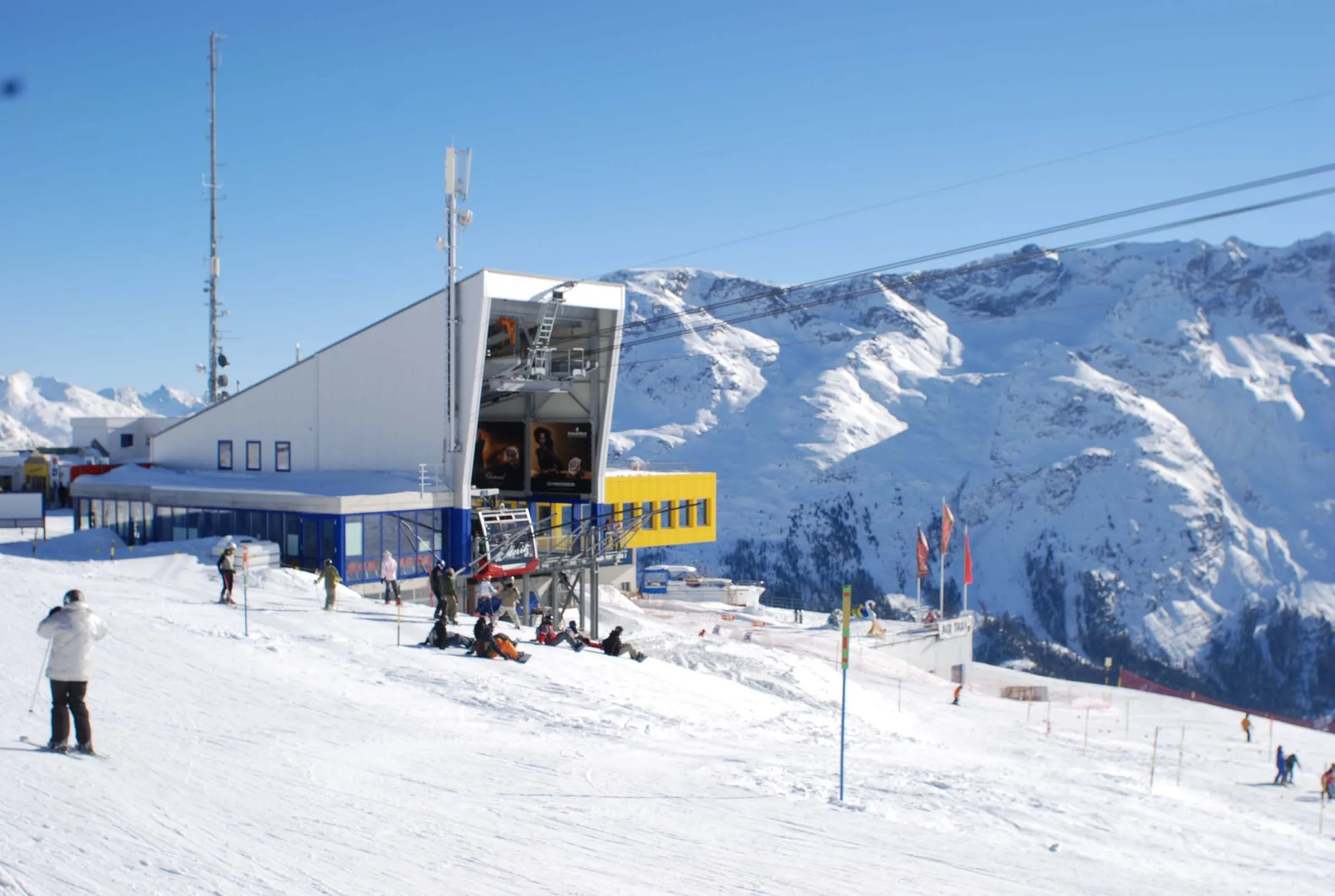
- Corviglia is St. Moritz’s home mountain, reached by funicular from St. Moritz Dorf or by lift from Celerina. It has 24 lifts and 155 km of pistes: 42 km blue, 79 km red and 34 km black. Piz Nair, at over 3,000 m, is the high point.
- Corvatsch-Furtschellas, above Silvaplana and Sils, has 120 km of pistes and a top station at 3,303 m, the highest in Graubünden.
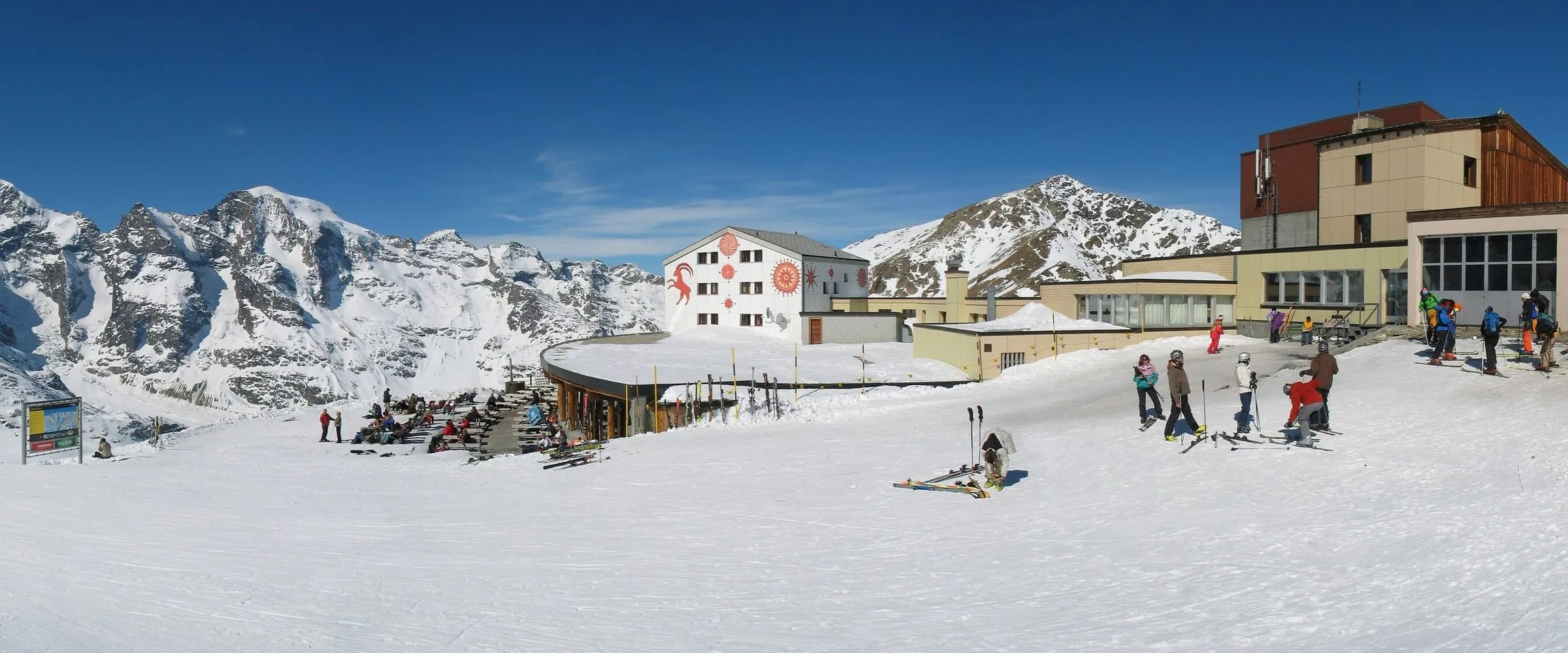
- Diavolezza-Lagalb, towards the Bernina pass, usually runs from mid-October to the start of May and has a glacier run.
- Zuoz is a smaller family area further down the valley.
Skiing in St. Moritz for beginners
Beginners have their own areas on Corviglia, including the Safe Kids Zone at Marguns for children, and the Princess run (No. 21) from Trais Fluors to Marguns is an easy blue for a first “big mountain” run. The Swiss Ski & Snowboard School St. Moritz runs courses in St. Moritz, Celerina and Samedan, with its mountain base at Salastrains.
Skiing in St. Moritz for intermediates
This is intermediate country: mostly red and blue cruising on big, open terrain. With 79 km of red runs on Corviglia alone, plus Corvatsch across the valley, there’s plenty to fill a week. The White Carpet early opening means freshly groomed pistes from 7.45 am.
Skiing in St. Moritz for experts
Corviglia has 34 km of black runs, and the Speed Check run (No. 15) and the timed Ski Run giant slalom course let you test yourself. The bigger challenges are off-piste on Corvatsch and Diavolezza, which is high, glaciated terrain: go with a guide.
Corvatsch, Diavolezza and the Hahnensee: St. Moritz’s signature runs
The great thing about a week in St. Moritz is the variety. Three runs stand out:
- Hahnensee is the long run from Corvatsch back down to St. Moritz, a good way to end a day across the valley.
- The Diavolezza glacier run is an 8 km descent down to Morteratsch.
- Corviglia’s freestyle and race features: the Crowland snowpark (open from mid-December to early April) and the Corviglia Cross, a 600 m skicross course below Salastrains.
Corvatsch also runs Snow Night evening skiing events, which are a fun change of pace if you’re there on the right date.
Snow in St. Moritz and the 2026/27 season
Corviglia opens on 28 November 2026, with an extra day for season-pass holders on 27 November. Graubünden Tourism lists its season end as 4 April 2027. Corvatsch is listed from 21 November 2026 to 25 April 2027, and Diavolezza usually runs from mid-October to the start of May, so it’s the place for very early or late trips.
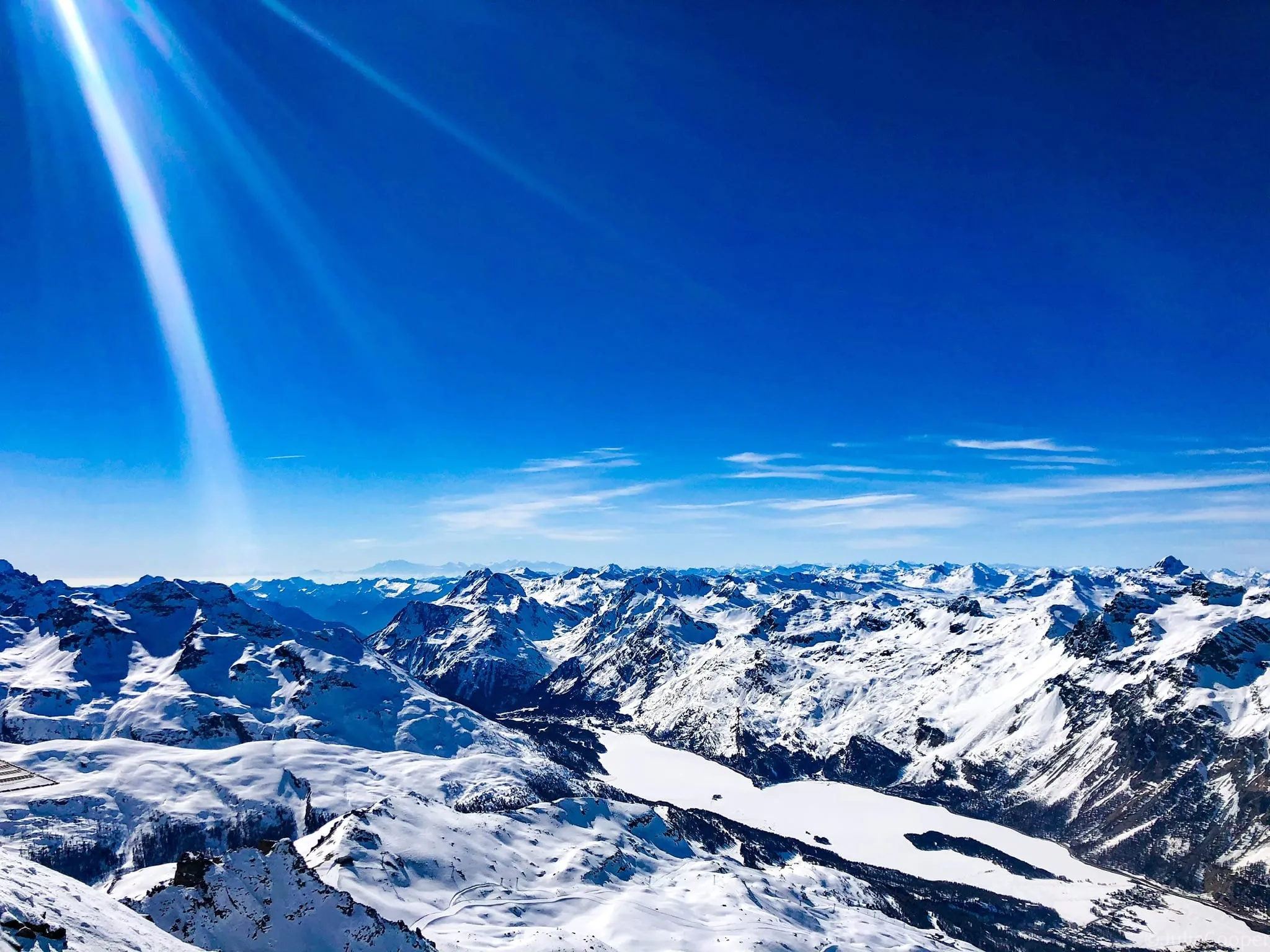
The Engadin is high, and the valley floor is already at about 1,800 m, so snow and cold are reliable. The downside is that much of the terrain is above the tree line, so stormy days bring flat light and wind. December and January can be bitterly cold.
Is St. Moritz good for a last-minute ski trip?
Mostly, yes. The altitude means snow is rarely the problem, and with Diavolezza’s glacier and Corvatsch running later than Corviglia, there’s usually somewhere good to ski from November to April. St. Moritz is also three hours by train from Zurich, so you don’t need to drive.
Two things work against booking late. First, Engadin lift passes are dynamically priced: prices are calculated on current demand, and there are early-booking discounts, so a last-minute pass can cost more. Second, big events such as World Cup races and the White Turf horse races on the frozen lake fill hotels. The fix for the first is a hotel that includes a lift pass: the Kulm includes a Ski & Mountain Pass for each night booked, and the Grand Hotel des Bains Kempinski sells guests a ski pass for the whole stay. See where to stay in St. Moritz.
St. Moritz lift passes
- Dynamic pricing with early-booking discounts on day and multi-day passes. Buy online as soon as your dates are fixed.
- Children under 6 ride most lifts free with their parents. A few smaller lifts, including Maloja, Surlej, Provuler in Celerina and Survih in Samedan, are excluded.
- Family tickets for the Engadin mountains are available. Check the current terms when you book.
- Look for hotel-included passes, which can be much better value than buying at the window.
Après-ski and things to do in St. Moritz
St. Moritz is more about long lunches and smart evenings than raucous après. Dorf has the grand hotels, bars and designer shops; Bad, by the lake, is quieter.
Off the slopes, the frozen lake hosts famous events through the winter, and there’s a lot more besides: winter hiking, more than 250 km of cross-country trails, the OVAVERVA pool and spa with indoor pools and water slides, and Muottas Muragl, with its funicular, winter walks and a 4.2 km sledge run.
Who St. Moritz suits, and who it doesn’t
- Great for: intermediates who love wide, sunny runs, people who want several ski areas in one holiday, luxury breaks, cross-country skiers and rail travellers.
- Think twice if: you want one big linked area with ski-in/ski-out everywhere, a budget week, or a party-focused trip.
Skiing with children? Read our guide to St. Moritz with kids.
How to get to St. Moritz
By train
St. Moritz Tourism says the train from Zurich main station takes three hours. The last part of the journey is on the Rhaetian Railway: either over the Albula line, a UNESCO World Heritage route with spiral tunnels and the Landwasser Viaduct, or from Landquart via Klosters and the Vereina tunnel. The Glacier Express and Bernina Express also run to St. Moritz.
Before the season, note that the Albula line is closed between Thusis and Preda from 29 October to 13 November 2026, with replacement buses. Travellers from Chur and Landquart should use the Prättigau and Vereina route instead.
By car
It takes about three hours from Zurich or Milan and four to four and a half hours from Munich. From the north, either cross the Julier pass from Chur, or avoid the passes with the Vereina car train from Klosters (Selfranga) to Sagliains, which takes about 18 minutes. From Italy, you can come over the Maloja pass. The Julier, Maloja and Ofen passes are open all year; the Albula and Flüela passes are closed in winter.
You need a Swiss motorway vignette (CHF 40), either as an e-vignette or a sticker. The 2026 vignette is valid until 31 January 2027, and the 2027 one from 1 December 2026. Switzerland has no general legal requirement for winter tyres, but if your car isn’t properly equipped for winter you can be held liable after an accident, and your insurer may pay less. On the Engadin passes, fit winter tyres and carry chains: you must use them where signs say so.
Nearest airports
Zurich, Milan and Innsbruck are the nearest international airports, with bus transfers to the Upper Engadin. The small Engadin Airport at Samedan has charter flights and air taxis.