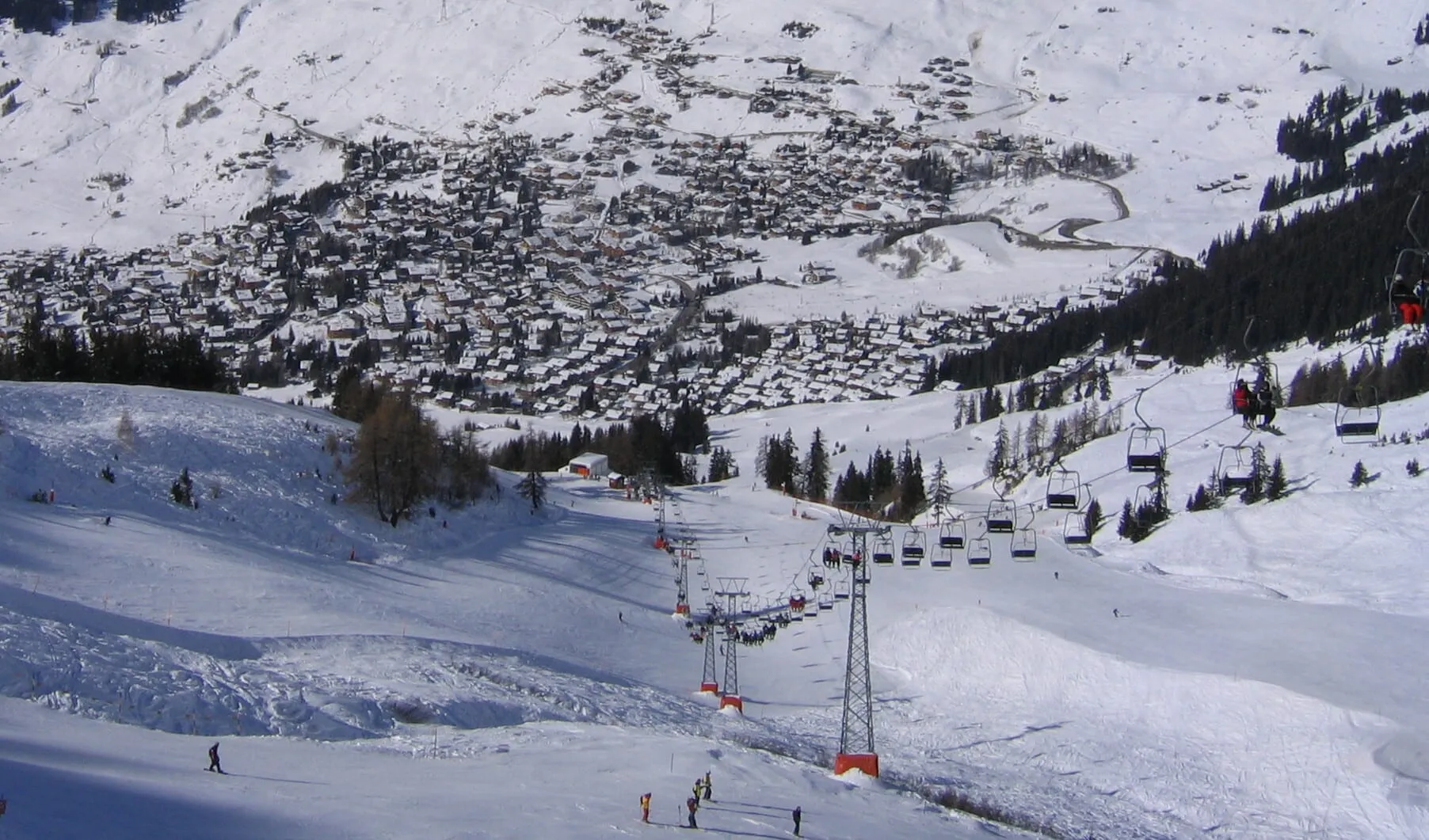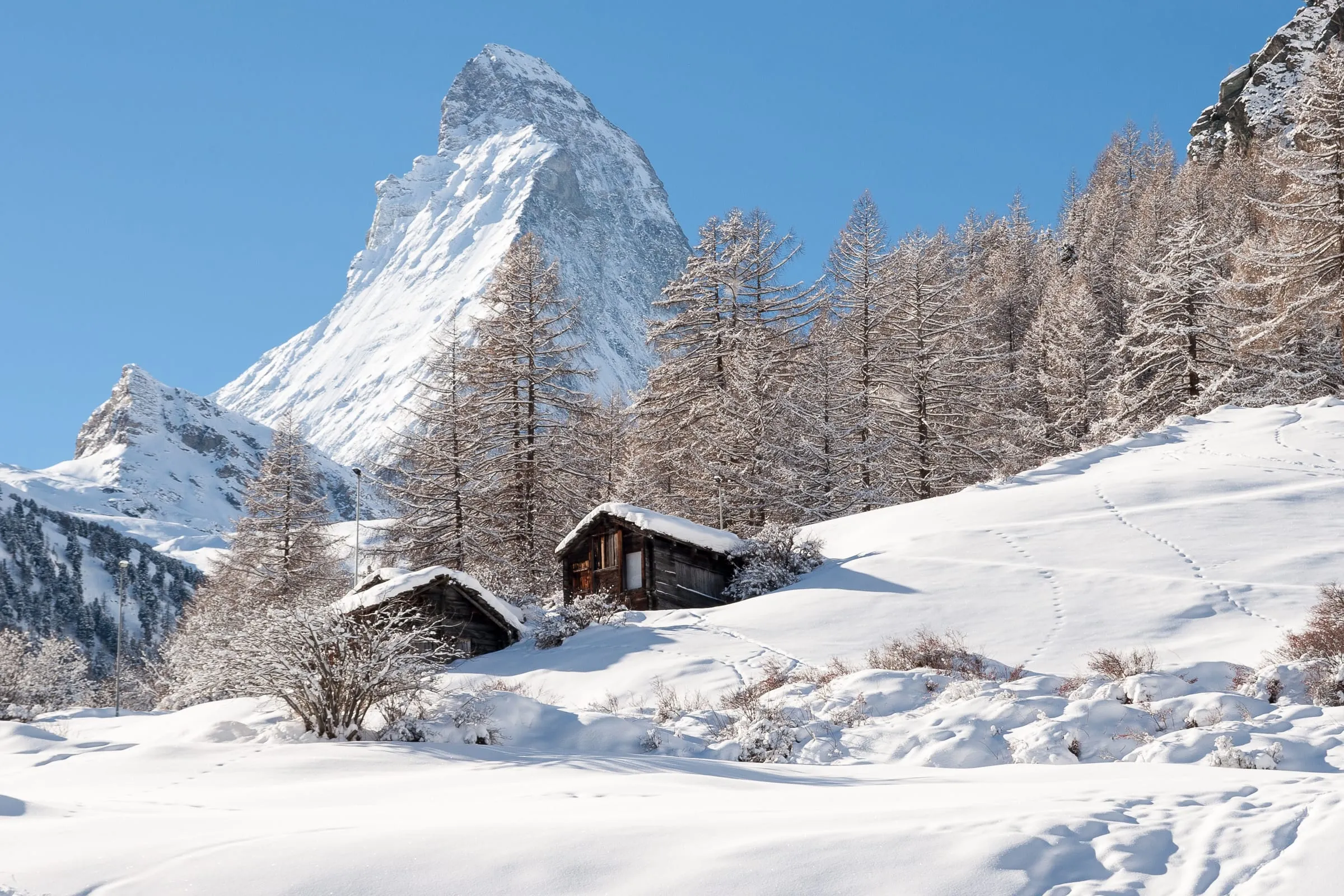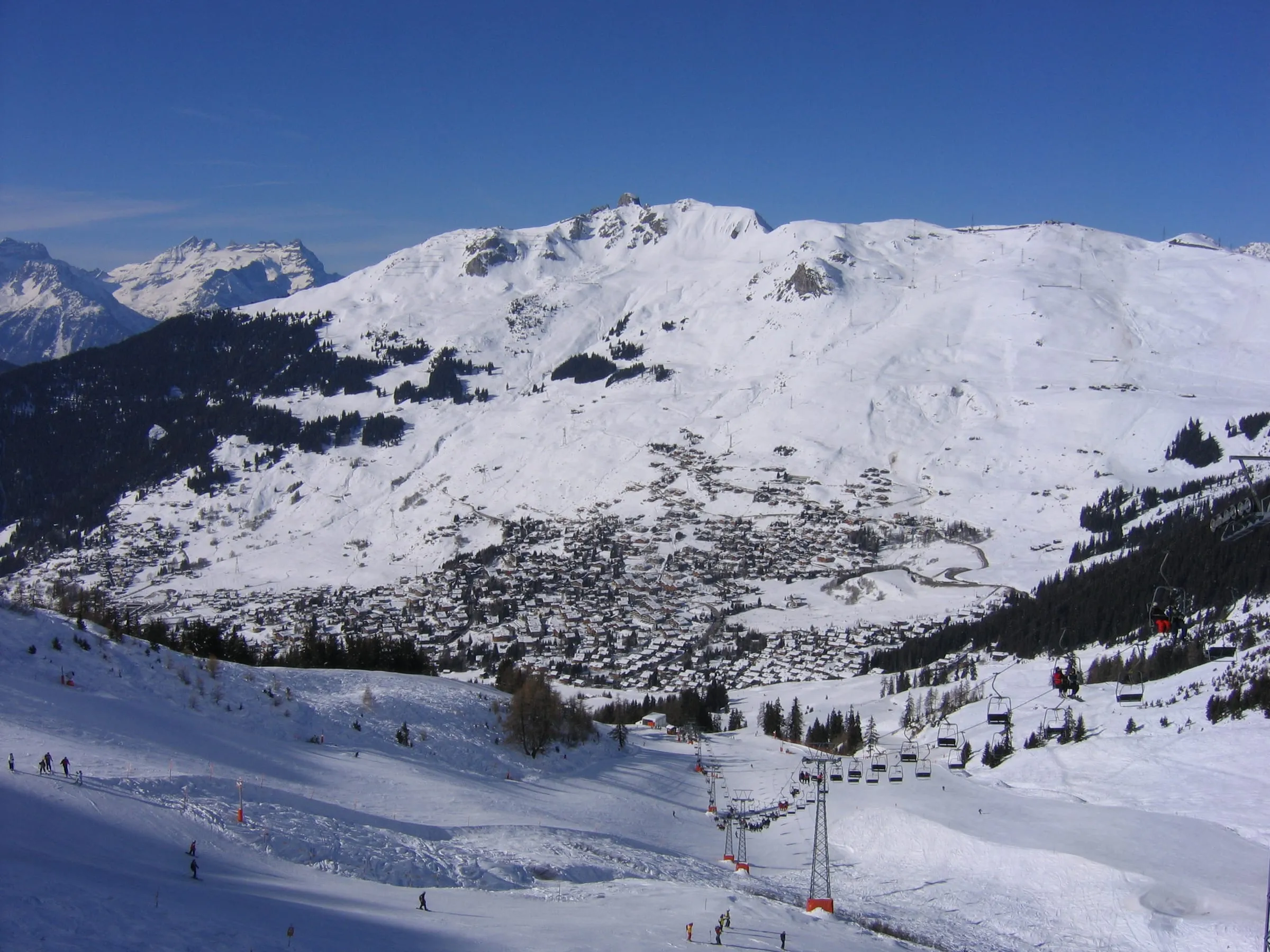
Verbier sits on a wide, sunny plateau at about 1,500 m above the Val de Bagnes in Valais. It’s the best-known resort in the 4 Vallées, which its lift company calls the largest connected ski area in Switzerland: 410 km of pistes stretching from Verbier to Nendaz, Veysonnaz and Thyon, with Mont-Fort at 3,330 m as the high point.
Verbier’s reputation rests on steep, off-piste terrain and some of the liveliest après-ski in Switzerland. But it’s also a surprisingly practical place to learn, with free beginner areas in the village, and you can get there by train and gondola.
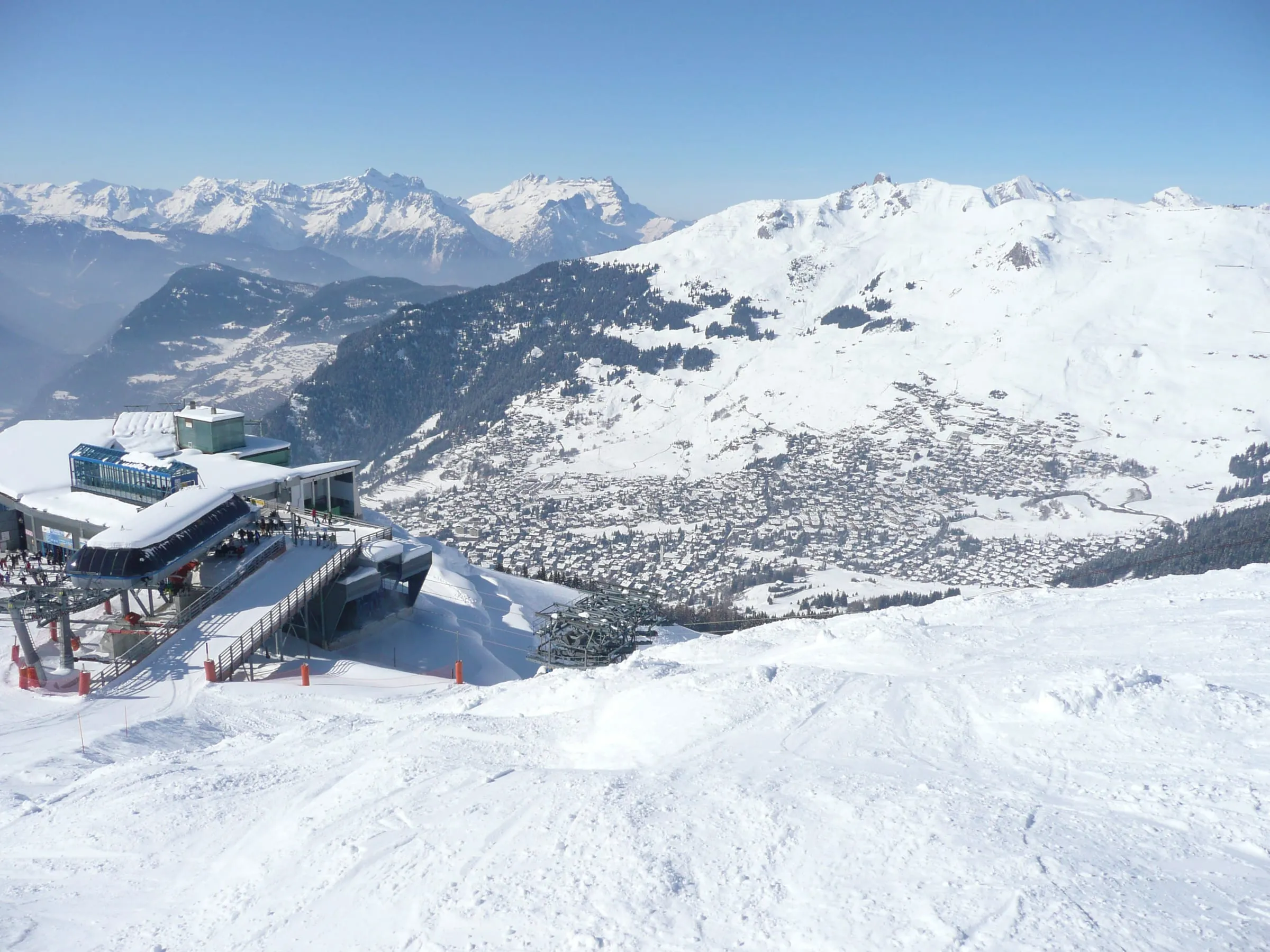
Verbier ski area: 410 km in the 4 Vallées
Verbier’s own lift pass covers four sectors, and you can buy passes for each:
- Verbier: slopes from about 1,500 m to 2,700 m, through Les Ruinettes, La Chaux and Les Attelas, with the link up to Mont-Fort.
- La Tzoumaz and Savoleyres: 1,500 m to 2,354 m. Wide, gentle runs on the La Tzoumaz side, and sunnier, longer descents on the Savoleyres side.
- Bruson: 1,080 m to 2,200 m, reached from Le Châble. Wooded and sheltered, so it’s the place to go on stormy, flat-light days.
- The 4 Vallées: the full area, linking across to Nendaz, Veysonnaz and Thyon for long touring days.
Skiing in Verbier for beginners
Beginners start on the free magic carpets at Les Esserts and Les Moulins, in the village and reached by free shuttle bus. The next step is Le Rouge, then the blue runs at La Chaux, which has easy access. La Tzoumaz has its own free magic carpet and a quieter beginner area.
Skiing in Verbier for intermediates
There are plenty of reds and blues in the Verbier sector, and the wider 4 Vallées turns a week into a proper tour. Some links between the valleys are long, so start early if you’re heading for Thyon.
Skiing in Verbier for experts
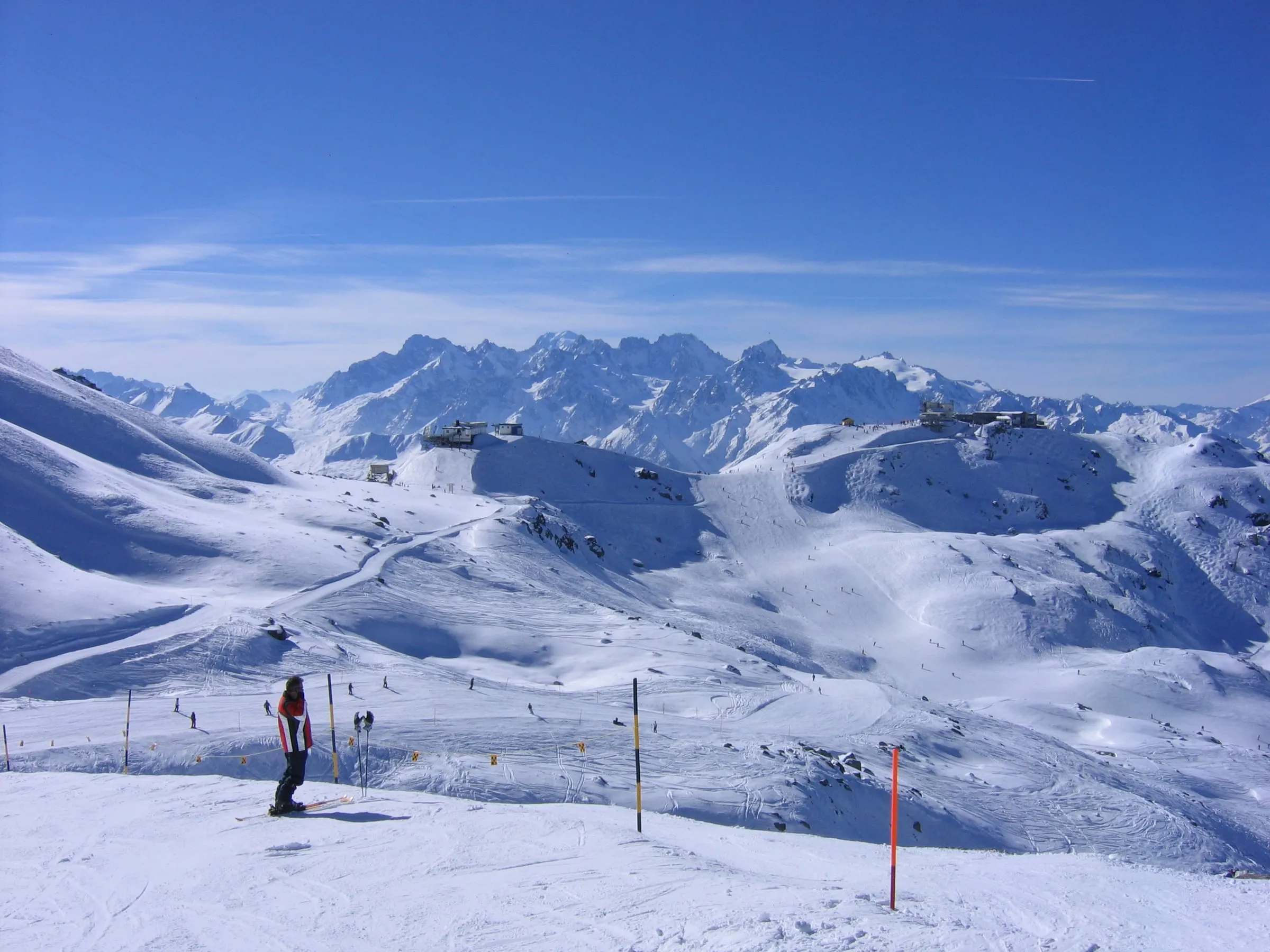
This is why most people come. Verbier has huge off-piste terrain and signposted freeride itineraries, marked with yellow lines on the piste map. Anything beyond those markers is unpatrolled high-mountain terrain with real avalanche risk, so hire a guide. Heliskiing is available too.
Mont-Fort and the Gentianes-Tortin run: Verbier’s famous terrain
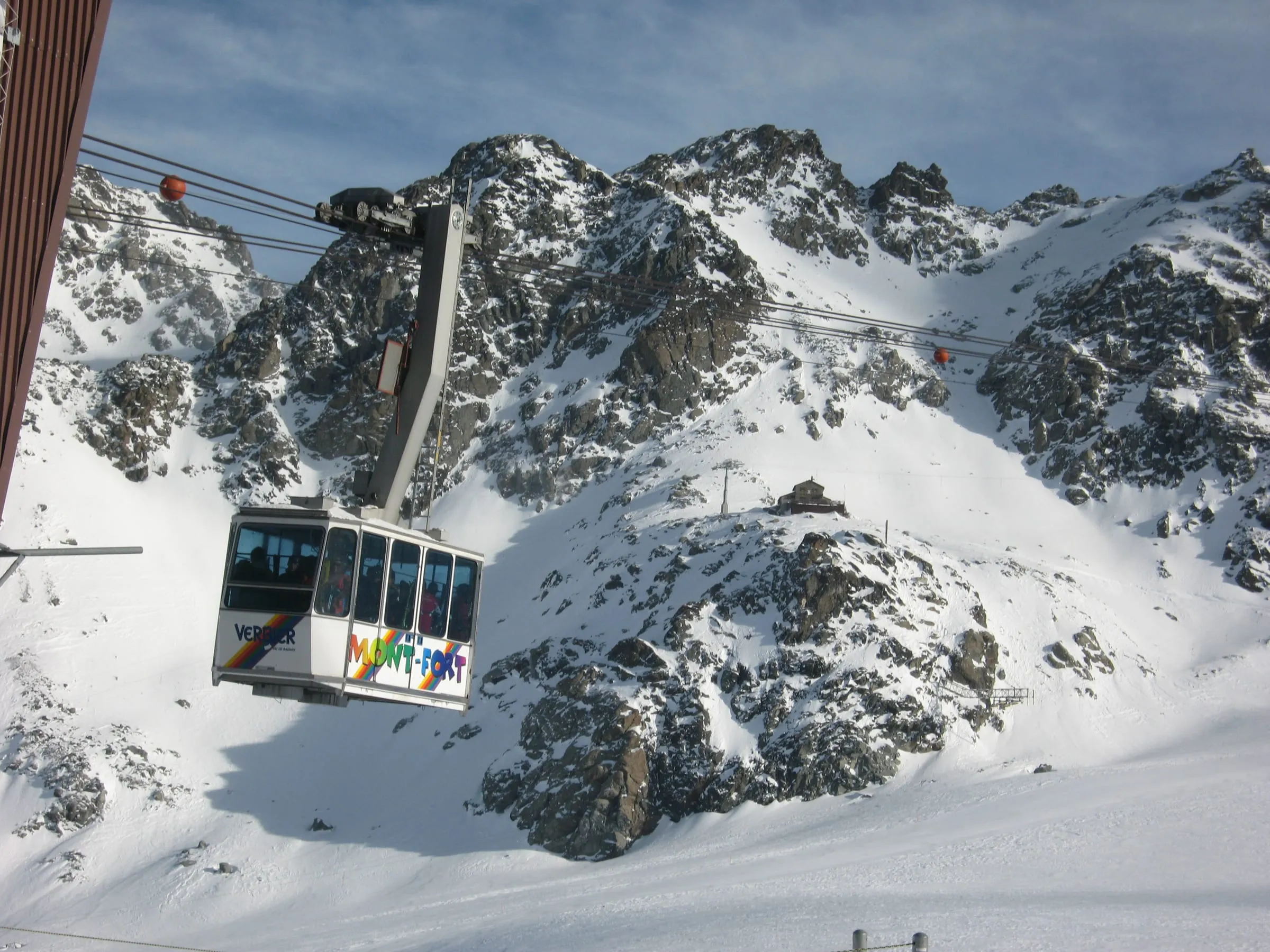
Mont-Fort, at 3,330 m, is the highest point of the 4 Vallées, reached by cable car from the Col des Gentianes. On a clear day the view from the top takes in a long line of Alpine peaks.
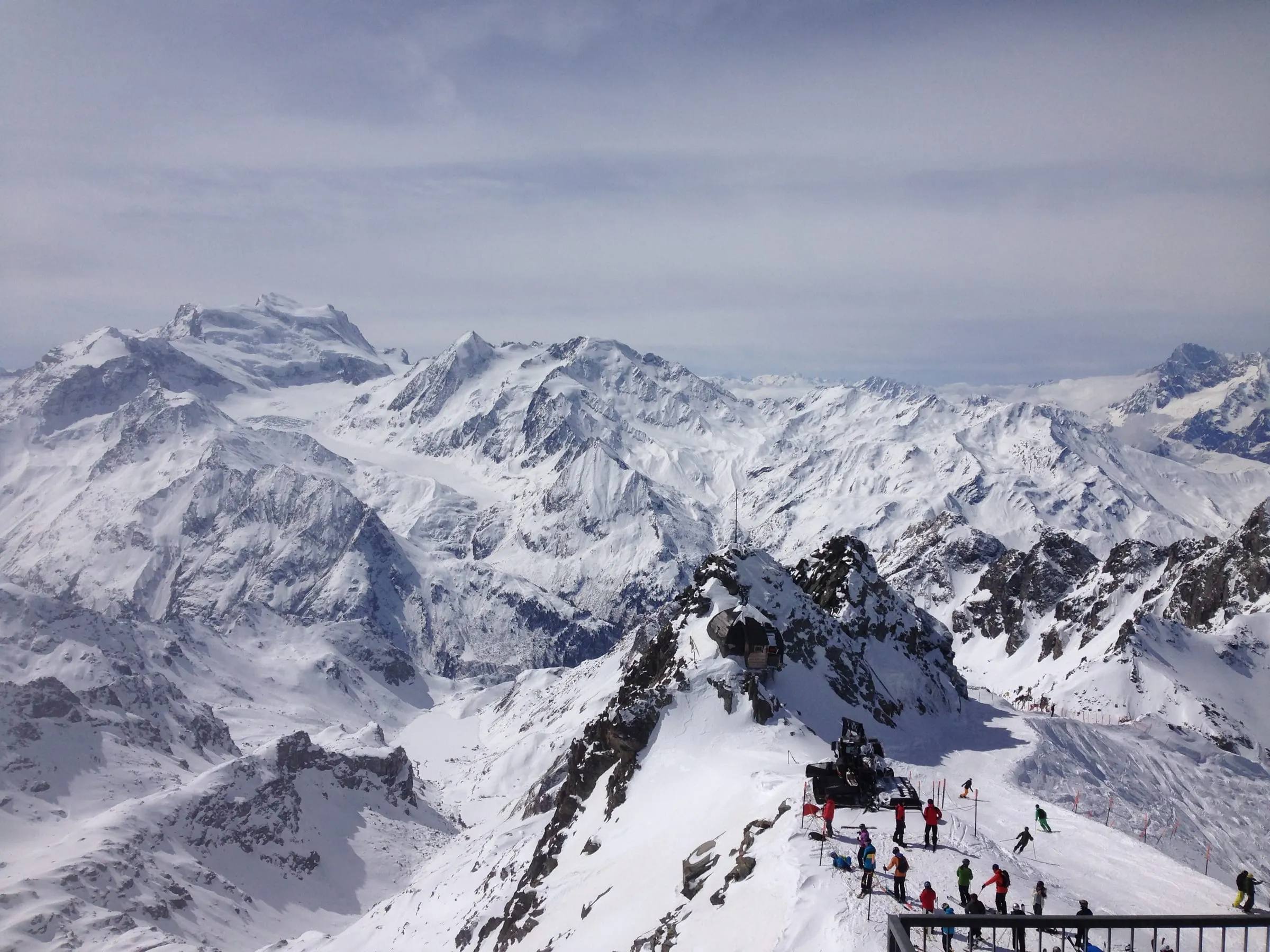
The run everyone talks about is Gentianes-Tortin. It starts at the Col des Gentianes, at about 2,950 m, where the Jumbo and Gentianes cable cars meet, and Verbier Tourism says it’s rumoured to be the longest, most sustained mogul run in Europe. It’s a signposted, secure freeride itinerary rather than a piste:
- It’s marked by a single line of yellow poles, and extends 15 m on each side of them.
- You need a valid 4 Vallées pass, and it’s only open when the ski area is open.
- Access is free, but it’s a serious test of fitness. Ski it when the snow is soft.
Verbier is also home to the Bec des Rosses, the steep face used for the Freeride World Tour’s Xtreme Verbier contest.
Snow in Verbier and the 2026/27 season
Verbier Tourism says the season usually starts at the end of November and runs to late April, depending on snow, and the best period is generally December to April. Official 2026/27 dates hadn’t been published when we checked. Last season, the high Lac des Vaux sector opened at weekends from 1 November, before the area opened daily from 29 November, so a similar pattern is possible.
Before the season, note that the Le Châble to Verbier gondola is closed for maintenance from 26 October to 6 November 2026, with replacement buses.
Altitude is the main snow question. The village slopes start at about 1,500 m and Bruson goes down to 1,080 m, so cover at the bottom can be thin early or late in the season. The high sectors around Mont-Fort and Les Attelas hold their snow far better.
Is Verbier good for a last-minute ski trip?
Often, yes. Geneva is the nearest major airport, and you can do the whole trip from there by train and gondola. The 4 Vallées is big enough that a modest snowfall still gives plenty of skiing, and the terrain goes up to 3,330 m.
The catches: Verbier is one of the most expensive resorts in the Alps, peak weeks fill fast, and the lower slopes are vulnerable in a warm spell. Check how much of the upper area is open, then find a place to stay in Verbier.
Verbier lift passes
- Passes are sold for four areas: Bruson, La Tzoumaz/Savoleyres, Verbier and the full 4 Vallées.
- The Gentianes-Tortin itinerary and the Mont-Fort area need a 4 Vallées pass.
- For 2026/27, the annual pass categories are adult (born 1950 to 2001), young person (born 2002 to 2011) and child (born 2012 to 2019). Rules for younger children vary, so check with the lift company before you buy.
- The free magic carpets at Les Esserts, Les Moulins and La Tzoumaz don’t need a pass.
Après-ski and things to do in Verbier
Verbier’s après is some of the liveliest in Switzerland. Place Centrale is the hub for bars and restaurants, and the crowd is busy and international. It’s expensive, but that’s part of the deal.
Off the slopes, there’s a sledging area with a magic carpet at Les Esserts and a long run from Savoleyres down to La Tzoumaz. The Verbier sports centre has a 600 m² climbing wall, squash, tennis and a swimming pool, though work is under way at the centre, so check what’s open. Snowshoeing and winter walks round it out.
Who Verbier suits, and who it doesn’t
- Great for: strong skiers and freeriders, groups who want serious après-ski, intermediates who want a huge area to explore, and rail travellers.
- Think twice if: you’re on a tight budget, you want a compact resort where everything is on the doorstep, or you want a quiet week in peak season.
Skiing with children? Read our guide to Verbier with kids.
How to get to Verbier
By train and gondola
Take the train to Martigny, on the main line through the Rhône valley. Change to the St-Bernard Express, run by TMR and RegionAlps, which climbs to Le Châble in under 30 minutes. From Le Châble station, the gondola takes you up to Verbier. The Bruson sector is reached from Le Châble too.
By car
Leave the A9 motorway at Martigny and follow the road towards the Grand-St-Bernard as far as Sembrancher, then head for Le Châble. From there, the road climbs to Verbier, or you can park in Le Châble and take the gondola. Coming from Italy, the Great St Bernard pass is closed in winter, so use the road tunnel.
You need a Swiss motorway vignette (CHF 40), either as an e-vignette or a sticker. The 2026 vignette is valid until 31 January 2027, and the 2027 one from 1 December 2026. Switzerland has no general legal requirement for winter tyres, but if your car isn’t properly equipped for winter you can be held liable after an accident, and your insurer may pay less. Fit winter tyres and carry chains: you must use them where signs say so.
Nearest airports
Geneva is the closest major airport. From there, take the train along the lake and the Rhône valley to Martigny, then continue as above.